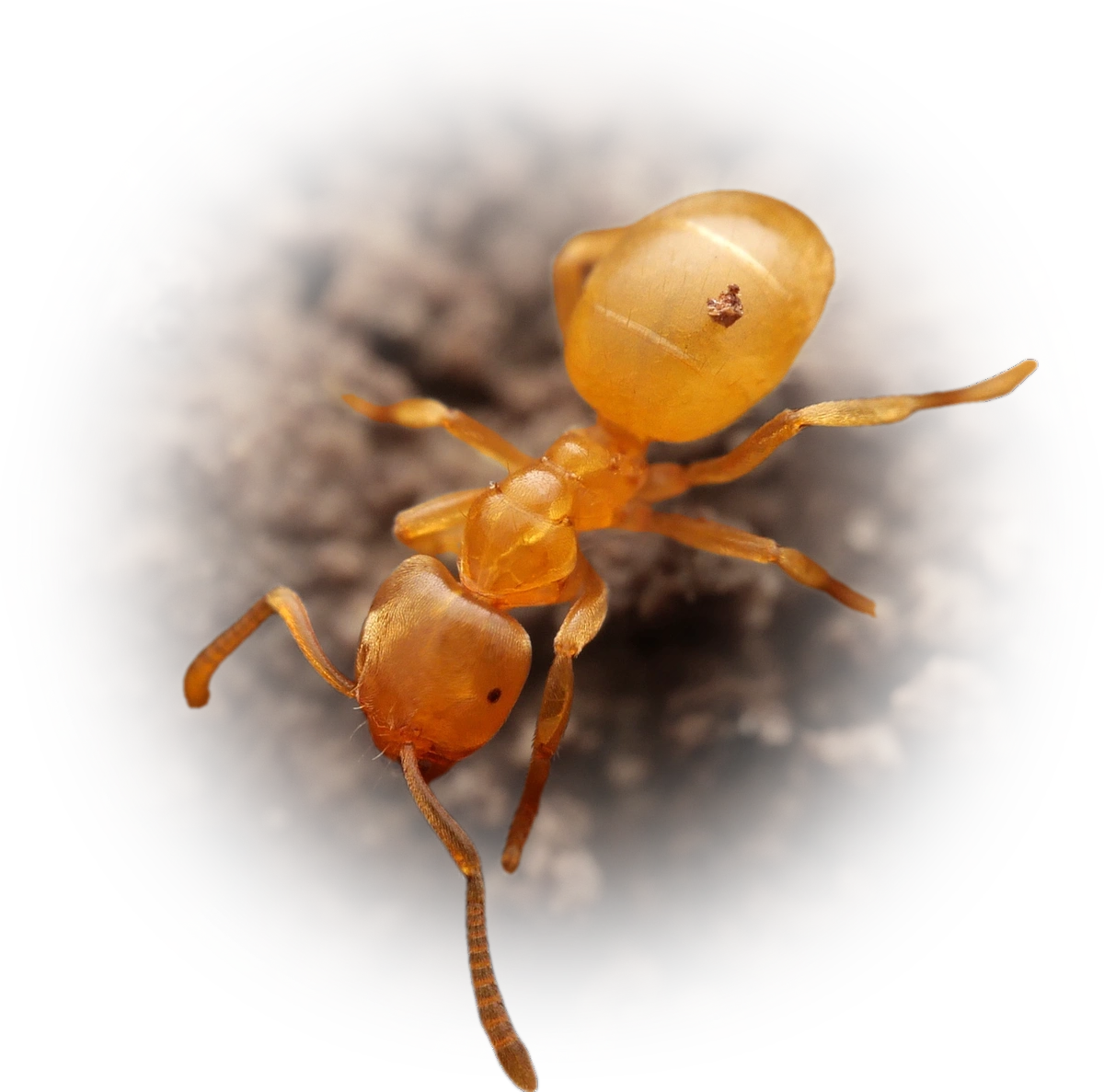

Lasius myops
- Scientific Name
- Lasius myops
- Tribe
- Lasiini
- Subfamily
- Formicinae
- Author
- Forel, 1894
- Distribution
- Found in 12 countries
Lasius myops Overview
Lasius myops is an ant species of the genus Lasius. It is primarily documented in 12 countries , including Belgium, Switzerland, Algeria. Detailed taxonomic data and occurrence records can be further explored via authoritative databases such as AntWeb or the Global Biodiversity Information Facility (GBIF).
Lasius myops
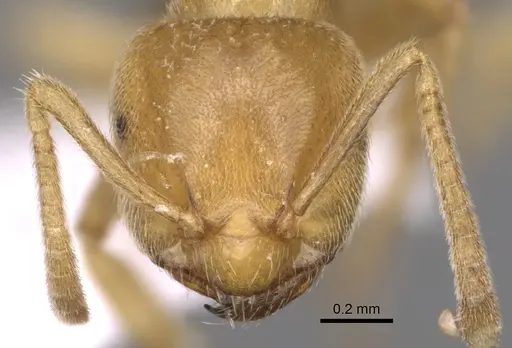
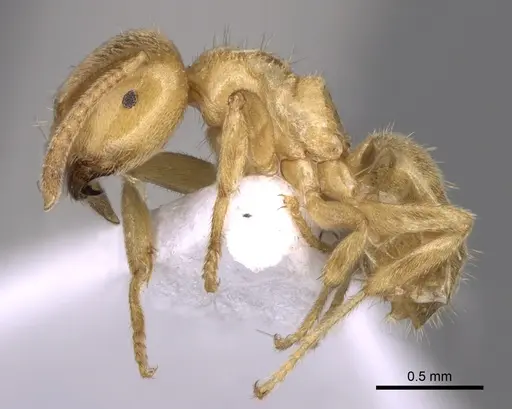
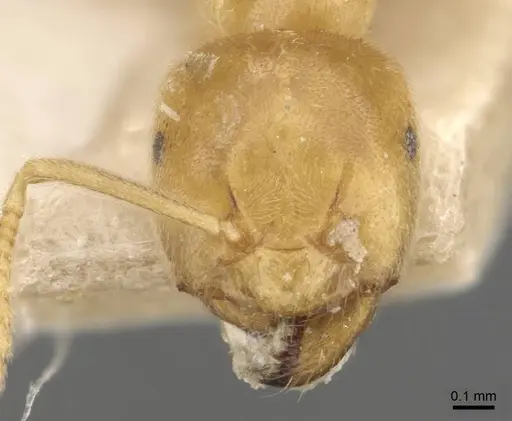
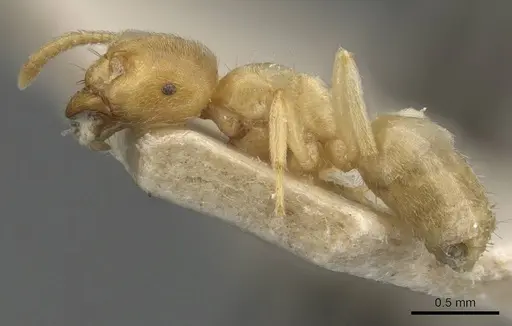
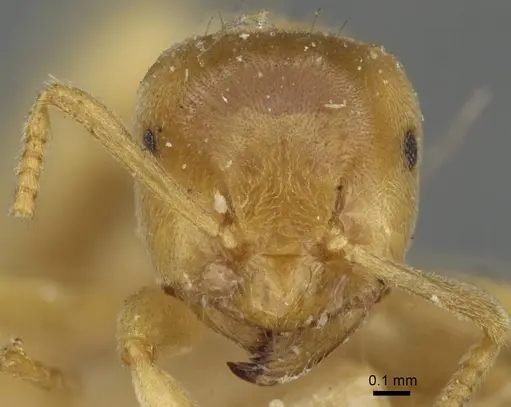
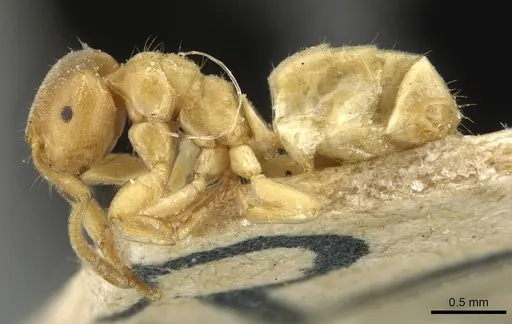
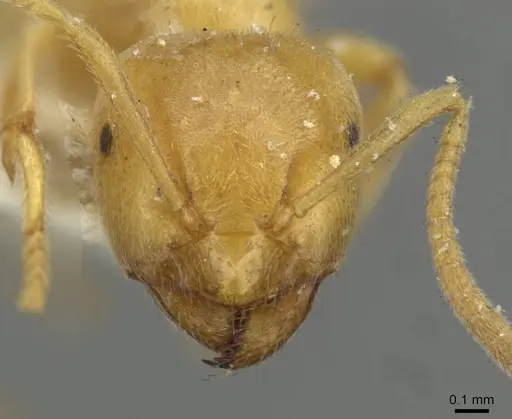
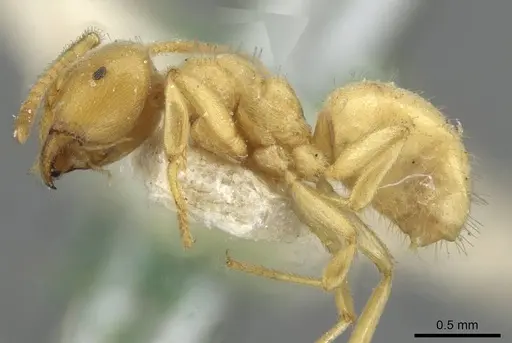
Lasius myops is a small, pale yellow ant belonging to the flavus group within the Formicinae subfamily. It is closely related to the common Lasius flavus but is distinguished by its significantly smaller eyes (only 15-20 facets compared to 60-80 in L. flavus), slightly smaller overall size, and strong preference for dry, warm habitats. Workers are monomorphic, meaning they are all the same size, and measure 1.5-4mm. Queens are larger at 7-9.5mm. This species is found across the Palaearctic region from Spain and Morocco in the west to Kyrgyzstan in the east, typically at low to mid altitudes in dry grasslands and rocky areas. The species was long considered a synonym of L. flavus until Seifert (1983) confirmed its separate status based on consistent morphological differences and reproductive isolation.
Quick Summary
- Difficulty: Medium
- Origin & Habitat: Palaearctic region, dry grasslands and rocky xerothermic habitats from lowland to 800m elevation. Prefers warm, dry, oligotrophic sites with sparse vegetation, often under stones or in cracked rock walls bonded with clay. More thermophilous than its sister species L. flavus [1][2].
- Colony Type: Monogyne (single queen colonies). Colonies are monogynous with one queen per nest [3].
- Colony: Monogyne
- Founding: Claustral
- Size & Growth:
- Queen: 7-9.5mm [2]
- Worker: 1.5-4mm [2]
- Colony: Moderate colony size, estimated up to several thousand workers based on related species
- Growth: Moderate
- Development: Estimated 6-10 weeks at optimal temperature based on related Lasius species (Development time inferred from genus-level data as species-specific timing not documented)
- Antkeeping:
- Temperature: Keep at 20-24°C. This is a warmth-loving species that prefers warmer conditions than L. flavus. A gentle gradient allowing warmer and cooler areas is recommended [4][2].
- Humidity: Low to moderate. This species prefers dry conditions, keep the nest substrate relatively dry, not waterlogged. Think dry grassland soil, not damp forest floor [2][5].
- Diapause: Yes. Requires a winter rest period typical of temperate Lasius species. Reduce temperature to 5-10°C for 3-4 months during winter [2].
- Nesting: Natural nesting: under stones, in cracked rock walls with clay bonding, and in dry soil. In captivity, a test tube setup works well for founding colonies. For established colonies, a Y-tong or plaster nest with dry conditions is appropriate. Avoid overly humid setups [5][2].
- Behavior: This is a hypogean (underground) species, workers are rarely seen on the surface except during nuptial flights. They have very small eyes adapted to their subterranean lifestyle and spend most of their time tending root aphids underground. Workers are not aggressive and rarely sting. Escape risk is low to moderate, they are not strong climbers but standard escape prevention is still recommended. They form large colonies that live almost entirely underground [2][6]
- Common Issues: very small eyes mean limited vision, workers may be less active on the surface, dry habitat requirements, too much humidity can be harmful, rare in the wild and difficult to find, wild-caught colonies may be scarce, easily confused with L. flavus, identification requires attention to eye facet count, slow colony growth typical of underground species may frustrate beginners
Housing and Nest Setup
Lasius myops is an underground-dwelling species that prefers dry conditions. For founding colonies, a simple test tube setup works well, fill the tube about one-third with water and plug with cotton, then place the queen in the humid chamber. The queen will seal herself in and raise her first workers in the chamber. For established colonies, a Y-tong (AAC) nest or plaster formicarium with dry to moderately humid conditions is appropriate. The key is to avoid overly damp setups, this species naturally inhabits xerothermic dry grasslands and rocky areas. Provide a connection to an outworld for foraging, but expect most activity to remain hidden underground. Flat stones or pieces of bark on top of the nest can simulate their natural cover [2][5].
Feeding and Diet
Like other Lasius species, L. myops is primarily honeydew-feeding. In the wild, workers spend most of their time underground tending root aphids and collecting their honeydew excretions. In captivity, offer sugar water (honey water or sugar water at 1:1 ratio) as a constant food source. For protein, offer small insects like fruit flies, small mealworms, or cricket pieces. Feed protein 1-2 times per week. They are not aggressive foragers and may take food slowly, remove uneaten food after 48 hours to prevent mold. The subterranean lifestyle means they may not readily come to open food sources, so placing sugar water on a small piece of cotton or sponge can help [6][2].
Temperature and Seasonal Care
Lasius myops is more thermophilous than its close relative L. flavus, meaning it prefers warmer conditions. Maintain temperatures between 20-24°C in the nest area. A heating cable on one side of the nest can create a gentle gradient, but avoid overheating. During the active season (spring through autumn), room temperature within this range is typically suitable. In winter, they require a diapause period, reduce temperatures to 5-10°C and keep them in a cool location (basement, garage, or refrigerator) for 3-4 months. This mimics their natural cycle in temperate regions. Do not feed during diapause. Return them to warm conditions gradually in spring [2][4].
Behavior and Observation
This is one of the more challenging Lasius species to observe because of its completely subterranean lifestyle. Workers have extremely reduced compound eyes (only 15-20 facets) and rarely come to the surface except during nuptial flights. Colonies can be quite large but all activity happens underground. You may see workers on the nest surface occasionally, but they will quickly retreat when disturbed. Nuptial flights occur from May to September in northern Europe and July to August in Mediterranean regions, this is when you may see winged reproductives. The species is not aggressive and workers will flee rather than attack. Observation requires patience and possibly a transparent nest to catch glimpses of their underground activities [2][6][5].
Colony Development
Lasius myops colonies develop moderately. The queen seals herself in during founding (claustral foundation) and raises the first brood using stored fat reserves. First workers (nanitics) will emerge after several weeks and begin foraging. Growth rate is moderate, colonies typically reach several hundred workers in the first year or two, with mature colonies potentially reaching several thousand. The monomorphic workers (all the same size) emerge gradually. Because this is an underground species, colony growth may appear slower than surface-nesting species because you see less activity. Be patient and avoid disturbing the nest during founding, stress can cause queens to abandon or eat their brood [2][4].
Frequently Asked Questions
Is Lasius myops a good species for beginners?
Lasius myops is not ideal for beginners. While not difficult to keep, their completely subterranean lifestyle makes them less rewarding to observe than other Lasius species. They also require specific dry, warm conditions and are rare in the wild, making colonies hard to find. If you want a rewarding yellow Lasius, L. flavus is easier to find and more active on the surface.
How long does it take for the first workers to appear?
Based on related Lasius species, expect first workers (nanitics) to emerge 6-10 weeks after the queen lays eggs, assuming temperatures around 20-24°C. The exact timeline for L. myops specifically is not documented, but genus-level data suggests this range.
Can I keep multiple queens together?
No. Lasius myops is monogyne, colonies have a single queen. Combining unrelated queens will result in fighting. Only one queen should be kept per colony.
What do Lasius myops eat?
They primarily feed on honeydew from aphids (especially root aphids). In captivity, offer sugar water or honey water as a constant food source, plus small insects like fruit flies or small mealworms for protein. They are not active hunters and may take sugar sources slowly.
Do Lasius myops need hibernation?
Yes, they require a winter diapause. Reduce temperatures to 5-10°C for 3-4 months during winter (typically November-February in the Northern Hemisphere). This is essential for colony health and triggering reproductive development in spring.
Why are my Lasius myops workers rarely seen?
This is normal behavior. Lasius myops is a hypogean (underground) species with very small eyes. Workers spend almost all their time underground tending root aphids and rarely come to the surface. You may only see them during nuptial flights or when the nest is disturbed.
How is Lasius myops different from Lasius flavus?
L. myops has significantly smaller eyes (15-20 facets vs 60-80 in L. flavus), is slightly smaller overall, prefers much drier and warmer habitats, and is generally rarer. The two species are reproductively isolated but often found in the same areas. Eye facet count is the most reliable distinguishing characteristic [2][5].
What is the ideal humidity for Lasius myops?
Keep it relatively dry compared to other ants. The nest substrate should be moist but not waterlogged, with some drier areas available. This species naturally inhabits xerothermic dry grasslands, too much humidity will harm them.
References

This caresheet is licensed under CC BY-SA 4.0 .
CASENT0280455
View on AntWeb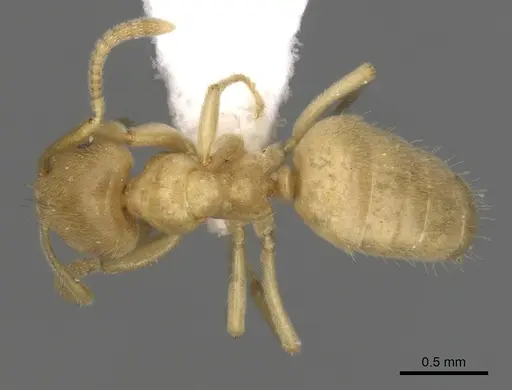
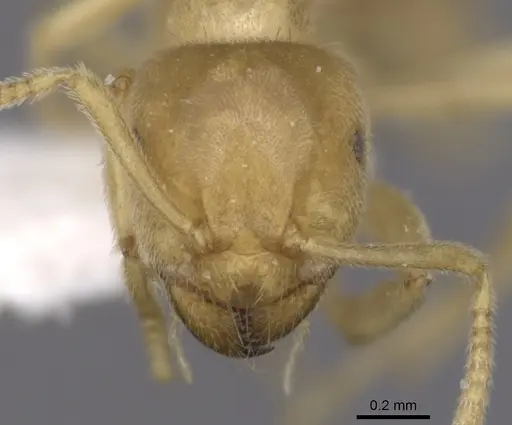
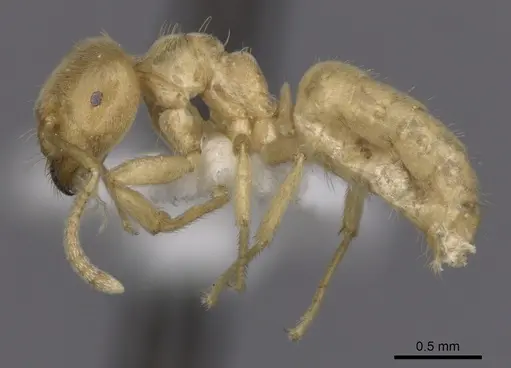
CASENT0906073
View on AntWeb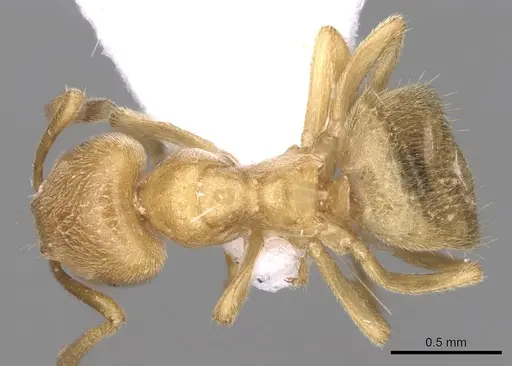
CASENT0907598
View on AntWeb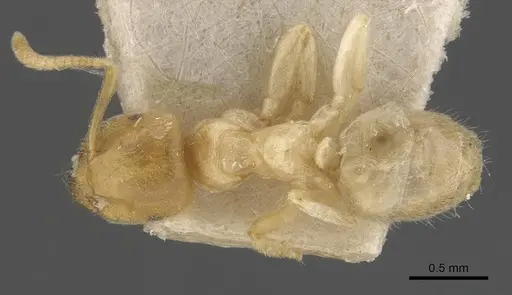
CASENT0911050
View on AntWeb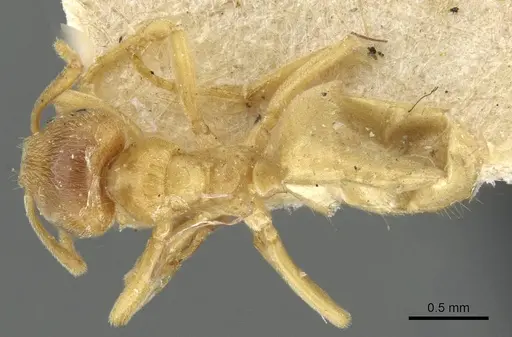
CASENT0911051
View on AntWeb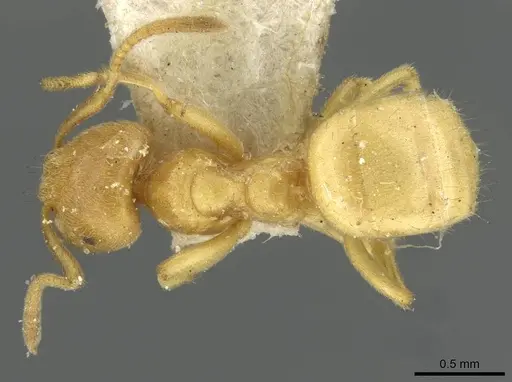
Literature
Loading...Loading products...