

Lasius atopus
- Scientific Name
- Lasius atopus
- Tribe
- Lasiini
- Subfamily
- Formicinae
- Author
- Cole, 1958
- Common Name
- Strange Fuzzy Ant
- Distribution
- Found in 1 countries
Lasius atopus Overview
Lasius atopus (commonly known as the Strange Fuzzy Ant) is an ant species of the genus Lasius. It is primarily documented in 1 countries , including United States of America. Detailed taxonomic data and occurrence records can be further explored via authoritative databases such as AntWeb or the Global Biodiversity Information Facility (GBIF).
Lasius atopus - "Strange Fuzzy Ant"
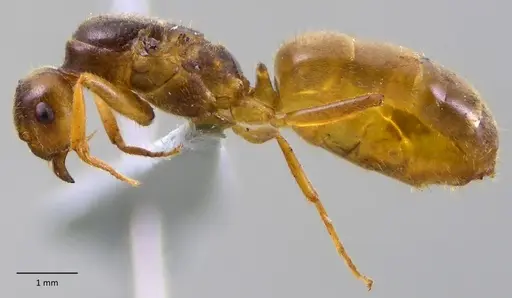
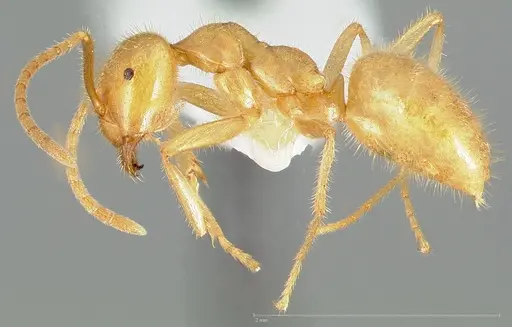
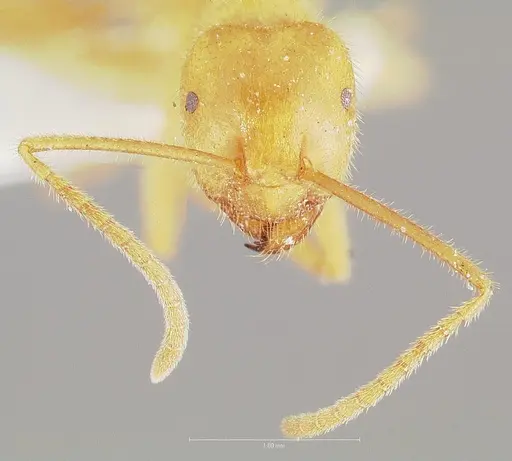
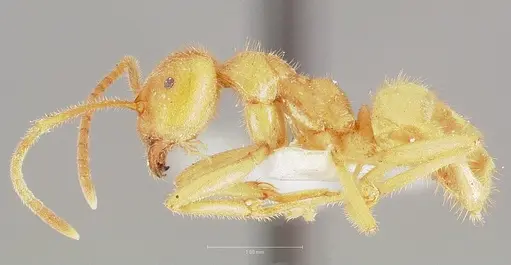
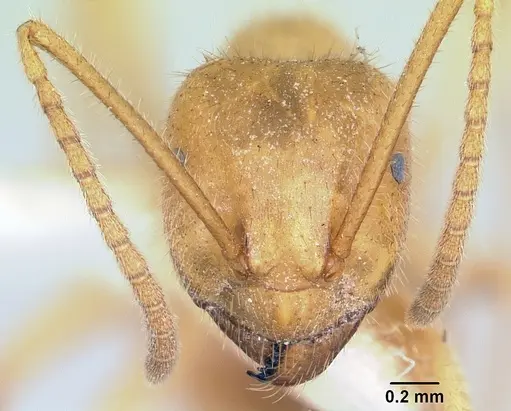
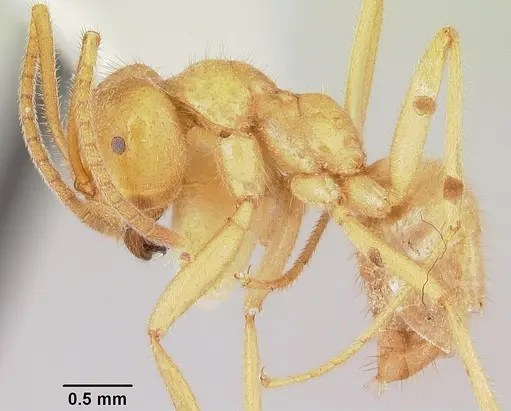
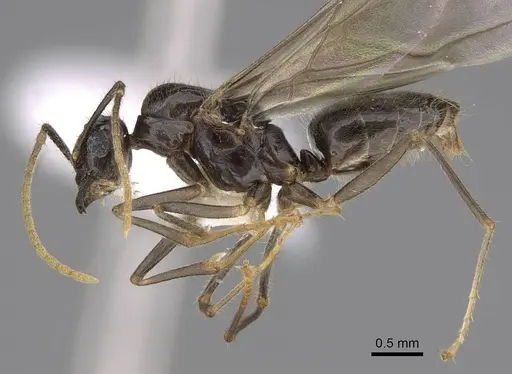
Lasius atopus is a rare North American ant endemic to California, belonging to the flavus clade within the genus Lasius. Workers are relatively large for a Lasius species, measuring 4-7mm in total length, with a distinctive slender body, notably long antennae (scapes) that extend well past the back of the head, and small eyes. The most striking feature is the dense covering of golden standing hairs across the entire body, including the legs and antennae. The head has a deeply notched (emarginated) posterior border, giving it a unique silhouette. These ants are light tan to yellowish-brown in color, with a highly glossy (shining) body surface. They were discovered nesting in very dry soil beneath stones in arid, unshaded semidesert areas of California, at depths around two feet [1][2].
This species is notable for being one of the most poorly known ants in North America. It belongs to the atopus species group and was originally classified in the subgenus Chthonolasius. The combination of its extremely elongated appendages, dense pilosity, and emarginated head makes it easily distinguishable from other Lasius species. Given its restricted distribution to California and the limited collection records, Lasius atopus remains a mystery in terms of its full biology and colony structure [1].
Quick Summary
- Difficulty: Unknown, Insufficient data for care recommendations
- Origin & Habitat: California, USA, arid semidesert habitats with very dry soil in unshaded areas [2]
- Colony Type: Colony structure unconfirmed, only workers have been described, no queen or colony size data available
- Size & Growth:
- Queen: Unknown, queen has not been described [2]
- Worker: 4-7mm total length, head 1.11-1.22mm, scapes 1.36-1.48mm [2]
- Colony: Unknown, no colony size data available
- Growth: Unknown, no development data available
- Development: Unknown, no direct measurements exist (No data on development time. Related Lasius species typically take 6-10 weeks from egg to worker at optimal temperatures.)
- Antkeeping:
- Temperature: Likely moderate, based on California Mediterranean climate, similar to other Lasius at 18-24°C. Start around 20°C and observe colony activity.
- Humidity: Low, found in very dry soil in arid semidesert. Keep nest substrate dry to moderately moist, avoid high humidity.
- Diapause: Likely yes, most Lasius species in temperate regions require winter dormancy. Based on California climate, a mild diapause around 10-15°C for 2-3 months may be appropriate.
- Nesting: Natural nesting: very dry soil under stones at depths around 2 feet. In captivity, a dry to moderately humid setup with compact chambers would likely suit them. Avoid overly humid conditions.
- Behavior: Behavior is poorly documented. Workers were not observed foraging during mid-day collection, suggesting they may be less active during hot periods or may have nocturnal/foraging patterns. Based on genus-level inference, they likely forage for honeydew and small insects. Escape risk is moderate, workers are not tiny but can climb well. Use standard Lasius-level escape prevention.
- Common Issues: This species has never been kept in captivity, no established care protocols exist, No queen has ever been described, making colony establishment from wild-caught queens impossible to verify, Growth rate and development timeline are completely unknown, Humidity requirements may be critical, they come from extremely dry habitats, Limited distribution means wild collection may be restricted or illegal
Species Identification and Distinguishing Features
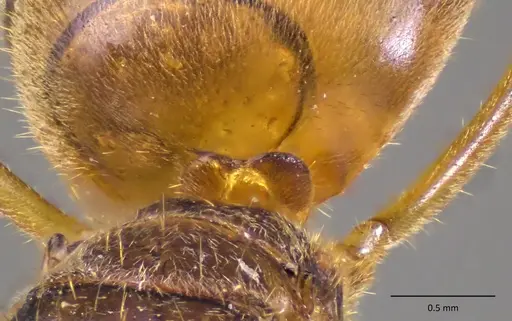
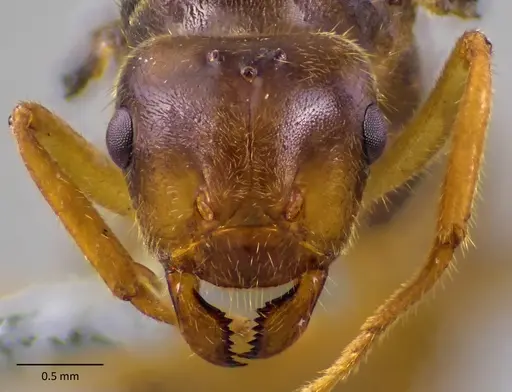
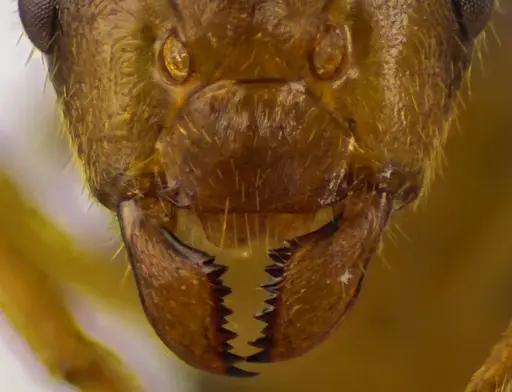
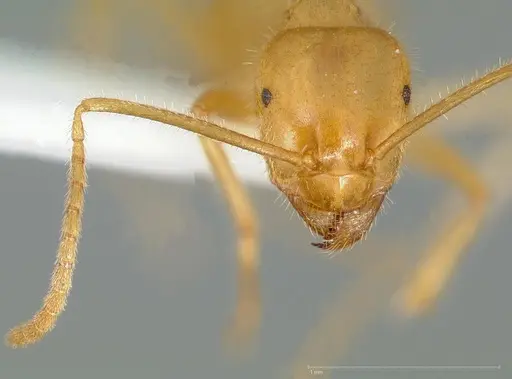
Lasius atopus workers are relatively large within the genus, measuring 4-7mm in total body length. The most distinctive morphological features include: (1) extremely long scapes (antenna segments) that extend well past the occipital corners of the head by more than one-third their length, (2) a deeply emarginated (notched) posterior border of the head, (3) small eyes with fewer than 40 facets, (4) dense golden standing hairs covering the entire body including the legs and antennae, and (5) a highly glossy, shining body surface. The body color is light tan to yellowish-brown, with the head slightly darker and the gaster slightly infused with darker tones. The petiolar scale is spatulate (spoon-shaped) with a broadly convex apical border. These morphological features, particularly the elongated appendages and dense pilosity, set this species apart from all other Lasius in North America [1][2].
Natural Habitat and Distribution
Lasius atopus is known only from California, USA, making it a true endemic. The original type series was collected from a nest in very dry soil beneath a stone in an unshaded, very arid semidesert area. The collector noted that no foraging activity was observed during mid-morning collection, and nest chambers were not found despite digging to a depth of about two feet (approximately 60cm). This suggests the species may create deep, vertical tunnel systems rather than horizontal chambers. The restricted distribution to California, combined with the arid habitat preferences, indicates this species is adapted to dry, Mediterranean-type climates with hot, dry summers and mild, wet winters. The species has been recorded from Mendocino County in northern California [3][2].
Taxonomy and Phylogeny
Lasius atopus was originally described by A.C. Cole in 1958 and placed in the subgenus Chthonolasius, a group of Lasius species known for their often parasitic founding behaviors. Modern phylogenetic research has reorganized Lasius taxonomy, and L. atopus is now placed in the atopus species group within the flavus clade. The species shows unique morphological characteristics that distinguish it from all other Lasius, including uniquely elongated scapes (about as long as the head length) and a relatively elongate mesosoma. The dense pilosity is somewhat reminiscent of Lasius vestitus, but otherwise the species bears little resemblance to other known forms. This combination of features suggests it represents an ancient lineage within the genus [1][2].
Current Knowledge Gaps and Research Needs
Lasius atopus remains one of the most poorly known ant species in North America. The original description from 1958 remains the primary source of information, and virtually nothing has been published about its biology since then. Key unknowns include: (1) queen morphology and whether they are similar to other Lasius or show unique features, (2) colony structure, whether they are single-queen (monogyne) or multi-queen (polygyne), (3) founding behavior, whether queens found colonies independently (claustral) or require host colonies (temporary social parasitism like other Chthonolasius), (4) colony size and growth rate, (5) diet and foraging behavior, (6) nuptial flight timing, and (7) overwintering requirements. The fungus Laboulbenia formicarum has been observed infesting some specimens, indicating they are susceptible to fungal parasites. Any captive husbandry would be entirely experimental [1][2].
Frequently Asked Questions
Can I keep Lasius atopus as a pet ant?
It is extremely unlikely that Lasius atopus can be kept in captivity. No queen has ever been described or collected, meaning there is no way to establish a colony from wild-caught queens. Additionally, this species has never been documented in the antkeeping hobby, and no established care protocols exist. The limited distribution in California may also mean collection is restricted.
What does Lasius atopus look like?
Workers are relatively large (4-7mm) with a slender body, light tan to yellowish-brown color, and a highly glossy surface. Their most distinctive features are the very long antennae (scapes) that extend far past the back of the head, a deeply notched head shape, and dense golden hairs covering the entire body including the legs.
Where does Lasius atopus live?
This is a California endemic known only from the western United States. It nests in very dry soil beneath stones in arid, unshaded semidesert areas, with nests extending to about two feet depth.
What do Lasius atopus eat?
Diet is completely unconfirmed. Based on genus-level inference, they likely feed on honeydew from aphids and scale insects, plus small insects and arthropods for protein. Sugar sources are likely accepted.
Do Lasius atopus queens have wings?
Unknown, no queen has ever been described. Most Lasius have winged queens that mate during nuptial flights, but the Chthonolasius subgenus sometimes involves parasitic founding which may affect queen morphology.
How big do Lasius atopus colonies get?
Unknown, no colony size data exists. Related Lasius species typically form colonies of several thousand workers, but this species is too poorly known to estimate.
Does Lasius atopus need hibernation?
Likely yes, based on California distribution and genus patterns. Most temperate Lasius require a winter dormancy period. A mild diapause at 10-15°C for 2-3 months during winter months would likely be appropriate, though this is speculative.
Why is Lasius atopus so rare?
The species appears to have a genuinely restricted distribution limited to California, combined with specialized habitat requirements (very dry, arid semidesert). It was only collected once in 1957 and has rarely been observed since. This may reflect both genuine rarity and lack of targeted survey effort.
Is Lasius atopus endangered?
Conservation status is unknown. The IUCN Red List does not list this species, and there is insufficient data to assess population trends. Its restricted distribution and specialized habitat could make it vulnerable to environmental changes.
References

This caresheet is licensed under CC BY-SA 4.0 .
ANTWEB1060172
View on AntWeb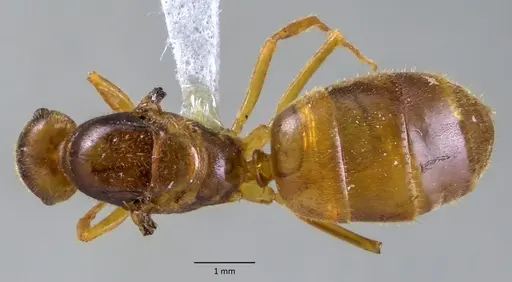
CASENT0005442
View on AntWeb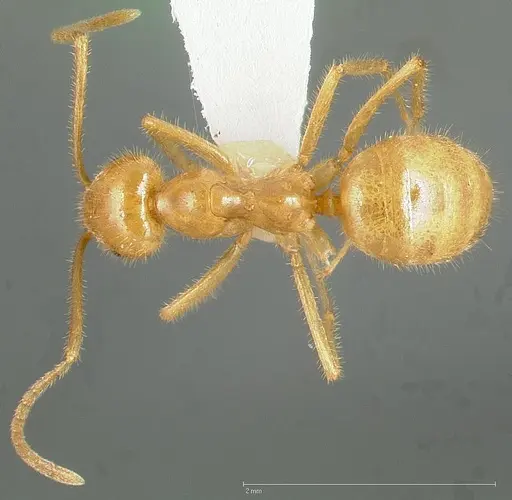
CASENT0005929
View on AntWeb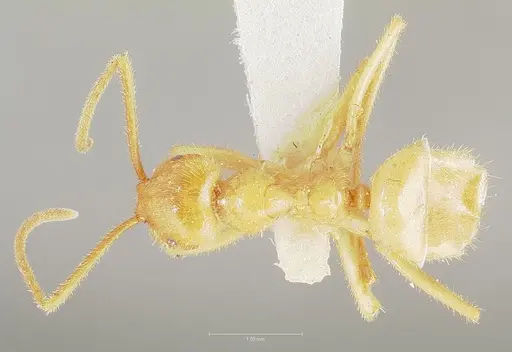
CASENT0103118
View on AntWeb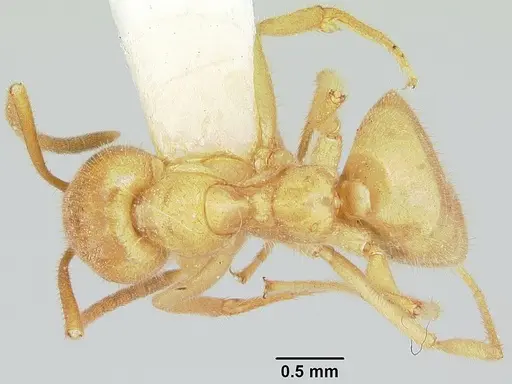
EMEC1133813
View on AntWeb
Literature
Loading...Loading products...