

Lachnomyrmex plaumanni
- Scientific Name
- Lachnomyrmex plaumanni
- Tribe
- Attini
- Subfamily
- Myrmicinae
- Author
- Borgmeier, 1957
- Distribution
- Found in 3 countries
Lachnomyrmex plaumanni Overview
Lachnomyrmex plaumanni is an ant species of the genus Lachnomyrmex. It is primarily documented in 3 countries , including Brazil, Costa Rica, Nicaragua. Detailed taxonomic data and occurrence records can be further explored via authoritative databases such as AntWeb or the Global Biodiversity Information Facility (GBIF).
Lachnomyrmex plaumanni
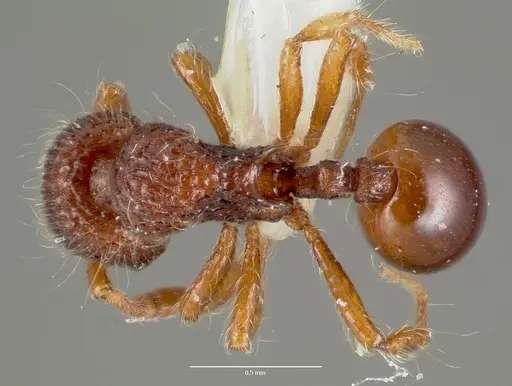
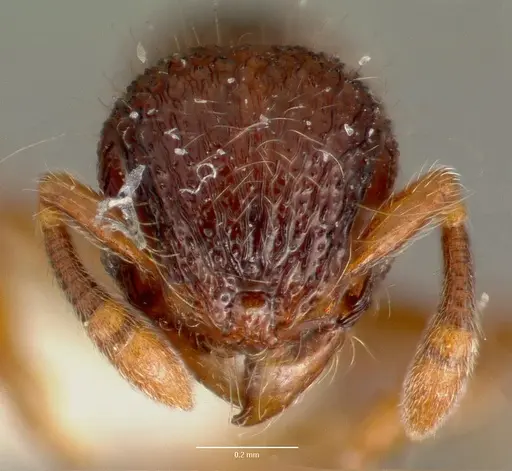
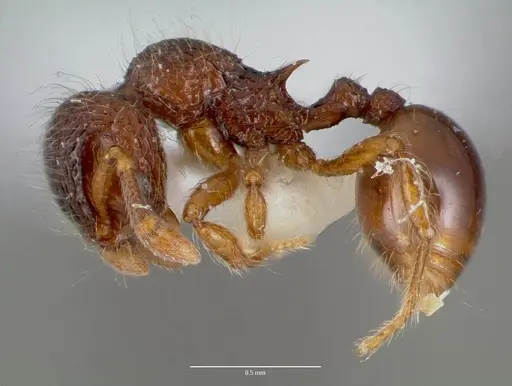
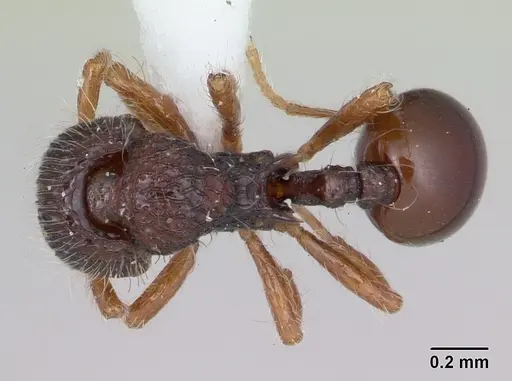
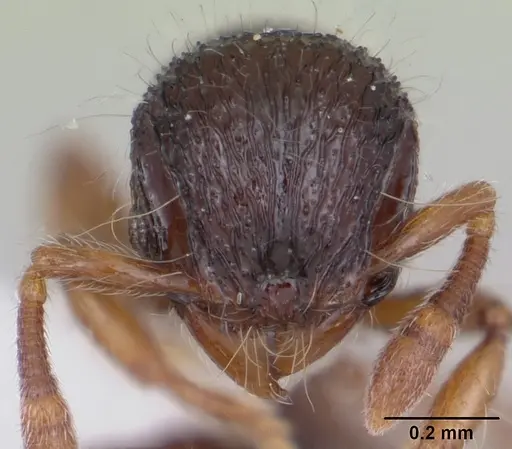
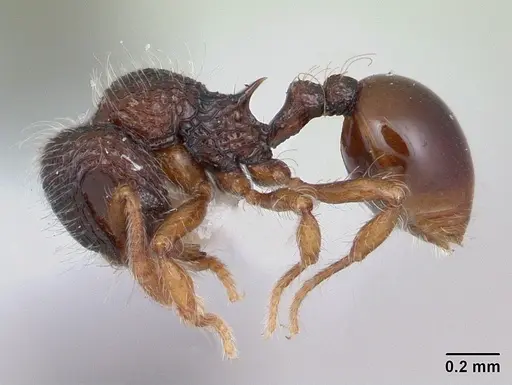
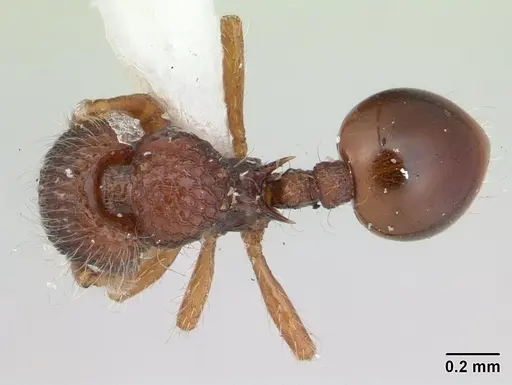
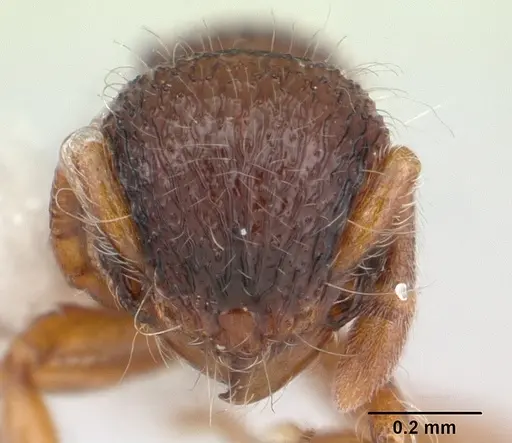
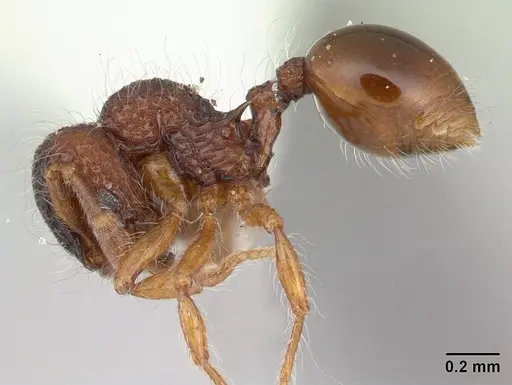
Lachnomyrmex plaumanni is one of the smallest species in the genus Lachnomyrmex, with workers measuring just 2.5-3mm [1]. These tiny ants are light reddish-brown to dark brown with lighter appendages, and can be identified by their sparse body sculpturing, propodeal spines that curve downward, and about six long hairs on the postpetiole [1]. They are native to the Neotropical region, found from northern Argentina through southeastern Brazil along the submontane areas of the Brazilian Atlantic Forest at elevations of 400-1200m [1][2].
This is a leaf-litter ant that nests in the ground, among rotten leaves, and inside fallen logs [3]. Workers forage alone on the ground or within leaf litter without recruiting nestmates or forming pheromone trails [3]. However, there is a critical issue: all attempts to maintain colonies in artificial conditions have failed, with queens and workers typically dying within days of capture [2][1][4]. This makes L. plaumanni one of the most challenging ants to keep in captivity.
Quick Summary
- Difficulty: Expert
- Origin & Habitat: Native to the Brazilian Atlantic Forest region, from northern Argentina to southeastern Brazil. Found at 400-1200m elevation in submontane wet forests. This is a primary forest specialist, not found in secondary forest or rubber plantations [5][1].
- Colony Type: Apparently monogynous (single queen colonies). Colonies are relatively small, with two mature colonies per square meter of forest floor commonly observed [2].
- Colony: Monogyne
- Size & Growth:
- Queen: 2.70-3.45mm [2]
- Worker: 2.51-3.07mm [1]
- Colony: Small colonies, exact maximum unknown but colonies are relatively small [2]
- Growth: Unknown, captive colonies have never been established
- Development: Unconfirmed, no captive colonies have ever been successfully maintained [2][1] (Development timeline is completely unknown because all attempts to maintain colonies in artificial conditions have failed)
- Antkeeping:
- Temperature: Based on their submontane Atlantic Forest habitat (400-1200m elevation), they likely prefer cooler temperatures than typical tropical ants. However, no captive data exists to confirm specific requirements.
- Humidity: As a leaf-litter ant from wet Atlantic forests, they likely require high humidity similar to other litter ants. However, no captive data exists to confirm specific requirements.
- Diapause: Unknown, no captive colonies have ever been established to observe seasonal behavior
- Nesting: In nature, they nest in the ground, among rotten leaves, and inside fallen logs [3]. A naturalistic setup with moist substrate, leaf litter, and small chambers would be the most appropriate attempt, though success is unlikely based on historical failures.
- Behavior: Workers forage alone on the ground or within leaf litter without recruiting nestmates or forming pheromone trails [3]. They are not aggressive and pose no threat to keepers. Their tiny size means escape prevention is critical, they can squeeze through extremely small gaps. However, the fundamental challenge is that this species has never been successfully maintained in captivity [2][1].
- Common Issues: All captive colony attempts have failed, queens and workers die within days of capture [2][1][4], This species should be considered essentially unkeepable in captivity based on all available evidence, Wild-caught colonies cannot be maintained, even short-term captivity has not succeeded, No established husbandry protocols exist because the species has never been successfully cultured
Why This Species Is Not Recommended for Keepers
Lachnomyrmex plaumanni represents one of the most challenging ant species to keep in captivity, in fact, it has never been successfully maintained. All attempts to establish colonies in artificial conditions have failed, with queens and workers typically dying within days of capture [2][1][4]. This is not a matter of needing better equipment or knowledge, the species has simply proven impossible to culture in captivity despite repeated efforts by researchers. For this reason, L. plaumanni should be considered essentially unkeepable, and antkeepers should not attempt to maintain wild-caught colonies. If you are interested in keeping Neotropical leaf-litter ants, consider better-documented species like some Myrmica or other Myrmicinae that have established captive protocols.
Natural History and Distribution
Lachnomyrmex plaumanni is found from northern Argentina (Misiones) through southern and southeastern Brazil (Santa Catarina, Paraná, São Paulo, Rio de Janeiro), at elevations between 400 and 1200 meters in the Atlantic Forest [2][1]. This is a primary forest specialist, research shows they occupy 9 regions in primary forest but are not found in secondary forest or rubber plantations [5]. They are very common in Atlantic Forest leaf-litter ant inventories in southeastern Brazil, with two mature colonies per square meter of forest floor commonly observed [2]. The species was named in honor of Fritz Plaumann (1902-1994), considered the greatest insect collector of Latin America in the 20th century, who collected the type series from Nova Teutônia, Santa Catarina [2][6].
Identification and Appearance
Workers measure just 2.51-3.07mm, making them one of the smallest species in the genus Lachnomyrmex [1][2]. Their coloration ranges from light reddish-brown to dark brown, with appendages being lighter [1]. The body is sparsely covered by short, fine rugae. Key identification features include: propodeal spines with apices curved downward (a diagnostic trait), propodeal lobe teeth that are swollen but extremely reduced (less than one-third the length of propodeal spines), about six long hairs on the postpetiole dorsum, and the first gastral tergite completely devoid of long flexuous hairs [1][2]. Queens are slightly larger at 2.70-3.45mm and have larger eyes with around 12 facets [2].
Foraging Behavior
Workers forage alone on the ground or within leaf litter and do not recruit nestmates or form pheromone trails [3]. There is a single record of a worker foraging in vegetation, it was collected from a bromeliad on a high live tree in Serra do Itapeti, São Paulo [2][1]. This solitary foraging style is typical of litter-dwelling ants in the genus Lachnomyrmex. Based on guild classification, they are considered litter omnivores and scavengers [7].
Nesting Preferences
In the wild, colonies nest in the ground, among rotten leaves, and inside fallen logs [3]. They are most often encountered in the leaf litter of submontane wet forests [3]. The genus Lachnomyrmex belongs to the tribe Stenammini and is related to Indo-Australian Lordomyrma and African Cyphoidris [3]. Given their natural nesting preferences, any hypothetical captive setup would need to replicate these humid, decomposing organic conditions with access to small chambers and abundant leaf litter material.
Frequently Asked Questions
Can I keep Lachnomyrmex plaumanni in captivity?
No. All attempts to maintain colonies in artificial conditions have failed. Queens and workers typically die within days of capture. This species should be considered essentially unkeepable in captivity [2][1][4].
Why do Lachnomyrmex plaumanni colonies die in captivity?
The exact reason is unknown, researchers have simply not been able to replicate the conditions this species requires. Despite being commonly found in leaf-litter samples (two colonies per square meter), they have never been successfully maintained in artificial conditions [2][1].
What do Lachnomyrmex plaumanni ants eat?
Based on guild classification, they are litter omnivores and scavengers [7]. In the wild, they forage alone on the ground or within leaf litter, likely consuming small organic particles, honeydew, and tiny arthropods. However, since captive colonies have never been established, specific dietary requirements are unknown.
Where is Lachnomyrmex plaumanni found?
They are found from northern Argentina (Misiones) through southeastern Brazil (Santa Catarina, Paraná, São Paulo, Rio de Janeiro), specifically in the submontane areas of the Brazilian Atlantic Forest at 400-1200m elevation [1][2].
How big do Lachnomyrmex plaumanni colonies get?
Colonies are relatively small. While the exact maximum size is unknown, researchers note that colonies are small and apparently monogynous (single queen). Two mature colonies per square meter of forest floor is commonly observed [2].
What is the best nest type for Lachnomyrmex plaumanni?
This cannot be determined, no captive colony has ever been successfully maintained. In nature, they nest in the ground, among rotten leaves, and inside fallen logs [3]. Any attempt would require a naturalistic setup with moist substrate and leaf litter, but success is considered extremely unlikely based on historical failures.
Are Lachnomyrmex plaumanni good for beginners?
No. This species is not recommended for any level of keeper because captive colonies have never been successfully established despite multiple attempts by researchers. Keepers interested in small Neotropical ants should consider other species with established captive protocols [2][1].
Do Lachnomyrmex plaumanni need hibernation?
Unknown. No captive colonies have ever been established to observe seasonal behavior. Based on their submontane Atlantic Forest habitat (400-1200m elevation), they may experience cooler temperatures seasonally, but specific diapause requirements are unconfirmed.
How long does it take for Lachnomyrmex plaumanni to develop from egg to worker?
Unknown. No captive colonies have ever been established, so development timelines have not been observed. The egg-to-worker timeline is completely unconfirmed [2][1].
References

This caresheet is licensed under CC BY-SA 4.0 .
Literature
Loading...Loading products...