

Lachnomyrmex longinoi
- Scientific Name
- Lachnomyrmex longinoi
- Tribe
- Attini
- Subfamily
- Myrmicinae
- Author
- Feitosa & Brandão, 2008
- Distribution
- Found in 4 countries
Lachnomyrmex longinoi Overview
Lachnomyrmex longinoi is an ant species of the genus Lachnomyrmex. It is primarily documented in 4 countries , including Costa Rica, Honduras, Nicaragua. Detailed taxonomic data and occurrence records can be further explored via authoritative databases such as AntWeb or the Global Biodiversity Information Facility (GBIF).
Lachnomyrmex longinoi
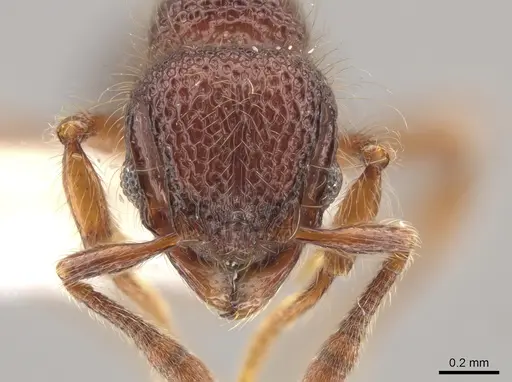
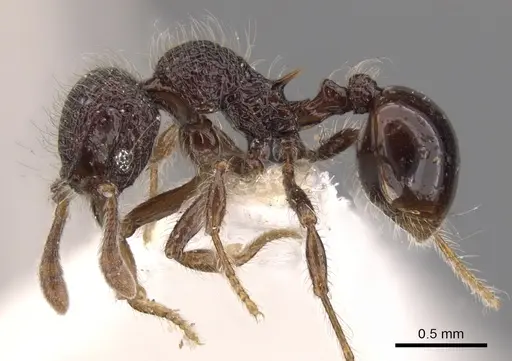
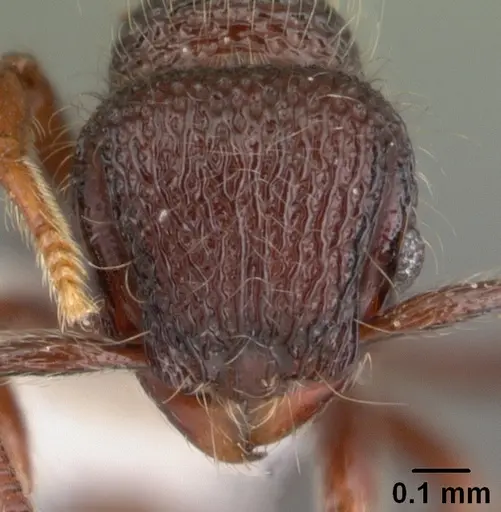
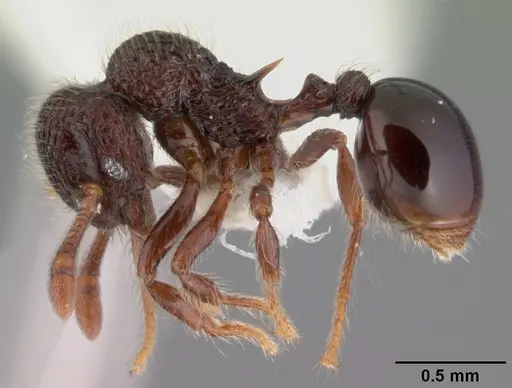
Lachnomyrmex longinoi is a tiny Neotropical ant species native to the wet forests of Costa Rica, Panama, Honduras, and Nicaragua. Workers measure just 3-3.3mm in length, making them one of the smaller ant species you'll encounter. They have a distinctive dark brown to black body with lighter appendages, covered in dense, irregular wrinkles (rugose sculpture) and unusually dense hairs on the rear portion of their body. The genus Lachnomyrmex belongs to the tribe Stenammini and is closely related to Lordomyrma. These ants are leaf-litter specialists, living and foraging in the damp decomposing material on the forest floor of Central American rainforests [1][2].
What makes Lachnomyrmex interesting is their solitary foraging behavior, unlike many ants that recruit nestmates to food sources, these tiny ants hunt and scavenge alone through the leaf litter. Colonies are relatively small and appear to have a single queen. They nest in the ground, among rotting leaves, and inside fallen logs, essentially anywhere it stays damp and dark in the forest understory [2].
Quick Summary
- Difficulty: Medium
- Origin & Habitat: Wet forests of Costa Rica, Panama, Honduras, and Nicaragua at elevations of 100-1200m. They live in leaf litter and rotting wood on the forest floor of tropical wet forests [1][2].
- Colony Type: Apparently monogyne (single-queen colonies). Colonies are relatively small with a single queen [2].
- Colony: Monogyne
- Size & Growth:
- Queen: 3.2-3.9mm [1]
- Worker: 3.0-3.3mm [1]
- Colony: Unknown maximum, but colonies are described as relatively small [2]
- Growth: Moderate, estimated based on similar small Myrmicinae
- Development: Estimated 6-10 weeks at warm tropical temperatures based on related Stenammini species (Development time is not directly documented for this species, this is an estimate based on genus-level patterns for small tropical Myrmicinae)
- Antkeeping:
- Temperature: Keep at 22-26°C. As a tropical wet-forest species, they need warm, stable conditions. A gentle gradient allowing them to choose their preferred temperature works best [2].
- Humidity: High humidity is essential. These ants live in leaf litter and rotting wood where it stays constantly damp. Keep the nest substrate consistently moist but not waterlogged. Provide a water tube as a drinking source and mist the outworld occasionally [2].
- Diapause: No, as a tropical species from low elevations, they do not require hibernation. Keep them at warm temperatures year-round [3].
- Nesting: They naturally nest in rotting wood, among fallen leaves, and in soil. In captivity, a small naturalistic setup with moist substrate (soil/peat mix), pieces of rotting wood, and leaf litter works well. A Y-tong or plaster nest with small chambers also works if kept humid. They prefer tight, enclosed spaces scaled to their tiny size [2].
- Behavior: These ants are peaceful but shy. Workers forage alone through leaf litter rather than in groups, and they do not recruit nestmates or form pheromone trails to food [2]. This means you may not see dramatic feeding frenzies, instead, a single worker will quietly discover and handle prey on its own. They are not aggressive and will flee rather than fight when disturbed. Escape prevention is critical due to their very small size, they can squeeze through tiny gaps that larger ants cannot. They are not known to sting and pose no danger to keepers.
- Common Issues: escape prevention is critical due to their tiny 3mm size, use fine mesh and tight-fitting lids, colonies are small and slow-growing, which can frustrate beginners expecting rapid expansion, high humidity requirements can lead to mold problems if ventilation is poor, solitary foraging means you may miss feeding, check the leaf litter layer regularly, tropical species will decline if temperatures drop below 20°C
Housing and Nest Setup
Lachnomyrmex longinoi is a leaf-litter specialist that needs a setup mimicking the damp forest floor. A naturalistic terrarium-style formicarium works best, use a container filled with a moist soil/peat mixture, add pieces of rotting wood, dried leaves, and moss to create a complex microhabitat. The substrate should stay damp but never waterlogged. You can also use a Y-tong or acrylic nest with small chambers if you maintain high ambient humidity. Because they are tiny, ensure all connections between the nest and outworld are narrow and well-sealed. Provide a shallow water dish or water tube for drinking [2].
Feeding and Diet
In the wild, Lachnomyrmex workers forage alone through leaf litter, hunting small invertebrates and scavenging dead insects. They are likely predatory on springtails, mites, and other micro-arthropods found in decaying wood. In captivity, offer small live prey like fruit flies, pinhead crickets, and tiny worms. They will also accept protein gels and small pieces of insects. Sugar sources may be accepted but are not a primary food, focus on providing varied small protein prey. Feed every 2-3 days and remove uneaten prey to prevent mold [2][3].
Temperature and Humidity
As a tropical wet-forest species from Central America, Lachnomyrmex longinoi needs warm, humid conditions. Keep temperatures in the 22-26°C range, this matches their natural habitat in lowland and submontane forests. They do not tolerate cool temperatures well. Humidity should be high (70-85%), the substrate should feel damp to the touch, and you should see condensation on the container walls periodically. Poor humidity leads to colony decline and death. However, balance this with adequate ventilation to prevent mold buildup. A small ventilation hole covered with fine mesh works well [2].
Colony Dynamics and Behavior
Lachnomyrmex longinoi colonies are relatively small and appear to have a single queen (monogyne). Workers forage alone rather than in groups, this is unusual among ants and means you won't see the dramatic recruitment behavior common in many species. A single worker will discover food and handle it independently. Colonies likely reach only a few dozen to perhaps a hundred workers at maximum. The species is not aggressive and workers will retreat from threats rather than attack. Their small size and solitary habits make them fascinating to observe but less dramatic than larger, more social species [2].
Growth and Development
The exact development timeline for Lachnomyrmex longinoi has not been documented in scientific literature. Based on related Stenammini and other small tropical Myrmicinae, expect roughly 6-10 weeks from egg to worker at optimal temperatures. Queens are similar in size to workers (3.2-3.9mm) but with larger eyes and wings. Founding behavior is unconfirmed, the genus pattern suggests claustral founding (queen seals herself in and lives off stored fat), but this has not been directly observed for this species. Growth is likely moderate but slow compared to faster-growing tropical species [1][2].
Frequently Asked Questions
How long does it take for Lachnomyrmex longinoi to produce first workers?
The exact timeline is unconfirmed, but based on related Stenammini species, expect 6-10 weeks from egg to first worker at warm tropical temperatures (24-26°C).
Can I keep Lachnomyrmex longinoi in a test tube?
Test tubes can work for founding colonies, but these ants prefer more complex environments. If using a test tube, keep it humid and add small pieces of leaf litter. A small naturalistic setup is better long-term.
Are Lachnomyrmex longinoi good for beginners?
They are rated Medium difficulty. They require high humidity and careful escape prevention due to their tiny 3mm size. Their slow colony growth and solitary foraging can also be less rewarding for beginners expecting active colonies.
How big do Lachnomyrmex longinoi colonies get?
Colonies are described as relatively small. Based on available information, maximum colony size is likely under 100 workers, possibly fewer.
Can I keep multiple Lachnomyrmex longinoi queens together?
No. This species appears to be monogyne (single-queen colonies). Multiple unrelated queens would likely fight. Only keep one queen per colony.
Do Lachnomyrmex longinoi need hibernation?
No. As a tropical species from Central American wet forests, they do not require hibernation. Keep them warm year-round at 22-26°C.
Why are my Lachnomyrmex longinoi escaping?
At only 3mm, they are expert escape artists. Use fine mesh (at least 0.5mm), ensure all lids fit tightly, and seal any gaps around tubing connections. Check for tiny gaps daily.
When should I move Lachnomyrmex longinoi to a formicarium?
You can keep them in a naturalistic setup from the start. If using test tubes, transfer when the colony reaches 15-20 workers or the tube becomes dirty. Always maintain high humidity in any setup.
References

This caresheet is licensed under CC BY-SA 4.0 .
CASENT0178858
View on AntWeb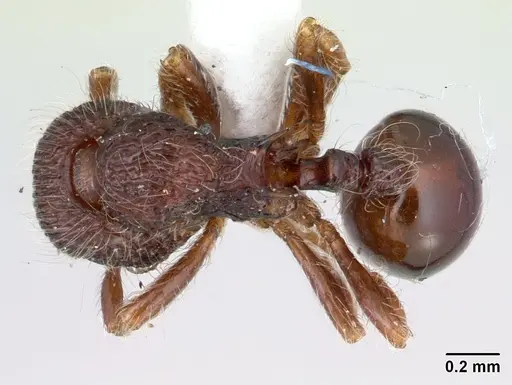
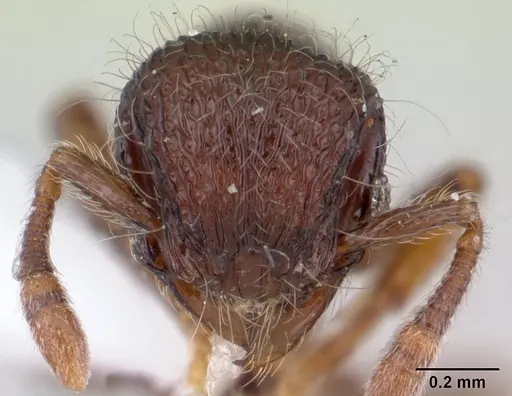
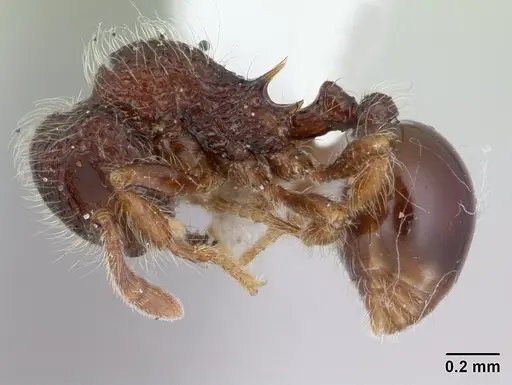
CASENT0628652
View on AntWeb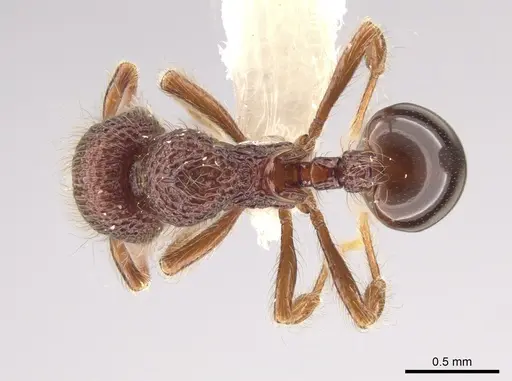
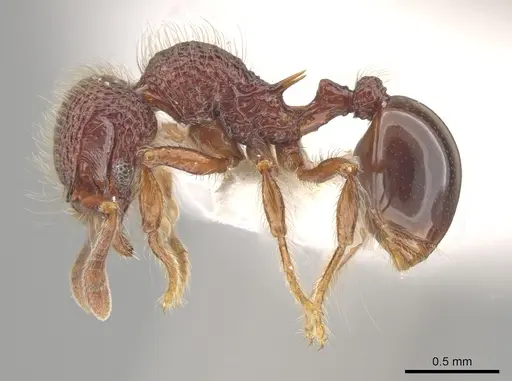
CASENT0900979
View on AntWeb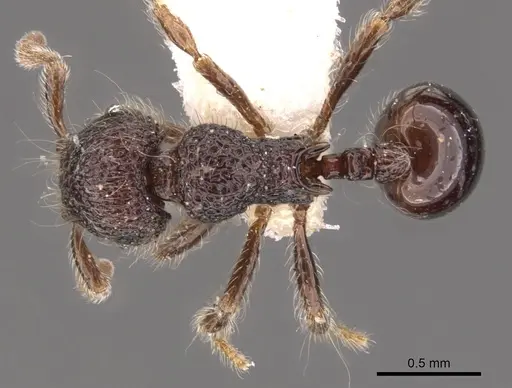
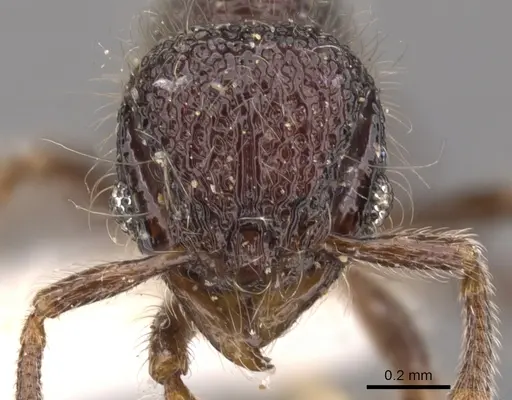
PSW7771-6
View on AntWeb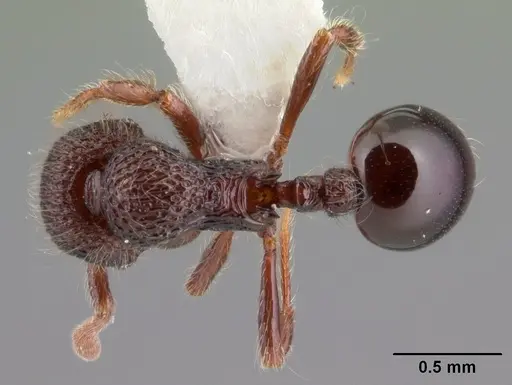
Literature
Loading...Loading products...