

Lachnomyrmex longinodus
- Scientific Name
- Lachnomyrmex longinodus
- Tribe
- Attini
- Subfamily
- Myrmicinae
- Author
- Fernández & Baena, 1997
- Distribution
- Found in 2 countries
Lachnomyrmex longinodus Overview
Lachnomyrmex longinodus is an ant species of the genus Lachnomyrmex. It is primarily documented in 2 countries , including Colombia, Ecuador. Detailed taxonomic data and occurrence records can be further explored via authoritative databases such as AntWeb or the Global Biodiversity Information Facility (GBIF).
Lachnomyrmex longinodus
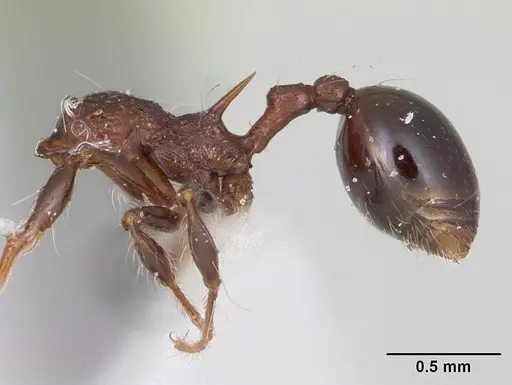
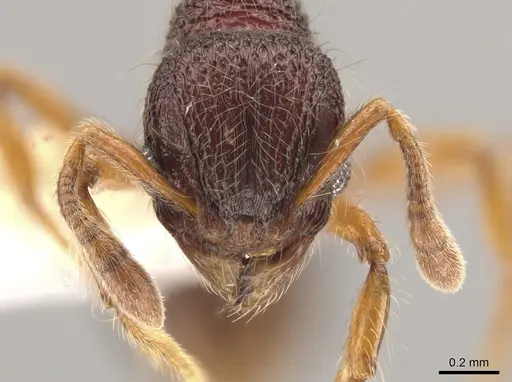
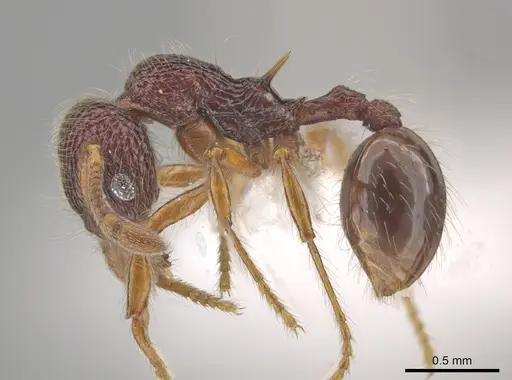
Lachnomyrmex longinodus is an extremely rare Neotropical ant species known only from two worker specimens collected in the montane wet forests of Nariño, Colombia. These small ants measure around 4.4mm total length and feature an unmistakable appearance: a slender body with fine longitudinal rugulation, extraordinarily long propodeal spines (at least twice the distance between their bases), and an elongated petiole that is roughly three times longer than wide when viewed from above [1]. Their coloration is reddish to dark brown, contrasting with an even darker gaster [1]. This species is considered one of the most distinctive within its genus due to its unique combination of morphological features, including the longest petiole relative to body width of any Lachnomyrmex species [2]. The species name literally means 'long node' in Latin, referring to this remarkably elongated petiolar structure [2].
Quick Summary
- Difficulty: Expert
- Origin & Habitat: Native only to the western slope of the Colombian Andes in Nariño department, found at 1200-1300m elevation in montane wet forests [1][3]. In their natural habitat, they live in leaf litter and rotting wood in humid, shaded forest environments.
- Colony Type: Apparently monogyne (single-queen colonies). Only known from worker caste, queen and reproductive castes have never been documented [4].
- Colony: Monogyne
- Size & Growth:
- Queen: Unknown, queen caste has never been described [1]
- Worker: 4.37-4.49 mm total length [1]
- Colony: Estimated small (under 100 workers) based on genus patterns of small colonies [4]
- Growth: Unknown, no captive breeding records exist
- Development: Unknown, no development data exists for this species. Based on typical Myrmicinae patterns from similar small litter ants, estimate 6-10 weeks at optimal temperature, but this is a rough guess. (Development timeline is entirely unstudied. Any estimate would be speculative.)
- Antkeeping:
- Temperature: Keep at moderate temperatures typical of montane tropical forests. Start around 20-24°C and observe colony activity. The natural habitat at 1200-1300m altitude suggests they prefer cooler conditions than lowland tropical ants.
- Humidity: High humidity is essential, they come from perpetually damp montane forests. Keep nest substrate consistently moist but not waterlogged. Provide a water tube and ensure the nest area maintains humidity similar to forest floor conditions (60-80% relative humidity).
- Diapause: Unknown, no seasonal data exists. The stable year-round conditions of their montane forest habitat suggest they may not require a true diapause, but a slight cooling period during 'winter' months may be beneficial.
- Nesting: In nature, colonies nest in ground, among rotten leaves, and inside fallen logs [4]. In captivity, a naturalistic setup with moist substrate (soil/peat mix) and small chambers works well. Y-tong or plaster nests with tight chambers scaled to their small size are suitable. Avoid dry, airy conditions.
- Behavior: Workers forage alone on the ground or within leaf litter and do not recruit nestmates or form pheromone trails [4]. They are likely peaceful and non-aggressive, consistent with other Lachnomyrmex species. Escape prevention should be excellent given their small size, they can easily slip through standard test tube barriers. Their slender body and long spines may help them navigate through leaf litter and tight spaces.
- Common Issues: extreme rarity makes obtaining this species nearly impossible, only two workers have ever been collected, complete lack of captive breeding records means no established care protocols exist, queen caste unknown, you cannot establish a colony without a queen, small size requires fine mesh barriers to prevent escapes, high humidity requirements can lead to mold if ventilation is poor, no development data makes it impossible to predict growth timelines
Why This Species Is Extremely Challenging
Lachnomyrmex longinodus is one of the rarest ants in the world to keep, in fact, only TWO worker specimens have ever been collected since the species was described in 1997 [2]. Both were found in the leaf litter of montane wet forests in Nariño, Colombia, and no queen, male, or colony has ever been documented [1]. This means there are no established care protocols, no captive breeding records, and no way to obtain a founding queen. Even if you somehow acquired a wild queen, nothing is known about their founding behavior, development timeline, or specific care requirements. This species is truly expert-level in the truest sense, not because it is difficult to keep, but because it is essentially impossible to obtain and maintain without any baseline knowledge. Unless you are a professional myrmecologist with access to field collection in Colombia, this species will remain out of reach.
Natural History and Habitat
This species is endemic to the western slope of the Colombian Andes in Nariño department, found at elevations between 1200-1300 meters [1][3]. The habitat is montane wet forest with high year-round humidity and moderate temperatures typical of tropical mountains at this altitude. Workers have been collected from leaf litter (serapilheira) in areas with moderate disturbance [2]. Like other Lachnomyrmex species, they likely nest in the ground, among rotting leaves, or inside fallen logs [4]. The genus as a whole is restricted to the Neotropical region, ranging from southern Mexico to northern Argentina, but L. longinodus has the most restricted range of any species in the genus [4].
Identification and Morphology
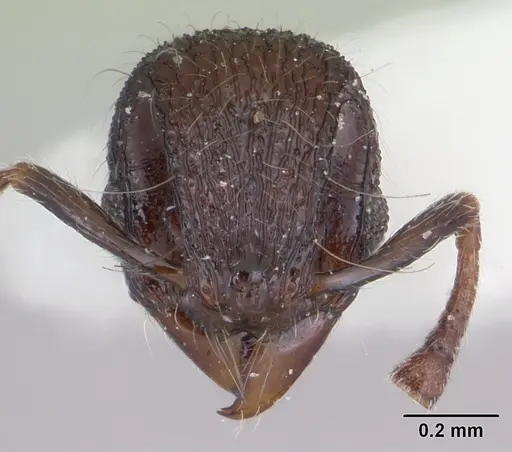
Lachnomyrmex longinodus is immediately recognizable by several unique features that set it apart from other species in the genus. The most striking is the extremely elongated petiole, which is approximately three times longer than wide when viewed from above, the longest relative to body size of any Lachnomyrmex species [1]. The propodeal spines are also exceptionally long, measuring at least twice the distance between their bases [1]. The body is slender with fine, primarily longitudinal rugulation (groove-like sculpturing) [1]. Workers measure 4.37-4.49mm in total length, making them small but not tiny [1]. The coloration is reddish to dark brown, with the gaster noticeably darker than the rest of the body [1]. Long flexible hairs sparsely cover the first gastral segment [1].
Genus-Level Behavior Patterns
While specific behavior of L. longinodus is unknown, the genus Lachnomyrmex provides some general guidance. Workers forage alone on the ground or within leaf litter and do not recruit nestmates or form pheromone trails [4]. This means they are solitary foragers rather than trail-forming species. Colonies are relatively small and apparently monogynic (single queen) [4]. Nests are found in ground, among rotten leaves, and inside fallen logs [4]. Workers have been recorded on tree trunks as well as in leaf litter [4]. The genus belongs to the tribe Stenammini and is related to Indo-Australian Lordomyrma and African Cyphoidris [4]. These behavioral patterns suggest a peaceful, non-aggressive ant that should do well in captivity if the right conditions can be determined.
Inferred Care Requirements
Since no species-specific care data exists, care recommendations must be inferred from the natural habitat and genus patterns. The montane forest origin at 1200-1300m altitude suggests moderate temperatures (roughly 20-24°C) and high humidity. Keep the nest substrate consistently moist but not waterlogged, think damp forest floor, not swamp. Provide a water tube for drinking access. Since workers forage in leaf litter, a naturalistic setup with a soil/peat substrate layer works well. The small colony size means they do not need large spaces, tight chambers scaled to their body size are appropriate. Escape prevention must be excellent given their small size, use fine mesh barriers. Feed small protein sources like fruit flies, springtails, or tiny insects. Sugar water may be accepted but is not confirmed. [4]
Frequently Asked Questions
Can I keep Lachnomyrmex longinodus in a test tube?
A test tube setup could work for a small colony, but you would need to ensure high humidity is maintained. The key issue is obtaining this species at all, only two workers have ever been collected worldwide, and no queen has ever been documented. Unless you collect them yourself in Colombia, this species is effectively unavailable to hobbyists.
How long does it take for Lachnomyrmex longinodus to develop from egg to worker?
This is completely unknown. No development data exists for this species, and no colony has ever been raised in captivity. Any timeline would be pure speculation, though based on similar small Myrmicinae, it might take 6-10 weeks at optimal temperature.
Are Lachnomyrmex longinodus good for beginners?
No. This species is not suitable for beginners or even experienced antkeepers. It is one of the rarest ants in the world with essentially no available information on captive care. There are no documented captive colonies, no described queen, and no established protocols. Additionally, the species has never been found in the antkeeping trade due to its extreme rarity in the wild.
What do Lachnomyrmex longinodus eat?
Unconfirmed for this species, but based on genus patterns, they likely accept small live prey (micro-arthropods like springtails, mites, tiny beetles) and may collect honeydew from aphids. Feed small protein sources like fruit flies, pinhead crickets, or freshly killed insects. Sugar sources may be accepted but are not confirmed.
Can I keep multiple queens together?
Unknown for this species. The genus Lachnomyrmex appears to be monogynic (single queen per colony), but the queen of L. longinodus has never been documented, so we cannot confirm whether they can be combined. Given the extreme rarity, this question is purely theoretical.
Do Lachnomyrmex longinodus need hibernation?
Unknown. The stable year-round conditions of their montane forest habitat (1200-1300m in Colombia) suggest they may not require a true diapause. However, a slight cooling period during simulated winter months might be appropriate. No seasonal data exists for this species.
How big do Lachnomyrmex longinodus colonies get?
Estimated small, likely under 100 workers based on genus patterns of small colonies [4]. The maximum colony size has never been documented because no complete colony has ever been collected.
Where can I get Lachnomyrmex longinodus?
You cannot. This species has only ever been collected twice in history, both times by professional researchers in Colombia. No queen has ever been found, and no colonies exist in captivity. The only option would be field collection in Nariño, Colombia, which requires scientific permits and expertise.
Why is Lachnomyrmex longinodus so rare?
This species has an extremely restricted distribution, it is only known from a single location in Nariño, Colombia, on the western slope of the Andes [2]. The montane wet forest habitat is limited, and the ants appear to live cryptically in leaf litter and rotting wood. Two workers collected in 1994 remain the only known specimens. This is one of the rarest ant species in the world.
References

This caresheet is licensed under CC BY-SA 4.0 .
CASENT0173875
View on AntWeb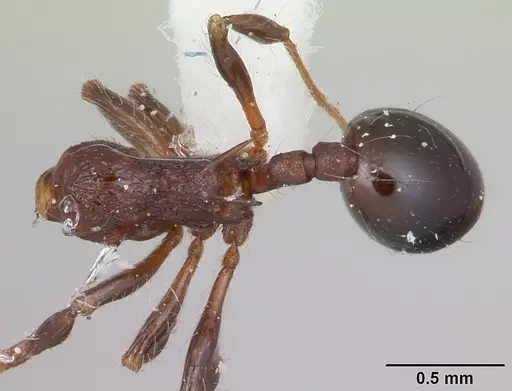
CASENT0633346
View on AntWeb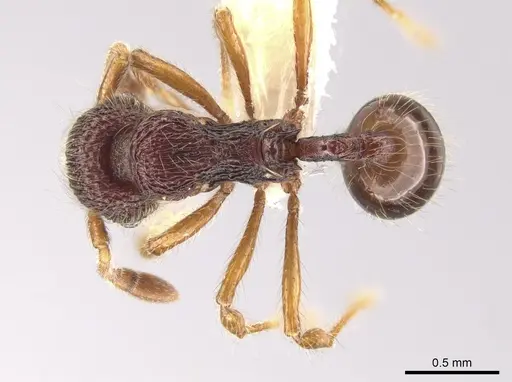
Literature
Loading...Loading products...