

Lachnomyrmex grandis
- Scientific Name
- Lachnomyrmex grandis
- Tribe
- Attini
- Subfamily
- Myrmicinae
- Author
- Fernández & Baena, 1997
- Distribution
- Found in 3 countries
Lachnomyrmex grandis Overview
Lachnomyrmex grandis is an ant species of the genus Lachnomyrmex. It is primarily documented in 3 countries , including Costa Rica, Ecuador, Guatemala. Detailed taxonomic data and occurrence records can be further explored via authoritative databases such as AntWeb or the Global Biodiversity Information Facility (GBIF).
Lachnomyrmex grandis
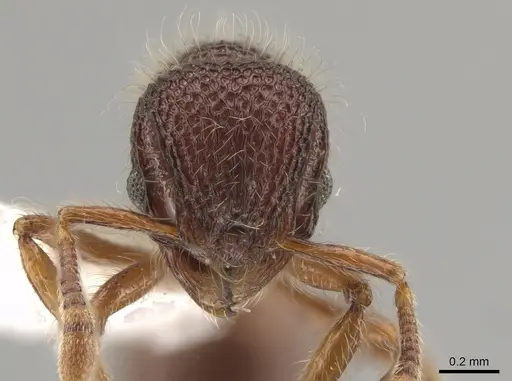
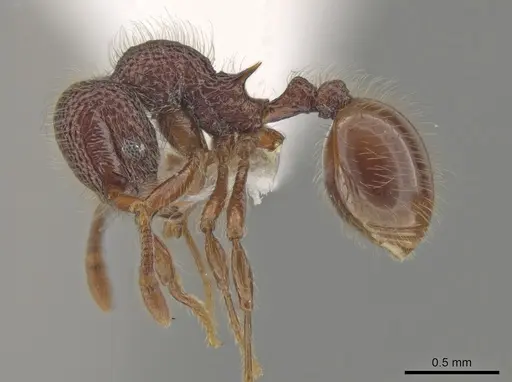
Lachnomyrmex grandis is a rare Neotropical ant and the largest species in its genus. Workers measure 4.35-4.54mm and have a distinctive appearance with a reddish-brown body covered in dense, irregular rugae (wrinkles), and most notably, extremely long hairs on the first segment of the abdomen (gaster) that can cover all or just the front portion of that segment [1]. Queens are larger at 5.43mm and slightly darker than workers [1]. This species is known only from wet forests in Costa Rica and Colombia at elevations of 200-520m, with probable occurrence in Panama [2][1]. Colonies are small and monogynous (single queen), with workers foraging alone rather than recruiting nestmates [2][3].
Quick Summary
- Difficulty: Medium
- Origin & Habitat: Wet forests in Costa Rica and Colombia at 200-520m elevation. Found in leaf litter, rotten wood, and ground microhabitats in submontane wet forests [2][3].
- Colony Type: Monogynous (single queen) with small colony sizes [2][3].
- Colony: Monogyne
- Size & Growth:
- Queen: 5.43mm [1]
- Worker: 4.35-4.54mm [2][1]
- Colony: Small colonies, exact maximum unknown but described as reduced in size [2]
- Growth: Unknown, no development data available
- Development: Unknown, no direct measurements available. Based on typical Attini patterns, expect 6-10 weeks at warm temperatures, but this is an estimate. (Development timeline has not been directly studied. Related Attini species typically develop in 6-10 weeks at optimal temperatures.)
- Antkeeping:
- Temperature: Keep warm, around 24-28°C. As a Neotropical wet forest species from low elevations, they prefer warm and humid conditions [2]. A heating cable on one side of the nest can create a gradient.
- Humidity: High humidity is essential. These ants live in wet forest leaf litter and rotting wood, keep the nest substrate consistently moist but not waterlogged. Provide a water tube and mist the outworld regularly.
- Diapause: Unlikely, as a Neotropical species from Costa Rica and Colombia, they do not require hibernation. Maintain warm conditions year-round.
- Nesting: Naturalistic setup works best. They nest in leaf litter, rotten wood, and ground microhabitats in the wild [3]. A Y-tong or plaster nest with multiple chambers mimics their natural environment. Keep nesting material humid.
- Behavior: Workers forage alone on the ground and in leaf litter, sometimes climbing vegetation. They do not recruit nestmates or form pheromone trails, each forager works independently [3]. This makes them less dramatic to watch than trail-forming species but still interesting. They are small ants with moderate escape risk, use standard barrier methods. Aggression level is low, they are not known for stinging.
- Common Issues: high humidity maintenance is critical, drying out can kill colonies quickly, small colony size means slow growth and potential founder failure, limited availability makes this a collector's species, finding a queen is difficult, foraging alone means less activity to observe compared to trail-forming ants, escape prevention needed despite modest size, they squeeze through small gaps
Nest Preferences and Housing
Lachnomyrmex grandis is a leaf-litter ant that naturally nests in rotting wood, among fallen leaves, and in soil microhabitats in wet forests [3]. In captivity, a naturalistic setup works best, a formicarium with moist soil, rotting wood pieces, and leaf litter mimics their natural environment. A Y-tong (acrylic) nest or plaster nest with multiple connected chambers also works well. The key is maintaining consistently high humidity in the nesting area while allowing some drier areas in the outworld for foraging. Use a water tube connected to the nest to maintain humidity through a moisture gradient.
Feeding and Diet
The natural diet of Lachnomyrmex grandis has not been directly studied, but the genus is within the tribe Attini (leaf-cutter ant relatives), though they are not true leaf-cutters. Workers forage alone in leaf litter, likely feeding on small invertebrates, honeydew from aphids or scale insects, and plant matter [3]. In captivity, offer a varied diet: sugar water or honey as an energy source, and protein sources like small insects (fruit flies, pinhead crickets, mealworms). Since workers forage individually, place food in the outworld where they can find it. Feed protein 2-3 times per week and keep sugar water available constantly.
Temperature and Humidity Requirements
As a Neotropical wet forest species from Costa Rica and Colombia, Lachnomyrmex grandis requires warm and humid conditions. Keep temperatures in the range of 24-28°C. A heating cable on one side of the nest creates a temperature gradient that allows the ants to self-regulate. Humidity is critical, these ants live in damp leaf litter and rotting wood in the wild [3]. Keep the nest substrate consistently moist but not waterlogged. A water tube connected to the nest helps maintain humidity. Mist the outworld regularly and consider a moist棉花 ball in the outworld. Avoid letting the nest dry out, as this will quickly kill a colony.
Colony Structure and Development
Lachnomyrmex grandis forms small, monogynous colonies with a single queen [2][3]. Colonies are described as 'reduced in size, ' suggesting maximum worker populations are modest, likely under 100 workers. Only three gynes (queens) are known from museum collections, reflecting both the rarity of this species and the difficulty of finding dealate queens [2]. The gyne was only described in 2008,showing how little we know about this species [1]. Queens measure 5.43mm and are slightly darker than workers. Development time from egg to worker is unknown, no direct measurements exist. Based on related Attini species, expect 6-10 weeks at optimal warm temperatures.
Foraging Behavior
One of the most distinctive behaviors of Lachnomyrmex grandis is their solitary foraging style. Workers forage alone on the ground and in leaf litter, sometimes climbing vegetation, but they do not recruit nestmates or form pheromone trails [3]. This is unusual among ants and makes watching them different from species like fire ants or Argentine ants that form massive foraging columns. Each worker finds food independently. This also means you won't see dramatic recruitment to protein foods, instead, individual workers will discover and process prey on their own. The long tarsal claws suggest specialization for climbing on vegetation while foraging [2].
Frequently Asked Questions
How long does it take for Lachnomyrmex grandis to produce first workers?
The exact egg-to-worker development time is unknown for this species, it has not been directly studied. Based on typical Attini (leaf-cutter ant relatives) development patterns, expect 6-10 weeks at optimal warm temperatures (around 26°C). However, this is an estimate, and actual times may vary.
Are Lachnomyrmex grandis good for beginners?
This species is rated Medium difficulty. While not the hardest ant to keep, they have specific humidity requirements and are rarely available. They are best suited for antkeepers who have successfully kept at least one other tropical species and can maintain consistent high humidity. The small colony size and slow growth require patience.
How big do Lachnomyrmex grandis colonies get?
Colonies remain small, likely under 100 workers maximum. The species is described as having 'reduced' colony size compared to related species [2]. This is not a species for antkeepers who want large, impressive colonies.
What do Lachnomyrmex grandis eat?
While not directly studied, they likely accept sugar sources (honey, sugar water) and protein (small insects like fruit flies, pinhead crickets, mealworms). Offer protein 2-3 times per week and keep sugar water available. Place food in the outworld where foragers can discover it.
Can I keep multiple Lachnomyrmex grandis queens together?
No. This species is monogynous, colonies have a single queen [2][3]. Combining unrelated queens is not recommended and would likely result in fighting. Only keep one queen per colony.
Do Lachnomyrmex grandis need hibernation?
No. As a Neotropical species from Costa Rica and Colombia, they do not require hibernation or winter cooling. Keep them warm year-round at 24-28°C.
What makes Lachnomyrmex grandis different from other ants?
Several things make this species unique: it is the largest species in the genus Lachnomyrmex [1], has extremely long hairs on the gaster (abdomen) [1], forages alone without recruiting nestmates [3], and is extremely rare in both the wild and in antkeeping. The long tarsal claws suggest specialized arboreal foraging [2].
References

This caresheet is licensed under CC BY-SA 4.0 .
CASENT0619829
View on AntWeb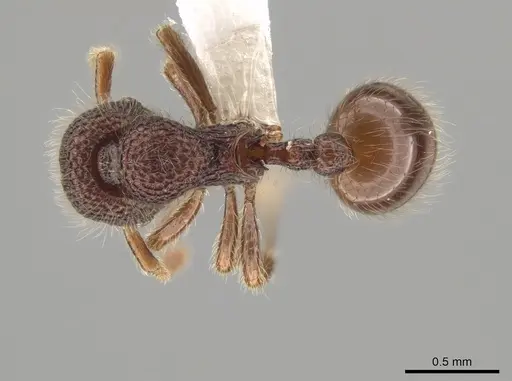
Literature
Loading...Loading products...