

Lachnomyrmex fernandezi
- Scientific Name
- Lachnomyrmex fernandezi
- Tribe
- Attini
- Subfamily
- Myrmicinae
- Author
- Feitosa & Brandão, 2008
- Distribution
- Found in 1 countries
Lachnomyrmex fernandezi Overview
Lachnomyrmex fernandezi is an ant species of the genus Lachnomyrmex. It is primarily documented in 1 countries , including Colombia. Detailed taxonomic data and occurrence records can be further explored via authoritative databases such as AntWeb or the Global Biodiversity Information Facility (GBIF).
Lachnomyrmex fernandezi
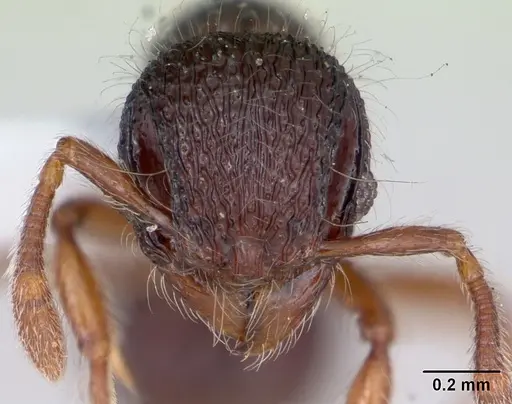
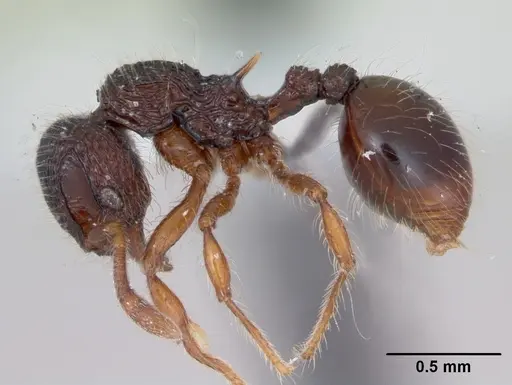
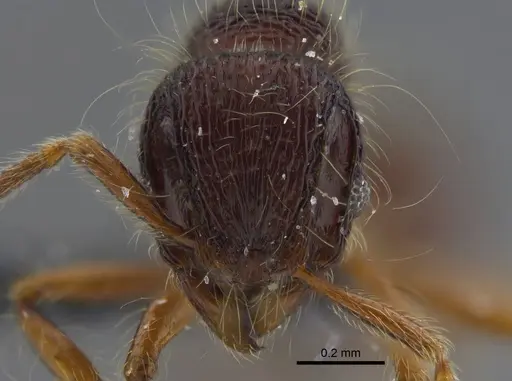
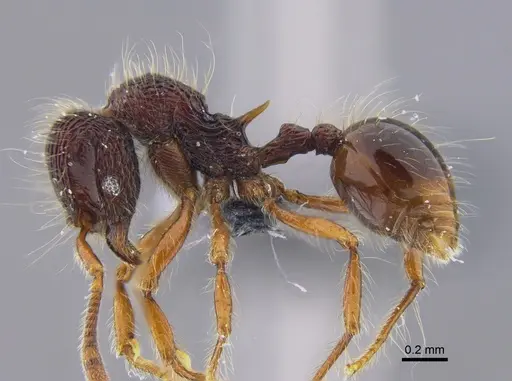
Lachnomyrmex fernandezi is a tiny Neotropical ant native to Colombia, where it lives in submontane forests at elevations between 440 and 1800 meters [1]. Workers measure just 2.84-2.99mm total length, making them one of the smaller ant species you'll encounter [1]. They have a distinctive appearance: medium to dark brown body covered in rough, wrinkle-like sculpturing, with the abdomen (gaster) appearing somewhat dull or opaque compared to other Lachnomyrmex species and covered in long, flexible hairs [1][2].
This species belongs to a genus where colonies are relatively small and appear to have a single queen [3]. Workers forage alone through leaf litter rather than forming trails or recruiting nestmates, a solitary, independent hunting style that's unusual among ants [3]. The genus Lachnomyrmex is part of the tribe Attini, which includes leafcutter ants, though this particular genus doesn't cultivate fungus like its famous relatives [3].
Quick Summary
- Difficulty: Unknown, likely Medium to Hard
- Origin & Habitat: Colombia (Santander and Tolima regions) in submontane wet forests at 440-1800m elevation [1][4]. Nests are found in the ground, among rotten leaves, and inside fallen logs [3].
- Colony Type: Small colonies with a single queen (monogynic) [3]. Colony size is not documented but related species suggest relatively small colonies.
- Colony: Monogyne
- Size & Growth:
- Queen: Unknown, not described in original description [1]
- Worker: 2.84-2.99mm total length, workers measure HL 0.66mm, HW 0.64-0.65mm [1]
- Colony: Likely under 100 workers based on genus patterns, colonies are described as relatively small [3]
- Growth: Unknown, no development data exists
- Development: Unknown, no direct measurements exist. Based on similar small Myrmicinae, estimate 6-10 weeks at optimal temperature, but this is a rough guess. (Development timeline has not been studied. This is an estimate based on genus-level patterns, not species-specific data.)
- Antkeeping:
- Temperature: Likely prefers moderate temperatures typical of Colombian highlands, aim for roughly 18-22°C. No direct data exists, but their elevation range suggests they tolerate cooler conditions than lowland tropical ants.
- Humidity: High humidity required, these are leaf litter ants from wet forests. Keep nest substrate consistently moist but not waterlogged. Provide a gradient from damp to slightly drier areas.
- Diapause: Unknown, no research on seasonal behavior. Colombian highlands may have mild seasonal variation. Consider a cool period (15-18°C) during winter months if the colony shows reduced activity.
- Nesting: Natural nesting is in soil, rotting wood, and leaf litter [3]. In captivity, a small naturalistic setup with moist substrate (soil or coco peat) works well. Y-tong or plaster nests with small chambers scaled to their tiny size are appropriate. Keep them in a small setup since colonies remain small.
- Behavior: Workers are solitary foragers, they hunt alone through leaf litter rather than recruiting nestmates to food sources [3]. They don't form pheromone trails, which means you'll need to spot-check multiple areas for food. They can be found on the ground and on tree trunks [3]. Escape risk is moderate due to their small size, use fine mesh and tight-fitting barriers. Aggression level is unknown but likely low given their tiny size and solitary foraging. They are not known to sting and present no danger to keepers.
- Common Issues: no documented care history, this is one of the least-studied ant species in the hobby, so expect a learning curve, colony size remains small, don't expect large colonies like Lasius or Camponotus, this is a tiny leaf litter species, humidity management is critical, being from wet forests, drying out is a major risk, solitary foraging means food can be missed, check multiple spots when offering prey, escape prevention matters, their tiny size means they can slip through standard barriers
Nest Preferences and Housing
In the wild, Lachnomyrmex fernandezi nests in soil, among rotten leaves, and inside fallen logs [3]. This is a leaf litter specialist, so your setup should mimic that environment. A naturalistic terrarium with a layer of moist leaf litter, small pieces of rotting wood, and soil works well. Keep the setup small, these ants never form large colonies, so a standard test tube setup may work for founding colonies, but transfer to a small naturalistic formicarium once the colony reaches 15-20 workers.
The key is maintaining high humidity while allowing some ventilation. Use a substrate that holds moisture well (coco peat, potting soil, or a mix) and keep it consistently damp but never waterlogged. A small water reservoir connected to the nest area helps maintain humidity. Since workers forage in leaf litter, include some decaying leaves in the outworld for them to explore.
Feeding and Diet
The genus Lachnomyrmex is part of the Attini tribe, which typically includes fungus-growing ants, but Lachnomyrmex itself is not known to cultivate fungus [3]. Based on related genera, these ants are likely omnivorous predators that hunt small invertebrates in leaf litter. Offer small live prey like springtails, booklice, or fruit flies. They may also accept honey or sugar water, though this is unconfirmed.
Because workers forage alone without recruiting nestmates [3], you'll need to place food in multiple locations and check carefully, a single worker might drag a prey item somewhere hidden, making it easy to miss feedings. Feed small amounts of protein 2-3 times per week and keep a sugar source available. Remove uneaten prey after 24-48 hours to prevent mold.
Temperature and Seasonal Care
This species comes from Colombian submontane forests at 440-1800m elevation [1], which means they're adapted to moderate temperatures rather than extreme heat. Aim for a temperature range of 18-22°C, cooler than typical tropical ants prefer. At higher elevations, temperatures can drop significantly at night, so a mild temperature drop during evening hours is likely natural and probably beneficial.
No research exists on diapause or winter behavior for this species. Since they're from a region with relatively mild seasons (compared to temperate zones), a strict hibernation may not be necessary. However, if your colony becomes less active during winter months, reducing temperature to around 15-18°C for 2-3 months may be appropriate. Watch your colony's behavior, if they remain active year-round, maintain consistent conditions.
Behavior and Colony Dynamics
One of the most interesting aspects of Lachnomyrmex fernandezi is their foraging behavior, workers hunt alone rather than recruiting nestmates [3]. This is unusual among ants and means you won't see the dramatic trail-forming behavior common in many species. Workers search independently through leaf litter and on tree trunks, hunting small invertebrates.
Colonies appear to have a single queen (monogynic) and remain relatively small [3]. Don't expect rapid population growth, these are tiny ants with naturally small colonies. Queen reproduction rate is unknown but likely modest. Workers are long-lived compared to some species, which helps compensate for small colony sizes. The colony structure is simple: one queen, workers, and brood. No special caste system like soldiers or major workers has been documented.
Frequently Asked Questions
How long does it take for Lachnomyrmex fernandezi to produce first workers?
The egg-to-worker timeline is completely unstudied for this species. Based on similar small Myrmicinae ants, expect roughly 6-10 weeks from egg to first worker at optimal temperature (around 20°C). However, this is a rough estimate, actual development time could be faster or slower.
Can I keep multiple Lachnomyrmex fernandezi queens together?
No, this species appears to be monogynic (single queen per colony) [3]. Multiple queens would likely fight. If you capture a queen, house her alone in a test tube until workers emerge.
What do Lachnomyrmex fernandezi ants eat?
Based on genus behavior, they likely hunt small invertebrates like springtails, booklice, and fruit flies [3]. They may accept sugar sources (honey, sugar water) but this is unconfirmed. Offer small live prey as the primary food and sugar water as an occasional supplement.
Are Lachnomyrmex fernandezi good for beginners?
This species is not recommended for beginners. Almost no captive care information exists, everything about their requirements (temperature, humidity, diet preferences, development) is either unknown or inferred from genus-level patterns. They're best suited for experienced antkeepers who enjoy working with poorly-studied species.
How big do Lachnomyrmex fernandezi colonies get?
Colony size is not documented, but the genus is described as having 'relatively small' colonies [3]. Based on this, expect a maximum of perhaps 50-100 workers at maturity. These will never be large, impressive colonies, they're tiny leaf litter specialists.
What temperature should I keep Lachnomyrmex fernandezi at?
Aim for 18-22°C based on their Colombian highland habitat [1]. This is cooler than most tropical ants prefer. No research exists on their exact temperature requirements, so start in this range and adjust based on colony activity.
Do Lachnomyrmex fernandezi need hibernation?
Diapause requirements are completely unknown. Their native range in Colombia has mild seasons, so a strict hibernation may not be necessary. However, a cool period (15-18°C) during winter months may be appropriate if the colony shows reduced activity.
When should I move Lachnomyrmex fernandezi to a formicarium?
Keep them in a small setup from the start. A test tube works for founding, but transfer to a small naturalistic setup (like a small terracotta pot or tiny formicarium) once the colony reaches 15-20 workers. They need space for leaf litter foraging but won't use large areas.
Why are my Lachnomyrmex fernandezi dying?
Without documented care history, diagnosing problems is difficult. The most likely causes are: drying out (they need high humidity), temperature stress (too hot or too cold), or starvation (they need small live prey). Check your humidity levels first, being leaf litter ants, they desiccate quickly in dry conditions.
References

This caresheet is licensed under CC BY-SA 4.0 .
CASENT0173880
View on AntWeb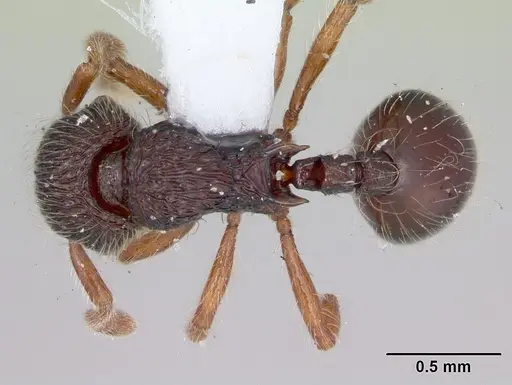
IAVH-E-263217
View on AntWeb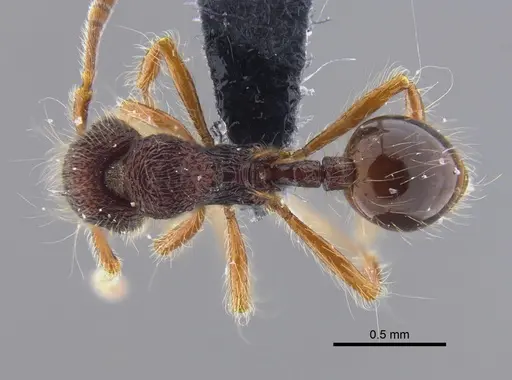
Literature
Loading...Loading products...