

Lachnomyrmex amazonicus
- Scientific Name
- Lachnomyrmex amazonicus
- Tribe
- Attini
- Subfamily
- Myrmicinae
- Author
- Feitosa & Brandão, 2008
- Distribution
- Found in 2 countries
Lachnomyrmex amazonicus Overview
Lachnomyrmex amazonicus is an ant species of the genus Lachnomyrmex. It is primarily documented in 2 countries , including Brazil, French Guiana. Detailed taxonomic data and occurrence records can be further explored via authoritative databases such as AntWeb or the Global Biodiversity Information Facility (GBIF).
Lachnomyrmex amazonicus
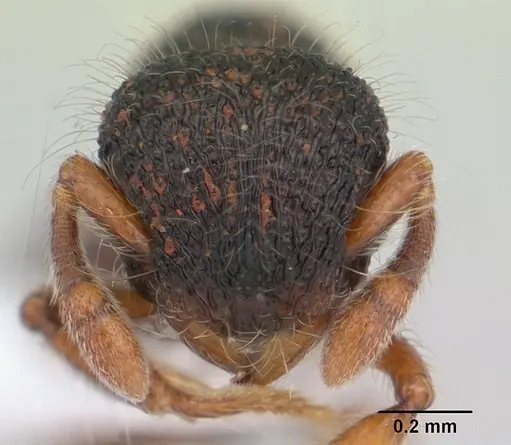
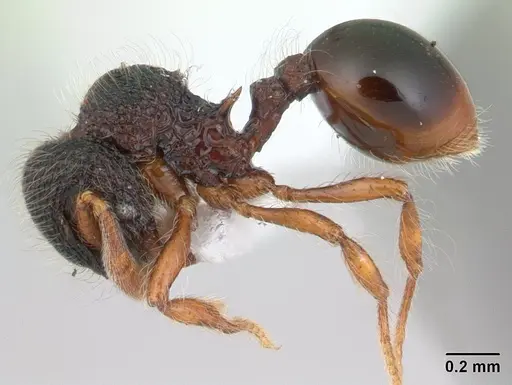
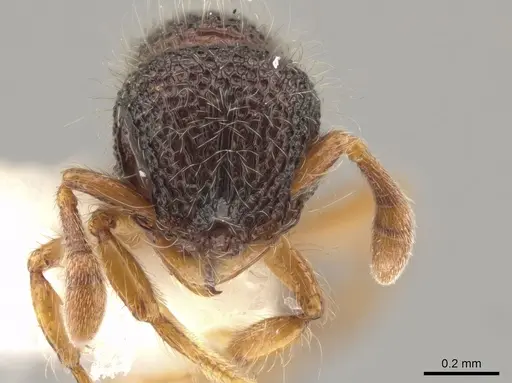
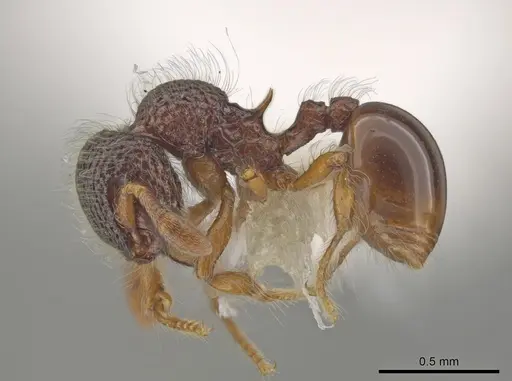
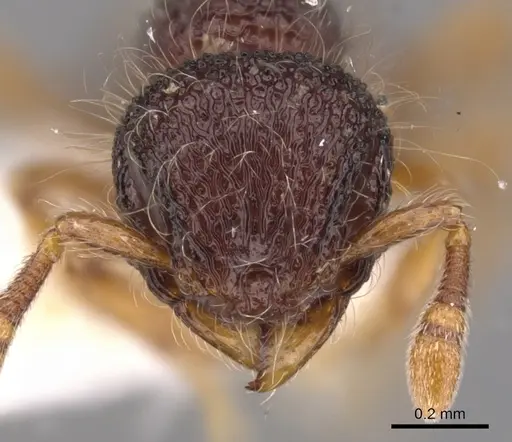
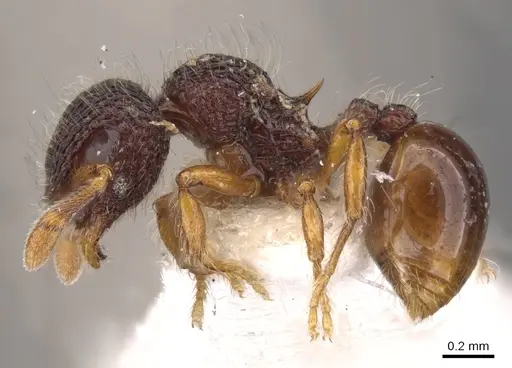
Lachnomyrmex amazonicus is a tiny myrmicine ant native to the Amazon Basin in Brazil and French Guiana. Workers measure just 2.3-2.8mm in total length, making them one of the smaller ant species you'll encounter [1]. They have a distinctive appearance with a strongly convex promesonotum that rises well above the propodeum, irregular body sculpturing, and a dark reddish-brown to blackish coloration with lighter waist segments and gaster [1]. This species is unusual within its genus because it inhabits lowland rainforests at 60-200m elevation, while most Lachnomyrmex species prefer submontane localities [1]. Colonies are relatively small and appear to have a single queen, with workers foraging solitarily through leaf litter without recruiting nestmates [2].
Quick Summary
- Difficulty: Expert
- Origin & Habitat: Amazonian Brazil and French Guiana, lowland rainforest at 60-200m elevation [1]. Nests are found in the ground, among rotten leaves, and inside fallen logs [2].
- Colony Type: Apparently monogyne (single queen colonies) with small colony sizes [2]. This is based on limited field observations.
- Colony: Monogyne
- Size & Growth:
- Queen: Not specifically measured in the original description, estimated slightly larger than workers at ~3mm based on typical genus patterns
- Worker: 2.3-2.8mm total length (HL 0.52-0.66mm, WL 0.57-0.74mm) [1]
- Colony: Relatively small colonies, exact maximum unknown but likely under 100 workers based on genus patterns [2]
- Growth: Unknown, no development data available for this species
- Development: Unconfirmed, no direct development studies exist for this species. Estimate 6-10 weeks based on related Myrmicinae in the Attini tribe. (Development timeline is unconfirmed. Related leaf-litter ants in the Attini tribe typically take 6-10 weeks from egg to worker at tropical temperatures.)
- Antkeeping:
- Temperature: Keep at tropical room temperature, roughly 24-28°C. This is inferred from their Amazonian lowland habitat, they come from warm, humid rainforest environments.
- Humidity: High humidity is essential, these ants live in leaf litter in Amazonian rainforests. Keep the nest substrate consistently moist but not waterlogged. Provide a gradient from damp to slightly drier areas.
- Diapause: No, as a tropical species from lowland Amazonia, they do not require hibernation or winter rest. Keep them at stable tropical temperatures year-round.
- Nesting: In captivity, a small test tube setup or mini acrylic nest works well. They naturally nest in soil, rotting wood, and leaf litter [2]. Use moist substrate that holds humidity well, with small chambers scaled to their tiny size.
- Behavior: Workers forage alone on the ground or within leaf litter, and have been recorded on tree trunks. Notably, they do not recruit nestmates or form pheromone trails, each forager works independently [2]. They are likely shy and non-aggressive given their small size and solitary foraging nature. Escape prevention is critical due to their very small size, they can squeeze through tiny gaps. Use fine mesh and tight-fitting barriers.
- Common Issues: very small size means escapes are likely without fine mesh barriers, limited availability in the antkeeping hobby, rarely collected or sold, no established captive breeding protocols exist for this species, wild-caught colonies may not adapt well to captive conditions, slow colony growth makes them challenging for impatient keepers
Nest Preferences and Housing
Lachnomyrmex amazonicus naturally nests in the ground, among rotten leaves, and inside fallen logs in Amazonian rainforests [2]. In captivity, a small test tube setup works well for founding colonies, while established colonies can be moved to mini acrylic nests or plaster nests with small chambers scaled to their tiny size. The key is maintaining high humidity while ensuring good ventilation to prevent mold. Use a substrate that holds moisture well, these ants come from consistently damp leaf litter environments. Because they are so small, the nest chambers should be tight and narrow, avoiding large open spaces where they may feel exposed.
Feeding and Diet
Feeding behavior is not directly documented for this species, but Lachnomyrmex belongs to the tribe Attini (leaf-cutter ants and their relatives), though this genus is not a leaf-cutter. Based on related leaf-litter Myrmicinae, they likely forage for small arthropods, honeydew, and nectar. In captivity, offer small live prey like fruit flies, pinhead crickets, or micro-arthropods. Sugar water or honey can be offered occasionally, though acceptance is uncertain. Feed small amounts every few days and remove uneaten prey to prevent mold. Given their small size and solitary foraging, target prey should be appropriately sized, much smaller than what you'd feed to larger ants like Camponotus. [2]
Temperature and Care
As a lowland Amazonian species from 60-200m elevation, Lachnomyrmex amazonicus requires warm, stable tropical conditions. Keep the nest area at roughly 24-28°C, which is typical room temperature in many homes. Avoid temperature drops below 22°C. A heating cable on one side of the nest can create a gentle gradient if your room runs cool. Unlike temperate species, they do not require hibernation or any cooling period, maintain tropical temperatures year-round. Temperature stability is important, avoid placing the nest near air conditioning vents or drafty windows. [1]
Behavior and Temperament
This species has a unique foraging behavior, workers forage alone rather than recruiting nestmates or forming pheromone trails [2]. This is unusual among ants and means you won't see the dramatic trail-forming behavior seen in many Myrmicinae. Workers are likely shy and non-aggressive, focusing on solitary hunting and foraging through leaf litter. They are probably more reclusive than many common ant species, preferring to stay hidden in the nest and foraging substrate rather than out in the open. Their small size and reclusive nature make them more of a 'watch from afar' species rather than one you'll observe actively interacting with the world.
Colony Structure and Development
Field observations suggest Lachnomyrmex amazonicus forms relatively small colonies with a single queen (monogyne) [2]. The exact colony size at maturity is unknown, but based on related species and their reclusive leaf-litter lifestyle, colonies likely max out at under 100 workers. Queens are slightly larger than workers but still tiny, only a few millimeters. There is no data on development times, egg-to-worker timeline, or how quickly colonies grow. This is a species where patience is essential, as slow growth is expected and documented observations are minimal. Starting with a colony of at least a few workers will give you the best chance of success.
Escape Prevention
Because workers are only about 2.3-2.8mm in total length, escape prevention is absolutely critical. These ants can squeeze through the tiniest gaps, standard test tube cotton barriers may not be sufficient. Use fluon (ant barrier) on the edges of any outworld, and ensure all connections are tight. If using a formicarium, check that all seams and gaps are smaller than the ants themselves. Fine mesh is essential for any ventilation holes. The smaller the ant, the more rigorous the escape prevention must be, this is not a species where you can be casual about containment. [1]
Frequently Asked Questions
How long does it take for Lachnomyrmex amazonicus to produce first workers?
The egg-to-worker timeline is unconfirmed for this species, no direct development studies exist. Based on related Attini tribe members, expect roughly 6-10 weeks from egg to first worker at tropical temperatures (24-28°C). However, this is an estimate and actual times may vary.
Can I keep multiple Lachnomyrmex amazonicus queens together?
Field observations suggest this species is monogyne (single queen colonies) [2]. Combining unrelated queens has not been documented and is not recommended. If you acquire multiple foundress queens, keep them in separate setups until you determine their status.
What do Lachnomyrmex amazonicus eat?
While not directly studied, they likely accept small live prey (fruit flies, micro-arthropods), and may occasionally drink sugar water or honey. Based on related leaf-litter ants, protein-rich prey should be their primary food source. Offer small prey items appropriately sized for their tiny workers.
Are Lachnomyrmex amazonicus good for beginners?
No, this is an expert-level species. They are rarely available in the antkeeping hobby, have no established captive breeding protocols, require high humidity and stable tropical temperatures, and their small size makes them prone to escaping. They are best suited for experienced antkeepers who can provide specialized care.
Do Lachnomyrmex amazonicus need hibernation?
No, as a tropical lowland Amazonian species, they do not require hibernation. Keep them at stable tropical temperatures (24-28°C) year-round. They have no diapause requirement and may suffer if temperatures drop significantly.
How big do Lachnomyrmex amazonicus colonies get?
Colonies remain relatively small. Based on field observations and genus patterns, colonies likely reach only a few dozen to perhaps 100 workers at maximum [2]. They are not a species that produces massive colonies.
When should I move Lachnomyrmex amazonicus to a formicarium?
Wait until the colony has at least 20-30 workers and is actively using the test tube space before moving to a formicarium. Given their small colony sizes, this may take over a year. Use a small formicarium with appropriately sized chambers, avoid large, open spaces.
Why are my Lachnomyrmex amazonicus dying?
Common causes include: temperature too low (below 22°C), humidity too low or too high (mold is a major risk), escape through tiny gaps, stress from too much disturbance, or poor prey acceptance. Ensure stable tropical conditions and minimal interference. Wild-caught colonies may also struggle to adapt to captive conditions.
References

This caresheet is licensed under CC BY-SA 4.0 .
CASENT0173882
View on AntWeb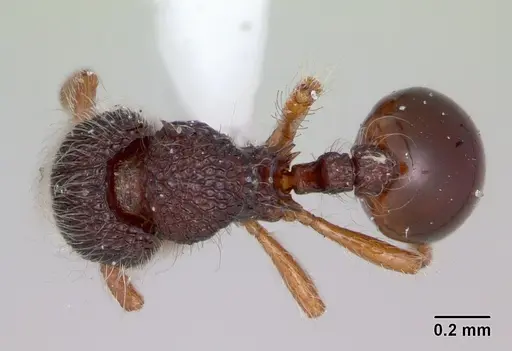
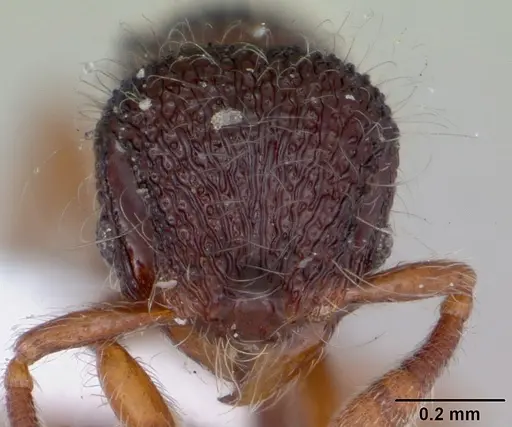
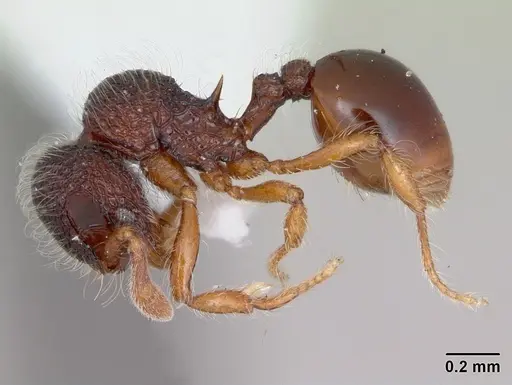
CASENT0178855
View on AntWeb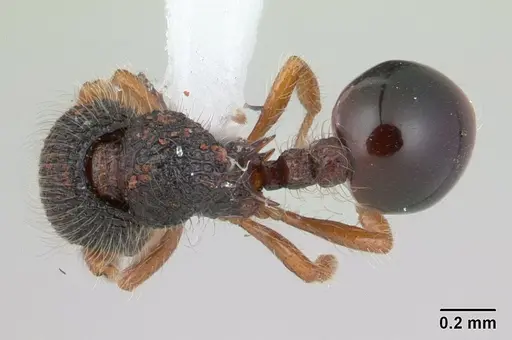
CASENT0646152
View on AntWeb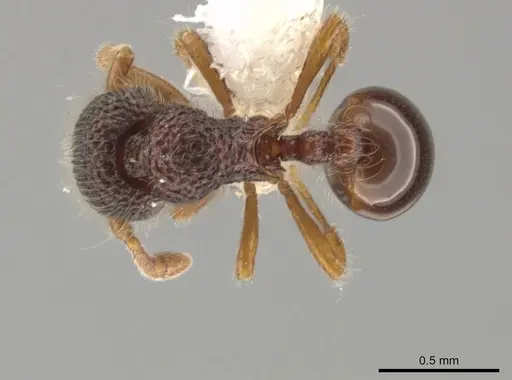
CASENT0900978
View on AntWeb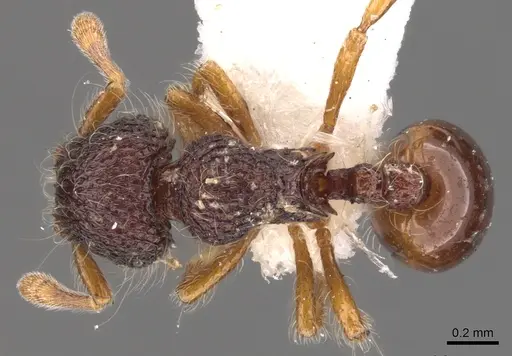
Literature
Loading...Loading products...