

Labidus truncatidens
- Scientific Name
- Labidus truncatidens
- Subfamily
- Dorylinae
- Author
- Santschi, 1920
- Distribution
- Found in 1 countries
Labidus truncatidens Overview
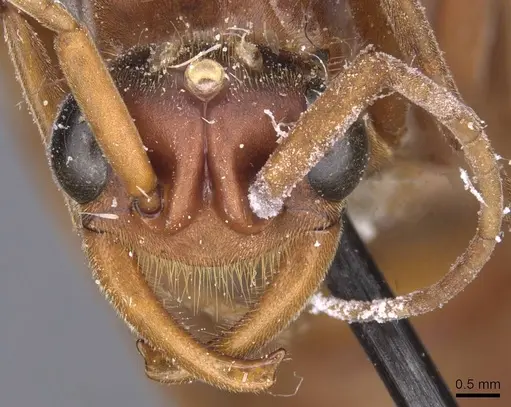
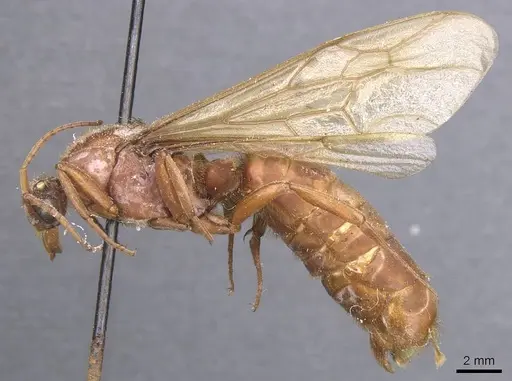
Labidus truncatidens is an ant species of the genus Labidus. It is primarily documented in 1 countries , including French Guiana. Detailed taxonomic data and occurrence records can be further explored via authoritative databases such as AntWeb or the Global Biodiversity Information Facility (GBIF).
Labidus truncatidens
Labidus truncatidens is a rare army ant species described from specimens collected in the Maroni region of French Guiana [1]. The genus Labidus belongs to the army ant tribe Ecitonini and is known for its predatory raiding behavior, though this particular species remains poorly studied. Army ants in this genus are characterized by their nomadic lifestyle, forming temporary bivouacs rather than permanent nests, and their specialized hunting raids on other ant colonies. The species was originally described under the name Labidus truncatidens before being reclassified to Labidus. Given the limited scientific data available, much of what is known about this species comes from general patterns observed in related army ants rather than direct observation of this specific species.
Quick Summary
- Difficulty: Expert
- Origin & Habitat: The species is known only from the Maroni region in French Guiana (Guyane), a tropical rainforest area in northern South America [1]. Army ants in this genus typically inhabit humid forest environments where they can conduct raiding expeditions.
- Colony Type: Colony structure is unconfirmed for this species. Related Labidus species are typically polygyne (multiple queens) with colony sizes reaching several thousand workers, but this has not been documented for L. truncatidens.
- Size & Growth:
- Queen: Unknown, no measurements available for this species
- Worker: Unknown, no measurements available for this species
- Colony: Unknown, no colony data exists
- Growth: Unknown
- Development: Unknown, no development data exists for this species (Development timelines for related army ants suggest several months, but this is not confirmed for L. truncatidens)
- Antkeeping:
- Temperature: Likely requires warm, humid conditions similar to other tropical army ants. Based on related species from similar habitats, aim for 24-28°C with high humidity. This is an estimate based on genus-level patterns.
- Humidity: Likely requires high humidity (70-90%) typical of tropical forest floor species. Keep the nest area consistently moist but not waterlogged. This is inferred from genus-level habitat preferences.
- Diapause: Unknown, no seasonal data exists for this species. Tropical army ants may have reduced activity periods rather than true hibernation.
- Nesting: Natural nesting behavior is unconfirmed. Related Labidus species form temporary bivouacs (temporary nests made of living workers hooked together) rather than permanent nests. Captive housing would require specialized setups allowing for colony movement.
- Behavior: Behavior is unconfirmed for this species. Based on related army ants, they are likely aggressive predators that conduct coordinated raids on other ant colonies to capture brood as food. Army ants are typically highly active and nocturnal. Escape prevention is critical given their small size and active foraging behavior. The genus is known for its legionary raiding behavior, but specific traits of L. truncatidens have not been documented.
- Common Issues: this species has never been documented in captivity, no established care protocols exist, extremely limited scientific data makes reliable care recommendations impossible, related army ants are notoriously difficult to keep long-term due to their nomadic nature and specialized dietary needs, no information on whether this species accepts captive food sources or requires live ant brood, colony establishment is uncertain, only known from type specimens collected decades ago
Species Status and Availability
Labidus truncatidens is one of the most poorly documented ant species in the hobby. It is known only from type specimens collected in the Maroni region of French Guiana in the early 20th century [1]. The species has not been observed in the wild since its original description, and there are no documented captive colonies. This makes it essentially unavailable to antkeepers and unsuitable for captive husbandry due to the complete lack of biological and ecological data. Related Labidus species are occasionally collected for scientific study or specialized ant collections, but L. truncatidens remains known only from museum specimens.
Why This Species Is Not Recommended for Keepers
This species should not be attempted by any antkeeper regardless of experience level. The complete absence of documented captive care information means no established protocols exist for housing, feeding, or breeding this species. Army ants in general require highly specialized conditions: they need to form temporary bivouacs, conduct regular hunting raids, and consume large quantities of ant brood from other colonies. Replicating these conditions in captivity is exceptionally difficult even for the most experienced keepers, and doing so for an entirely unstudied species would be impossible. Additionally, the species may no longer exist in viable populations or may represent a rare or extinct taxon known only from historical specimens.
What We Know About Related Species
While L. truncatidens specifically remains unstudied, the genus Labidus provides general context. These are army ants (subfamily Dorylinae) known for their nomadic lifestyle and predatory raids. Colonies can contain thousands of workers and multiple queens. They do not build permanent nests but instead form living bivouacs from interlocking workers. Their primary food source is the brood of other ant species, which they capture during coordinated raids. This specialized predatory lifestyle makes them extremely difficult to keep in captivity, as they require constant access to prey ant colonies. Related species are found throughout Central and South American tropical forests.
Frequently Asked Questions
Can I keep Labidus truncatidens as a pet ant?
No. This species is not available to antkeepers and has never been documented in captivity. It is known only from historical museum specimens collected decades ago in French Guiana.
Where can I find Labidus truncatidens for sale?
This species is not available in the antkeeping hobby. It is extremely rare in scientific collections and has not been observed in the wild since its original description.
What do Labidus truncatidens ants eat?
Unknown for this specific species. Related army ants in the genus Labidus are predatory and raid other ant colonies to capture brood, but this has not been confirmed for L. truncatidens.
How big do Labidus truncatidens colonies get?
Unknown. Colony size has not been documented for this species. Related Labidus species can form colonies with thousands of workers, but this may not apply to L. truncatidens.
What temperature and humidity do Labidus truncatidens need?
Unknown. Based on the species being from tropical French Guiana, they likely require warm (24-28°C) and humid conditions, but this is an estimate based on genus-level patterns, not documented requirements for this species.
How long does it take for Labidus truncatidens to develop from egg to worker?
Unknown. No development data exists for this species. Related army ants have development periods of several months, but this is not confirmed for L. truncatidens.
Is Labidus truncatidens good for beginners?
No. This species is not suitable for any keeper due to the complete lack of captive care information. Even experienced army ant keepers would not attempt this species.
Do Labidus truncatidens need hibernation?
Unknown. No seasonal data exists for this species. As a tropical species from French Guiana, they likely do not require true hibernation but may have reduced activity periods.
Can I catch a Labidus truncatidens queen from the wild?
Extremely unlikely. The species has not been documented in the wild since its original collection in the early 20th century and may be extremely rare, geographically restricted, or potentially extinct.
References

This caresheet is licensed under CC BY-SA 4.0 .
CASENT0911394
View on AntWeb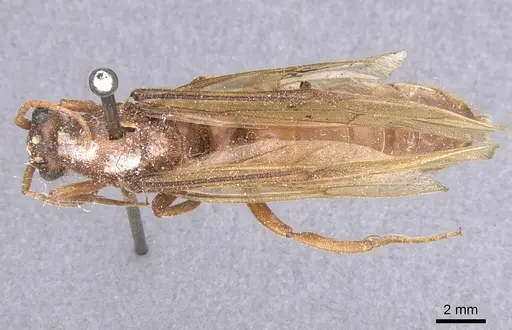
Literature
Loading...Loading products...