

Kartidris ashima
- Scientific Name
- Kartidris ashima
- Tribe
- Crematogastrini
- Subfamily
- Myrmicinae
- Author
- Xu & Zheng, 1995
- Distribution
- Found in 1 countries
Kartidris ashima Overview
Kartidris ashima is an ant species of the genus Kartidris. It is primarily documented in 1 countries , including China. Detailed taxonomic data and occurrence records can be further explored via authoritative databases such as AntWeb or the Global Biodiversity Information Facility (GBIF).
Kartidris ashima
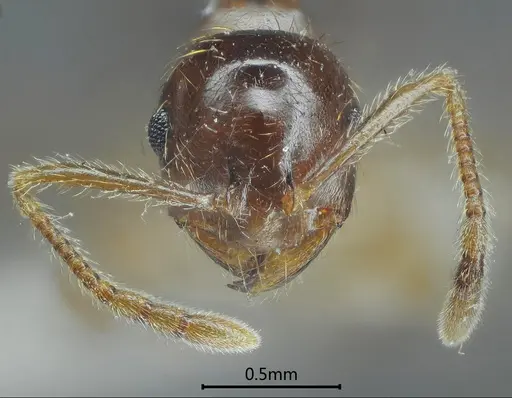
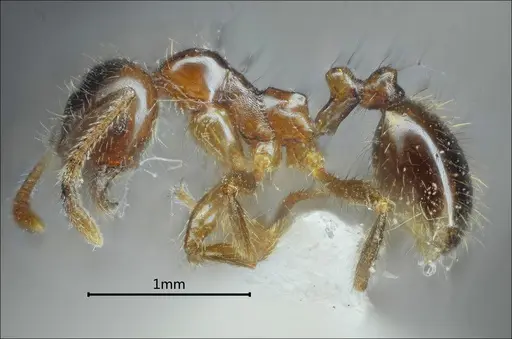
Kartidris ashima is a small to medium-sized myrmicine ant described from Yunnan Province, China. Workers measure approximately 3-4mm with a dark brown to black coloration. The genus Kartidris is closely related to Crematogaster and belongs to the tribe Crematogastrini within Myrmicinae. This species was described in 1995 from specimens collected at an elevation of 1820m in Anning County, Yunnan. The species is notable for being a habitat specialist restricted to primary forest ecosystems, it has not been found in secondary forest or rubber plantations [1]. This makes it one of the more specialized ant species in the region, indicating specific ecological requirements that may affect captive care.
Quick Summary
- Difficulty: Unknown, likely Expert
- Origin & Habitat: Yunnan Province, China. Found in primary forest at 1820m elevation in Anning County (24°56'N,102°26'E). A habitat specialist restricted to primary forest ecosystems [1].
- Colony Type: Unconfirmed. Only worker and queen castes have been described. Colony structure (single-queen vs multi-queen) has not been documented.
- Size & Growth:
- Queen: Approximately 5-6mm (estimated from related Crematogaster species)
- Worker: Approximately 3-4mm (from type description)
- Colony: Unknown, no colony size data available
- Growth: Unknown, no development data available
- Development: Unknown, no direct measurements. Based on related Crematogaster species, estimate 6-8 weeks at optimal temperature. (Development timeline has not been directly studied. Estimates based on genus-level patterns.)
- Antkeeping:
- Temperature: Likely prefers moderate temperatures. Based on Yunnan location (subtropical highland), suggest 18-24°C range. Start in the mid-20s°C and observe colony activity.
- Humidity: Based on primary forest habitat, likely requires higher humidity (60-80%). Keep nest substrate consistently moist but not waterlogged.
- Diapause: Unknown, no data on overwintering requirements. Yunnan experiences cool winters, so a hibernation period is likely beneficial.
- Nesting: No specific nesting data available. Based on primary forest habitat, likely prefers humid nest conditions. Y-tong or plaster nests with good moisture retention would be appropriate starting points.
- Behavior: Behavior is poorly documented. As a primary forest specialist, likely prefers stable, humid conditions with minimal disturbance. Escape risk assessment is unknown but workers at 3-4mm are small enough to require standard escape prevention measures.
- Common Issues: Very limited species-specific care information exists, much is inference from related species, Habitat specialist requirements may be difficult to replicate in captivity, Growth and development timelines are unknown, making colony management challenging, Wild-caught colonies may have specific dietary or ecological needs not yet documented, This species may be sensitive to environmental changes and require stable conditions
Species Overview and Distribution
Kartidris ashima is a rare myrmicine ant endemic to Yunnan Province, China. The species was described in 1995 by Xu and Zheng from specimens collected in Anning County at approximately 1820m elevation. The type series includes the holotype worker, seven paratype workers, and one paratype queen. The distribution appears limited to this region of southwestern China. What makes this species particularly interesting from an ecological perspective is its extreme habitat specialization, it has only been found in primary forest and has not been recorded in secondary forest or rubber plantation habitats [1]. This specialization suggests specific microclimate and environmental requirements that may be challenging to replicate in captivity.
Identification and Morphology
Workers of Kartidris ashima measure approximately 3-4mm in length. The original description includes figures 6,8,and 9 in Xu & Zheng 1995. The genus Kartidris is characterized by certain morphological features that distinguish it from related genera in the Crematogastrini tribe. Queens are larger than workers (estimated 5-6mm based on related species). Only worker and queen castes have been described, males have not been documented in the type material or subsequent literature. The dark coloration typical of the genus may help with identification in captivity.
Natural History and Ecology
The ecological requirements of Kartidris ashima remain poorly studied. As a primary forest specialist from Yunnan, this species likely evolved in stable, humid forest floor environments with consistent temperature and moisture. The elevation of 1820m suggests it experiences subtropical highland conditions with seasonal temperature variation. The complete absence of records from secondary forest or rubber plantations indicates this ant cannot adapt to disturbed habitats or human-modified landscapes [1]. This level of habitat specialization is relatively rare among ants and suggests the species may have specific dietary, moisture, or nesting requirements that could be difficult to meet in captivity.
Housing and Nesting
Since specific nesting data is unavailable, housing recommendations must be based on the species' apparent ecological preferences. A primary forest specialist from a humid, subtropical highland environment would likely thrive in a nest that maintains consistent moisture. Y-tong (acrylic) nests or plaster nests with water reservoirs work well for species requiring humidity control. The nest should be kept in an area with stable temperatures away from direct sunlight or drafts. Given the small worker size (3-4mm), standard escape prevention measures should be used, though this species does not appear to be particularly escape-prone based on available behavioral observations.
Feeding and Nutrition
Dietary requirements for Kartidris ashima have not been documented in scientific literature. As a member of the Crematogastrini tribe (closely related to Crematogaster), it likely has omnivorous tendencies typical of this group. In captivity, offer a varied diet including sugar sources (honey water, sugar water) and protein sources (small insects, mealworms). Start with standard ant husbandry approaches and observe acceptance. Given the species' apparent specialization, it may have specific prey preferences not yet identified. Fresh water should always be available.
Temperature and Seasonal Care
Based on the Yunnan location (approximately 24-56'N latitude,1820m elevation), this species likely experiences moderate temperatures with distinct seasons. A temperature range of 18-24°C is recommended as a starting point, with the mid-range being safer initially. Observe colony behavior, if workers cluster consistently in warmer areas, increase slightly, if they avoid heated areas, reduce temperature. Winter care is uncertain since diapause requirements have not been documented. However, given the seasonal climate of Yunnan, a cool period during winter months (perhaps 10-15°C for 2-3 months) may be beneficial or even necessary.
Frequently Asked Questions
How difficult is Kartidris ashima to keep?
Difficulty level is uncertain due to limited species-specific data. Based on its habitat specialization and the fact that it is a rarely kept species with minimal documentation, it is likely best suited for experienced antkeepers who can provide stable, humid conditions. Beginners should consider more established species in the hobby.
What do Kartidris ashima ants eat?
Their exact diet is unconfirmed. Based on genus-level patterns, they are likely omnivorous, accepting both sugar sources and protein. Offer honey water or sugar water as a carbohydrate source and small insects (fruit flies, small mealworms) for protein. Observe what your colony accepts and adjust accordingly.
What temperature do Kartidris ashima need?
A temperature range of 18-24°C is recommended based on their Yunnan highland origin. Start in the mid-range (around 20-22°C) and adjust based on colony behavior. Avoid temperature extremes.
Do Kartidris ashima need hibernation?
Diapause requirements are not documented, but based on the seasonal climate of their native Yunnan habitat, a cool winter period is likely beneficial. A temperature of 10-15°C for 2-3 months during winter months may be appropriate.
How big do Kartidris ashima colonies get?
Colony size is unknown, no published colony size data exists for this species. Based on related Crematogaster species, colonies may reach several hundred workers, but this is an estimate only.
What humidity level do Kartidris ashima require?
Based on their primary forest habitat, they likely require higher humidity (60-80%). Keep nest substrate consistently moist but not waterlogged. Monitor for condensation and mold as indicators.
Can I keep multiple Kartidris ashima queens together?
Colony structure (monogyne vs polygyne) has not been documented for this species. Until more information is available, it is not recommended to combine unrelated queens. Single-queen colonies are the safer default approach.
How long does it take for Kartidris ashima to produce first workers?
The egg-to-worker development timeline has not been directly studied. Based on related Crematogaster species, development likely takes 6-8 weeks at optimal temperature, but this is an estimate only.
What type of nest is best for Kartidris ashima?
No specific nesting data exists, but given their primary forest origin and need for humidity, Y-tong nests or plaster nests with water reservoirs are appropriate choices. The nest should maintain consistent moisture.
Are Kartidris ashima aggressive or do they sting?
Aggression levels and sting capability have not been documented. Based on their small size and related genera, they are unlikely to be significantly aggressive or deliver notable stings. Standard antkeeping precautions apply.
References

This caresheet is licensed under CC BY-SA 4.0 .
ANTWEB1060546
View on AntWeb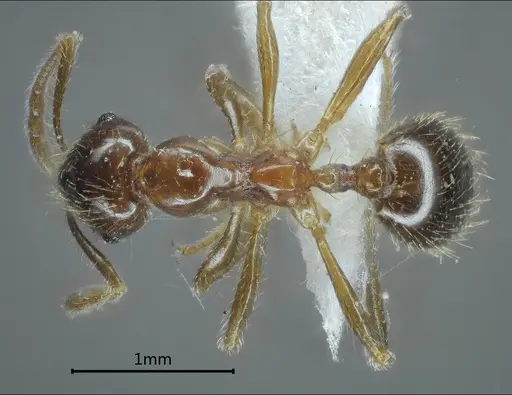
Literature
Loading...Loading products...