

Iridomyrmex spadius
- Scientific Name
- Iridomyrmex spadius
- Tribe
- Leptomyrmecini
- Subfamily
- Dolichoderinae
- Author
- Shattuck, 1993
- Distribution
- Found in 1 countries
Iridomyrmex spadius Overview
Iridomyrmex spadius is an ant species of the genus Iridomyrmex. It is primarily documented in 1 countries , including Australia. Detailed taxonomic data and occurrence records can be further explored via authoritative databases such as AntWeb or the Global Biodiversity Information Facility (GBIF).
Iridomyrmex spadius
Iridomyrmex spadius is a medium-sized ant species belonging to the I. purpureus complex, native to Queensland, Australia. Workers measure 1.66-1.99mm in head width and 1.83-2.11mm in head length, making them a modest-sized dolichoderine ant [1]. They have a distinctive appearance with an orange head featuring weak green iridescence, contrasting against a darker brown mesosoma with pink iridescence, and a chocolate-colored gaster with bluish iridescence [1]. This species is highly localized, known only from two disjunct populations in north-eastern and eastern Queensland [1].
What makes I. spadius particularly interesting is its limited distribution and the distinctive male genitalia that set it apart from other members of the I. purpureus species-group [1]. Ecological information for this species is lacking, making it a relatively unstudied member of a well-known genus. For antkeepers, this means much of the detailed husbandry information must be inferred from related species in the same complex.
Quick Summary
- Difficulty: Medium
- Origin & Habitat: Iridomyrmex spadius is found only in Queensland, Australia, specifically in two disjunct populations in the north-eastern and eastern regions of the state [1]. As a member of the I. purpureus complex, it likely inhabits subtropical to tropical environments, typically nesting in soil or under stones in open woodland or forest edges.
- Colony Type: Colony structure is unconfirmed for this species. Members of the I. purpureus complex are typically monogyne (single-queen colonies), though some Iridomyrmex species can form polygynous colonies under certain conditions.
- Size & Growth:
- Queen: Unconfirmed, no queen measurements available for this species. Related Iridomyrmex queens typically range 7-12mm.
- Worker: 1.66-1.99mm head width,1.83-2.11mm head length [1]
- Colony: Unknown, no colony size data available for this species
- Growth: Unknown, growth rate has not been documented
- Development: Unknown, development timeline has not been studied for this species. Based on related Iridomyrmex species, estimate 6-10 weeks at optimal temperature. (Estimated based on genus-level data for Iridomyrmex. Specific data for this species is lacking.)
- Antkeeping:
- Temperature: Keep at 22-28°C. As a Queensland species from subtropical/tropical areas, they prefer warmer conditions. Provide a temperature gradient allowing workers to self-regulate.
- Humidity: Moderate humidity around 50-70%. Queensland experiences seasonal variation, so they likely tolerate a range. Keep nest substrate slightly moist but allow drying between waterings.
- Diapause: Likely minimal or no true diapause. Queensland winters are mild, so they may reduce activity during cooler months but not enter full hibernation.
- Nesting: In nature, likely nests in soil or under stones like other I. purpureus complex members. In captivity, a Y-tong (AAC) nest, plaster nest, or naturalistic setup with soil substrate works well. Provide moderate humidity and a dark nesting chamber.
- Behavior: Iridomyrmex ants are generally active foragers with moderate aggression levels. Workers are medium-sized and likely form moderate-sized colonies. They probably forage in trails and tend honeydew from sap-sucking insects, as is typical for the genus. Escape prevention should be moderate, their size is manageable but they are active and may attempt escapes. They likely have the typical dolichoderine chemical defense but no functional stinger.
- Common Issues: Limited availability, this species is rarely available in the antkeeping hobby due to its restricted distribution, Lack of species-specific care information means keepers must adapt from related species, Queens may be difficult to locate and acquire for starting colonies, Growth rate is unknown, which can make colony management challenging for beginners, Wild-caught colonies may harbor parasites or diseases not yet characterized
Nest Preferences
Iridomyrmex spadius likely nests in soil or under stones in its native Queensland habitat, similar to other members of the I. purpureus complex. In captivity, provide a nest with a chamber deep enough for the colony to cluster but not excessively large. A Y-tong (AAC) formicarium works well, as does a plaster nest with channels scaled to their worker size. The nesting area should be dark and humid but not wet. A small water reservoir connected to the nest helps maintain stable humidity. For the outworld, a standard foraging area with a secure lid works fine, these ants are moderate climbers but not extreme escape artists. Include a shallow water dish and protein food area in the outworld. [1]
Feeding and Diet
Like other Iridomyrmex species, I. spadius likely has an omnivorous diet typical of dolichoderine ants. They probably consume honeydew from sap-sucking insects, nectar from flowers, and protein from small insects. In captivity, offer sugar water or honey as a constant energy source. For protein, provide small insects like fruit flies, small mealworms, or cricket pieces. They likely accept a variety of foods but prefer fresh prey. Feed protein 2-3 times per week, and keep sugar water available at all times. Remove uneaten prey after 24-48 hours to prevent mold.
Temperature and Care
As a Queensland species from subtropical to tropical areas, I. spadius prefers warmer temperatures. Keep the nest area at 22-28°C, with a slight gradient if possible so workers can choose their preferred temperature. A heating cable on one side of the nest can create this gradient, place it on top of the nest to warm the chamber without excessive drying. Room temperature within this range is often sufficient. During Queensland's cooler months (roughly May-September), you may reduce feeding and allow slightly cooler temperatures, but avoid cold shocking the colony. They do not require true hibernation but may reduce activity in cooler conditions. [1]
Behavior and Temperament
Iridomyrmex ants are known for their active foraging behavior and moderate colony sizes. Workers likely patrol foraging trails and may tend aphids or scale insects for honeydew. They are not typically aggressive toward keepers but will defend their nest if threatened. Like other dolichoderines, they can emit a defensive chemical (formic acid) from their anal gland, though this is not dangerous to humans. They are diurnal and most active during warmer parts of the day. Colonies grow at a moderate pace once established, with the first workers (nanitics) typically appearing within a couple of months under good conditions.
Colony Founding
Colony founding behavior for I. spadius has not been directly documented. Most Iridomyrmex species are claustral, meaning the queen seals herself in a chamber and raises her first workers entirely on stored body fat without foraging. If this holds true for I. spadius, you would keep the founding queen in a small test tube setup with water reservoir, placed in darkness at around 24-26°C. Do not disturb her during the founding period, wait several weeks before checking for workers. If she is semi-claustral, she would need to leave to hunt, but this is less likely for this genus.
Growth and Development
Specific development timeline data is lacking for I. spadius. Based on related Iridomyrmex species in the purpureus complex, expect 6-10 weeks from egg to first worker at optimal temperature (around 24-26°C). The first workers, called nanitics, are typically smaller than full-sized workers. Growth rate is likely moderate, not the fastest in the ant world but not slow either. Once the colony reaches 20-30 workers, growth typically accelerates. A mature colony likely reaches several hundred workers, though exact maximum size is unknown for this species.
Frequently Asked Questions
How long does it take for Iridomyrmex spadius to raise first workers?
The exact timeline is unknown for this species, but based on related Iridomyrmex species, expect 6-10 weeks from egg to first worker at optimal temperature (24-26°C). Be patient, disturbing the queen during founding can cause her to eat her eggs or abandon the nest.
What do Iridomyrmex spadius ants eat?
They likely have an omnivorous diet similar to other Iridomyrmex species. Offer sugar water or honey constantly for energy, and protein sources like small insects (fruit flies, small mealworms, cricket pieces) 2-3 times per week. They probably also accept nectar and honeydew if available.
What temperature do Iridomyrmex spadius ants need?
Keep them at 22-28°C, with 24-26°C being ideal. As a Queensland species from subtropical areas, they prefer warmer conditions. A temperature gradient allowing self-regulation is beneficial.
Are Iridomyrmex spadius ants good for beginners?
This species is rated Medium difficulty. While not the most challenging ant to keep, the lack of species-specific care information makes it better suited for keepers with some experience who can adapt from related species. Beginners may struggle with the uncertainty around exact requirements.
How big do Iridomyrmex spadius colonies get?
Colony size is not documented for this species. Based on related Iridomyrmex species, expect several hundred workers at maturity. They are not among the largest or most populous ant species.
Can I keep multiple Iridomyrmex spadius queens together?
Colony structure is unconfirmed for this species. Most I. purpureus complex members are monogyne (single-queen). Until proven otherwise, it is best to keep only one queen per colony. Combining unrelated foundresses has not been documented and is not recommended.
Do Iridomyrmex spadius ants need hibernation?
True hibernation is unlikely. Queensland winters are mild, so the colony may reduce activity during cooler months but should not enter full diapause. You can reduce feeding and allow temperatures to drop slightly during winter (roughly May-September in the southern hemisphere).
Where is Iridomyrmex spadius found in the wild?
This species is endemic to Queensland, Australia, with two known disjunct populations in the north-eastern and eastern parts of the state. It is a localized species not widely distributed.
Why is Iridomyrmex spadius so rarely available?
This species has a very restricted distribution in Queensland and is not commonly collected. Additionally, ecological information is lacking, making it difficult for suppliers to locate and harvest colonies. It remains a rare species in the antkeeping hobby.
How do I set up a founding colony for Iridomyrmex spadius?
If you obtain a founding queen, place her in a small test tube setup with a water reservoir. Keep it dark, humid, and warm (24-26°C). Do not disturb her for 4-6 weeks. Once workers emerge, you can gradually introduce them to a small outworld area. Wait until the colony has 20-30 workers before moving to a larger formicarium.
References

This caresheet is licensed under CC BY-SA 4.0 .
CASENT0172050
View on AntWeb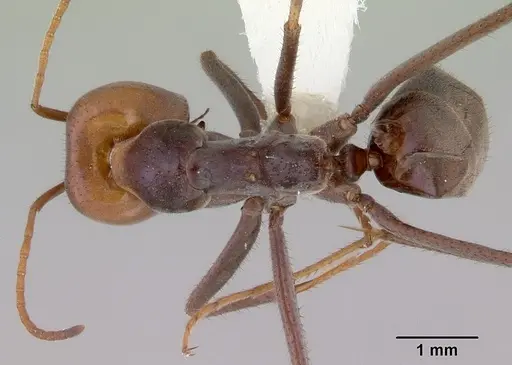
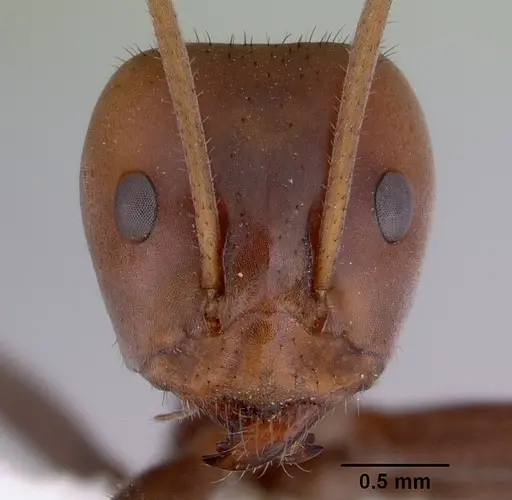
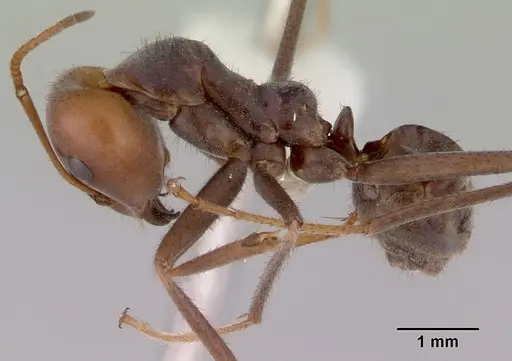
Literature
Loading...Loading products...