

Iridomyrmex rufoinclinus
- Scientific Name
- Iridomyrmex rufoinclinus
- Tribe
- Leptomyrmecini
- Subfamily
- Dolichoderinae
- Author
- Shattuck, 1993
- Distribution
- Found in 1 countries
Iridomyrmex rufoinclinus Overview
Iridomyrmex rufoinclinus is an ant species of the genus Iridomyrmex. It is primarily documented in 1 countries , including Australia. Detailed taxonomic data and occurrence records can be further explored via authoritative databases such as AntWeb or the Global Biodiversity Information Facility (GBIF).
Iridomyrmex rufoinclinus
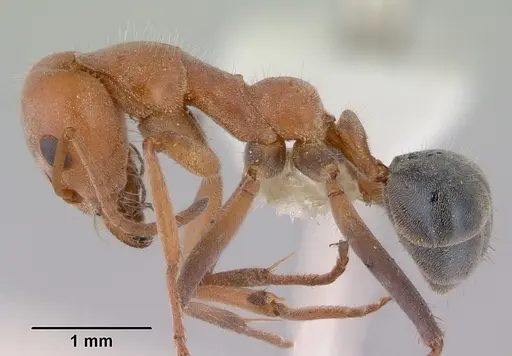
Iridomyrmex rufoinclinus is a medium-sized dolichoderine ant native to northern Australia. Workers measure 1.10-1.38mm in head width and feature distinctive coloration, the head and mesosoma are uniformly orange to brick red, while the gaster is dark chocolate with striking blue iridescence. This color pattern makes it the only member of its species complex with such uniform red foreparts and blue-shimmering abdomen. The species occurs across the entire top end of Australia, from the Kimberley region in Western Australia to south central Queensland, favouring woodland habitats. Workers are active foragers, moving in loosely formed columns during the day and sometimes climbing onto low vegetation to search for food.
Quick Summary
- Difficulty: Medium
- Origin & Habitat: Northern Australia, occurs from the Kimberley region to south central Queensland, favouring woodland habitats in the monsoonal tropics [1][2]
- Colony Type: Colony structure is unconfirmed, Iridomyrmex species are typically polygynous (multi-queen) but specific data for this species is lacking
- Size & Growth:
- Queen: Undescribed in available literature, estimated based on genus patterns at 7-9mm
- Worker: 1.10-1.38mm head width,1.20-1.44mm head length [1]
- Colony: Unknown, typical Iridomyrmex colonies reach several thousand workers
- Growth: Moderate, inferred from tropical genus patterns
- Development: Estimated 6-8 weeks at tropical temperatures (25-28°C) based on typical Dolichoderinae development (Development time is estimated from related Iridomyrmex species, specific data for this species is unavailable)
- Antkeeping:
- Temperature: Keep at 25-30°C. As a tropical Australian species, they prefer warm conditions. A heating cable on one side of the nest creates a suitable gradient [1]
- Humidity: Moderate humidity around 50-70%. The monsoonal tropics experience distinct wet and dry seasons, so allow for some variation. Keep the nest substrate slightly moist but not waterlogged [1]
- Diapause: No, being a tropical species from Australia's top end, they do not require hibernation. However, a slight reduction in temperature during the dry season (winter months) may be beneficial [1]
- Nesting: In nature they build shallow nests in loose soil, forming low asymmetrical discs with a single entrance. In captivity, a Y-tong (AAC) nest or plaster formicarium works well. Provide a layer of sandy soil or fine gravel for them to dig in, with chambers scaled to their medium size [1]
- Behavior: Workers are active foragers, moving in loosely formed columns during the day. They also climb onto low vegetation, suggesting they may exploit arboreal food sources. They are not particularly aggressive but will defend the nest if threatened. Escape risk is moderate, their medium size means standard barrier methods like Fluon on test tube rims or formicarium edges will work well. They are fast-moving and alert, typical of the genus [1].
- Common Issues: tropical species may struggle in cool rooms, ensure adequate heating, wild-caught colonies may carry parasites or diseases from their native habitat, foraging workers may escape if formicarium connections to outworld are not sealed, colonies may be stressed by excessive humidity, avoid waterlogging the nest, blue iridescence may fade in captivity if lighting conditions differ from natural habitat
Appearance and Identification
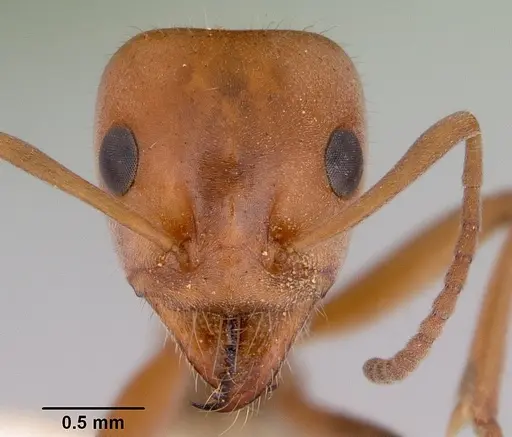
Iridomyrmex rufoinclinus workers are distinctive and relatively easy to identify within their range. They measure 1.10-1.38mm in head width and 1.20-1.44mm in head length, making them medium-sized ants. The most striking feature is their coloration: the head and mesosoma (the middle body section) are uniformly orange to brick red, while the gaster (the abdomen) is dark chocolate with a beautiful blue iridescence that catches the light. This makes them the only member of the I. rufoinclinus species complex with such uniform red foreparts. Workers also have numerous long, curved hairs on the underside of the head, a characteristic shared with other arid-zone Iridomyrmex species [1][3].
Natural History and Distribution
This species occurs across the entire top end of Australia, from the Kimberley region in Western Australia through the Northern Territory to south central Queensland. They favour woodland habitats, which provides them with both foraging opportunities and suitable nesting sites. The top end of Australia experiences a monsoonal climate with distinct wet and dry seasons, which influences the ants' activity patterns. Workers have been observed foraging throughout the day in loosely formed columns, and they also move onto low vegetation to search for food, suggesting they may exploit both ground-level and slightly elevated food sources [1].
Nesting Behavior
In their natural habitat, Iridomyrmex rufoinclinus builds nests in loose soil. The type colony nest was described as a low, asymmetrical disc of loose soil with a single entrance hole, quite different from the elaborate mound-building of some related species. This nesting style suggests they prefer relatively shallow, simple nest structures in well-drained soil. For captive care, provide a nest with a layer of sandy soil or fine gravel that allows for digging. A Y-tong (AAC) nest or plaster formicarium with appropriate moisture retention works well. The chambers should be scaled to their medium size, not too cramped but not overly spacious either [1].
Temperature and Seasonal Care
As a tropical species from Australia's monsoonal north, Iridomyrmex rufoinclinus requires warm conditions. Keep the nest at 25-30°C, with a slight gradient allowing workers to regulate their temperature. A heating cable placed on one side of the nest can create this gradient. Unlike temperate species, they do not require a true hibernation period. However, you might consider a slight temperature reduction during the dry season (Australian winter, roughly May to October) to mimic natural conditions. Avoid keeping them in cool rooms or air-conditioned spaces, as this can suppress activity and slow colony development. Room temperature in most homes should be suitable, but supplemental heating is recommended for optimal growth [1].
Feeding and Diet
Iridomyrmex species are generalist foragers with varied diets. They likely feed on honeydew from aphids and scale insects, extrafloral nectars, and small invertebrates. In captivity, offer a varied diet including sugar water or honey as a constant energy source, and protein sources such as small crickets, mealworms, or other insects. Since workers forage throughout the day and climb vegetation, they are likely active hunters and scavengers. Feed protein prey 2-3 times per week, and keep sugar water available at all times. Remove uneaten prey after 24-48 hours to prevent mold issues. Fresh water should always be accessible [1].
Behavior and Colony Dynamics
Workers are diurnal foragers, active throughout the day in loosely organized columns. This is a characteristic Iridomyrmex behavior, they don't form the massive highway trails of some species but maintain loose, flexible foraging groups. The species is not particularly aggressive toward keepers, but workers will readily defend the nest if disturbed. They are fast-moving and alert, typical of dolichoderine ants. Colony growth is likely moderate, not the explosive growth of some tropical species but steady over time. The colony structure (whether single-queen or multi-queen) is unconfirmed, but Iridomyrmex species typically form polygynous colonies. If you obtain a wild-caught colony, expect several hundred to a few thousand workers at maturity [1].
Frequently Asked Questions
How long does it take for Iridomyrmex rufoinclinus to produce first workers?
The exact timeline is unconfirmed for this species, but based on typical Dolichoderinae development at tropical temperatures (25-28°C), expect first workers (nanitics) in approximately 6-8 weeks after the queen lays eggs. This is an estimate, actual timing depends on temperature and feeding.
What temperature should I keep Iridomyrmex rufoinclinus at?
Keep them at 25-30°C. As a tropical Australian species from the top end, they prefer warm conditions. Use a heating cable on one side of the nest to create a temperature gradient, allowing workers to move between warmer and cooler areas as needed.
Can I keep multiple queens of Iridomyrmex rufoinclinus together?
The colony structure is unconfirmed for this specific species. Many Iridomyrmex species are polygynous (multi-queen) in the wild, but combining unrelated foundress queens in captivity has not been documented. It is not recommended to attempt pleometrosis (multiple queen founding) without specific data on this species' behavior.
What do Iridomyrmex rufoinclinus eat?
They are generalist foragers. Offer sugar water or honey as a constant energy source, and protein such as small crickets, mealworms, or other insects 2-3 times per week. They likely also collect honeydew in the wild, so occasional sweet treats are appreciated.
Do Iridomyrmex rufoinclinus need hibernation?
No. As a tropical species from Australia's monsoonal tropics, they do not require true hibernation. However, a slight temperature reduction during the dry season (Australian winter, roughly May to October) may be appropriate to mimic natural seasonal cycles.
What size colony do Iridomyrmex rufoinclinus reach?
Exact colony size is unconfirmed for this species, but typical Iridomyrmex colonies reach several thousand workers. Expect moderate growth over several years from a healthy founding colony.
Are Iridomyrmex rufoinclinus good for beginners?
This species is rated as Medium difficulty. They require warm temperatures (25-30°C) and specific humidity conditions that mimic their tropical Australian habitat. They are not the easiest species for complete beginners, but experienced antkeepers should find them manageable. Their moderate size and generalist diet make them workable once basic tropical antkeeping skills are mastered.
What type of nest is best for Iridomyrmex rufoinclinus?
A Y-tong (AAC) nest or plaster formicarium works well. Provide a layer of sandy soil or fine gravel for natural digging behavior. The nest should have chambers scaled to their medium size, with good moisture retention but not waterlogging. A small outworld connected to the nest allows for foraging.
Why does my Iridomyrmex rufoinclinus have blue iridescence?
The blue iridescence on the gaster (abdomen) is a natural characteristic of this species, it is the only member of the I. rufoinclinus species complex with this feature. The iridescence comes from light reflecting off the cuticle and is completely normal. It may appear more or less prominent depending on lighting conditions.
References

This caresheet is licensed under CC BY-SA 4.0 .
CASENT0172060
View on AntWeb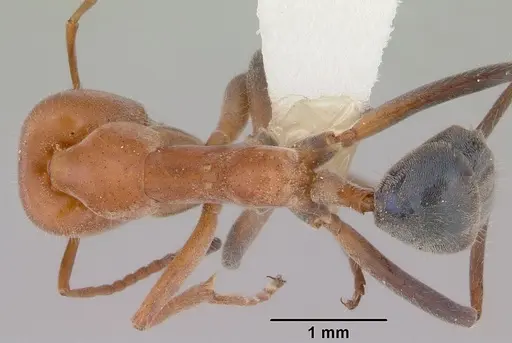
Literature
Loading...Loading products...