

Iridomyrmex meridianus
- Scientific Name
- Iridomyrmex meridianus
- Tribe
- Leptomyrmecini
- Subfamily
- Dolichoderinae
- Author
- Heterick & Shattuck, 2011
- Distribution
- Found in 1 countries
Iridomyrmex meridianus Overview
Iridomyrmex meridianus is an ant species of the genus Iridomyrmex. It is primarily documented in 1 countries , including Australia. Detailed taxonomic data and occurrence records can be further explored via authoritative databases such as AntWeb or the Global Biodiversity Information Facility (GBIF).
Iridomyrmex meridianus
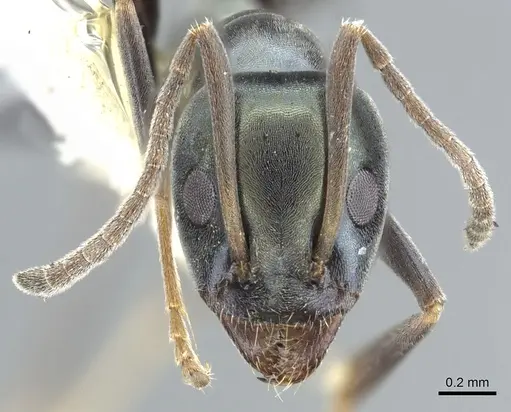
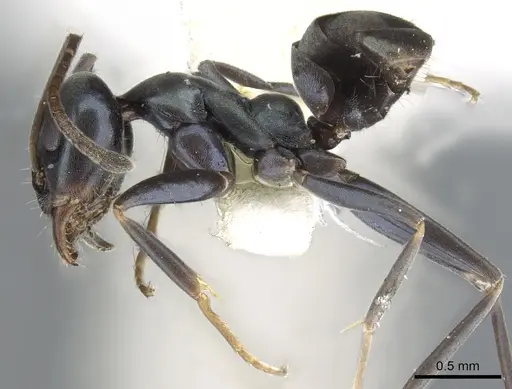
Iridomyrmex meridianus is a small to medium-sized ant native to southern Australia, specifically found in the extreme southwest of Western Australia and Tasmania. Workers measure 0.79-0.87mm in head length and are dark brown to black with a distinctive bluish-green to yellowish-green iridescence that gives them an attractive, slightly metallic appearance when light hits them [1]. This species closely resembles several other Iridomyrmex species but can be identified by the virtual absence of erect hairs on the mesosoma (the middle body section) and the posterior margin of the head [1].
These ants inhabit heavily forested areas where they nest under rocks, logs, and in rotting wood, typical forest floor nesting behavior [1]. The species name 'meridianus' comes from Latin meaning 'south' or 'southern', reflecting their southern Australian distribution [1]. Western Australian populations tend to be slightly larger and darker than Tasmanian specimens, with more pronounced iridescence [1].
Quick Summary
- Difficulty: Medium
- Origin & Habitat: Extreme southwest of Western Australia and Tasmania. Found in heavily forested areas, nesting under rocks, logs, and in rotting wood [1].
- Colony Type: Colony structure is unconfirmed for this species. Based on typical Iridomyrmex patterns, they likely form multi-queen colonies, but this has not been directly documented.
- Size & Growth:
- Queen: Estimated 6-8mm based on genus patterns (not directly measured in type material)
- Worker: 0.79-0.87mm head length,0.67-0.76mm head width [1]
- Colony: Unknown, not documented in available research
- Growth: Moderate, inferred from typical Iridomyrmex development patterns
- Development: Estimated 6-10 weeks based on related Iridomyrmex species at optimal temperature (around 24-26°C) (Development time is not directly studied for this species, estimate based on genus-level data)
- Antkeeping:
- Temperature: Keep at 22-26°C. They come from temperate forested regions of southern Australia, so they prefer moderate temperatures rather than extreme heat. A gentle gradient allowing them to move between warmer and cooler areas is ideal.
- Humidity: Keep substrate moderately moist. In nature they nest under logs and in rotting wood in forest environments, so they prefer damp but not waterlogged conditions. Provide a moisture gradient with a consistently damp section.
- Diapause: Likely required. As a species from Tasmania and southern Western Australia, they experience cool winters and likely need a winter rest period of 2-3 months at 10-15°C.
- Nesting: Y-tong (AAC) nests or plaster nests work well. They naturally nest under rocks and in rotting wood, so provide a naturalistic setup with some wood material or a dark, enclosed nest chamber. Avoid overly dry conditions.
- Behavior: Iridomyrmex ants are generally active foragers with a moderate to aggressive temperament. They are known for their characteristic rapid movement and will defend their nest vigorously if threatened. Workers are small but numerous and will readily investigate and exploit food sources. Escape prevention is important given their small size, use fine mesh barriers and ensure all openings are sealed. They are generalist foragers and will accept a variety of protein and sugar sources.
- Common Issues: small size means escape prevention must be excellent, they can squeeze through tiny gaps, limited species-specific research means some care aspects are estimated from genus patterns, colonies may be slow to establish initially, patience is needed during founding, winter diapause is likely required but timing and duration specifics are uncertain, wild-caught colonies may carry parasites that can cause problems in captivity
Housing and Nest Setup
Iridomyrmex meridianus does well in Y-tong (AAC) nests or plaster formicariums that maintain consistent humidity. Since they naturally nest under rocks, logs, and in rotting wood in forested areas, a naturalistic setup with some wood material or cork bark can encourage natural behavior. The nest should be dark, these ants prefer enclosed, sheltered spaces. Because they are small (under 1mm workers), ensure all ventilation holes and connections are sealed with fine mesh to prevent escapes. A test tube setup can work for founding colonies, but transfer to a proper nest once the colony reaches 20-30 workers. [1]
Feeding and Diet
Like most Iridomyrmex species, these ants are generalist feeders that will accept both protein and sugar sources. Offer sugar water, honey, or diluted nectar regularly as a constant energy source. For protein, provide small insects such as fruit flies, small crickets, mealworms, or other appropriately-sized prey. In nature, they forage for honeydew from aphids and scale insects, so they may also accept aphid honeydew if available. Feed protein sources 2-3 times per week, adjusting based on colony size and consumption rate. Remove uneaten prey within 24-48 hours to prevent mold issues.
Temperature and Seasonal Care
Maintain temperatures in the 22-26°C range for optimal colony activity and development. These ants come from the temperate forests of southern Australia (Tasmania and southwest Western Australia), so they do not require extreme heat. A temperature gradient allowing workers to self-regulate is ideal, place a heating cable on one side of the nest at low setting, creating a warm zone and cooler zone. During Australian winter (roughly June-August in their native range), reduce temperatures to 10-15°C for a diapause period. This winter rest is important for colony health and may trigger reproductive behavior in spring. [1]
Humidity Requirements
Keep the nest substrate moderately moist but not waterlogged. In their natural forest habitat, they benefit from the damp conditions found under logs and in rotting wood. The substrate should feel damp to the touch but not drip water. Provide a humidity gradient, one area consistently moist, another slightly drier so ants can choose their preferred conditions. Avoid both overly dry conditions (which can cause brood desiccation) and stagnant, overly wet conditions (which promotes mold). Mist the outworld occasionally but allow it to dry between mistings. [1]
Behavior and Colony Dynamics
Iridomyrmex ants are active foragers with characteristic rapid, somewhat erratic movement patterns. Workers will readily explore their outworld and establish foraging trails. The colony will likely grow moderately over time, with new workers being produced seasonally. Queens in this genus typically have moderate longevity, and colonies may become multi-queen over time (though this is not confirmed for this specific species). Workers are defensive and will attempt to bite or spray formic acid if the nest is disturbed. The small worker size means they can be overlooked as potential escape artists, treat them as a small species requiring fine mesh barriers. [1]
Frequently Asked Questions
How long does it take for Iridomyrmex meridianus to produce first workers?
The exact timeline is unconfirmed for this species, but based on typical Iridomyrmex development patterns, expect first workers (nanitics) approximately 6-10 weeks after the queen lays eggs, assuming temperatures around 24-26°C. Founding colonies require patience as the queen raises her first brood alone.
Do Iridomyrmex meridianus ants need hibernation?
Yes, based on their origin in Tasmania and southern Western Australia, they likely require a winter diapause period. Reduce temperatures to 10-15°C for 2-3 months during winter (roughly June-August in the Southern Hemisphere). This rest period supports colony health and may trigger spring reproduction.
What do Iridomyrmex meridianus eat?
They are generalist feeders. Offer sugar water or honey as a constant energy source, and provide protein such as small insects (fruit flies, small crickets, mealworms) 2-3 times per week. They will likely accept a variety of foods typical of Iridomyrmex species.
Are Iridomyrmex meridianus good for beginners?
This species is rated as Medium difficulty. While not the most challenging ant to keep, the limited species-specific research means some care aspects are estimated from genus patterns. Beginners should be prepared to monitor colony response and adjust conditions accordingly. Their small size requires attention to escape prevention.
How big do Iridomyrmex meridianus colonies get?
Colony size data is not available for this specific species. Based on typical Iridomyrmex patterns, colonies likely reach several hundred to perhaps over a thousand workers over several years. Growth rate is moderate.
Can I keep multiple Iridomyrmex meridianus queens together?
Colony structure (single-queen vs multi-queen) has not been documented for this species. Combining unrelated foundress queens is not recommended as it has not been studied and could result in aggression. If you obtain a wild colony, observe queen number and do not combine separate colonies.
Why are my Iridomyrmex meridianus dying?
Common causes include: escape (check all mesh barriers), improper humidity (too dry or too wet), temperature stress (too hot or too cold), mold from uneaten food, or parasites from wild-caught colonies. Review each parameter and adjust gradually. Founding colonies are particularly vulnerable, ensure the queen is healthy and conditions are stable.
Where is Iridomyrmex meridianus native to?
This species is native to southern Australia, specifically the extreme southwest of Western Australia and Tasmania. They inhabit heavily forested areas in these temperate regions [1].
References

This caresheet is licensed under CC BY-SA 4.0 .
CASENT0903089
View on AntWeb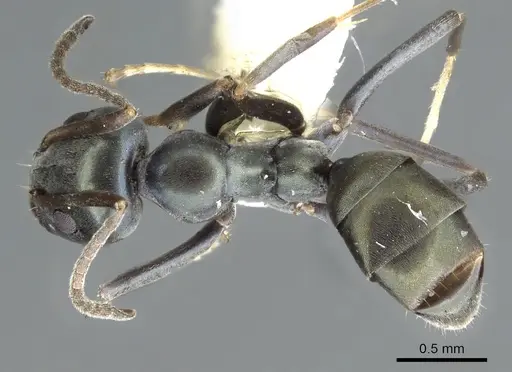
Literature
Loading...Loading products...