

Iridomyrmex hesperus
- Scientific Name
- Iridomyrmex hesperus
- Tribe
- Leptomyrmecini
- Subfamily
- Dolichoderinae
- Author
- Shattuck, 1993
- Distribution
- Found in 1 countries
Iridomyrmex hesperus Overview
Iridomyrmex hesperus is an ant species of the genus Iridomyrmex. It is primarily documented in 1 countries , including Australia. Detailed taxonomic data and occurrence records can be further explored via authoritative databases such as AntWeb or the Global Biodiversity Information Facility (GBIF).
Iridomyrmex hesperus
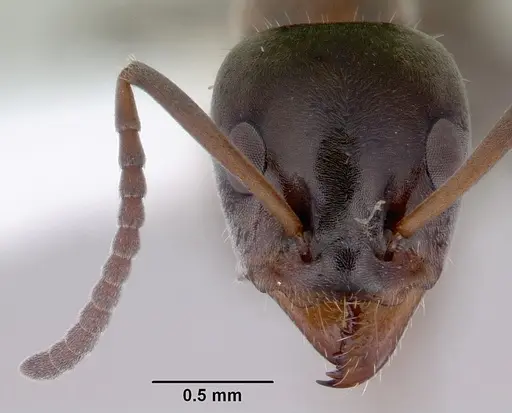
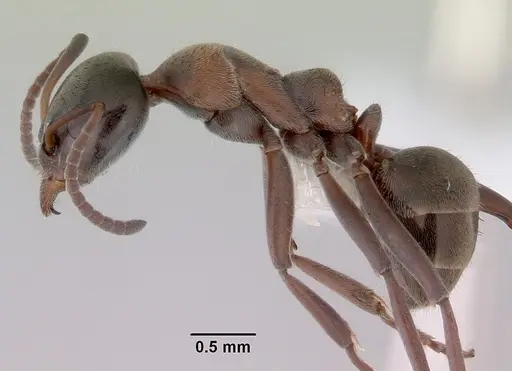
Iridomyrmex hesperus is a small to medium-sized ant native to Western Australia, measuring around 1.08-1.23mm in head width [1]. It belongs to the viridigaster complex but stands out from its relatives by lacking the iridescent sheen typical of many Iridomyrmex species. Workers have a pale orange to brown coloration on the head and mesosoma, with darker brown on the gaster and legs [1]. This species is distinguished by its hairy mesosoma, erect setae on the hind tibiae, and relatively long antennal scape that extends well beyond the back of the head [1].
This ant is quite uncommon in the wild, known only from a handful of specimens collected near the south coast of Western Australia and from Queen Victoria Spring Nature Reserve [2]. The limited distribution and sparse records mean this species is rarely kept in captivity, making it a choice for experienced antkeepers interested in Australian natives.
Quick Summary
- Difficulty: Expert
- Origin & Habitat: Western Australia, known from few specimens near the south coast and Queen Victoria Spring Nature Reserve, suggesting arid to semi-arid habitat preferences typical of inland Western Australian ants [2][1].
- Colony Type: Colony structure is unconfirmed, no published data on queen number or colony organization exists for this species.
- Size & Growth:
- Queen: Unknown, queen measurements have not been documented in available literature [1].
- Worker: 1.08-1.13mm head width, with workers measuring 0.98-1.03mm for antennal scape length [1].
- Colony: Unknown, only a few specimens have been collected, suggesting naturally small colonies or low population density [2].
- Growth: Unknown, no development data exists for this species.
- Development: Unknown, no published development timeline exists. Estimates based on related Iridomyrmex species suggest 6-10 weeks at optimal temperature, but this is speculative. (Development timeline is unconfirmed. Related Iridomyrmex species typically develop in 6-10 weeks, but this species may differ.)
- Antkeeping:
- Temperature: Based on Western Australian distribution, likely prefers warm conditions around 24-28°C. Provide a temperature gradient allowing ants to self-regulate.
- Humidity: Likely prefers dry to moderate humidity reflecting arid inland habitats. Allow substrate to dry between waterings, with a moist area available.
- Diapause: Unknown for this species. Many Western Australian ants experience reduced activity during cooler months, but specific diapause requirements are unconfirmed.
- Nesting: Natural nesting behavior is unconfirmed. Based on habitat and related species, likely nests in soil or under stones. A naturalistic setup with sandy substrate and moderate moisture works well as a starting point.
- Behavior: Behavior is poorly documented. Iridomyrmex species are typically active foragers with moderate aggression when defending the colony. Workers are fast-moving and may be territorial. Escape prevention should be moderate, workers are small but not extremely tiny. Monitor colony temperament as they establish.
- Common Issues: limited availability, this species is rarely collected or available in the antkeeping hobby, no published care guidelines, keepers must experiment based on genus-level knowledge, small colony sizes in the wild suggest colonies may be sensitive to disturbance, unknown diapause requirements may lead to seasonal colony losses if conditions are incorrect, lack of documented feeding preferences requires experimental approach
Natural History and Distribution
Iridomyrmex hesperus is endemic to Western Australia, specifically known from specimens collected near the south coast region and from Queen Victoria Spring Nature Reserve in the interior [2]. This limited distribution makes it one of the rarer Australian Iridomyrmex species. The species was formally described by Shattuck in 1993 and is recognized as part of the viridigaster complex, a group of closely related species that can be challenging to distinguish from one another [1]. Unlike many of its relatives, I. hesperus lacks the iridescent sheen that gives many Iridomyrmex ants their characteristic shiny appearance, making it relatively distinctive within its group. The few specimens collected suggest either naturally low population densities or highly localized habitat preferences.
Identification and Distinguishing Features
Identifying Iridomyrmex hesperus requires attention to several key features. The workers lack the iridescence common in many Iridomyrmex species, appearing instead matte brown to pale orange-brown [1]. The mesosoma (the middle body section) is notably hairy, covered in numerous short, bristly erect setae, this is one of its most distinctive characteristics. Workers also have erect setae on their hind tibiae, and the antennal scape is relatively elongated compared to related species, extending 1-2 times its diameter beyond the posterior margin of the head [1]. Workers measure approximately 1.18-1.23mm in head length and 1.08-1.13mm in head width, with a cephalic index of 91-92 [1]. These subtle identification features mean specimens require careful comparison with verified identification keys.
Housing and Nesting
Since specific nesting requirements are undocumented, housing recommendations must be based on genus-level knowledge and habitat inference. Given the Western Australian distribution spanning coastal and inland arid regions, a naturalistic setup with a sandy to loamy substrate that allows for some drying between waterings would be appropriate. Provide a shallow water dish and allow portions of the nest to dry while maintaining a consistently moist area for brood development. Test tube setups can work for founding colonies, but a naturalistic formicarium with a soil layer would better support longer-term colony growth. Ensure moderate ventilation to prevent mold while maintaining humidity levels that keep the substrate from completely drying out.
Feeding and Diet
Feeding preferences are unconfirmed for this specific species, but Iridomyrmex genus members are typically omnivorous, accepting both sugar sources and protein. Offer sugar water or honey as a carbohydrate source, and provide protein through small insects like fruit flies, small crickets, or mealworms. Based on related species behavior, these ants are likely active foragers that will quickly discover and exploit food sources. Start with small prey items and sugar water, then observe acceptance. Remove uneaten prey after 24-48 hours to prevent mold. Feed protein 2-3 times per week and maintain constant access to sugar water.
Temperature and Seasonal Care
Western Australia experiences a wide temperature range, from hot summers to cool winters. Based on the species' inland and coastal distribution, aim for a temperature gradient of 24-28°C in the nest area, with room temperature (around 20-24°C) acceptable for the outworld. Provide a heating cable on one side of the nest to create a thermal gradient if room temperature falls below optimal ranges. Seasonal care is uncertain, many Australian ants reduce activity during winter months but may not require true hibernation. Monitor colony activity levels and reduce feeding and heating slightly during cooler months if the colony shows reduced activity. Avoid temperatures below 15°C for extended periods.
Frequently Asked Questions
How long does it take for Iridomyrmex hesperus to develop from egg to worker?
The egg-to-worker development timeline is unconfirmed for this species. Based on related Iridomyrmex species, expect approximately 6-10 weeks at optimal temperature (around 26°C), but this is an estimate rather than documented fact.
What do Iridomyrmex hesperus ants eat?
Feeding preferences are unconfirmed for this species specifically. Based on related Iridomyrmex ants, they likely accept sugar water or honey and small protein sources like fruit flies, small crickets, or mealworms. Offer both and observe what they accept.
Are Iridomyrmex hesperus ants aggressive?
Iridomyrmex species are typically moderately aggressive when defending their colony but are not considered particularly dangerous to humans. They may bite if handled, but their small size means any bite would be minimal.
Do Iridomyrmex hesperus ants need hibernation?
Diapause requirements are unknown for this species. Many Western Australian ants experience seasonal slowdowns but may not require true hibernation. Monitor your colony and reduce temperatures slightly during winter months if activity decreases.
Can I keep multiple queens together?
Colony structure (monogyne vs polygyne) is unconfirmed for Iridomyrmex hesperus. Without documented information, combining unrelated queens is not recommended.
What temperature should I keep Iridomyrmex hesperus at?
Based on Western Australian habitat inference, aim for 24-28°C in the nest area. Provide a temperature gradient so ants can self-regulate. Room temperature around 20-24°C is acceptable for the outworld.
How big do Iridomyrmex hesperus colonies get?
Colony size is unknown, only a few wild specimens have been collected, suggesting either naturally small colonies or low population densities. Related species typically reach several hundred to a few thousand workers.
Is Iridomyrmex hesperus a good species for beginners?
No. This species is rated Expert difficulty due to limited availability, completely unconfirmed care requirements, and the need to rely on genus-level inference rather than species-specific documentation.
Where is Iridomyrmex hesperus found?
This species is endemic to Western Australia, known from specimens collected near the south coast and from Queen Victoria Spring Nature Reserve in the interior [2][1].
How do I identify Iridomyrmex hesperus?
Iridomyrmex hesperus can be distinguished by its lack of iridescence (unlike most Iridomyrmex), its hairy mesosoma covered in short bristly setae, erect setae on the hind tibiae, and relatively elongated antennal scape [1]. Workers are approximately 1.1mm in head width.
References

This caresheet is licensed under CC BY-SA 4.0 .
CASENT0172052
View on AntWeb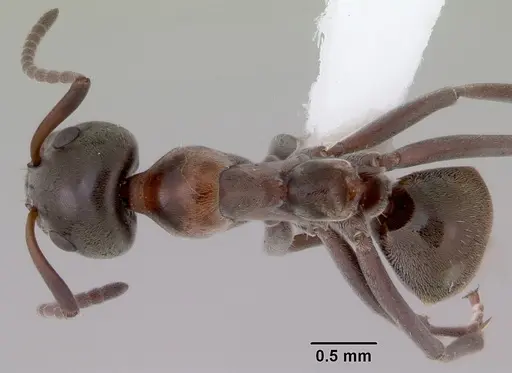
Literature
Loading...Loading products...