

Hypoponera truncata
- Scientific Name
- Hypoponera truncata
- Tribe
- Ponerini
- Subfamily
- Ponerinae
- Author
- Smith, 1860
- Distribution
- Found in 2 countries
Hypoponera truncata Overview
Hypoponera truncata is an ant species of the genus Hypoponera. It is primarily documented in 2 countries , including China, Lao People's Democratic Republic. Detailed taxonomic data and occurrence records can be further explored via authoritative databases such as AntWeb or the Global Biodiversity Information Facility (GBIF).
Hypoponera truncata
Hypoponera truncata is a small subterranean ant species native to tropical and subtropical Asia, ranging from India through Indonesia to southern China. Workers measure 3-3.5mm and have a dark brown to blackish-brown body with noticeably paler reddish-brown mandibles, antennae, and legs. Their head is nearly square with relatively large eyes for the genus, and they possess a visible stinger. Unlike many surface-nesting ants, this species lives deep underground, with studies finding them at depths of 50cm beneath the soil surface in tropical forests [1]. They inhabit lowland dipterocarp forests and are collected through leaf litter extraction methods, indicating they traverse the forest floor layer while nesting deeper in the soil [2].
Quick Summary
- Difficulty: Medium
- Origin & Habitat: Tropical and subtropical Asia, found across India, Indonesia (Sulawesi), Malaysia, Borneo, Brunei, Singapore, and southern China (Yunnan, Zhejiang, Taiwan). Inhabits lowland dipterocarp forests and tropical leaf litter environments [2][3].
- Colony Type: Likely monogyne (single queen) based on typical Ponerine patterns, though colony structure has not been directly studied. Colonies appear small, with only 8-9 individuals collected in intensive surveys [1][4].
- Colony: Monogyne
- Size & Growth:
- Queen: Not directly measured in primary literature, estimated 5-6mm based on genus patterns
- Worker: 3-3.5mm [5]
- Colony: Small colonies, only 8-9 individuals found in comprehensive surveys [1][4]
- Growth: Unknown, likely moderate based on small colony sizes observed
- Development: Estimated 6-8 weeks at tropical temperatures based on typical Ponerine development (Development timeline not directly studied, estimate based on related Ponerine species)
- Antkeeping:
- Temperature: Keep at 24-28°C, this matches their tropical forest floor origin in Southeast Asia. A gentle gradient allowing them to choose warmer or cooler areas is ideal.
- Humidity: High humidity required, these are subterranean ants found in damp forest environments. Keep the nest substrate consistently moist but not waterlogged. Provide a water tube for drinking access.
- Diapause: Unlikely, being a tropical species, they probably do not require a true hibernation period. However, slight temperature reduction during cooler months may be appropriate if room temperature drops.
- Nesting: A naturalistic setup with deep substrate (at least 5-10cm) works best, or a plaster/acrylic nest with deep chambers. These ants prefer to nest below the surface, so a nest that allows them to create underground tunnels is ideal. Y-tong nests with tight chambers can also work.
- Behavior: These ants are predatory, like most Ponerines, and will hunt small invertebrates. They possess a functional stinger and can deliver a mild sting if handled roughly. Workers are small but active foragers through the substrate. Escape prevention should be moderate, while not the smallest ants, they can squeeze through small gaps. They are not aggressive toward humans but will defend the nest if threatened. Their small colony size means they are not overwhelming in numbers.
- Common Issues: small colony size means slow population growth, don't expect rapid expansion, subterranean lifestyle requires deep nesting space which some keepers overlook, humidity needs are high, drying out is a common killer of these ants, predatory diet means they need live prey, sugar alone won't sustain them, wild-caught colonies may be difficult to establish due to their underground nesting habits
Nest Preferences and Housing
Hypoponera truncata is a subterranean species that naturally nests deep in soil, with studies finding them at 50cm depth [1]. In captivity, they need a nest setup that allows for deep burrowing or provides enclosed chambers that mimic underground conditions. A naturalistic setup with 5-10cm of moist substrate (like a mixture of soil and sand) works well, allowing them to create tunnels. Alternatively, a plaster or acrylic nest with deep chambers can work, though you should ensure the chambers are appropriately sized for their small 3mm workers. Avoid tall, open spaces, these ants prefer confined spaces that mimic their natural underground tunnels. The nest should be kept dark or covered, as subterranean ants prefer dim conditions.
Feeding and Diet
As a Ponerine ant, Hypoponera truncata is predatory and will hunt small invertebrates. In captivity, their primary food should be small live prey such as fruit flies, pinhead crickets, small mealworms, or other tiny arthropods. They are small ants, so prey items should be appropriately sized, no larger than their body size. Unlike many ants that readily accept sugar, the dietary importance of honeydew or nectar for this species is unclear. You can offer a small amount of sugar water or honey occasionally, but do not rely on it as a primary food source. Feed them protein-rich prey 2-3 times per week, removing any uneaten prey after 24 hours to prevent mold. A constant water source is essential.
Temperature and Seasonal Care
Being a tropical species from Southeast Asia, these ants need warm conditions. Keep the nest at 24-28°C, which matches their natural lowland forest environment in Borneo, Indonesia, and southern China. Room temperature in most homes is often adequate, but you may need a heating cable or mat on one side of the nest during cooler months. Create a gentle temperature gradient so workers can move between warmer and cooler areas. Unlike temperate species, they do not require a true hibernation period. However, if your room temperature drops significantly in winter, a slight reduction to around 20-22°C is appropriate without triggering full diapause. Avoid temperatures below 18°C as this could stress the colony. [2][3]
Behavior and Handling
Hypoponera truncata workers are small but active, moving through substrate to hunt prey. They possess a functional stinger, inherited from their Ponerine ancestry, and can deliver a mild sting if provoked or handled roughly. However, they are not aggressive toward keepers and will typically flee rather than attack. Their small size (3-3.5mm) means they can slip through small gaps, so ensure your setup has adequate barriers. Escape prevention should be moderate, not as critical as for tiny 1-2mm ants, but still important. Colonies remain small even when established, so you won't deal with massive worker numbers. Workers are not particularly noisy or disruptive, making them suitable for observation in naturalistic setups. [5]
Colony Establishment
Establishing a colony of Hypoponera truncata can be challenging because they nest deep underground in the wild, making queen capture difficult. If you obtain a founding queen, she will likely need semi-claustral conditions, meaning she may need to leave the founding chamber to hunt for food, unlike claustral ants that seal themselves in and survive on fat reserves. Provide a deep test tube setup with moist substrate, and offer small live prey items even during the founding stage. Colony growth is slow, expect several months before the first workers (nanitics) appear, and even then, colonies remain small. Wild-caught colonies may be more difficult to establish than lab-reared ones, as they may have experienced stress during collection from their deep underground nests.
Frequently Asked Questions
How long does it take for Hypoponera truncata to produce first workers?
The exact timeline is unconfirmed, but based on typical Ponerine development, expect 6-8 weeks from egg to first worker at tropical temperatures (24-28°C). Growth is slower than many common ant species, and colonies remain small even after establishment.
Can I keep Hypoponera truncata in a test tube?
A test tube can work for a founding queen or small colony initially, but these ants prefer deeper spaces to mimic their subterranean lifestyle. Consider transitioning to a naturalistic setup with deep substrate or a plaster nest with chambers once the colony grows beyond 10-15 workers.
What do Hypoponera truncata eat?
They are predatory ants that hunt small invertebrates. Feed them small live prey such as fruit flies, tiny crickets, small mealworms, or other micro-arthropods. You can occasionally offer sugar water or honey, but protein-rich prey should be their primary food source.
Are Hypoponera truncata good for beginners?
They are rated as medium difficulty. While not the hardest ant to keep, their specific humidity needs, predatory diet, and preference for deep nesting spaces make them better suited for keepers who already have some experience with ant keeping. Their slow growth and small colony sizes also require patience.
How big do Hypoponera truncata colonies get?
Colonies appear to stay small in the wild, field surveys found only 8-9 individuals per colony [1][4]. In captivity, they likely won't grow beyond 50-100 workers. This is a small-colony species, so don't expect the massive populations seen in species like Lasius or Camponotus.
Do Hypoponera truncata need hibernation?
No, being a tropical species from Southeast Asia and southern China, they do not require true hibernation. However, if your room temperature drops significantly in winter, a slight reduction to around 20-22°C is appropriate. Avoid keeping them below 18°C for extended periods.
When should I move Hypoponera truncata to a formicarium?
Start them in a test tube or small container with moist substrate for founding. Once the colony reaches 15-20 workers and you see them foraging actively, you can move them to a naturalistic setup or formicarium with deeper chambers. They prefer tight spaces, so don't provide unnecessarily large enclosures.
Why are my Hypoponera truncata dying?
Common causes include: the nest drying out (they need high humidity), temperatures being too cold (below 18°C), lack of live prey (they need protein), or stress from excessive disturbance. Their small colony size also means any losses have a bigger impact on the population. Ensure proper humidity, warmth, and a steady supply of small live prey.
Can I keep multiple Hypoponera truncata queens together?
Colony structure is not well-documented for this species, but based on typical Ponerine behavior, they are likely monogyne (single queen). Combining unrelated queens is not recommended as it often leads to fighting. If you obtain a multi-queen colony from the wild, it's best to house them separately unless you observe peaceful co-founding behavior.
References

This caresheet is licensed under CC BY-SA 4.0 .
CASENT0901360
View on AntWeb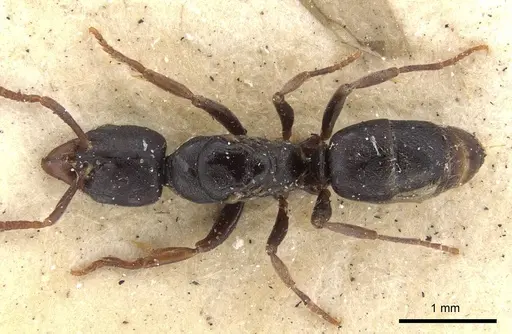
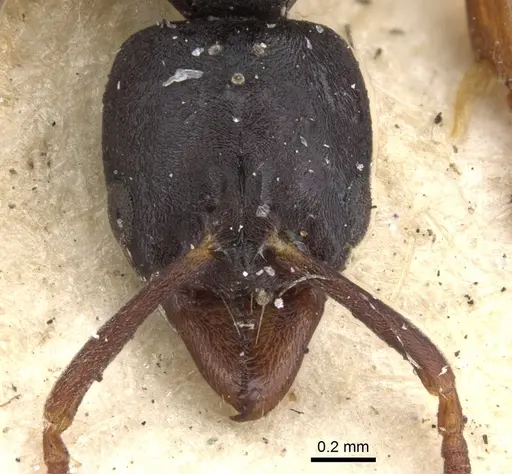
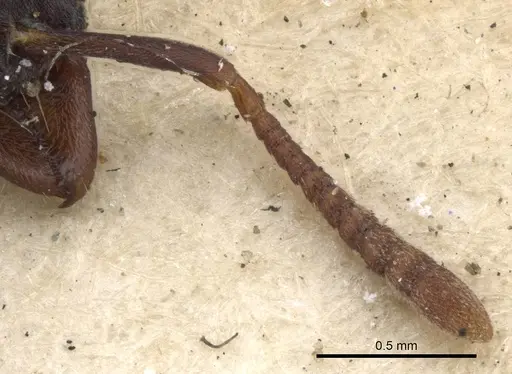
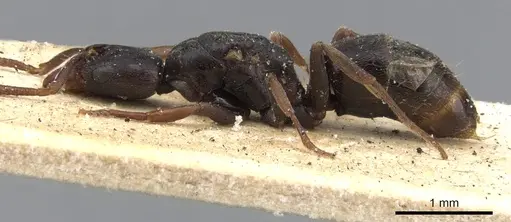
Literature
Loading...Loading products...