

Hypoponera trigona
- Scientific Name
- Hypoponera trigona
- Tribe
- Ponerini
- Subfamily
- Ponerinae
- Author
- Mayr, 1887
- Distribution
- Found in 10 countries
Hypoponera trigona Overview
Hypoponera trigona is an ant species of the genus Hypoponera. It is primarily documented in 10 countries , including Argentina, Bolivia, Plurinational State of. Detailed taxonomic data and occurrence records can be further explored via authoritative databases such as AntWeb or the Global Biodiversity Information Facility (GBIF).
Hypoponera trigona
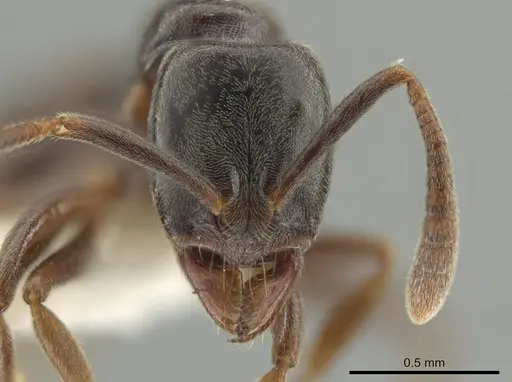
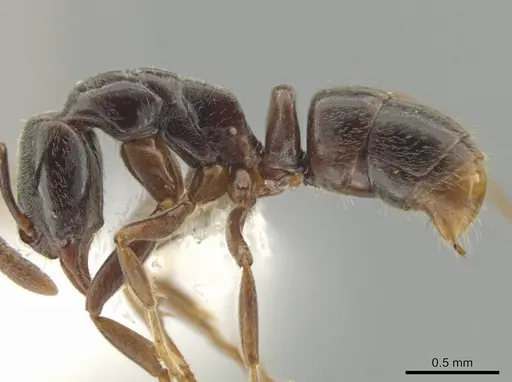
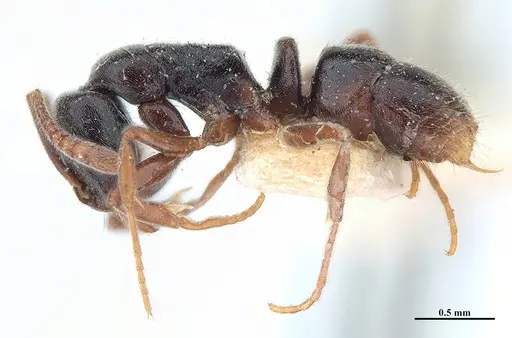
Hypoponera trigona is a small, cryptic ponerine ant native to the Neotropical region, ranging from Costa Rica down through Colombia, Ecuador, Peru, Bolivia, Paraguay, Brazil, and Argentina, with populations also found in the southern United States and Caribbean islands [1][2]. Workers measure around 3.5mm in total length and are typically dark brown to black in color, though some specimens show reddish coloration on the sides [1]. This species is distinguished by its small eyes with 3-4 partially fused facets, numerous erect hairs on the mesosoma (15-25), and distinctive rugo-punctate sculpture on the propodeum [1]. As a cryptic ground-dwelling species, H. trigona lives in leaf litter and soil microhabitats, often found under rocks or in rotting logs [3][4].
Quick Summary
- Difficulty: Medium
- Origin & Habitat: Neotropical region, found in Argentina, Bolivia, Brazil, Colombia, Costa Rica, Paraguay, with range extending into southern US and Caribbean. Inhabits leaf litter in tropical and subtropical forests, including semideciduous Atlantic forests and Amazon biomes [1][5][6].
- Colony Type: Colony structure is unconfirmed for this species. Based on typical Ponerinae patterns, likely single-queen (monogyne) colonies, though this requires verification.
- Size & Growth:
- Queen: Undocumented in primary literature, estimated based on genus at 4-6mm
- Worker: 3.5mm total length [1]
- Colony: Unknown, typical for small cryptic ponerines likely under 200 workers
- Growth: Unknown, likely moderate based on typical small ant development
- Development: Estimated 6-10 weeks based on related Ponerinae species (Direct development data not available for this species, estimates based on genus-level patterns for small tropical ponerines)
- Antkeeping:
- Temperature: Keep at 22-26°C as a starting point. As a Neotropical species from Brazil and surrounding regions, they likely prefer warm, stable conditions. Adjust based on colony activity, workers should be active throughout the nest.
- Humidity: Moderate to high, they inhabit leaf litter and forest floor environments where conditions are damp but not waterlogged. Keep the nest substrate consistently moist but allow some drying between waterings. Mist or rehydrate when the substrate surface begins drying out.
- Diapause: Unknown, Neotropical species may not require true hibernation, but may show reduced activity during cooler months. Monitor colony for seasonal slowdowns.
- Nesting: Natural nesting occurs in leaf litter, under stones, and in rotting logs [3][4]. In captivity, a naturalistic setup with moist substrate (soil or sand mixture) works well, or a Y-tong/plaster nest with narrow chambers scaled to their small size. They prefer tight, enclosed spaces typical of cryptic ground-dwelling ants.
- Behavior: Hypoponera trigona is a cryptic, secretive species that forages in leaf litter and soil. They are likely predatory like other Ponerinae ants, hunting small invertebrates. Workers are small (3.5mm) so escape prevention should be good, they can still squeeze through small gaps. Their small size means fine mesh barriers are recommended. Temperament is typically non-aggressive toward keepers, though they may have a functional stinger typical of Ponerinae (though often too small to penetrate human skin effectively).
- Common Issues: escape prevention is important despite small size, use fine mesh and tight-fitting lids, limited published care information means keepers may need to experiment with conditions, slow colony growth can test keeper patience, don't overfeed or disturb founding colonies, wild-caught colonies may carry parasites that can cause colony failure in captivity, maintaining consistent humidity without flooding is key, avoid waterlogging the nest
Natural History and Distribution
Hypoponera trigona has an extensive range across the Neotropics, from Costa Rica and Panama south through Colombia, Ecuador, Peru, Bolivia, Paraguay, Brazil, and Argentina. The species also populations in the southern two-thirds of the United States and various Caribbean islands including Puerto Rico and the West Indies [1][2]. This wide distribution suggests adaptability to different environmental conditions within tropical and subtropical zones.
In Colombia, the species has been recorded specifically in Risaralda department, while in Brazil it appears across multiple biomes including the Amazon and Atlantic forest regions [7][6]. Studies in southern Brazil document the species in urban areas, indicating some tolerance for human-modified environments [8]. The ant is typically collected using Winkler sac extraction from leaf litter, reflecting its cryptic, ground-dwelling lifestyle [9].
Identification and Distinguishing Features
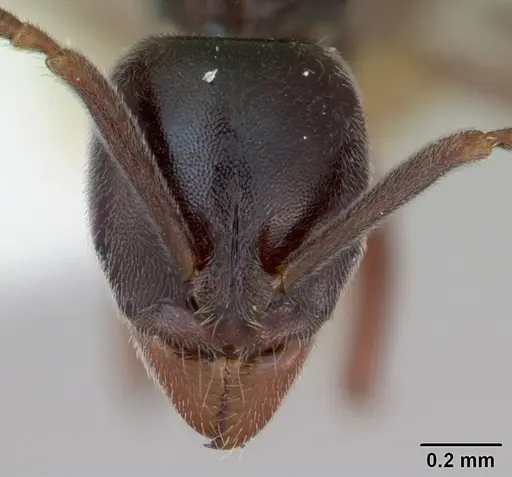
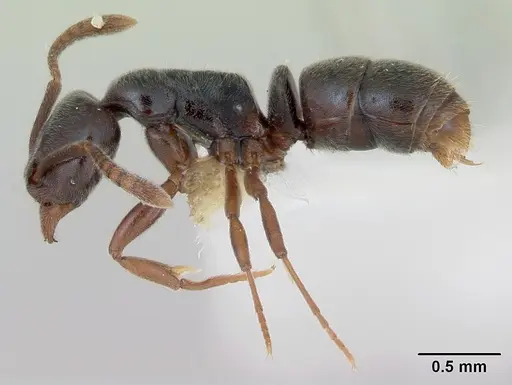
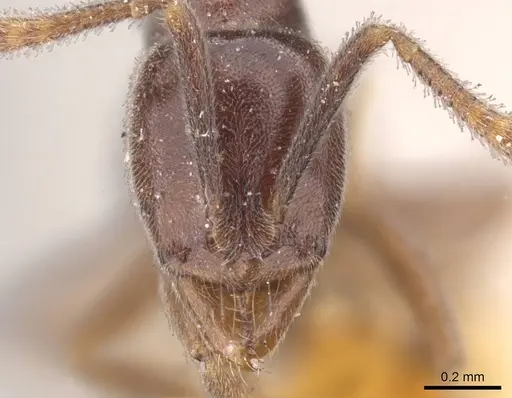
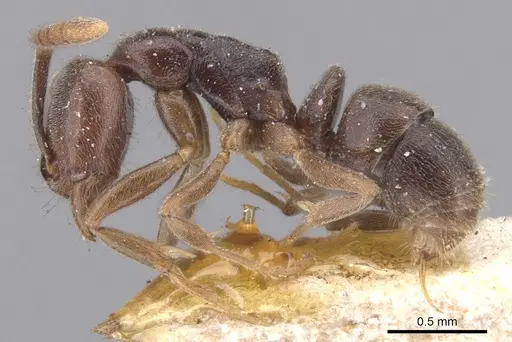
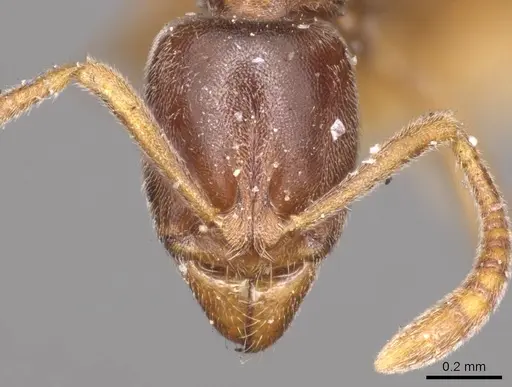
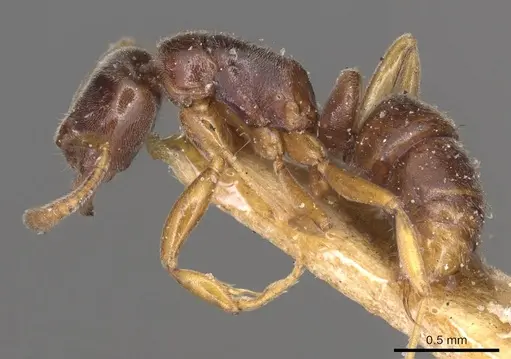
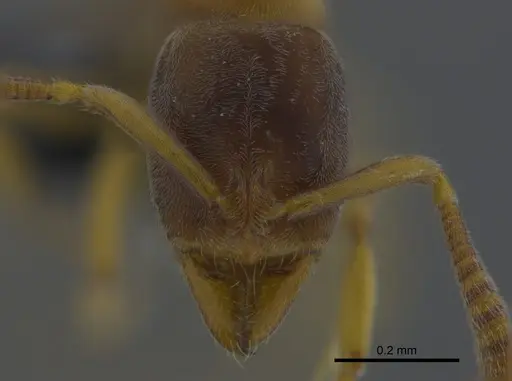
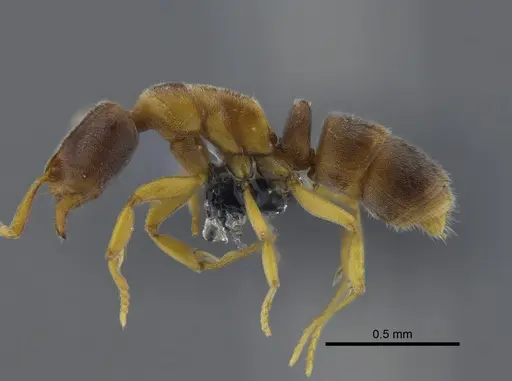
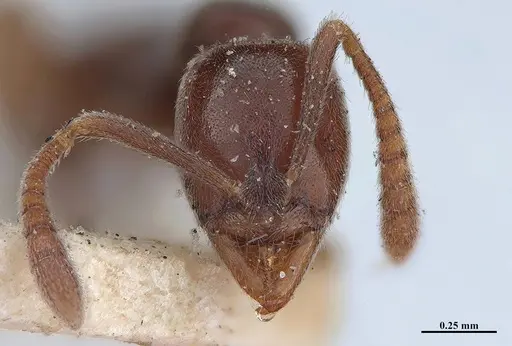
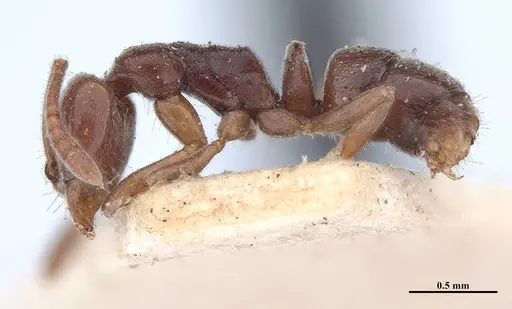
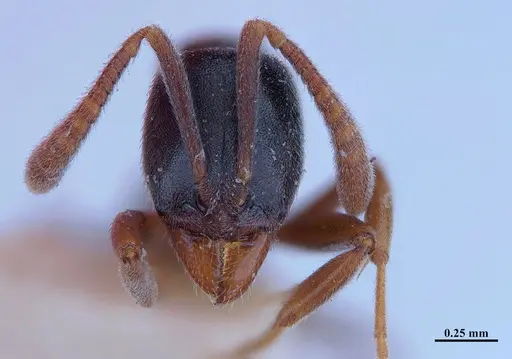
Workers of Hypoponera trigona reach approximately 3.5mm in total length [1]. The coloration is variable, ranging from brown to brown with reddish lateral markings, though most specimens appear black [1]. The species has several distinctive morphological features: small eyes containing only 3-4 partially fused facets, a scape (the first antenna segment) that extends past the posterior margin of the head by a length equal to or greater than half of the first funicular segment, and numerous erect hairs (15-25) on the mesosoma dorsum [1].
The propodeum (the rear portion of the mesosoma) shows distinctive rugo-punctate sculpture that helps separate this species from similar forms. The petiolar node is scale-shaped with anterior and posterior faces converging toward the apex [1]. This species is most likely to be confused with H. opacior and H. opaciceps var. pampana, but can be distinguished by the straight mesosoma dorsum (without the uneven profile of H. opaciceps var. pampana) and the greater number of erect hairs on the mesosoma [1].
Habitat and Ecology
Hypoponera trigona is classified as a cryptic species (functional group C), meaning it lives primarily in leaf litter and soil microhabitats, avoiding open areas [10]. Studies in Brazilian semideciduous forests show the species is most abundant in lowland areas (baixada) and ramp environments, with some occurrence on ridge (crista) habitats [5]. The species shows seasonal abundance patterns, with higher numbers typically recorded during wet seasons, one study found 13 occurrences in 2005 and 24 in 2006 during wet seasons at certain sites [5].
The species has been collected from native forest environments, including both Amazon and Atlantic forest biomes [4][6]. It is found under rocks, in rotting logs, and within leaf litter, reflecting its preference for moist, protected microhabitats [3]. This ground-dwelling lifestyle means they prefer nest conditions that mimic forest floor moisture levels.
Housing and Nest Setup
For captive care, create a naturalistic setup that mimics the species' natural leaf litter and soil-dwelling habitat. Use a moist substrate mixture (such as a sand-soil blend) in a test tube setup for founding colonies, or a naturalistic terrarium-style formicarium for established colonies. The substrate should remain consistently damp but never waterlogged, aim for moisture levels similar to a forest floor that has dried slightly on the surface but retains moisture below.
Given their small size (3.5mm workers), use appropriately scaled chambers and passages. Tight-fitting lids and fine mesh barriers are essential for preventing escapes, though this species is less prone to climbing than some other ponerines. Provide a water tube and ensure the nest area maintains moderate humidity. A layer of leaf litter or decorative elements on the outworld can help these cryptic ants feel secure and encourage natural foraging behaviors.
Feeding and Diet
Like other Ponerinae ants, Hypoponera trigona is likely predatory, feeding on small invertebrates found in leaf litter. In captivity, offer small live prey such as fruit flies, pinhead crickets, small mealworms, or other appropriately sized protein sources. Since they are small ants, prey items should be appropriately sized, no larger than the ant itself.
Protein should form the primary diet component. Sugar sources may be accepted occasionally, but Ponerinae typically rely less on honeydew and more on animal prey. Offer small amounts of sugar water or honey occasionally, but do not rely on these as primary food sources. Feed small prey items 2-3 times per week for established colonies, removing any uneaten prey after 24-48 hours to prevent mold issues.
Temperature and Seasonal Care
As a Neotropical species from Brazil and surrounding countries, Hypoponera trigona likely prefers temperatures in the warm range, aim for 22-26°C as a starting point. Monitor your colony's activity levels to fine-tune: if workers are consistently clustered near the warmer side of the nest, slightly increase temperature, if they avoid heated areas, reduce it.
The species does not require true hibernation given its tropical origins, but may show reduced activity during cooler periods. If your colony becomes less active in winter, reduce feeding frequency and ensure the nest does not get too cold. Avoid temperature extremes, sudden drops below 18°C or spikes above 30°C should be avoided. Room temperature within the 22-26°C range is typically suitable for most keepers.
Frequently Asked Questions
How long does it take for Hypoponera trigona to produce first workers?
The exact development timeline is unconfirmed for this species. Based on typical patterns for small Ponerinae ants, expect approximately 6-10 weeks from egg to first worker at optimal temperature (around 24-26°C). Be patient, founding colonies can take time, and disturbing the queen during this period can cause abandonment.
What do Hypoponera trigona ants eat?
Like other Ponerinae ants, they are predatory and should be fed small live prey. Offer appropriately sized insects such as fruit flies, small crickets, or mealworms. Protein-based foods should form the main diet. They may occasionally accept sugar water or honey, but this should not be their primary food source.
Can I keep Hypoponera trigona in a test tube setup?
Yes, test tubes work well for founding colonies. Keep the water reservoir moderate-sized to avoid flooding, and ensure the tube is placed in a dark area to mimic the cryptic nature of this species. Transfer to a larger naturalistic setup once the colony reaches 20-30 workers.
What temperature do Hypoponera trigona ants need?
Keep them at 22-26°C as a starting point. As a Neotropical species from Brazil and surrounding regions, they prefer warm, stable conditions. Room temperature in this range is typically suitable. Adjust based on colony behavior, active colonies indicate comfortable conditions.
How big do Hypoponera trigona colonies get?
Colony size is not well-documented in the literature. Based on similar small cryptic ponerines, colonies likely reach under 200 workers. Growth is typically moderate, these are not fast-growing ants like some Myrmicinae species.
Are Hypoponera trigona ants good for beginners?
This species is rated as Medium difficulty. While not the most challenging ant, there is limited published care information available, which may require some experimentation. Their small size and cryptic nature also require attention to escape prevention. Experienced beginner antkeepers should do well with this species.
Do Hypoponera trigona ants need hibernation?
True hibernation is not required for this Neotropical species. However, they may show reduced activity during cooler months. If your colony slows down in winter, reduce feeding frequency slightly and ensure temperatures don't drop below 18°C. A brief cool period (around 15-18°C for 2-3 months) may be beneficial but is not strictly necessary.
Why are my Hypoponera trigona dying?
Common causes include: improper humidity (too wet causes flooding, too dry causes desiccation), temperature stress (too cold or extreme fluctuations), stress from disturbance during founding, or wild-caught colonies carrying parasites. Ensure consistent moisture levels, stable temperatures, and minimal disturbance, especially for founding colonies.
When should I move Hypoponera trigona to a formicarium?
Transfer to a larger setup once the colony reaches approximately 20-30 workers or when the test tube water reservoir needs frequent refilling. A naturalistic setup with moist substrate works well for this species. Ensure the new setup maintains similar humidity levels to reduce transfer stress.
References

This caresheet is licensed under CC BY-SA 4.0 .
CASENT0173719
View on AntWeb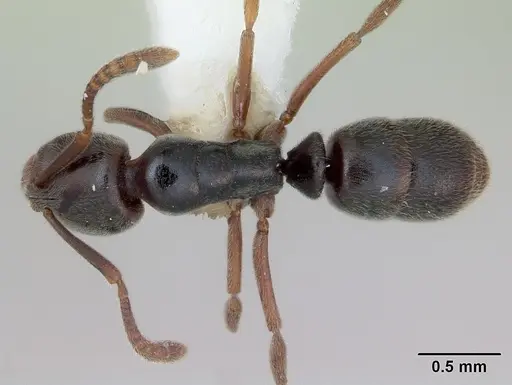
CASENT0635113
View on AntWeb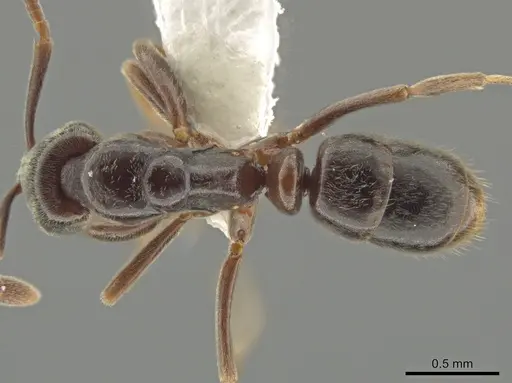
CASENT0902571
View on AntWeb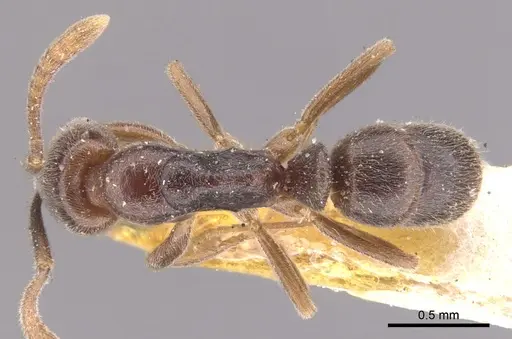
CASENT0915871
View on AntWeb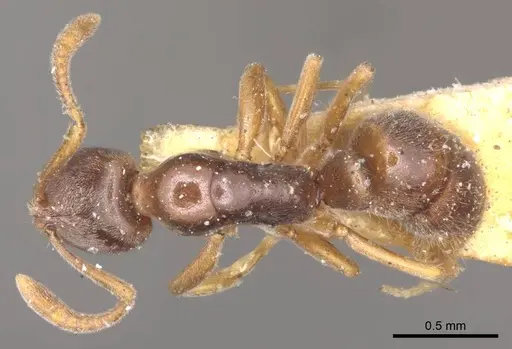
CBUMAGENT41732
View on AntWeb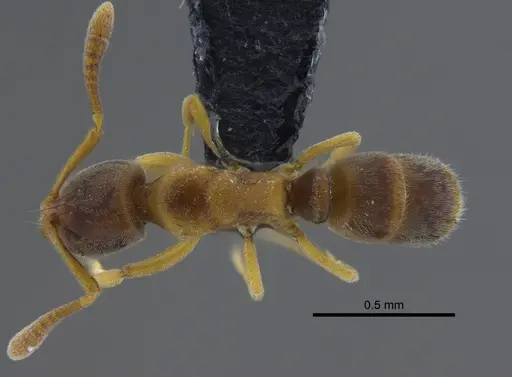
MHNGENTO00094347
View on AntWeb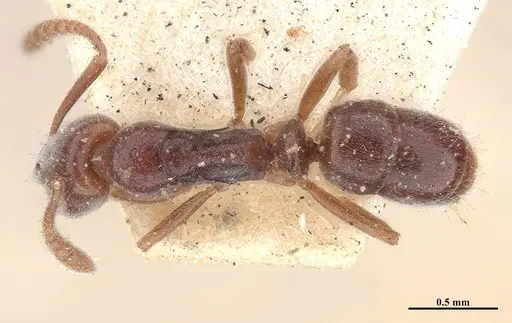
MHNGENTO00094348
View on AntWeb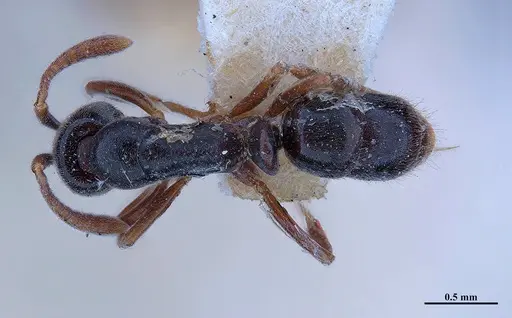
Literature
Loading...Loading products...