

Hypoponera quaestio
- Scientific Name
- Hypoponera quaestio
- Tribe
- Ponerini
- Subfamily
- Ponerinae
- Author
- Bolton & Fisher, 2011
- Distribution
- Found in 1 countries
Hypoponera quaestio Overview
Hypoponera quaestio is an ant species of the genus Hypoponera. It is primarily documented in 1 countries , including Tanzania, United Republic of. Detailed taxonomic data and occurrence records can be further explored via authoritative databases such as AntWeb or the Global Biodiversity Information Facility (GBIF).
Hypoponera quaestio
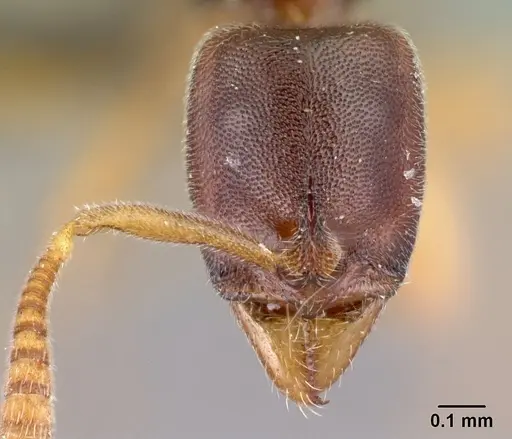
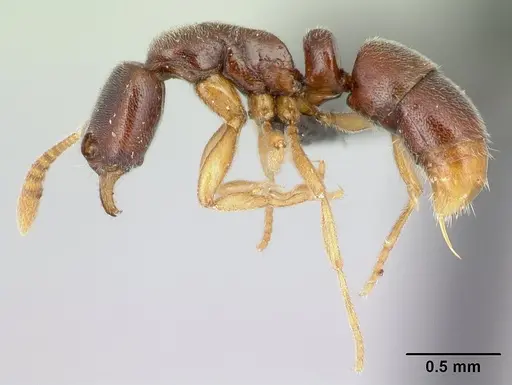
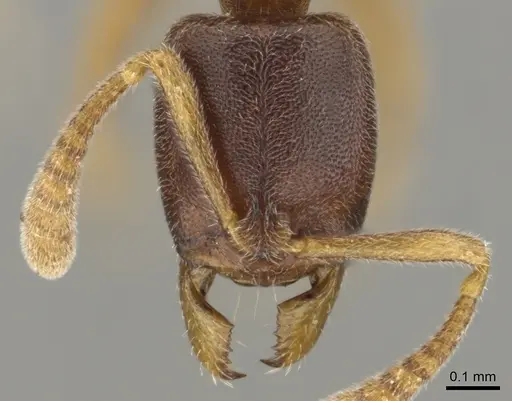
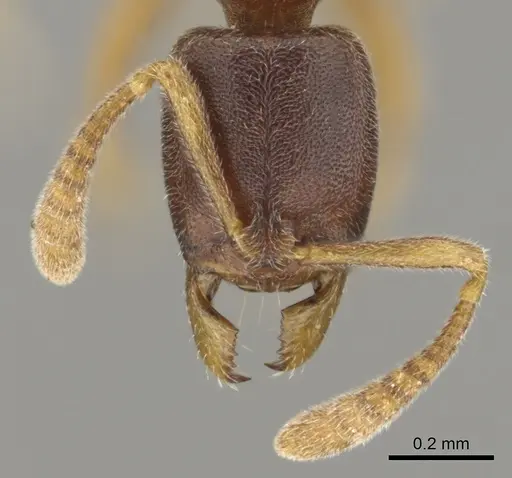
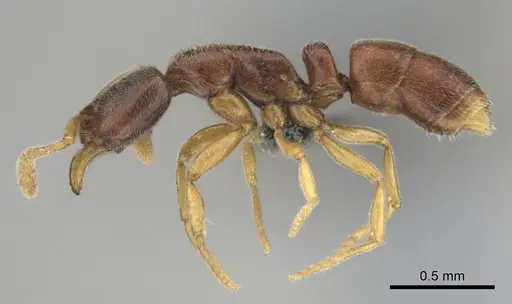
Hypoponera quaestio is an extremely rare ponerine ant known from a single worker specimen collected in the Kindoroko Forest Reserve in northern Tanzania. These are tiny ants, workers measure just 0.63mm in head length, making them among the smallest ants you'll encounter. They are brown in color and belong to the Hypoponera abeillei group, a collection of closely related species that are notoriously difficult to distinguish from one another [1].
This species is so poorly known that only one specimen has ever been found. Researchers suspect it may eventually prove to be an extreme variant of the closely related Hypoponera jeanneli, but the single available specimen is darker in color and has subtle differences in body proportions [1]. Queens and males have never been collected, leaving much of their biology a mystery. What we do know suggests they are leaf-litter dwellers in high-elevation forest, similar to other Hypoponera species.
Quick Summary
- Difficulty: Expert
- Origin & Habitat: Tanzania, Kilimanjaro Region, Kindoroko Forest Reserve at 1739m elevation. Found in primary forest leaf litter [1].
- Colony Type: Unknown, only a single worker has ever been collected. Queens and males are unknown. Based on genus patterns, likely single-queen colonies with potential ergatoid replacement reproductives.
- Size & Growth:
- Queen: Unknown, queens have never been collected. Estimated 3-4mm based on worker proportions and related species.
- Worker: 0.63mm head length, approximately 2.5-3mm total length [1].
- Colony: Unknown, only one specimen has ever been found.
- Growth: Unknown, estimated moderate based on genus patterns.
- Development: Unknown, estimated 6-10 weeks based on typical Ponerine development at warm temperatures. (No species-specific data exists. Estimates based on related Hypoponera species.)
- Antkeeping:
- Temperature: Keep around 22-26°C. The high-elevation Tanzanian location suggests they prefer cooler conditions than lowland tropical ants. A gentle gradient allowing workers to self-select their preferred temperature is ideal.
- Humidity: High humidity is essential, they live in forest leaf litter where conditions are constantly damp. Keep the nest substrate consistently moist but not waterlogged. Provide a water tube as a humidity source.
- Diapause: Unknown, likely no true diapause given the tropical location, but may show reduced activity during cooler periods.
- Nesting: Naturalistic setup with fine substrate (like coco peat or a soil mixture) works best. These are tiny leaf-litter ants that would nest in damp soil or rotting wood fragments. A Y-tong or acrylic nest with small chambers scaled to their minute size would work, but escape prevention must be excellent given their tiny size.
- Behavior: Almost nothing is known about their behavior. Based on genus patterns, they are likely predatory on small soil micro-arthropods and may have stingers, though their tiny size likely makes them harmless to humans. They are probably shy and non-aggressive, avoiding confrontation with larger ants. Escape risk is extremely high due to their minute size, they can squeeze through gaps invisible to the human eye. Excellent escape prevention is absolutely critical.
- Common Issues: escape prevention is critical, their tiny size means they can slip through the tiniest gaps, including standard mesh, no species-specific care data exists, all recommendations are genus-level estimates, slow or absent colony growth is expected given how little is known about their requirements, finding appropriate prey may be challenging, they likely need microscopic live prey like springtails, high humidity requirements create mold risk if ventilation is inadequate
Why This Species Is Challenging
Hypoponera quaestio represents one of the most challenging ants to keep because virtually no captive care information exists. Only a single worker has ever been collected and described scientifically, there are no queens, no males, no colony samples, and no biological observations in the literature. Every recommendation in this caresheet is an inference from genus-level patterns and related species, not direct experience with this specific ant [1]. This means you will essentially be pioneering the husbandry of this species through careful experimentation. Success is far from guaranteed, and progress will be slow. Only experienced antkeepers willing to document their failures should attempt this species.
Natural Habitat and Implications for Care
The single known specimen came from Kindoroko Forest Reserve in northern Tanzania at 1739 meters elevation, this is highland forest, not lowland tropical. The ant was collected from leaf litter in a Winkler sample, which means it was living in the top layers of forest floor debris, among decaying leaves and small soil organisms [1]. This tells us they prefer cool, damp, shaded conditions with plenty of organic matter. The elevation also suggests they may tolerate cooler temperatures than typical tropical ants, think misty mountain forest rather than steamy lowland jungle. In captivity, this means providing high humidity, a naturalistic substrate they can move through, and keeping temperatures moderate rather than hot.
Size and Escape Prevention
This is an extremely small ant, workers measure just 0.63mm in head length, making them among the smallest ants in the hobby. Their total length is approximately 2.5-3mm [1]. This tiny size creates a critical husbandry challenge: escape prevention must be absolutely bulletproof. Standard test tube setups may have gaps large enough for these ants to slip through. You will need to use fine mesh barriers, seal all joints with fluon or similar barriers, and inspect for any visible gaps. Even the gap between a water tube and nest setup can be an escape route. Some keepers use double-barrier systems for species this small. Check your setup daily and be prepared to upgrade enclosures at the first sign of escape attempts.
Feeding and Nutrition
Hypoponera ants are predatory, feeding primarily on small soil micro-arthropods like springtails, mites, and other tiny invertebrates. While no specific feeding data exists for H. quaestio, you should assume they need live prey. Small live springtails should be the primary food, these are readily available from pet stores and culturing them at home is straightforward. Other potential prey includes tiny isopods, booklice, and fruit fly larvae. Sugar sources are unlikely to be accepted, Ponerine ants like this are typically strict predators. Feed small amounts of prey every few days and remove any uneaten prey after 24 hours to prevent mold. Because of their tiny size, even a single fruit fly larva may be a substantial meal.
Nesting Requirements
In the wild, this species lives in leaf litter at the forest floor, so a naturalistic setup works best. Use a fine, damp substrate like coco peat, potting soil, or a soil-sand mix that holds moisture well. The substrate should be deep enough (at least 2-3cm) for the ants to create small chambers and tunnels. A layer of leaf litter on top provides cover and helps maintain humidity. Alternatively, a small acrylic or Y-tong nest with chambers scaled to their tiny size can work, but ensure the passages are narrow enough that the ants feel secure. A water tube attached to the nest helps maintain humidity. Avoid dry conditions entirely, these ants will quickly desiccate in dry air.
Temperature Management
Based on their high-elevation Tanzanian habitat, these ants likely prefer cooler conditions than typical tropical ants. Aim for temperatures in the 22-26°C range, warmer than room temperature but not hot. A heating cable on one side of the nest can create a gradient, allowing workers to self-select their preferred temperature. Monitor colony behavior: if workers cluster near the heat source, increase slightly, if they avoid it and stay in cooler areas, reduce heat. Avoid temperatures above 30°C, which could stress or kill them. Room temperature (around 20-22°C) may actually be suitable given their mountain forest origin. [1]
Frequently Asked Questions
Is Hypoponera quaestio a good species for beginners?
No. This is an expert-level species because virtually no captive care information exists. Only a single worker has ever been collected, so all care recommendations are educated guesses from genus patterns. You will essentially be pioneering the husbandry of this species, which requires experience with difficult ants and willingness to experiment and potentially fail.
How long does it take for Hypoponera quaestio to go from egg to worker?
Unknown for this specific species. Based on typical Ponerine development and related Hypoponera species, estimate 6-10 weeks at optimal warm temperatures (around 24-26°C). However, this is purely an estimate, no one has ever successfully raised this species from egg to worker in captivity.
What do Hypoponera quaestio eat?
Based on genus patterns, they are predatory on small live prey. Offer small live springtails as a primary food source. They may also accept other tiny arthropods like mites, tiny isopods, and fruit fly larvae. Sugar sources are unlikely to be accepted. Do not offer prey larger than the ants themselves.
Can I keep multiple queens together?
Unknown. Queens have never been collected for this species, so colony structure is completely unconfirmed. Based on related Hypoponera species, they likely form single-queen colonies. Do not attempt combining unrelated queens, there is no data to suggest this would work.
How big do Hypoponera quaestio colonies get?
Unknown. Only a single worker has ever been found. Based on related species in the genus, colonies are likely small, probably under 100 workers. Large colonies have never been documented.
What temperature should I keep Hypoponera quaestio at?
Aim for 22-26°C. Their high-elevation Tanzanian origin suggests they prefer cooler conditions than typical tropical ants. A gentle temperature gradient allowing self-selection is ideal. Avoid temperatures above 30°C.
Why is escape prevention especially important for this species?
Hypoponera quaestio workers are extremely small, only about 2.5-3mm total length. They can squeeze through gaps that are invisible to the human eye. Standard test tube setups and formicaria may have gaps large enough for them to escape. Use fine mesh, fluon barriers, and inspect setups daily for any potential escape routes.
Do they need hibernation?
Unknown. Given their tropical Tanzanian origin, true hibernation is unlikely. However, they may show reduced activity during cooler periods. No seasonal data exists for this species.
Where can I get Hypoponera quaestio?
This species is essentially unavailable in the antkeeping hobby. Only a single specimen has ever been collected scientifically, and no colonies exist in captivity. It is extremely unlikely you will find this species for sale. If you are interested in Hypoponera ants, more commonly available related species like Hypoponera punctatissima or other Hypoponera species would be more realistic options.
References

This caresheet is licensed under CC BY-SA 4.0 .
CASENT0192421
View on AntWeb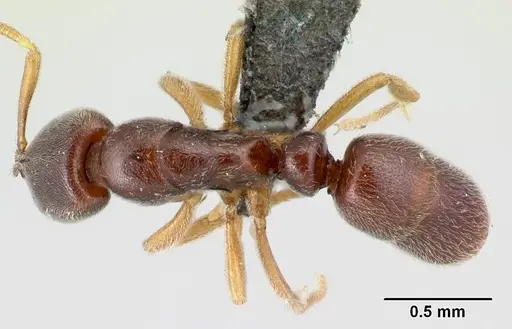
CASENT0250610
View on AntWeb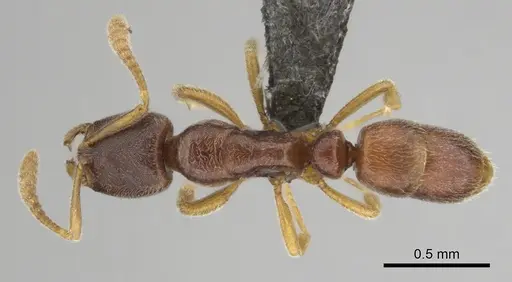
Literature
Loading...Loading products...