

Hypoponera papuana
- Scientific Name
- Hypoponera papuana
- Tribe
- Ponerini
- Subfamily
- Ponerinae
- Author
- Emery, 1900
- Distribution
- Found in 3 countries
Hypoponera papuana Overview
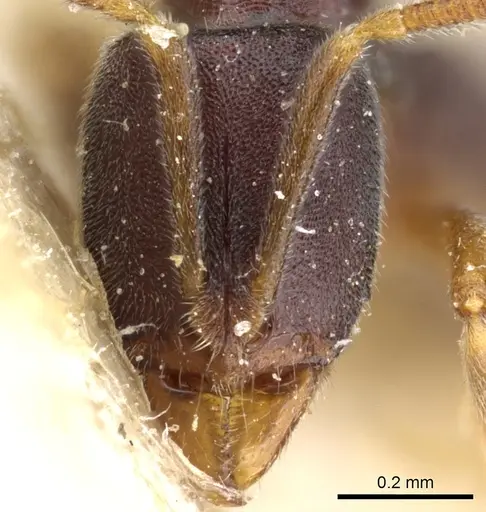
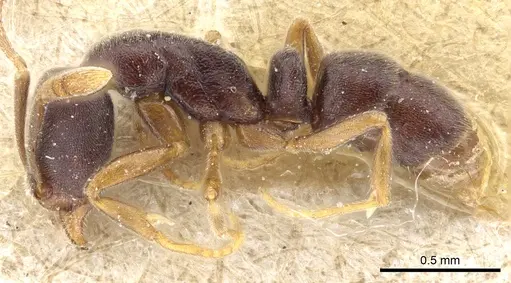
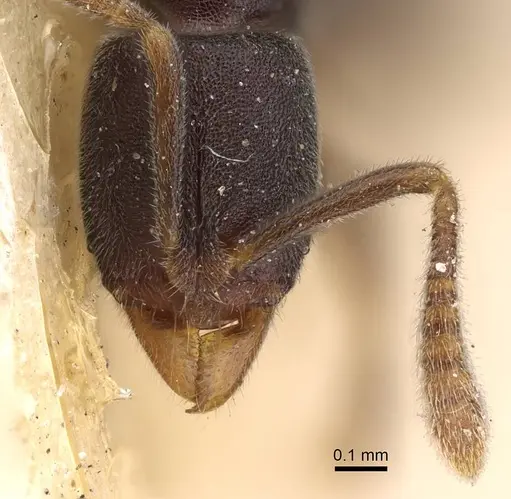
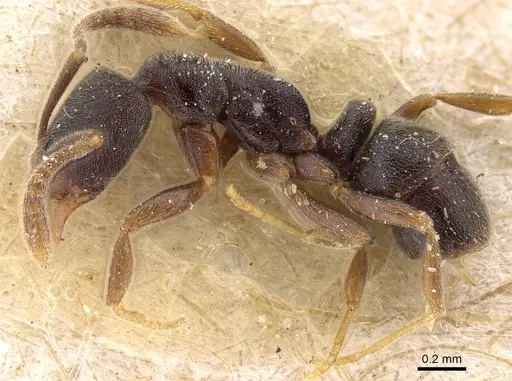
Hypoponera papuana is an ant species of the genus Hypoponera. It is primarily documented in 3 countries , including Indonesia, Papua New Guinea, Solomon Islands. Detailed taxonomic data and occurrence records can be further explored via authoritative databases such as AntWeb or the Global Biodiversity Information Facility (GBIF).
Hypoponera papuana
Hypoponera papuana is a small Ponerine ant native to New Guinea and the Solomon Islands in the Australasian region. Workers are modest in size, typically measuring around 3-4mm, with the characteristic Ponerine body plan featuring a distinct petiole and powerful stinger. The species was originally described by Emery in 1900 as Hypoponera papuana before being transferred to Hypoponera. These ants nest in soil and rotting wood in tropical forest environments, where they prey on small invertebrates. The genus Hypoponera is known for their cryptic, ground-dwelling habits and relatively docile temperament compared to some other Ponerines.
Quick Summary
- Difficulty: Medium
- Origin & Habitat: Native to New Guinea and the Solomon Islands in the Australasian/Oceanian region. Found in tropical forest environments, typically nesting in soil and rotting wood [1][2].
- Colony Type: Likely monogyne (single queen colonies) based on typical Hypoponera patterns, though colony structure has not been specifically documented for this species.
- Colony: Monogyne
- Founding: Claustral
- Size & Growth:
- Queen: Approximately 4-5mm (estimated based on genus patterns)
- Worker: Approximately 3-4mm (from original description) [1]
- Colony: Likely small to moderate, typical of Hypoponera genus, estimated 50-200 workers based on related species
- Growth: Moderate, Ponerine ants typically develop more slowly than many Myrmicines
- Development: Estimated 8-12 weeks at tropical temperatures (25-28°C) based on typical Ponerine development patterns (Development time is estimated from related Ponerine species, specific data for H. papuana is not available)
- Antkeeping:
- Temperature: Keep at 24-28°C (tropical species). A gentle gradient allowing warmer and cooler areas is recommended. Avoid temperatures below 22°C as this is a tropical species not adapted to cool conditions.
- Humidity: Moderate to high humidity (60-80%). Keep the nest substrate consistently moist but not waterlogged. These ants prefer damp forest floor conditions.
- Diapause: No, as a tropical species, they do not require hibernation. Maintain consistent temperatures year-round.
- Nesting: Natural nesting occurs in soil and rotting wood. In captivity, they do well in test tubes with moist substrate, Y-tong nests, or plaster nests that retain humidity. Provide a small outworld for foraging.
- Behavior: Hypoponera papuana is a relatively docile Ponerine ant. Workers are modest in size and not particularly aggressive, though they possess a stinger for defense. They are primarily predatory, hunting small invertebrates in the soil. Foraging activity is moderate, workers will search the outworld for prey. Escape prevention is important due to their small size, use standard barriers. They are not known for being particularly escape-prone compared to some tiny ants, but small gaps should still be avoided.
- Common Issues: tropical species requires consistent warmth, cold drafts or room temperature below 22°C can stress or kill colonies, overfeeding can lead to mold in the nest, remove uneaten prey promptly, small colony size means slower population growth, patience is required, wild-caught colonies may have parasites that are difficult to detect
Housing and Nest Setup
Hypoponera papuana does well in standard ant keeping setups. Test tube setups work well for founding colonies, use a test tube with a water reservoir (filled with water, blocked with cotton) to maintain humidity. Once the colony reaches 15-20 workers, you can move them to a formicarium. Y-tong (AAC) nests or plaster nests are excellent choices as they hold humidity well. The nest chambers should be appropriately sized for their small workers, avoid overly large, open spaces. Provide a small outworld connected to the nest where you can offer food. Use a barrier like fluon around the edges of the outworld to prevent escapes.
Feeding and Diet
As a Ponerine ant, Hypoponera papuana is primarily predatory. Feed them small live prey such as fruit flies, pinhead crickets, small mealworms, and other appropriately sized insects. They will likely accept protein-rich foods 2-3 times per week. Remove any uneaten prey after 24-48 hours to prevent mold. Sugar sources are not typically a major part of the diet for Hypoponera species, though they may occasionally accept honey or sugar water. Focus on providing varied protein sources for optimal colony growth.
Temperature and Humidity
This is a tropical species requiring warm, humid conditions. Maintain temperatures between 24-28°C in the nest area. A heating cable on one side of the nest can create a gentle gradient if your room temperature is below this range. Humidity should be kept at 60-80%, the nest substrate should feel consistently moist but never waterlogged. Mist the outworld occasionally but avoid excessive moisture that could cause mold. Good ventilation is important to prevent stagnant air while still maintaining humidity.
Colony Development
Ponerine ants like Hypoponera papuana typically develop more slowly than many common ant species. Expect the first workers (nanitics) to emerge 8-12 weeks after the queen lays her first eggs, assuming optimal temperatures around 26°C. Initial colony growth is slow, the queen raises the first brood alone. Once workers emerge, the colony will gradually expand. Full maturity, with dozens of workers, may take 1-2 years. Be patient with this species, they are not fast growers but can live for many years once established.
Behavior and Temperament
Hypoponera papuana is a relatively docile species compared to some other Ponerines. Workers are small and non-aggressive, though they will use their stinger if threatened. They are primarily nocturnal or crepuscular foragers, searching for small invertebrates in the soil. The colony will establish a network of foragers in the outworld. They are not known for being particularly aggressive toward keepers and can be observed without much difficulty once the colony is established.
Frequently Asked Questions
How long does it take for Hypoponera papuana to produce first workers?
Expect 8-12 weeks from egg to first worker at optimal temperatures (25-28°C). This is typical for Ponerine ants, which develop more slowly than many common ant species.
What do Hypoponera papuana ants eat?
They are primarily predatory. Feed small live prey like fruit flies, pinhead crickets, and small mealworms. Offer protein 2-3 times per week and remove uneaten prey promptly.
Do Hypoponera papuana ants need hibernation?
No, they do not require hibernation. This is a tropical species from New Guinea and the Solomon Islands. Keep them warm year-round at 24-28°C.
Are Hypoponera papuana ants good for beginners?
They are rated as Medium difficulty. While not the easiest species, they are manageable for intermediate ant keepers willing to maintain warm, humid conditions. Their slower growth requires patience.
What temperature do Hypoponera papuana ants need?
Keep them at 24-28°C. This tropical species needs consistent warmth, avoid temperatures below 22°C.
How big do Hypoponera papuana colonies get?
Based on related species, colonies likely reach 50-200 workers at maturity. They are not among the largest ant species.
Do Hypoponera papuana ants sting?
Yes, as Ponerine ants they possess a stinger. However, they are relatively docile and unlikely to sting unless directly threatened or handled roughly.
Can I keep multiple queens together?
Hypoponera species are typically single-queen (monogyne) colonies. Combining unrelated queens is not recommended as they are likely to fight.
When should I move Hypoponera papuana to a formicarium?
Move them once the colony reaches 15-20 workers. Before that, a test tube setup works well for founding colonies.
What humidity level do Hypoponera papuana ants need?
Keep humidity at 60-80%. The nest substrate should feel consistently moist but not waterlogged.
References

This caresheet is licensed under CC BY-SA 4.0 .
CASENT0903914
View on AntWeb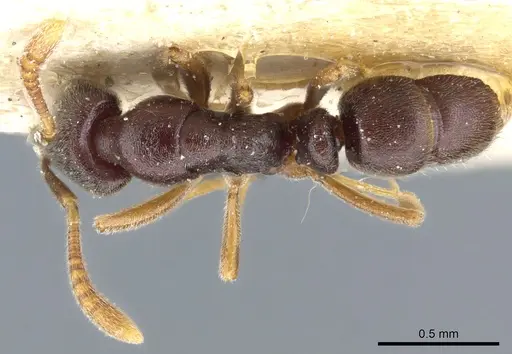
CASENT0922244
View on AntWeb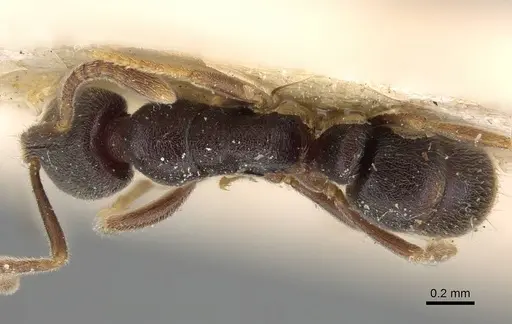
Literature
Loading...Loading products...