

Hypoponera monticola
- Scientific Name
- Hypoponera monticola
- Tribe
- Ponerini
- Subfamily
- Ponerinae
- Author
- Mann, 1921
- Distribution
- Found in 2 countries
Hypoponera monticola Overview
Hypoponera monticola is an ant species of the genus Hypoponera. It is primarily documented in 2 countries , including Fiji, Wallis and Futuna. Detailed taxonomic data and occurrence records can be further explored via authoritative databases such as AntWeb or the Global Biodiversity Information Facility (GBIF).
Hypoponera monticola
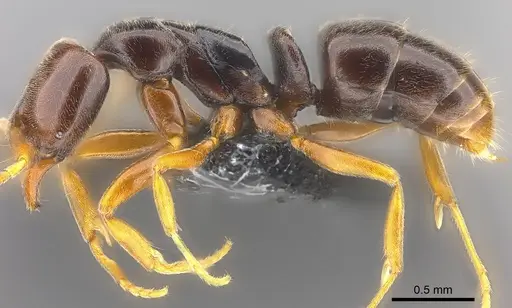
Hypoponera monticola is a medium-sized ponerine ant native to Fiji, where it is endemic to the islands of Viti Levu, Ovalau, and the Lau group [1][2]. Workers measure 5.00-5.78mm and are dark brown to black in color, with distinctive propodeal spines and a prominent tooth on the posterior apex of the petiole [3][4]. This species forages in leaf litter and nests in fallen logs in elevated, rainy regions [4]. The genus Hypoponera was formerly classified under Ponera, and this species was originally described as Hypoponera monticola by Mann in 1921 before being reclassified by Taylor in 1967 [5].
Quick Summary
- Difficulty: Medium
- Origin & Habitat: Fiji islands (Viti Levu, Ovalau, Lau), endemic species found in scrub habitat and leaf litter at elevated locations [1][2][6]. In Colombia, specimens have been recorded at altitudes between 1400-2600m in departments including Valle del Cauca, Meta, and Caquetá, though this may represent a different species [7][8].
- Colony Type: Colony structure is unconfirmed. Based on typical Hypoponera patterns, likely single-queen colonies.
- Size & Growth:
- Queen: Unconfirmed, not directly measured in available literature
- Worker: 5.00-5.78mm [3]
- Colony: Unconfirmed, no colony size data available
- Growth: Moderate, inferred from similar ponerine ants
- Development: Estimated 6-10 weeks based on typical Ponerinae development at optimal temperature (Direct development data unavailable, estimate based on related species in the genus)
- Antkeeping:
- Temperature: Keep around 22-26°C, they inhabit elevated regions so prefer cooler conditions than typical tropical ants [4]. A gentle gradient allows workers to self-regulate.
- Humidity: Moderate to high, they live in leaf litter and rotting wood in rainy elevated regions [4]. Keep substrate consistently moist but not waterlogged.
- Diapause: Unlikely, being a tropical/endemic island species, they probably do not require a diapause period. However, a slight cooling period during winter months may be beneficial.
- Nesting: Naturalistic setup works best, they nest in fallen logs and rotting wood in nature [4][9]. A Y-tong nest or plaster nest with soil substrate mimics their natural environment. Provide damp soil and small hiding structures.
- Behavior: Hypoponera monticola is a cryptic leaf-litter forager that hunts small prey. As a ponerine ant, they have a functional stinger and may use it defensively if handled or threatened. Workers are modest in size but can deliver a noticeable sting. They are not aggressive toward humans but will defend their nest. Escape risk is moderate, use standard barrier methods.
- Common Issues: lack of specific care data makes precise requirements uncertain, humidity control is critical, too dry causes colony decline, they may be difficult to establish from queen founding due to limited data, wild-caught colonies may have parasites
Natural History and Distribution
Hypoponera monticola is endemic to Fiji, found on the islands of Viti Levu, Ovalau, and the Lau group [1][2]. The species was originally described by Mann in 1921 as Hypoponera monticola before being reclassified to Hypoponera by Taylor in 1967 [5]. In their natural habitat, these ants inhabit elevated, rainy regions where they forage in leaf litter and establish nests in fallen logs and rotting wood [4]. The frequency of occurrence in scrub habitat is approximately 5%, with lower frequency in leaf litter quadrats [6]. Interestingly, specimens from Colombia have been recorded under this name at high altitudes (1400-2600m), though these may represent a different species or taxonomic confusion, as the species is considered endemic to Fiji [7][8].
Identification and Morphology
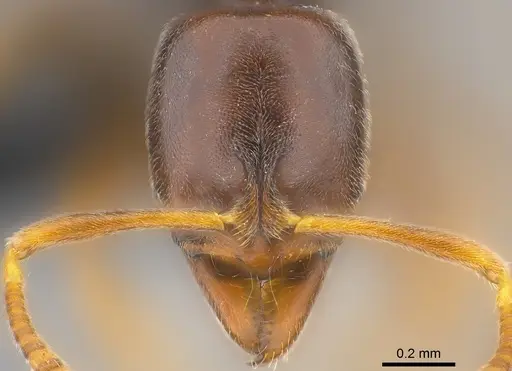
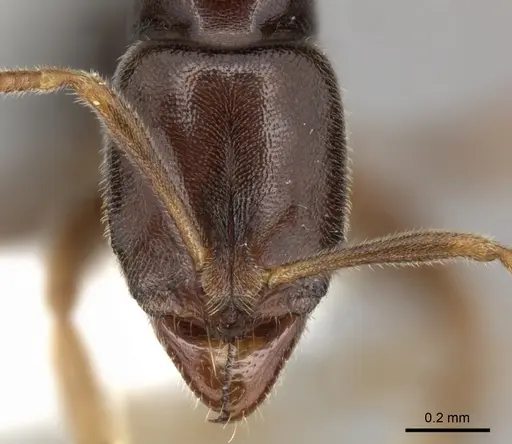
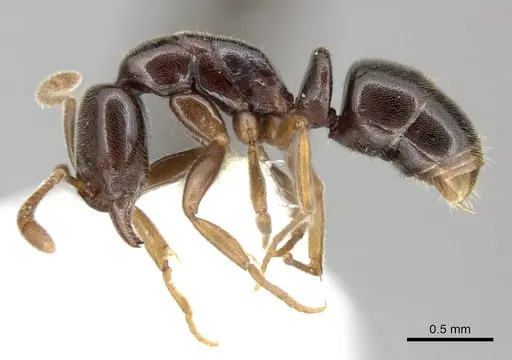
Workers of Hypoponera monticola measure 5.00-5.78mm in total length, making them relatively large for the genus [3]. Their body color ranges from dark brown to black [3][4]. The species has distinctive morphological features including considerably longer propodeal spines compared to similar species like H. inca, and a prominent tooth on the posterior apex of the petiole [3][4]. The mandibles are triangular, smooth and shiny with scattered piliferous punctations, and possess approximately 8 small teeth with strong apical and subapical teeth [4]. The clypeus is convex medially with a strong sagittal carina, and the occipital corners form prominent and acute lobes [4]. These morphological features help distinguish them from other Hypoponera species in the region.
Housing and Nest Preferences
In captivity, Hypoponera monticola does best in a naturalistic setup that mimics their forest floor environment. They naturally nest in fallen logs and rotting wood, so a setup with damp soil substrate and pieces of wood or bark for shelter works well [4][9]. A Y-tong (AAC) nest or plaster nest with soil chambers can also work, provided humidity is maintained. The key is providing a moist environment that doesn't dry out, these ants come from rainy elevated regions in Fiji. Avoid completely dry conditions. Include small hiding spots and debris in the outworld to give foragers enrichment. Because they are modest-sized ants, standard escape prevention measures suffice, though any ant can squeeze through small gaps if determined.
Feeding and Diet
As a Ponerinae ant, Hypoponera monticola is predatory and likely feeds on small invertebrates in nature. They forage in leaf litter where they hunt micro-arthropods and other tiny prey [4]. In captivity, offer small live prey such as fruit flies, pinhead crickets, small mealworms, and other appropriately-sized insects. Protein should make up the majority of their diet. Sugar sources like honey water or sugar water may be accepted occasionally, but these ants are primarily predatory. Feed every 2-3 days, adjusting based on colony consumption. Remove uneaten prey after 24 hours to prevent mold.
Temperature and Seasonal Care
Hypoponera monticola comes from elevated regions in Fiji, suggesting they prefer cooler conditions than typical tropical ants. Keep the nest area around 22-26°C, with a slight gradient allowing workers to regulate their own temperature [4]. Room temperature in this range is likely suitable. Since they are from a tropical island environment, they probably do not require a diapause or hibernation period. However, a slight reduction in temperature during winter months (dropping a few degrees) may simulate natural seasonal variation and could be beneficial. Avoid temperatures above 30°C or below 18°C. Monitor colony activity, if workers become sluggish, slightly increase temperature.
Behavior and Defense
Hypoponera monticola is a cryptic forager that spends much of its time in leaf litter and rotting wood, making it less visible than ground-nesting ants. As a member of the subfamily Ponerinae, they possess a functional stinger and may use it defensively when threatened [5]. While not aggressive toward humans, they will sting if handled roughly or if their nest is disturbed. The sting is not dangerous to healthy humans but may cause mild irritation. Workers are moderately active and will forage for prey in the outworld. This species is not known for being particularly aggressive or territorial toward other ants, but will defend their colony. Escape prevention is important, while not tiny, any ant can find ways to escape if barriers are inadequate.
Frequently Asked Questions
How long does it take for Hypoponera monticola to produce first workers?
The exact timeline is unconfirmed, but based on typical Ponerinae development, expect 6-10 weeks from egg to first worker at optimal temperature (around 24°C). This is an estimate since specific development data for this species is not available.
What do Hypoponera monticola eat?
They are predatory ants that hunt small invertebrates. In captivity, feed them small live prey like fruit flies, pinhead crickets, small mealworms, and other appropriately-sized insects. Protein should be their primary food source. They may occasionally accept sugar water or honey.
Are Hypoponera monticola good for beginners?
This species is rated as Medium difficulty. While not the most challenging ant to keep, the lack of specific care data in the hobby makes them less ideal for complete beginners. Those with some ant-keeping experience should have success, but be prepared to adapt based on colony behavior.
What temperature do Hypoponera monticola need?
Keep them around 22-26°C. They come from elevated, rainy regions in Fiji so they prefer cooler conditions than typical tropical ants. A temperature gradient allows them to self-regulate.
Do Hypoponera monticola need hibernation?
Probably not. Being from a tropical island environment, they likely do not require a true diapause. However, a slight cooling during winter months (a few degrees drop) may be beneficial and natural.
What type of nest should I use for Hypoponera monticola?
A naturalistic setup with damp soil and pieces of wood or bark works best since they nest in fallen logs in nature. A Y-tong (AAC) nest or plaster nest with soil substrate also works. The key is maintaining consistent moisture.
How big do Hypoponera monticola colonies get?
Colony size data is not available in the literature. Based on similar ponerine ants, colonies likely reach several hundred workers at maximum. Growth is expected to be moderate.
Can I keep multiple Hypoponera monticola queens together?
This is unconfirmed. The colony structure of this species has not been directly studied. Based on typical Hypoponera patterns, they likely form single-queen colonies. Combining unrelated queens is not recommended without specific data.
Where is Hypoponera monticola found in the wild?
This species is endemic to Fiji, found on Viti Levu, Ovalau, and the Lau group islands [1][2]. They inhabit elevated, rainy regions and forage in leaf litter while nesting in fallen logs.
References

This caresheet is licensed under CC BY-SA 4.0 .
CASENT0186141
View on AntWeb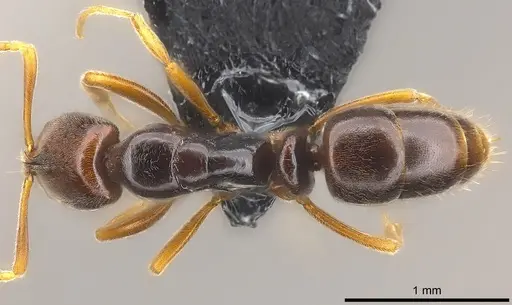
CASENT0270526
View on AntWeb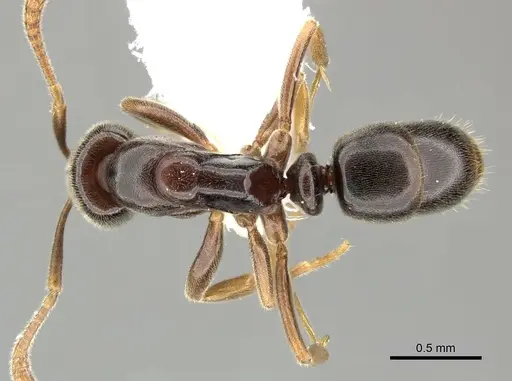
Literature
Loading...Loading products...