

Hypoponera mixta
- Scientific Name
- Hypoponera mixta
- Tribe
- Ponerini
- Subfamily
- Ponerinae
- Author
- Bolton & Fisher, 2011
- Distribution
- Found in 1 countries
Hypoponera mixta Overview
Hypoponera mixta is an ant species of the genus Hypoponera. It is primarily documented in 1 countries , including Kenya. Detailed taxonomic data and occurrence records can be further explored via authoritative databases such as AntWeb or the Global Biodiversity Information Facility (GBIF).
Hypoponera mixta
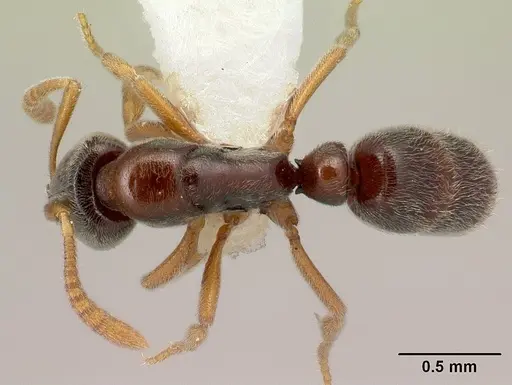
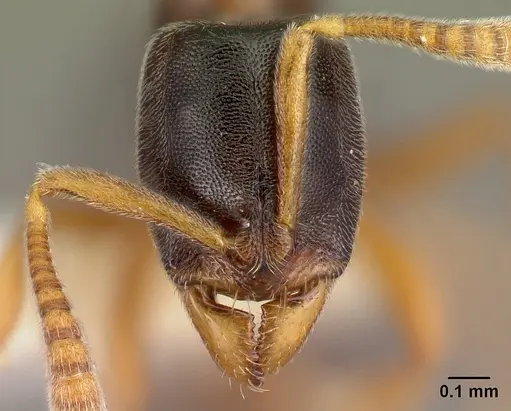
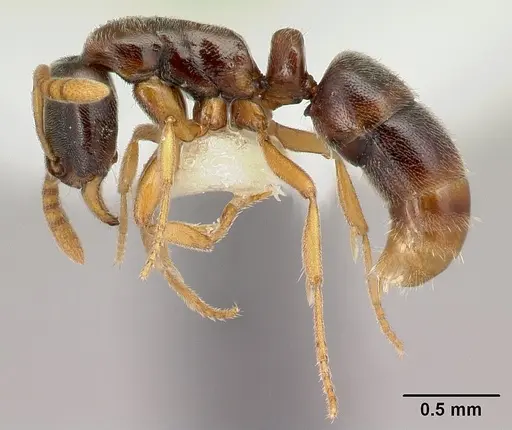
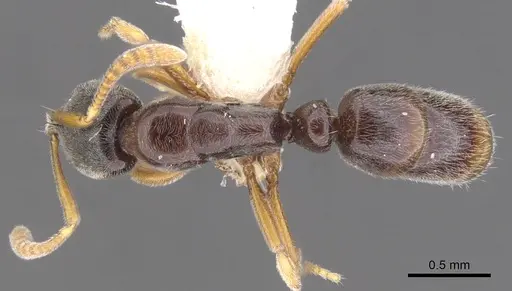
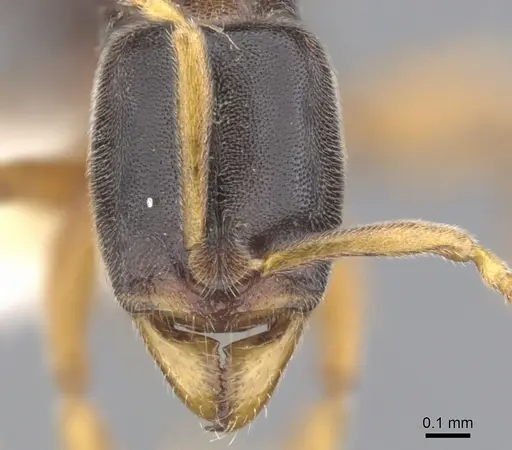
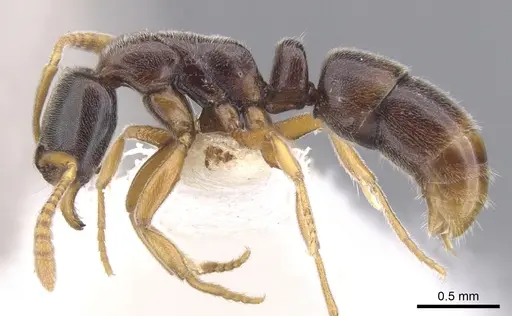
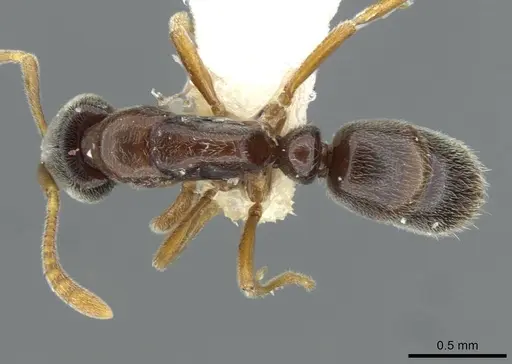
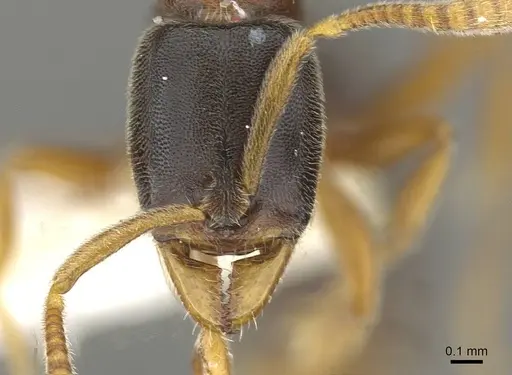
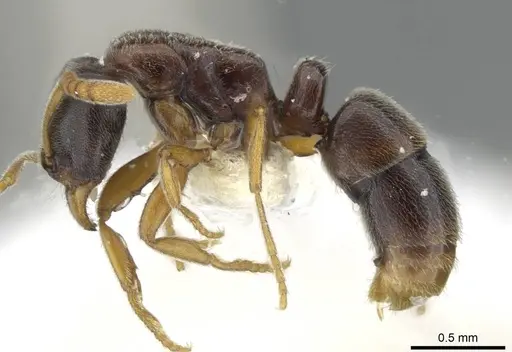
Hypoponera mixta is a tiny ponerine ant species from the highlands of Kenya, Africa. Workers measure just 0.68-0.74mm in head length, making them among the smaller ant species you'll encounter [1]. They belong to the Hypoponera abeillei group and can be identified by their lack of eyes, smooth pronotum, and distinctive petiole structure with short cuticular ridges on the posterior surface [1]. These ants are known only from two high-elevation forest locations in Kenya: Nyandarua at 2550m and Embu at 2000m [1].
As a Hypoponera species, they are likely predatory like other members of the Ponerinae subfamily, though their exact diet and behavior have not been documented. The complete absence of eyes suggests they navigate and forage primarily through chemical and tactile cues, similar to other blind Hypoponera species. This makes them an unusual and challenging species for antkeepers who want to observe unique ant behaviors.
Quick Summary
- Difficulty: Expert
- Origin & Habitat: Kenya, East Africa, found in highland forest habitats at elevations of 2000-2550m [1]. The two known collection sites are in montane forest zones.
- Colony Type: Colony structure is unconfirmed, no data exists on queen number or colony size for this species. Many Hypoponera species have ergatoid (wingless) replacement queens, but this has not been documented for H. mixta specifically.
- Size & Growth:
- Queen: Unknown, queen has not been described for this species
- Worker: 0.68-0.74mm head length,0.56-0.60mm head width [1]
- Colony: Unknown, no colony size data exists
- Growth: Unknown
- Development: Unknown, development has not been studied (No data exists for this species. Related Hypoponera species typically require 6-10 weeks for development at optimal temperatures, but this is a rough estimate only.)
- Antkeeping:
- Temperature: Based on their high-elevation Kenyan habitat, they likely prefer cooler conditions than typical tropical ants. Aim for 18-22°C as a starting point and observe colony behavior. Avoid overheating.
- Humidity: Highland forest habitats suggest moderate to high humidity needs. Keep the nest substrate consistently moist but not waterlogged. Provide a moisture gradient so ants can choose their preferred zone.
- Diapause: Unknown, no seasonal data exists. High-elevation origins suggest they may tolerate or require cooler temperatures seasonally, but this is unconfirmed.
- Nesting: No specific nesting data exists. Based on genus patterns, they likely prefer humid leaf litter environments or may nest in soil under stones. A small test tube setup or plaster nest with high humidity would be appropriate starting points.
- Behavior: Behavior is undocumented. As Ponerinae, they likely have a functional sting but their small size probably makes it ineffective against human skin. They are probably predatory on small invertebrates. Their lack of eyes means they rely heavily on chemical communication. Escape risk is low given their tiny size, they cannot climb smooth surfaces easily but can squeeze through very small gaps. Exercise standard escape prevention anyway.
- Common Issues: lack of documented biology means significant trial and error is required to establish successful husbandry, no data on founding behavior makes it difficult to know how to start a colony, high-elevation origins may make them sensitive to typical room temperatures, no information on acceptable foods makes feeding experimental, no hibernation or diapause data exists, seasonal care is unknown
Understanding the Challenge
Hypoponera mixta represents one of the most poorly documented species in the antkeeping hobby. We know its size, its location, and its physical identification features, but almost nothing about its biology, behavior, or care requirements. This makes it an expert-level species suitable only for antkeepers who enjoy experimentation and who have experience with other difficult, data-poor species. Before attempting to keep this species, consider that you will likely be pioneering husbandry techniques rather than following established protocols. Document your observations carefully, they could contribute valuable knowledge to the antkeeping community.
Natural History and What We Know
This species was formally described in 2011 by Bolton and Fisher as part of a comprehensive taxonomic revision of Afrotropical Hypoponera ants [1]. The type specimens were collected from two highland forest locations in Kenya: Nyandarua at 2550m elevation and Embu at 2000m elevation. These are montane forest habitats, suggesting the species prefers cooler, possibly more humid conditions than typical lowland tropical ants. Workers are tiny at under 1mm body length and completely lack eyes, a trait shared with many leaf-litter dwelling Hypoponera species. The absence of eyes indicates they are adapted to life in dark, concealed microhabitats where visual cues are useless.
Housing Recommendations
Given the complete lack of biological data, housing recommendations must be based on genus-level inference and cautious experimentation. Start with a small test tube setup or a small plaster/acrylic nest with chambers scaled to their tiny size. Maintain high humidity, these ants come from humid highland forests. The test tube should have a water reservoir but not be flooded. Given their likely predatory nature, provide a small outworld where you can offer prey items. Because they are blind, ensure the setup has textured surfaces they can grip. Use fine mesh for any ventilation, their tiny size means they can escape through gaps that would hold back larger ants.
Feeding and Diet
As Ponerinae ants, Hypoponera mixta is almost certainly predatory, feeding on small invertebrates such as springtails, mites, and other micro-arthropods. However, this is an inference based on subfamily biology, not species-specific observation. Start by offering small live prey items like springtails, fruit flies, or tiny crickets. You might also experiment with small pieces of mealworm or other protein sources. Sugar acceptance is uncertain, many Ponerinae species do not take sugar, but some do. Offer sugar water or honey occasionally but do not rely on it as a food source. Remove any uneaten prey after 24-48 hours to prevent mold.
Temperature and Environmental Conditions
The high-elevation Kenyan origin of this species suggests they prefer cooler temperatures than most ant species. Start with a range of 18-22°C and monitor colony behavior. If workers are consistently clustered together and show reduced activity, the temperature may be too low. If they avoid each other and seem stressed, it may be too warm. Avoid placing the nest in direct sunlight or near heat sources. Room temperature in most homes (20-24°C) may actually be too warm, consider this when positioning the colony. Humidity should be moderate to high, aim for substrate that feels consistently damp but not soggy.
Frequently Asked Questions
How difficult is Hypoponera mixta to keep?
This is an expert-level species. Almost nothing is known about their biology, so you will be experimenting with husbandry techniques rather than following established guidelines. Only attempt this species if you have experience with other difficult, data-poor ant species.
What do Hypoponera mixta ants eat?
As Ponerinae, they are likely predatory on small invertebrates. Offer small live prey like springtails, fruit flies, or tiny crickets. Sugar acceptance is uncertain, offer occasionally but do not rely on it.
What temperature do they need?
Based on their high-elevation Kenyan habitat, they likely prefer cooler conditions. Start around 18-22°C and adjust based on colony behavior. Typical room temperature may be too warm.
Do Hypoponera mixta ants have a queen?
The queen caste has not been described for this species. Many Hypoponera species have ergatoid (wingless) queens, but this is unconfirmed for H. mixta.
How big do colonies get?
Colony size is unknown, no data exists. Based on their tiny worker size and related species, colonies are likely small, possibly under 100 workers.
Where is Hypoponera mixta found?
Only known from two high-elevation locations in Kenya: Nyandarua at 2550m and Embu at 2000m elevation.
Can beginners keep this species?
No. This species is not suitable for beginners due to the complete lack of documented biology. You will need to experiment with all aspects of care.
Do they need hibernation?
Diapause requirements are unknown. The high-elevation origin suggests they may tolerate or require cooler seasonal conditions, but this is unconfirmed.
How do I start a colony?
Founding behavior is unconfirmed. If you obtain a founding queen, provide a small, humid test tube setup and offer small prey items periodically. Monitor closely and document your observations.
References

This caresheet is licensed under CC BY-SA 4.0 .
Literature
Loading...Loading products...