

Hypoponera hawkesi
- Scientific Name
- Hypoponera hawkesi
- Tribe
- Ponerini
- Subfamily
- Ponerinae
- Author
- Bolton & Fisher, 2011
- Distribution
- Found in 1 countries
Hypoponera hawkesi Overview
Hypoponera hawkesi is an ant species of the genus Hypoponera. It is primarily documented in 1 countries , including Tanzania, United Republic of. Detailed taxonomic data and occurrence records can be further explored via authoritative databases such as AntWeb or the Global Biodiversity Information Facility (GBIF).
Hypoponera hawkesi
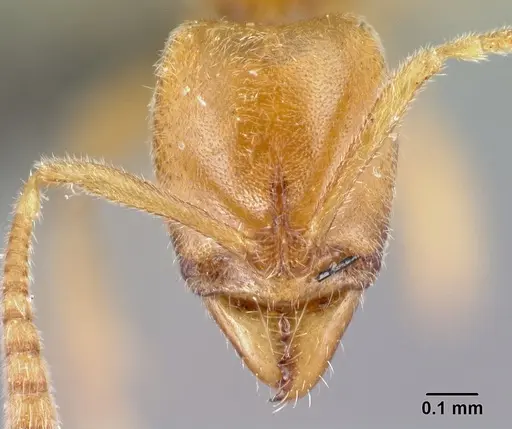
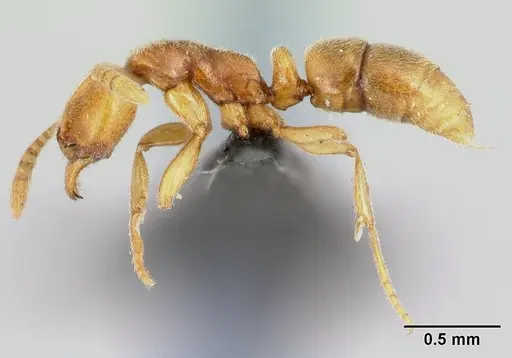
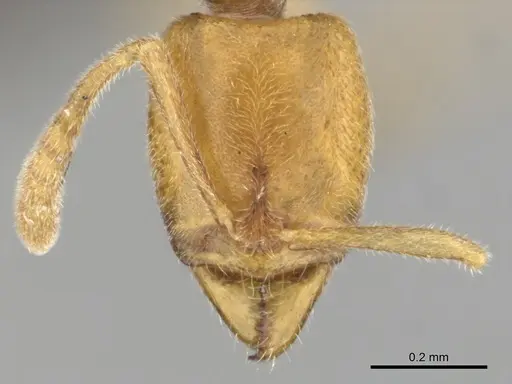
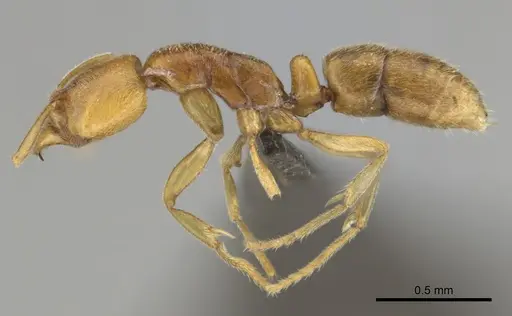
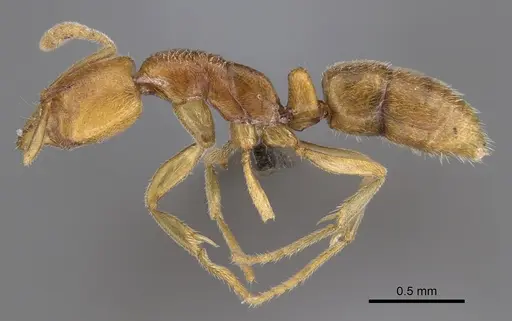
Hypoponera hawkesi is a tiny, slender ant species native to East Africa, specifically found in Tanzania and Uganda. Workers measure just 0.57-0.58mm in head length, making them one of the smaller ant species kept in captivity. They are entirely yellow in color and lack eyes entirely, a trait common to many Hypoponera species that live in dark, concealed microhabitats. The species was formally described in 2011 by Bolton and Fisher and is known from only four collected workers, making it one of the rarest ants in the antkeeping hobby. What makes this species distinctive is its unusually narrow petiole (the waist segment connecting the thorax and abdomen) and relatively long scapes (antennal segments) compared to other African Hypoponera [1].
Quick Summary
- Difficulty: Expert
- Origin & Habitat: East Africa, found in Tanzania (Sali Forest Reserve at 1150m elevation) and Uganda (Kalinzi National Park). The type specimen was collected from primary forest by hand collection, indicating they live in shaded, humid forest floor microhabitats [1][2].
- Colony Type: Unknown, only four workers have ever been documented, with no queen or colony ever observed. The colony structure (single-queen or multi-queen) remains unconfirmed.
- Size & Growth:
- Queen: Unconfirmed, no queens have been documented
- Worker: 0.57-0.58mm head length, workers are tiny at approximately 3-4mm total length [1]
- Colony: Unknown, no colony data exists
- Growth: Unknown
- Development: Unconfirmed, no development data exists for this species (No brood development has been studied. Related Hypoponera species typically take 6-10 weeks from egg to worker at warm temperatures, but this is unconfirmed for H. hawkesi)
- Antkeeping:
- Temperature: Likely 22-26°C based on typical lowland forest ant requirements, no specific data exists for this species
- Humidity: High humidity likely required, they come from primary forest environments where moisture is consistent. Keep nest substrate moist but not waterlogged.
- Diapause: Unknown, no seasonal data exists for this species. East African ants from similar habitats may not require strong diapause but may have reduced activity periods.
- Nesting: No specific nesting data exists. Based on related species and the eye-less morphology, they likely nest in concealed microhabitats like soil cavities, rotting wood, or under stones in humid forest settings. Test tubes with moist cotton and fine mesh barriers are recommended given their tiny size.
- Behavior: No behavioral observations have been documented for this species. As a Hypoponera species, they are likely predatory on small invertebrates. Their eye-less morphology suggests cryptic, surface-active foraging in dark microhabitats. Escape prevention is critical due to their very small size, they can squeeze through standard mesh. They likely have a functional stinger but are too small to affect humans.
- Common Issues: this species is virtually unknown in captivity, no established care protocols exist, tiny size makes escape prevention challenging, standard formicarium barriers may not contain them, no established breeding stock exists, all antkeepers would need to locate wild-caught queens which are extremely rare, no feeding data exists, unknown what they accept in captivity, no colony development timeline is known, keepers have no reference for healthy growth
Rarity and Documentation
Hypoponera hawkesi is one of the most poorly documented ant species in the world. Only four workers have ever been collected, the holotype from Tanzania's Sali Forest Reserve and three workers from Uganda's Kalinzi National Park. No queens, no colonies, no nuptial flight data, no feeding observations, and no developmental studies exist. This means everything about their captive care must be inferred from related species and general Hypoponera biology. For antkeepers, this species represents both a challenge (no established protocols) and an opportunity (pioneering captive breeding of an almost unknown species). You will be essentially creating the care protocol from scratch if you obtain this species [1].
Inferred Care from Related Species
Since direct data does not exist, care recommendations must be based on typical Hypoponera biology and the species' morphology. The workers lack eyes entirely, suggesting they are adapted to dark microhabitats and likely forage underground or in concealed spaces. This points to needing a humid, dark nesting environment with minimal light exposure. Related Hypoponera species are predatory, feeding on small arthropods and invertebrates. You should likely offer small live prey like springtails, fruit flies, and other micro-arthropods. The genus is typically claustral founding (queen seals herself in and lives off stored fat), so expect similar behavior if you obtain a queen. Start with room-temperature conditions around 22-26°C with high humidity and adjust based on colony activity.
Housing and Escape Prevention
Given their tiny size (workers are approximately 3-4mm total length), standard ant keeping setups will require significant modification for escape prevention. The workers can easily squeeze through standard mesh barriers that would contain larger ants. You will need fine mesh (at least 0.5mm or tighter), tightly fitting test tube caps, and careful attention to any seams or gaps in your formicarium. A test tube setup with moist cotton provides the humidity they likely need while allowing you to observe them. Because they are from primary forest environments, consider providing a naturalistic setup with soil or a humid acrylic nest that maintains consistent moisture without flooding.
The Challenge of Obtaining This Species
Hypoponera hawkesi has never been documented in the antkeeping hobby to our knowledge. There is no established captive breeding stock, meaning any antkeeper wanting to keep this species would need to locate wild-caught queens, an extremely challenging prospect given that only four workers have ever been documented in scientific collections. The species' range is limited to two protected areas in East Africa (Sali Forest Reserve in Tanzania and Kalinzi National Park in Uganda), and collecting would require research permits. For most antkeepers, this species will remain a theoretical keeping challenge rather than a practical one. If you do obtain this species through proper channels, your observations would contribute genuinely new knowledge to antkeeping. [1]
Frequently Asked Questions
Is Hypoponera hawkesi available in the antkeeping hobby?
No, this species is virtually unknown in captivity. Only four workers have ever been documented in scientific collections, and no captive colonies exist. You would need to locate wild-caught queens, which is extremely unlikely given the species' rarity and limited range.
How big are Hypoponera hawkesi workers?
Workers are tiny at approximately 3-4mm total length. Their head length (HL) is 0.57-0.58mm and head width (HW) is 0.47-0.48mm. They are among the smaller ant species kept in captivity.
What do Hypoponera hawkesi eat?
Feeding is unconfirmed for this species. Based on related Hypoponera species, they are likely predatory on small invertebrates. You should offer small live prey like springtails, fruit flies, and micro-arthropods. Sugar acceptance is unknown.
Do Hypoponera hawkesi have queens?
Queens have never been documented. Only four workers are known to science. The species was described in 2011,and no further specimens have been collected since.
What temperature should I keep Hypoponera hawkesi at?
No specific temperature data exists. Based on their East African forest habitat, aim for 22-26°C. Start in the middle of this range and observe colony activity to fine-tune.
Do Hypoponera hawkesi need hibernation?
Diapause requirements are unknown. As an East African species from a relatively stable tropical environment, they may not require a true hibernation but might have reduced activity periods.
Are Hypoponera hawkesi good for beginners?
No. This species is rated Expert difficulty because no established care protocols exist, they are extremely rare, and their tiny size presents significant keeping challenges. Only experienced antkeepers with the resources to experiment should attempt this species.
Where does Hypoponera hawkesi live?
They are found in East Africa, specifically Tanzania (Sali Forest Reserve at 1150m elevation) and Uganda (Kalinzi National Park). The habitat is primary forest, indicating they live in humid, shaded forest floor environments.
Why do Hypoponera hawkesi have no eyes?
The workers lack eyes entirely, which is a common trait in many Hypoponera species. This indicates they are adapted to dark microhabitats, likely living in soil, under stones, or in rotting wood where light does not penetrate. They probably navigate using chemical cues and touch rather than sight.
How long does it take for Hypoponera hawkesi to develop from egg to worker?
This is completely unconfirmed, no brood development has ever been studied for this species. Related Hypoponera species typically take 6-10 weeks, but this is only an estimate.
Can I keep multiple Hypoponera hawkesi queens together?
This is unknown. No queens have ever been documented, so colony structure (single-queen or multi-queen) is completely unconfirmed. Do not attempt combining unrelated queens without specific data.
References

This caresheet is licensed under CC BY-SA 4.0 .
CASENT0192422
View on AntWeb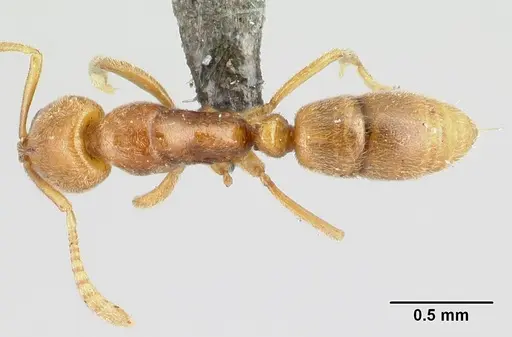
CASENT0250672
View on AntWeb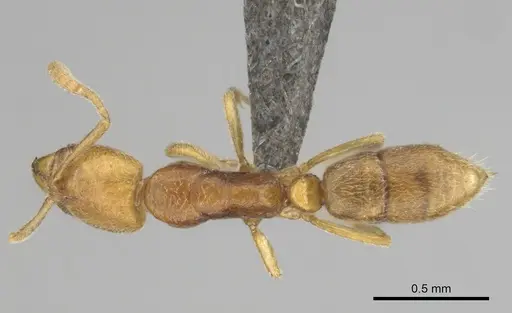
Literature
Loading...Loading products...