

Hypoponera foreli
- Scientific Name
- Hypoponera foreli
- Tribe
- Ponerini
- Subfamily
- Ponerinae
- Author
- Mayr, 1887
- Distribution
- Found in 4 countries
Hypoponera foreli Overview
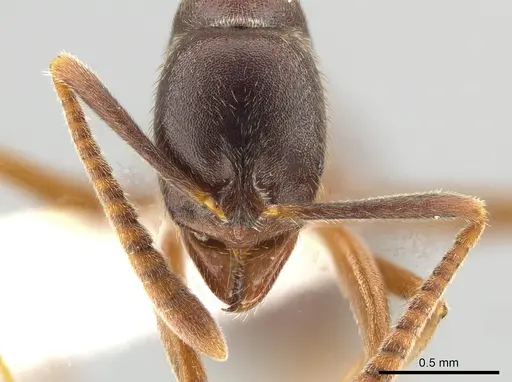
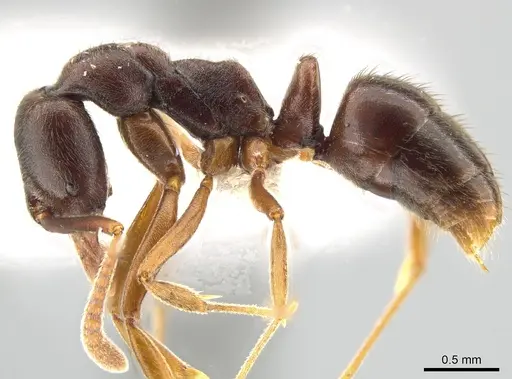
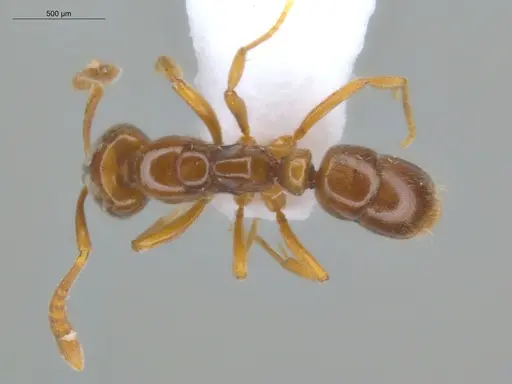
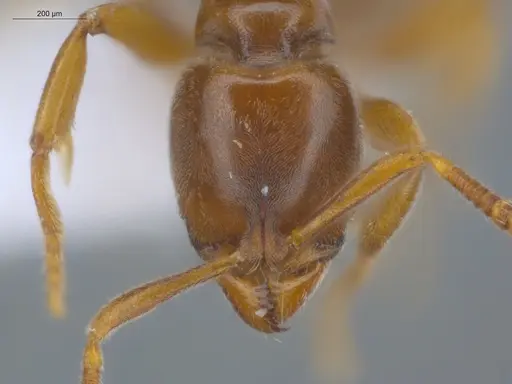
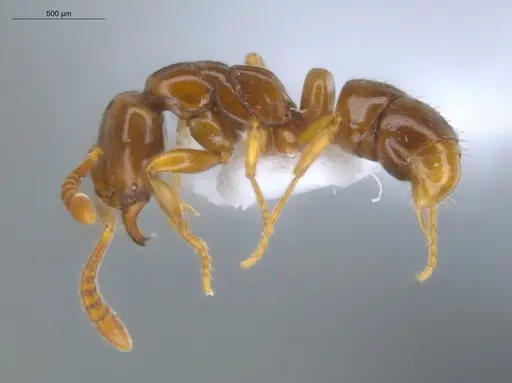
Hypoponera foreli is an ant species of the genus Hypoponera. It is primarily documented in 4 countries , including Argentina, Brazil, French Guiana. Detailed taxonomic data and occurrence records can be further explored via authoritative databases such as AntWeb or the Global Biodiversity Information Facility (GBIF).
Hypoponera foreli
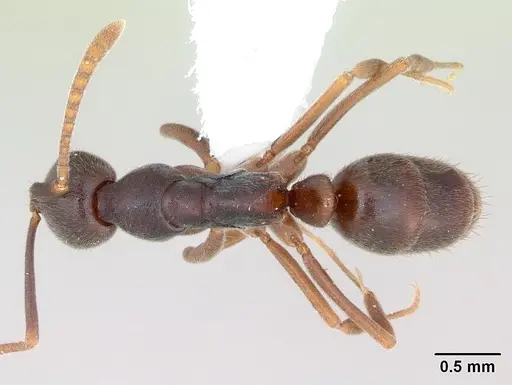
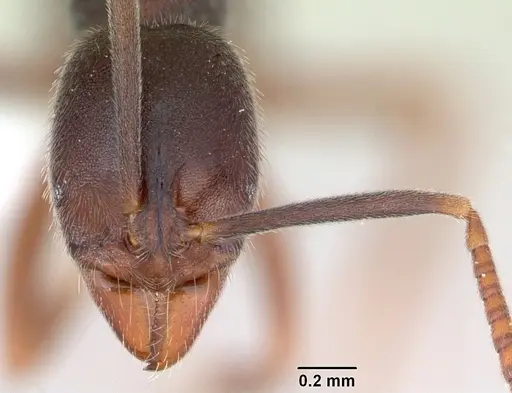
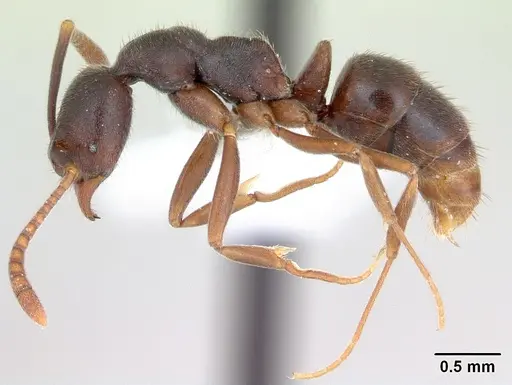
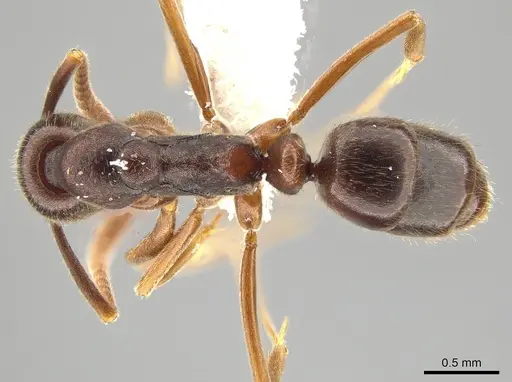
Hypoponera foreli is a small, cryptic ant species native to the Neotropical region, found across Argentina, Brazil, French Guiana, Paraguay, and Venezuela [1]. Workers are tiny and slender, typically measuring 2-3mm, with the genus known for their pale to reddish-brown coloration and distinctive elongated petiole. These ants are leaf-litter dwellers, living deep within the forest floor where they hunt small prey. They belong to the Ponerinae subfamily, which includes some of the more primitive ant species, and are classified as litter generalist predators, meaning they hunt small invertebrates among the decomposing leaves on the forest floor [2]. This species prefers mature forest environments and is rarely found in disturbed or open areas.
Quick Summary
- Difficulty: Medium
- Origin & Habitat: Neotropical region, Argentina, Brazil, French Guiana, Paraguay, Venezuela. Found in leaf-litter of native Atlantic forests, semideciduous forests, and cerrado areas [1][3][4]. They inhabit the forest floor in humid, shaded environments with plenty of decomposing organic matter.
- Colony Type: Likely single-queen colonies (monogyne), though colony structure is not well-documented for this specific species. Hypoponera colonies are typically small to moderate in size.
- Colony: Monogyne
- Founding: Claustral
- Size & Growth:
- Queen: Estimated 4-5mm based on genus typical size
- Worker: 2-3mm [1]
- Colony: Likely under 200-300 workers based on typical Hypoponera colony sizes
- Growth: Moderate, Ponerine ants typically develop slower than many common house ants
- Development: Estimated 8-12 weeks at optimal temperature based on related Ponerinae species (Development times are not specifically documented for this species. Ponerine ants generally have slower development than Myrmicinae species.)
- Antkeeping:
- Temperature: Keep around 22-26°C. They tolerate temperatures from roughly 20-28°C but avoid extremes. Being a Neotropical species, they prefer warm but not hot conditions.
- Humidity: High humidity is essential, these are forest floor ants. Keep the nest substrate consistently moist but not waterlogged. The leaf-litter layer in their natural habitat stays damp, so replicate that with a well-hydrated nest setup.
- Diapause: Likely no true diapause, being tropical/subtropical, they may reduce activity in cooler months but don't require hibernation like temperate species.
- Nesting: Y-tong (AAC) nests or plaster nests work well. They prefer tight, humid chambers that mimic the compressed spaces between leaf-litter and soil. Avoid dry, open nests.
- Behavior: Hypoponera foreli is a shy, cryptic species. Workers are slow-moving and spend most of their time hunting through leaf-litter. They are not aggressive and rarely venture into the open. Their small size means escape prevention is important, they can slip through small gaps. They are predators, hunting small invertebrates rather than scavenging sweets. Workers may be nocturnal or crepuscular, matching their forest-floor lifestyle.
- Common Issues: high humidity maintenance is critical, drying out kills colonies quickly, small size makes escape prevention challenging without fine mesh barriers, slow growth can frustrate beginners who overfeed or disturb the nest, wild-caught colonies may have parasites that are difficult to treat, they are not sugar-feeding ants, protein prey is essential and must be available
Natural History and Habitat
Hypoponera foreli is a leaf-litter dwelling ant found throughout the Neotropics, from Argentina up through Brazil, French Guiana, Paraguay, and Venezuela [1]. They live in the humid forest floor environment, typically found in native forest fragments including Atlantic semideciduous forests and cerrado areas [3][4]. Research shows they are strongly associated with mature forest environments, they are rarely found in open areas, pastures, or eucalypt plantations unless adjacent to forest [5]. Studies in Brazil found them almost exclusively in native forest environments, with specimens collected using Winkler extractors from leaf-litter samples [6]. They are classified as 'litter generalist predators, ' meaning they hunt small invertebrates among decomposing leaves rather than foraging in the open [2]. This species appears to require some level of forest cover and is sensitive to habitat disturbance.
Nest Preferences and Housing
In captivity, Hypoponera foreli needs a humid, compact nest that mimics the compressed spaces between leaf-litter and soil on the forest floor. Y-tong (AAC) nests or plaster nests work well because they hold humidity consistently. The chambers should be relatively small and tight, these ants don't need large open spaces. Keep the nest substrate consistently moist but never waterlogged. A hydration setup that provides constant moisture without flooding is ideal. The outworld should also be humid, and you can add leaf-litter or moss to give foragers cover. Because they are tiny, ensure all connections and barriers are tight, they can escape through surprisingly small gaps. Test tube setups can work for founding colonies but monitor humidity carefully.
Feeding and Diet
As predators in the leaf-litter guild, Hypoponera foreli needs a protein-based diet. Feed small live prey such as springtails, fruit flies, small mealworms, or other tiny arthropods. They are not typically sugar-feeders, though you can occasionally offer a drop of honey or sugar water to test acceptance, don't rely on it as a primary food source. Feed small prey items a few times per week, adjusting based on colony size. Remove uneaten prey after 24-48 hours to prevent mold. The key is providing consistent small protein meals rather than large feedings. A well-fed colony will have workers that appear active and foragers that regularly patrol the outworld.
Temperature and Seasonal Care
Keep your colony at 22-26°C. This is a Neotropical species that prefers warm, stable temperatures in the low-to-mid 20s Celsius. Avoid temperatures above 30°C or below 18°C for extended periods. A heating cable on one side of the nest can create a gentle gradient, allowing ants to move to their preferred temperature zone. Unlike temperate species, they likely do not require a true diapause or hibernation period. However, you may notice reduced activity during cooler months, this is normal and you can reduce feeding frequency during these periods. Maintain humidity year-round as forest floor conditions don't change dramatically with seasons.
Behavior and Colony Dynamics
Hypoponera foreli is a shy, cryptic species that spends most of its time hidden in the nest or hunting through leaf-litter. Workers are slow-moving and deliberate rather than frantic. They are not aggressive and lack a potent sting, making them safe to handle. Colonies are likely small, probably under a few hundred workers at maturity. The queen is claustral, she seals herself in to found the colony and raises the first workers alone on stored body reserves. Workers are polymorphic, meaning there may be some size variation among them. Because they are so small and cryptic, observing colony activity can be challenging, but healthy colonies will have foragers regularly emerging to hunt in the outworld.
Frequently Asked Questions
How long does it take for Hypoponera foreli to produce first workers?
Estimated 8-12 weeks from egg to first worker at optimal temperature (22-26°C). This is based on typical Ponerinae development patterns since specific timing is not documented for this species. Be patient, Ponerine ants develop more slowly than many common ants.
Can I keep Hypoponera foreli in a test tube?
Yes, test tubes work for founding colonies. Keep the water reservoir moderate-sized and ensure the cotton is packed tightly to prevent flooding. Cover the tube with a dark cloth to simulate the dark forest floor environment they prefer. Monitor humidity closely as test tubes can dry out quickly.
What do Hypoponera foreli eat?
They are predators that need small live prey. Feed springtails, fruit flies, small mealworms, or other tiny arthropods. They are not reliable sugar-feeders, though you can occasionally offer honey or sugar water. Protein is essential.
Are Hypoponera foreli good for beginners?
They are rated Medium difficulty. They require high humidity and specific protein-based feeding, which makes them slightly more challenging than sugar-feeding ants. However, their docile nature and small colony size make them manageable for committed beginners.
How big do Hypoponera foreli colonies get?
Likely under 300 workers at maturity based on typical Hypoponera colony sizes. They are not large colony ants. Growth is moderate and colonies remain relatively compact.
Do Hypoponera foreli need hibernation?
No, they do not require hibernation. Being a Neotropical species, they prefer consistent warm, humid conditions year-round. You may notice reduced activity in cooler months, but this is not a true diapause.
Why are my Hypoponera foreli dying?
The most common causes are: drying out (critical, they need constant humidity), lack of protein prey (they will starve without live prey), escape through small gaps (they are tiny), and disturbance from excessive light or vibrations. Check humidity first.
When should I move Hypoponera foreli to a formicarium?
Move them when the test tube water reservoir is fouled or when the colony has outgrown the tube (typically 30-50+ workers). A Y-tong or plaster nest works well for continued growth. They prefer tight, humid chambers.
Can I keep multiple queens together?
Not recommended. There is no documented evidence that unrelated Hypoponera foreli queens can found colonies together successfully. Stick to single-queen colonies for best results.
References

This caresheet is licensed under CC BY-SA 4.0 .
Literature
Loading...Loading products...