

Hypoponera faex
- Scientific Name
- Hypoponera faex
- Tribe
- Ponerini
- Subfamily
- Ponerinae
- Author
- Bolton & Fisher, 2011
- Distribution
- Found in 1 countries
Hypoponera faex Overview
Hypoponera faex is an ant species of the genus Hypoponera. It is primarily documented in 1 countries , including Ethiopia. Detailed taxonomic data and occurrence records can be further explored via authoritative databases such as AntWeb or the Global Biodiversity Information Facility (GBIF).
Hypoponera faex
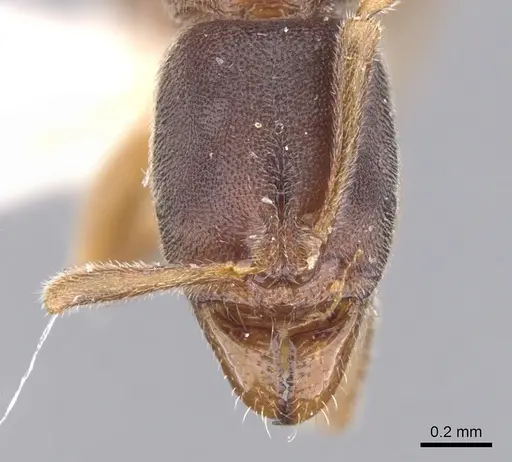
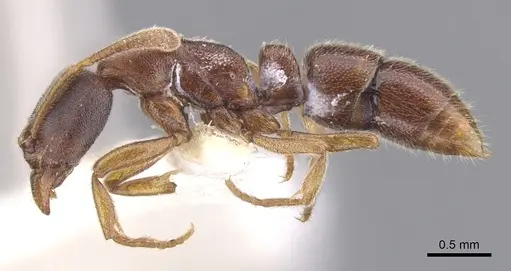
Hypoponera faex is a large, striking ponerine ant species only known from a single worker specimen collected in Ethiopia. Workers measure approximately 5mm in total length, with a head length of 0.88mm and width of 0.72mm [1]. This species stands out within the genus due to its relatively well-developed eyes (5-6 ommatidia) and distinctive radiating cuticular ridges at the base of the posterior face of the petiole node [1]. The species was discovered in the Gughé highlands of Ethiopia at an elevation of roughly 9,500-10,000 feet, in a humid microhabitat under bamboo near a waterfall [1].
This is one of the least-studied ant species in captivity, with no documented captive colonies or breeding records. The genus Hypoponera contains cryptic, ground-dwelling ants often found in moist forest habitats. Based on its natural collection location and genus patterns, it likely inhabits damp, shaded forest floor environments with high humidity. The well-developed eyes suggest this species may be more visually oriented than typical Hypoponera, which often have reduced or absent eyes.
Quick Summary
- Difficulty: Expert
- Origin & Habitat: Ethiopia (Gamo Province, Bonghé valley, Gughé highlands) at approximately 9,500-10,000 feet elevation. Found in humid forest under bamboo near a waterfall, sifted from humus [1]. This suggests a cool, moist highland forest environment with significant leaf litter and organic matter.
- Colony Type: Unknown, only a single worker (holotype) has ever been documented. No colony structure data exists. Based on genus patterns, likely single-queen colonies, but this is unconfirmed.
- Size & Growth:
- Queen: Unknown, no queen has been described
- Worker: HL 0.88mm, HW 0.72mm [1], approximately 5mm total length (estimated)
- Colony: Unknown, no colony size data exists
- Growth: Unknown
- Development: Unknown, no development data exists for this species. Based on typical Ponerine patterns, estimate 6-10 weeks at optimal temperature, but this is highly uncertain. (No captive breeding has ever been documented. All timelines are genus-level estimates.)
- Antkeeping:
- Temperature: Cool to moderate conditions expected. Based on highland Ethiopian habitat (9,500+ feet), aim for 18-22°C. Avoid warm conditions.
- Humidity: High humidity required, collected from humid microhabitat under bamboo near waterfall. Keep nest substrate consistently moist but not waterlogged. Think damp forest floor, not wet swamp.
- Diapause: Unknown, no seasonal data exists. Highland Ethiopian species may tolerate cooler temperatures and may benefit from a cool period during winter months.
- Nesting: Likely prefers moist, naturalistic setups with significant organic material. Test tubes may be too dry. A naturalistic setup with soil, leaf litter, and moisture retention would best approximate its natural habitat. Given its collection from humus, it likely nests in loose, damp substrate rather than hard soil.
- Behavior: Behavior is completely unstudied in captivity. Based on genus patterns, Hypoponera are typically cryptic, slow-moving, and predatory. The relatively well-developed eyes suggest this species may be more visually oriented than typical members of the genus. Escape risk is moderate, workers are small but not tiny. However, since no one has kept this species, actual behavior in captivity is unknown.
- Common Issues: no captive data exists, this species has never been kept in captivity, so all care is speculative, high humidity requirements may be difficult to maintain without causing mold, extremely slow growth typical of Ponerines may frustrate keepers, wild-caught colonies may have parasites that kill them in captivity, difficulty obtaining this species, only known from a single specimen collected in 1948
Species Discovery and Rarity
Hypoponera faex was described in 2011 by Barry Bolton and Brian Fisher based on a single worker specimen collected in 1948. The holotype was found in the Bonghé valley in Ethiopia's Gamo Province, at an elevation of approximately 9,500-10,000 feet in the Gughé highlands. The specimen was collected by H. Scott by sifting humus (decaying organic matter) from under bamboo plants near a waterfall on the south side of the valley [1]. This makes it one of the rarest and least-studied ant species in the world, no additional specimens have been found since its discovery over 75 years ago. There are no documented captive colonies, no observations of queens or reproductive castes, and no ecological studies of live colonies. Everything we know about this species comes from this single preserved worker.
Identification and Distinguishing Features
This species is distinctive within the Afrotropical Hypoponera fauna. It is described as a large, conspicuous, and coarsely sculptured species. The most notable feature is the combination of relatively well-developed eyes (5-6 ommatidia) with radiating cuticular ridges at the base of the posterior face of the petiole node [1]. Most Hypoponera species have reduced or absent eyes, making this species unusual. The head and body have coarse reticulate-punctate sculpture, a distinctive texture pattern of interconnected ridges and pits. The metanotal groove (the groove between the mesonotum and propodeum) is absent or only vestigially present. The first gastral segment (the first segment behind the petiole) is wider than the second segment, which is unusual among Hypoponera [1]. This species belongs to the Hypoponera abeillei species group.
Natural Habitat and Microclimate
The type locality provides strong clues about this species' habitat preferences. The collection occurred at high elevation (roughly 9,500-10,000 feet) in the Ethiopian highlands. The specimen was found in humus, decaying organic matter, under bamboo plants near a waterfall. This indicates a permanently shaded, extremely humid microhabitat with abundant organic material. The waterfall proximity suggests constant moisture, and the bamboo cover indicates a forested or woodland area. High elevation Ethiopian environments experience cool temperatures year-round. This ant clearly prefers cool, moist, shaded conditions with access to significant organic matter, likely a forest floor habitat. It would not tolerate dry, sunny, or warm conditions. [1]
Keeping Hypoponera faex in Captivity
WARNING: This species has never been kept in captivity. All care recommendations are highly speculative and based on genus-level patterns and habitat inference. Do not acquire this species unless you are an expert antkeeper with experience in difficult, data-poor species.
If attempting to keep this species, you would need to replicate its natural microhabitat: extremely high humidity, cool temperatures (18-22°C), and significant organic substrate. A naturalistic setup with soil, leaf litter, and moss would be essential. Test tube setups would likely be too dry unless very carefully maintained. The collection from humus suggests it may be a leaf-litter dweller rather than a deep-nesting species. Feeding would likely follow typical Ponerine patterns, small live prey such as springtails, fruit flies, or other tiny arthropods. Sugar acceptance is unknown but possible. Given the complete lack of captive data, success would require extensive experimentation and careful observation.
Related Species and Genus Context
Hypoponera is a large genus of cryptic ponerine ants found primarily in tropical and subtropical regions worldwide. Most species are small, ground-dwelling, and have reduced eyes. They are typically predatory, feeding on small soil arthropods. The genus is known for cryptic lifestyles, with colonies often hidden in leaf litter, soil, or under objects on the forest floor. Many species are difficult to identify and likely many remain undiscovered. The Hypoponera abeillei group, to which H. faex belongs, contains species with various distinguishing features including eye development and petiole morphology. This species is unique within the Afrotropical fauna for combining well-developed eyes with the distinctive petiolar ridges. No other species in this group has been documented in the antkeeping hobby. [1]
Frequently Asked Questions
Has Hypoponera faex ever been kept in captivity?
No, this species has never been documented in captivity. It is known from only a single worker specimen collected in 1948. No colony has ever been found, no queen has ever been described, and no antkeeper has successfully kept this species. All care information is speculative.
Where does Hypoponera faex live in the wild?
Only from Ethiopia, specifically the Gughé highlands in Gamo Province at approximately 9,500-10,000 feet elevation. It was found under bamboo near a waterfall in a humid, shaded forest environment.
What does Hypoponera faex look like?
Workers are large for the genus, approximately 5mm total length. They have a distinctive coarse sculptured appearance with reticulate-punctate texture on the head and body. The most notable feature is the relatively well-developed eyes (5-6 ommatidia), unusual for Hypoponera. They also have distinctive cuticular ridges at the base of the petiole node.
Is Hypoponera faex suitable for beginners?
No. This species is not suitable for any antkeeper. It has never been kept in captivity, no captive breeding has ever been documented, and we have no confirmed information about its care requirements. It should only be considered by expert researchers with specific conservation goals, not hobbyists.
What temperature does Hypoponera faex need?
Based on its highland Ethiopian habitat, it likely prefers cool conditions, approximately 18-22°C. However, this is entirely speculative since no live specimens have ever been studied. Avoid warm conditions.
What humidity does Hypoponera faex need?
Very high humidity, it was collected from a humid microhabitat under bamboo near a waterfall. The nest substrate should be consistently moist but not waterlogged. Think damp forest floor conditions.
What does Hypoponera faex eat?
Unknown, no feeding observations exist. Based on genus patterns, it is likely predatory on small arthropods. Ponerine ants typically feed on live prey such as springtails, fruit flies, and other tiny invertebrates. Sugar acceptance is unconfirmed.
How big do Hypoponera faex colonies get?
Unknown, no colony size data exists. Only a single worker has ever been documented. Related Hypoponera species typically have colonies ranging from dozens to a few hundred workers.
Can I keep multiple queens of Hypoponera faex together?
Unknown, colony structure has never been studied. Most Hypoponera species are believed to be single-queen, but this is unconfirmed for H. faex. Do not attempt combining unrelated queens without expert guidance.
Does Hypoponera faex need hibernation?
Unknown, no seasonal data exists. Based on its highland Ethiopian origin, it may tolerate or even benefit from cooler winter temperatures, but this is entirely speculative.
How long does it take for Hypoponera faex to develop from egg to worker?
Unknown, no development data exists for this species. Ponerine ants typically take 6-10 weeks from egg to worker at optimal temperatures, but this is a rough estimate with no species-specific data.
References

This caresheet is licensed under CC BY-SA 4.0 .
CASENT0902545
View on AntWeb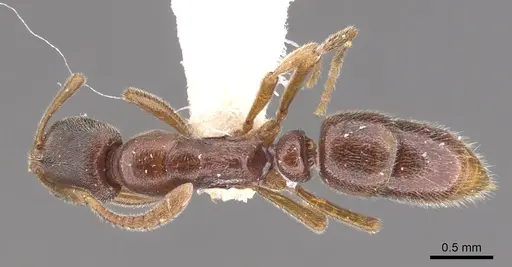
Literature
Loading...Loading products...