

Hypoponera comis
- Scientific Name
- Hypoponera comis
- Tribe
- Ponerini
- Subfamily
- Ponerinae
- Author
- Bolton & Fisher, 2011
- Distribution
- Found in 1 countries
Hypoponera comis Overview
Hypoponera comis is an ant species of the genus Hypoponera. It is primarily documented in 1 countries , including Tanzania, United Republic of. Detailed taxonomic data and occurrence records can be further explored via authoritative databases such as AntWeb or the Global Biodiversity Information Facility (GBIF).
Hypoponera comis
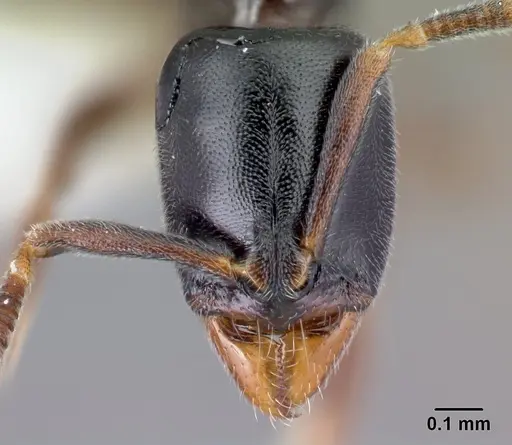
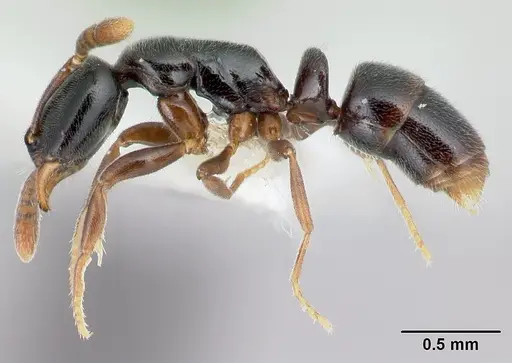
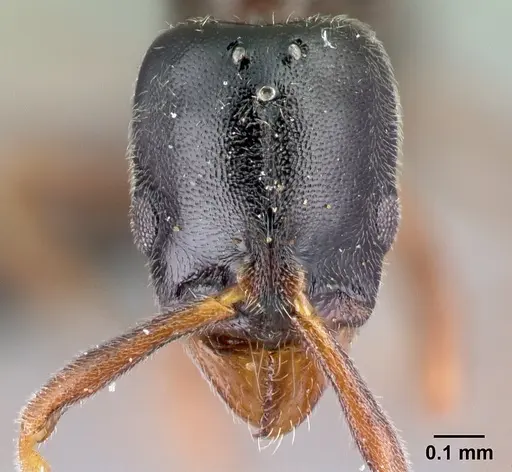
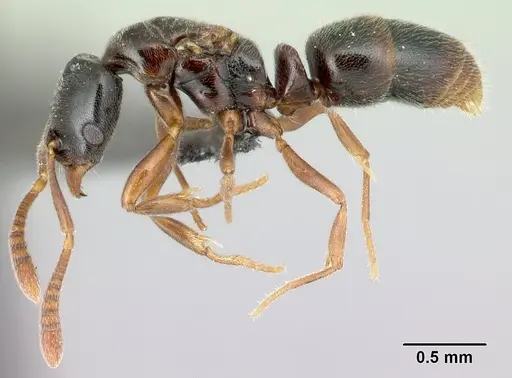
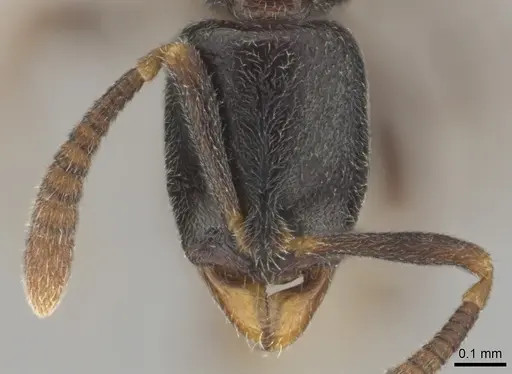
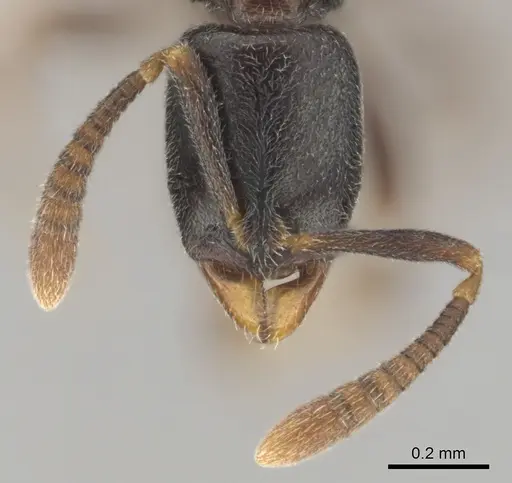
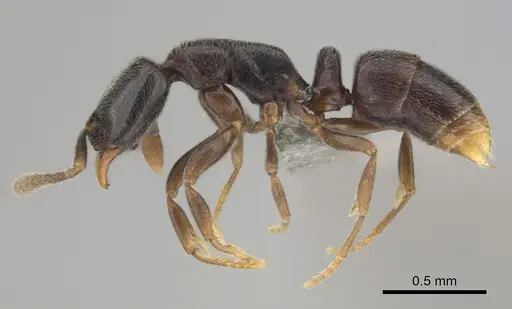
Hypoponera comis is a tiny, cryptic ant species from the Ponerinae subfamily, native to the rainforests of Tanzania in East Africa. Workers are among the smallest ants you'll encounter, measuring just 0.61-0.65mm in head length, that's roughly 2-3mm total length. They are uniformly dark brown to black in color, making them difficult to spot against the forest floor [1]. This species was only recently described in 2011 and remains one of the least-studied ants in the hobby. They belong to the Hypoponera abeillei group and are closely related to H. importuna and H. occidentalis [1]. In the wild, these ants live deep within leaf litter on the forest floor, where they hunt tiny prey among the decomposing material [1].
What makes H. comis particularly challenging for antkeepers is how little we know about them. Unlike common species with decades of captive observation, this ant has never been kept in captivity, we have no data on their founding behavior, colony size, or specific care requirements. Everything we recommend is based on what we know about related Hypoponera species and general principles for cryptic forest-floor ants. This species is best suited for experienced antkeepers who enjoy the challenge of working with poorly documented species and can adapt their care based on colony behavior.
Quick Summary
- Difficulty: Expert
- Origin & Habitat: Ndundulu Forest Reserve in Tanzania's Iringa Region at 1567m elevation. They live in primary rainforest, specifically in leaf litter on the forest floor where they were collected using Winkler extraction (a method that sifts leaf litter to catch tiny arthropods) [1].
- Colony Type: Unknown, colony structure has not been documented. Related Hypoponera species are typically monogyne (single queen) but this has not been confirmed for H. comis.
- Size & Growth:
- Queen: Not fully measured in original description, paratype dealate queen exists but measurements not provided [1]. Estimate based on genus: 4-5mm.
- Worker: 0.61-0.65mm head length, total body length approximately 2-3mm [1].
- Colony: Unknown, only the type series (12 workers and 1 queen) has ever been collected [1].
- Growth: Unknown, no captive data exists.
- Development: Unknown, no development data exists for this species. Based on typical Hypoponera patterns and their small size, estimate 6-10 weeks at optimal temperature, but this is a rough guess. (No direct data available. Estimates based on genus-level patterns for small Ponerine ants.)
- Antkeeping:
- Temperature: Keep at room temperature, roughly 20-24°C. Since they come from a Tanzanian rainforest at 1567m elevation, they likely prefer stable, moderate temperatures rather than extreme heat. Avoid temperatures above 28°C. A slight gradient allowing cooler areas (around 20°C) is advisable
- Humidity: High humidity is essential, these are leaf-litter ants from a tropical rainforest. Keep the nest substrate consistently moist but not waterlogged. The substrate should feel damp to the touch. Provide a water tube but ensure the cotton doesn't flood. Mist the outworld occasionally but avoid standing water. Think damp forest floor conditions
- Diapause: Unknown, no data on overwintering requirements. Tanzania is near the equator with minimal seasonal temperature variation, so they may not require a true diapause. However, related temperate Hypoponera species do overwinter. Monitor colony behavior, if they become less active in winter months, reduce feeding and keep slightly cooler (15-18°C) for a few months.
- Nesting: Use a nest designed for tiny ants, test tubes with very small diameters work well, or a Y-tong (AAC) nest with narrow chambers. The nest material should retain moisture well (plaster or soil-based naturalistic setups work). Avoid large, open spaces, these ants are cryptic and prefer tight, enclosed spaces. A naturalistic setup with a thick layer of moist leaf litter or soil mimics their natural habitat best.
- Behavior: Hypoponera comis is a cryptic, ground-dwelling ant that avoids light and open spaces. They are predatory on tiny arthropods and likely use venom to subdue prey, though their small size means they pose no threat to humans. Workers are slow-moving and deliberate rather than frantic. They do not form visible foraging trails, instead, individual workers hunt alone through the leaf litter. Escape risk is significant due to their tiny size, use fine mesh and ensure all connections are sealed. They are not aggressive toward keepers and will retreat rather than defend. Expect minimal visible activity compared to more common ants, this is a quiet, secretive species.
- Common Issues: no captive husbandry data exists, everything about keeping this species is speculative, their tiny size makes escape prevention critical, they can squeeze through gaps too small for other ants, high humidity requirements create mold risk, balance moisture with ventilation, slow growth and secretive behavior make it difficult to assess colony health, wild-caught colonies may contain parasites that can devastate captive colonies
Understanding the Challenge
Hypoponera comis represents one of the most challenging species you could choose to keep. This is not a species where you can look up established care protocols or rely on years of hobbyist experience. The entire scientific knowledge of this ant consists of 12 workers and 1 queen collected in 2007 and described in 2011 [1]. No one has ever documented their behavior in captivity, their founding process, their exact dietary needs, or how they develop from egg to adult. What you're doing is essentially pioneering captive husbandry for a species that has never been kept before. This requires patience, careful observation, and a willingness to adapt your methods based on what the colony tells you. Start with very small colonies (if available) and be prepared for a steep learning curve. The techniques that work for common species may need significant modification for this cryptic leaf-litter ant.
Housing and Nest Setup
Given their natural habitat in leaf litter, a naturalistic setup is your best starting point. Use a container with a deep layer (at least 3-4cm) of moist, decomposing leaf litter and soil mix. This provides the humid microclimate they naturally inhabit and gives them spaces to hunt and forage. Alternatively, a small test tube setup can work if you're careful about moisture, use a tube with a small water reservoir and ensure the cotton is packed tight enough to prevent flooding but loose enough to maintain humidity. A Y-tong (AAC) nest with very small chambers is another option, though these ants may not use it if it doesn't feel 'natural' to them. The key is scale, their tiny size means they need tight spaces. Avoid formicariums with large chambers or wide tubing. The nest should be kept in a dark location or covered, as these ants strongly avoid light.
Feeding and Nutrition
In the wild, Hypoponera species are predatory on tiny soil arthropods, springtails, mites, and other micro-invertebrates make up their natural diet. In captivity, you should focus on providing small live prey: springtails are ideal and should be your primary food source. Other options include fruit flies, tiny mealworms (cut into small pieces), and other small insects. Offer prey items that are roughly the size of the ant or smaller, these are tiny predators, not large hunters. Sugar sources are unlikely to be accepted, these are not honeydew-feeding ants. Some keepers report that related Hypoponera will occasionally accept very small amounts of honey or sugar water, but don't rely on this. Feed small amounts every 2-3 days and remove any uneaten prey after 24 hours to prevent mold. The key is variety and persistence, offer different tiny prey items and see what they accept.
Temperature and Humidity Management
The natural habitat of H. comis provides important clues. They come from Ndundulu Forest Reserve at 1567m elevation in Tanzania, this is high-altitude rainforest with moderate temperatures and high humidity. Aim for temperatures in the 20-24°C range, stable is more important than exact. Avoid temperatures above 28°C or below 16°C. A small temperature gradient allows the ants to choose their preferred zone. Humidity is critical: maintain substrate moisture at a level where the material feels damp but no water pools. A water tube in the outworld helps maintain humidity through evaporation. However, balance is key, too wet causes mold and fungal problems, too dry causes desiccation. Monitor condensation on test tube setups as a guide: some condensation is good, but excessive dripping indicates too much moisture.
Observation and Colony Health
Because so little is known about this species, your observations are incredibly valuable. Keep detailed notes on everything: what foods are accepted, at what temperatures the colony is most active, how they behave in different humidity conditions, and how quickly they develop. Watch for signs of stress: workers avoiding the nest, refusal of food, unusual clustering, or dead brood. Healthy colonies should show gradual growth, new workers emerging over time. The slow, deliberate nature of these ants means activity levels will be low compared to other species. Don't mistake natural crypticity for illness. Document everything and consider sharing your findings with the antkeeping community, you're contributing to knowledge that simply doesn't exist for this species.
Frequently Asked Questions
How difficult is Hypoponera comis to keep?
This is an expert-level species. There is no captive husbandry data available, everything about keeping them is speculative. You should have experience with other cryptic, small ant species before attempting H. comis. Expect a steep learning curve and be prepared to adapt your methods based on colony behavior.
What do Hypoponera comis ants eat?
They are predatory on tiny arthropods. Feed live springtails as a primary food source, supplemented with other small prey like fruit flies, tiny mites, and small insect pieces. Sugar sources are unlikely to be accepted. Remove uneaten prey after 24 hours to prevent mold.
What temperature do Hypoponera comis need?
Keep them at room temperature, roughly 20-24°C. They come from high-altitude Tanzanian rainforest, so stable moderate temperatures work better than extremes. Avoid temperatures above 28°C or below 16°C.
Do Hypoponera comis need hibernation?
Unknown. Tanzania is equatorial with minimal seasonal temperature variation, so they may not require a true diapause. However, monitor your colony, if they become less active in winter, you can reduce temperatures slightly (15-18°C) for a few months.
How big do Hypoponera comis colonies get?
Unknown. Only 12 workers have ever been collected. Related species typically form colonies of several dozen to a few hundred workers. Expect slow growth and relatively small colonies compared to common species.
Can I keep multiple Hypoponera comis queens together?
Unknown. Colony structure has not been documented for this species. Related Hypoponera are typically single-queen colonies. Do not attempt combining unrelated queens, this has not been studied and could result in fighting.
How long does it take for Hypoponera comis to produce first workers?
Unknown, no development data exists. Based on typical Hypoponera patterns and their small size, estimate 6-10 weeks from egg to worker at optimal temperature, but this is a rough guess.
What type of nest is best for Hypoponera comis?
Use a setup designed for tiny, cryptic ants. A naturalistic setup with deep, moist leaf litter works well. Alternatively, small test tubes or Y-tong nests with narrow chambers work. Avoid large chambers and ensure tight connections, their tiny size means they can escape through very small gaps.
Where can I get Hypoponera comis?
This species is extremely rare in the antkeeping hobby. It has only been collected once scientifically, from Tanzania. You are unlikely to find captive-bred colonies for sale. Any available colonies would likely be wild-caught, which carries significant risks including parasites and stress from collection.
Why are my Hypoponera comis dying?
Without captive data, we can only guess. Common causes likely include: incorrect humidity (too dry or too wet), temperature stress, mold from overwatering, starvation (not providing appropriate tiny prey), or parasites from wild-caught colonies. Document your conditions and adjust gradually.
Are Hypoponera comis good for beginners?
No. This species is not suitable for beginners. There is no established care protocol, and the species requires careful attention to humidity, temperature, and appropriate tiny prey. Choose a species with established captive husbandry protocols instead.
References

This caresheet is licensed under CC BY-SA 4.0 .
CASENT0192386
View on AntWeb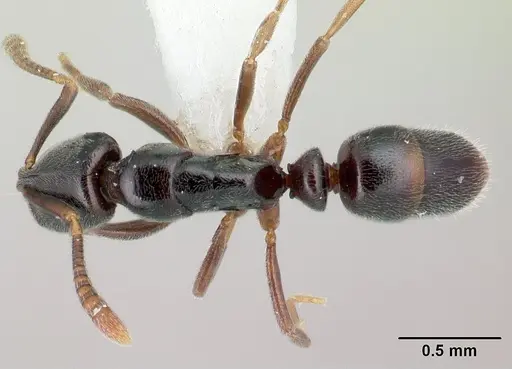
CASENT0192390
View on AntWeb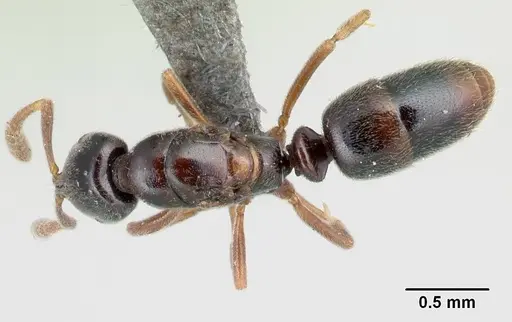
CASENT0250654
View on AntWeb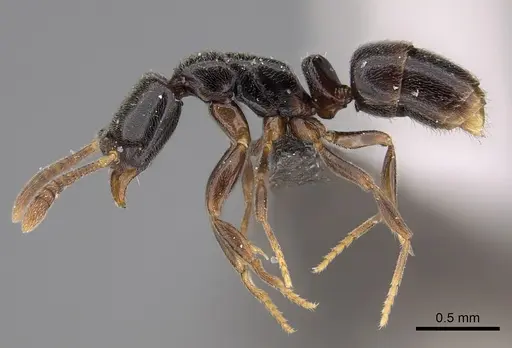
CASENT0250660
View on AntWeb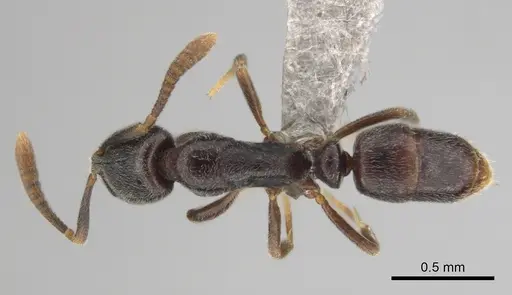
Literature
Loading...Loading products...