

Hypoponera boerorum
- Scientific Name
- Hypoponera boerorum
- Tribe
- Ponerini
- Subfamily
- Ponerinae
- Author
- Forel, 1901
- Distribution
- Found in 0 countries
Hypoponera boerorum Overview
Hypoponera boerorum is an ant species of the genus Hypoponera. It is primarily documented in 0 countries . Detailed taxonomic data and occurrence records can be further explored via authoritative databases such as AntWeb or the Global Biodiversity Information Facility (GBIF).
Hypoponera boerorum
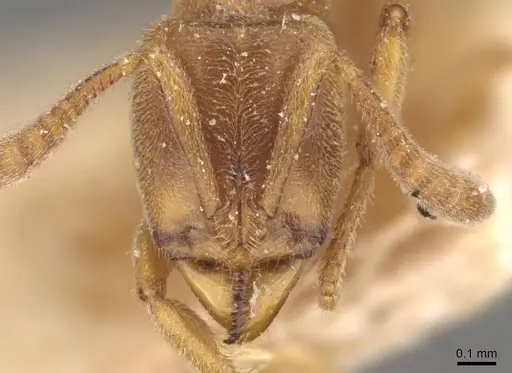
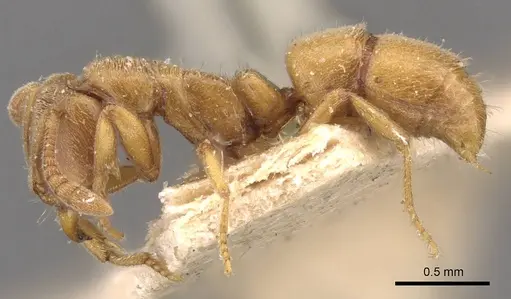
Hypoponera boerorum is a tiny yellow ant belonging to the Ponerinae subfamily. Workers measure just 0.68-0.72mm in head length, making them among the smaller ant species you'll encounter [1]. They have small, barely visible eyes and a distinctive yellow coloration throughout their adult life. The species was originally described from Natal, South Africa, and is part of the Hypopononera boerorum species group, which is characterized by a conspicuous pit near the anterior margin of the subpetiolar process [1].
Unfortunately, almost nothing is known about the biology of this species, their founding behavior, colony size, diet preferences, and seasonal patterns have never been documented. What we know comes from taxonomic descriptions of the worker caste. As a Ponerine ant, they likely share traits with related Hypoponera species, but specific care requirements remain speculative. This makes them a challenging species to keep for anyone wanting clear guidance on their care.
Quick Summary
- Difficulty: Expert
- Origin & Habitat: South Africa (Natal region) at elevations around 5300 feet (1600m). The type locality is in KwaZulu-Natal province. Also recorded from Belgium, though this likely represents an introduced or accidental record [1][2].
- Colony Type: Unknown, colony structure has not been documented. Many Hypoponera species have ergatoid (wingless) replacement queens, but this is unconfirmed for H. boerorum.
- Size & Growth:
- Queen: Unknown, queen has not been described
- Worker: 0.68-0.72mm head length, approximately 3-4mm total length [1]
- Colony: Unknown, no colony data exists
- Growth: Unknown
- Development: Unknown, no development data exists for this species (Based on typical Hypoponera patterns, expect 6-10 weeks at optimal temperature, but this is entirely estimated)
- Antkeeping:
- Temperature: Likely 22-26°C based on genus patterns for South African species. Provide a temperature gradient allowing the colony to self-regulate.
- Humidity: Likely requires moderate to high humidity (60-80%) given their likely forest floor habitat. Keep substrate consistently moist but not waterlogged.
- Diapause: Unknown, South African species may have reduced activity during cooler months but true diapause is unconfirmed.
- Nesting: Natural nesting is unknown. Based on related species, they likely nest in rotting wood, under stones, or in soil. A moist Y-tong or plaster nest with small chambers scaled to their tiny size would be appropriate.
- Behavior: Undocumented. As a Ponerine ant, they likely have a functional stinger and may be predatory on small arthropods. Most Hypoponera species are secretive and not aggressive. Their tiny size means escape prevention is critical, they can squeeze through extremely small gaps. Activity level is unknown but likely low to moderate, typical of cryptic forest-floor species.
- Common Issues: complete lack of biological data makes proper care difficult, tiny size creates extreme escape risk, fine mesh barriers are essential, growth rate is unknown so patience is required, diet preferences are unconfirmed, likely predatory on micro-arthropods, humidity requirements are speculative and may cause colony failure if guessed incorrectly
Appearance and Identification
Hypoponera boerorum workers are tiny ants, measuring only about 3-4mm in total length. Their head length ranges from 0.68-0.72mm, and head width is 0.56-0.60mm [1]. They are uniformly yellow in color as adults, with small, depigmented eyes that are barely visible. The scapes (antennal segments) are relatively short, when laid straight back, they fail to reach the midpoint of the posterior head margin. A distinctive feature is the subpetiolar process (a structure on the petiole) which has a conspicuous pit near its anterior margin, from which a sensory seta arises. This pit is more pronounced than in most related species. The first gastral (abdomen) segment has many short, stubbly standing setae (bristles) along its entire length, with longer setae only at the extreme apex [1].
Why This Species Is Challenging
Hypoponera boerorum is one of the least documented ant species in the hobby. The AntWiki explicitly states that nothing is known about their biology, not their founding behavior, not their colony size, not their diet, not their temperature preferences, nothing. This is not a species where you can look up care guides and follow established protocols. Every aspect of their care is speculative, based only on what we know about related Hypoponera species. This makes them genuinely expert-level territory. You should only attempt this species if you have extensive experience with other Ponerines and are comfortable experimenting with care parameters while carefully observing colony response. Be prepared for the possibility that your colony may fail despite your best efforts, simply because we don't know what they need. [2]
Housing and Nest Setup
Given their tiny size (workers around 3-4mm), housing requires attention to escape prevention. Use a test tube setup for founding colonies, with a tight-fitting cotton plug and excellent barrier methods if moving to a formicarium later. A Y-tong (acrylic) nest with very small chambers or a moist plaster nest would be appropriate once the colony is established. The chambers must be scaled to their tiny size, avoid large, open spaces. Since their natural nesting habitat is unknown but likely involves rotting wood or soil in shaded areas, provide a moist, humid environment. Ensure ventilation is adequate to prevent mold while maintaining humidity.
Feeding and Diet
Diet is entirely speculative for this species. As a Ponerine ant, they likely have a predatory nature and would accept small live prey such as springtails, micro- mites, or fruit fly larvae. Many Hypoponera species are specialized predators on soil micro-arthropods. I would recommend starting with live springtails as a primary protein source, as these are small enough for their tiny mandibles and represent a natural prey item. Sugar acceptance is uncertain, some Ponerines will take honey or sugar water, while others are strictly predatory. Offer sugar sources occasionally but do not rely on them as a primary food. Feed small amounts every few days and remove uneaten prey within 24 hours.
Temperature and Humidity
Temperature requirements are unconfirmed. South Africa (their origin) has a warm temperate to subtropical climate in the Natal region. I would suggest starting around 22-26°C and observing colony behavior, if workers cluster together, they may want it warmer, if they avoid heated areas, try reducing temperature. Provide a gradient so the colony can self-regulate. Humidity is likely important, forest-floor ants typically prefer moist conditions. Keep the nest substrate consistently damp but not waterlogged. Aim for 60-80% humidity. A small water reservoir in the outworld can help maintain humidity. Monitor for condensation, some is good, but excessive moisture leads to mold.
Behavior and Temperament
Behavior is unstudied, but Ponerine ants typically have functional stingers. While the sting is likely too weak to penetrate human skin effectively given their tiny size, they may attempt to sting if threatened. Most Hypoponera species are secretive, cryptic ants that prefer to stay hidden and are not aggressive toward keepers. They are likely slow-moving and not particularly active. Escape risk is extremely high due to their minute size, even standard ant farm setups have gaps they can squeeze through. Use fine mesh (at least 0.5mm) on any ventilation holes, and ensure all connections are sealed. This is not a species you can keep in a loosely fitted formicarium.
Frequently Asked Questions
How do I care for Hypoponera boerorum ants?
Unfortunately, no care guide exists for this species because their biology has never been documented. You would need to experiment based on typical Hypoponera genus patterns: keep them humid (60-80%), warm (22-26°C), feed small live prey like springtails, and use escape-proof housing. This is an expert-level species.
What do Hypoponera boerorum eat?
Unconfirmed, but likely predatory on small micro-arthropods like springtails. Start with live springtails as a primary food and offer sugar water occasionally. Remove uneaten prey within 24 hours.
How big do Hypoponera boerorum colonies get?
Unknown, no colony size data exists. Based on typical small Ponerine patterns, colonies likely reach under 100 workers.
What is the difficulty level for keeping Hypoponera boerorum?
Expert, this is one of the least documented ant species in existence. There is no established care protocol. Only experienced antkeepers comfortable with experimentation should attempt this species.
How long does it take for Hypoponera boerorum to develop from egg to worker?
Unknown, no development data exists for this species. Based on related Hypoponera species, it may take 6-10 weeks at optimal temperature, but this is entirely estimated.
Where is Hypoponera boerorum found in the wild?
The species was described from Natal, South Africa, at elevations around 5300 feet (1600m). This is in the KwaZulu-Natal province.
Can I keep multiple Hypoponera boerorum queens together?
Unknown, colony structure has never been documented for this species. Do not attempt combining unrelated queens without documented evidence that they can coexist.
Do Hypoponera boerorum need hibernation?
Unknown, South African species may have reduced activity in cooler months, but true winter diapause is unconfirmed. Do not force hibernation without evidence.
Why is Hypoponera boerorum so rarely kept?
Because their biology is completely unstudied, the AntWiki explicitly states nothing is known about their biology. They are also extremely tiny, making them difficult to house and observe. There is no established hobby protocol for keeping them.
References

This caresheet is licensed under CC BY-SA 4.0 .
CASENT0907303
View on AntWeb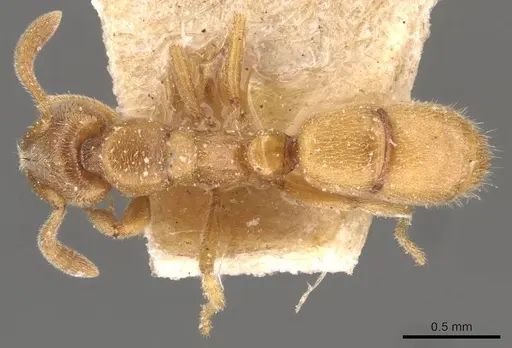
Literature
Loading...Loading products...