

Hypoponera beebei
- Scientific Name
- Hypoponera beebei
- Tribe
- Ponerini
- Subfamily
- Ponerinae
- Author
- Wheeler, 1924
- Distribution
- Found in 1 countries
Hypoponera beebei Overview
Hypoponera beebei is an ant species of the genus Hypoponera. It is primarily documented in 1 countries , including Ecuador. Detailed taxonomic data and occurrence records can be further explored via authoritative databases such as AntWeb or the Global Biodiversity Information Facility (GBIF).
Hypoponera beebei
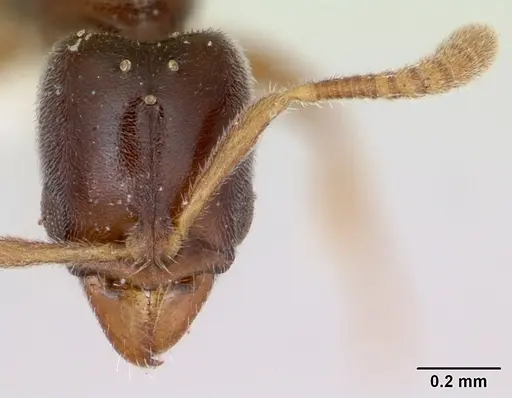
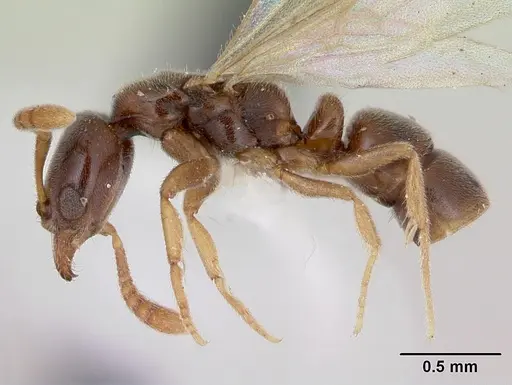
Hypoponera beebei is a small, cryptic ponerine ant originally described from the Galápagos Islands. Workers are slender and measure around 3mm, with the queen slightly larger at 3.5-4mm. They have the typical Ponerine appearance: a single waist segment (petiole) between the thorax and abdomen, and a powerful stinger. The body is generally dark brown to blackish. This species is endemic to the Galápagos, where it inhabits the humid highland zones of multiple islands including Santa Cruz, Isabela, Fernandina, and Genovesa. [1][2] They are ground-nesting ants found under stones and in leaf litter in damp forest areas. [1]
What makes this species interesting is its island endemism and the fact that it's one of the rarer Hypoponera species in captivity. As a Ponerine ant, they are predatory and have a functional stinger, though their small size limits their ability to sting humans. Their colonies remain relatively small compared to many common ant species, making them suitable for observers who prefer modest colony sizes.
Quick Summary
- Difficulty: Medium
- Origin & Habitat: Endemic to the Galápagos Islands (Ecuador). Found on multiple islands including Santa Cruz, Isabela, Fernandina, Marchena, San Cristóbal, Genovesa, Floreana, and Seymour Norte. They inhabit humid zones in natural areas, often found under stones and in leaf litter at higher elevations. Occasional specimens appear in dry and littoral zones. [1][3]
- Colony Type: Likely monogyne (single queen) based on typical genus patterns. Colony sizes appear modest, likely under 100 workers given their cryptic habits and the limited specimens collected. [1]
- Size & Growth:
- Queen: 3.5-4mm (estimated from original description) [2]
- Worker: ~3mm (estimated from genus patterns)
- Colony: Likely under 100 workers (estimated from field collection data) [1]
- Growth: Moderate, inferred from typical Ponerine development
- Development: Estimated 6-10 weeks at optimal temperature based on related Ponerine species (Development time is estimated from genus-level data, specific measurements for this species are unavailable)
- Antkeeping:
- Temperature: Keep at 24-28°C. Being from tropical islands, they prefer warm, stable conditions. A gentle gradient allowing workers to self-regulate is beneficial. [1]
- Humidity: High humidity is essential, these ants live in humid forest zones and under stones in damp areas. Keep nest substrate consistently moist but not waterlogged. Provide a water tube as a drinking source. [1]
- Diapause: Likely minimal or none. Galápagos have minimal seasonal temperature variation, so a true diapause is probably not required. However, slight reduction in temperature during winter months may be appropriate.
- Nesting: They naturally nest under stones and in leaf litter. In captivity, a test tube setup works well for founding colonies. For established colonies, a Y-tong or plaster nest with moisture retention works well. Keep the nest dark and undisturbed.
- Behavior: These are docile, cryptic ants that prefer to stay hidden. Workers forage singly rather than in visible trails. They are predatory, hunting small invertebrates. Their small size means escape prevention is straightforward, they cannot climb smooth surfaces easily. However, their small size also means they can slip through very fine gaps, so standard barrier precautions apply. They have a functional stinger but rarely use it against humans due to their small size and docile nature. Workers are not aggressive and will flee rather than fight when disturbed.
- Common Issues: high humidity maintenance is critical, drying out kills colonies quickly, small colony size means slow population growth which can frustrate beginners, limited availability in the antkeeping hobby since they're rarely exported, wild-caught colonies may have parasites or health issues, they prefer darkness and may avoid well-lit nest areas
Natural History and Distribution
Hypoponera beebei is endemic to the Galápagos Islands, making it a true island endemic. The species was first collected in 1923 from Genovesa Island and formally described by William Morton Wheeler in 1924. [1] It has since been found on eight islands across the archipelago, primarily in natural areas with humid conditions. [1] The distribution includes the highland areas of Santa Cruz, Isabela (multiple zones), Fernandina, Marchena, San Cristóbal, Floreana, and Seymour Norte. [3] They occupy various zones from littoral beaches to humid highland forests up to 1300m elevation on Fernandina. [1] Specimens have been collected under stones, in leaf litter, and in areas with fern and grass cover. This species may represent a Galápagos endemic that evolved in isolation on these volcanic islands.
Housing and Nest Setup
For founding colonies, a standard test tube setup works well. Fill the tube about one-third with water, plug with cotton, and place the queen in the chamber. Keep the tube in darkness and avoid disturbing the queen during the founding stage. Once workers emerge (nanitics), you can maintain them in the test tube or transfer to a small formicarium. For established colonies, Y-tong nests or plaster nests with moisture chambers work well. These ants prefer tight, enclosed spaces and will often nest in the moistest areas of the nest. Avoid bright lighting, they are cryptic and will avoid lit areas. A naturalistic setup with a moist soil chamber and some hiding structures can also work. Keep the nest area humid but ensure some dry areas exist so the ants can self-regulate.
Feeding and Diet
As a Ponerine ant, Hypoponera beebei is predatory. In captivity, they should be fed small live prey such as fruit flies, pinhead crickets, mealworms, and other small insects. They likely accept protein sources like bloodworms, fish flakes, and freeze-dried krill as alternatives. Sugar sources may be accepted but are not a primary food, these are not honeydew-feeding ants. Feed small prey items 2-3 times per week, removing any uneaten prey after 24 hours. A constant water source should be available. The small size of workers means prey items should be appropriately sized, no larger than the ant's head.
Temperature and Seasonal Care
Being from tropical Galápagos, these ants prefer warm conditions. Maintain temperatures between 24-28°C. They can tolerate slightly higher temperatures but avoid overheating. Room temperature (around 22-24°C) is acceptable if your home stays in this range. A heating cable on one side of the nest can create a gradient for self-regulation. Since Galápagos have minimal seasonal temperature variation, a true diapause is not required. However, slight winter cooling (a few degrees) may be appropriate if you want to simulate natural cycles. The key is consistency, avoid sudden temperature swings. High humidity is more critical than precise temperature control. [1]
Behavior and Temperament
Hypoponera beebei is a docile, secretive species. Workers are not aggressive and will typically flee when the nest is disturbed rather than attack. They have a functional stinger but rarely use it against humans, the small size makes it difficult for them to penetrate skin, and they are not prone to stinging. Foraging occurs singly rather than in visible trails. Workers are small and cryptic, often remaining hidden in the nest substrate. This makes them better suited for observation than for interactive antkeeping. They are not escape artists in the traditional sense, they cannot climb smooth surfaces well, but their small size means they can slip through fine mesh, so standard barrier precautions apply.
Frequently Asked Questions
How long does it take for Hypoponera beebei to produce first workers?
Based on typical Ponerine development, expect 6-10 weeks from egg to first worker (nanitic) at optimal temperature (around 26°C). This is an estimate since specific development data for this species is not available.
What do Hypoponera beebei eat?
They are predatory ants that hunt small invertebrates. Feed them small live prey like fruit flies, pinhead crickets, and mealworms. They may accept protein flakes and freeze-dried foods, but live prey is ideal.
Are Hypoponera beebei good for beginners?
They are rated as medium difficulty. They require high humidity and warm temperatures, which can be challenging to maintain. Their small size and slow colony growth may also test beginner patience. They are better suited for keepers with some experience maintaining humidity-dependent species.
How big do Hypoponera beebei colonies get?
Based on field collection data and their cryptic habits, colonies likely remain modest, probably under 100 workers. This is smaller than many common ant species, which may appeal to keepers who prefer smaller colonies.
Do Hypoponera beebei need hibernation?
Probably not. The Galápagos Islands have minimal seasonal temperature variation, so a true diapause is likely not required. Slight winter cooling is acceptable but not necessary.
Can I keep multiple Hypoponera beebei queens together?
This has not been documented. Based on typical genus patterns, they are likely single-queen (monogyne) species. Combining unrelated queens is not recommended without evidence they can coexist.
What humidity level do Hypoponera beebei need?
High humidity is essential, they inhabit humid forest zones in the wild. Keep nest substrate consistently moist but not waterlogged. A humidity range of 70-85% is appropriate.
When should I move Hypoponera beebei to a formicarium?
Wait until the colony has at least 10-15 workers before transferring from a test tube to a formicarium. They prefer tight spaces, so a small formicarium with moist chambers works best. Avoid bright lighting in the formicarium.
References

This caresheet is licensed under CC BY-SA 4.0 .
CASENT0173306
View on AntWeb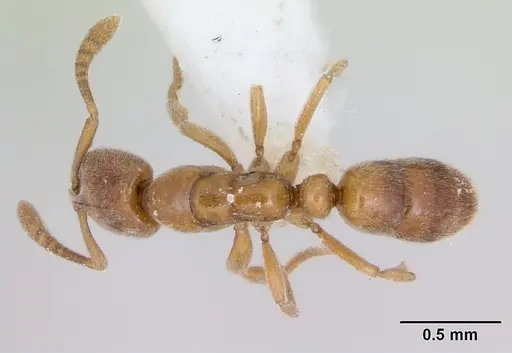
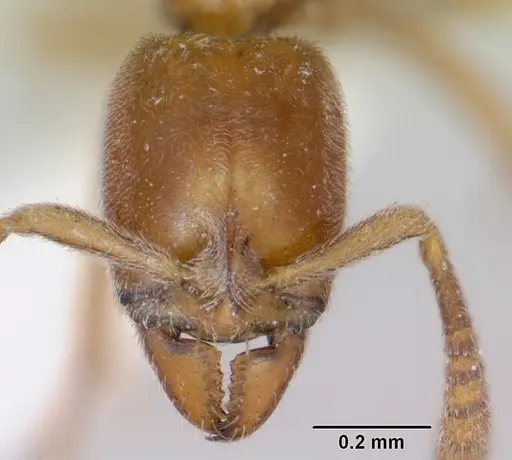
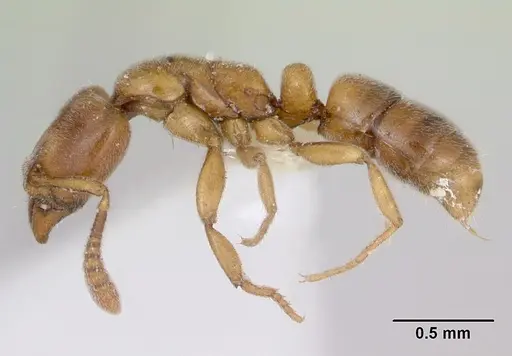
CASENT0173307
View on AntWeb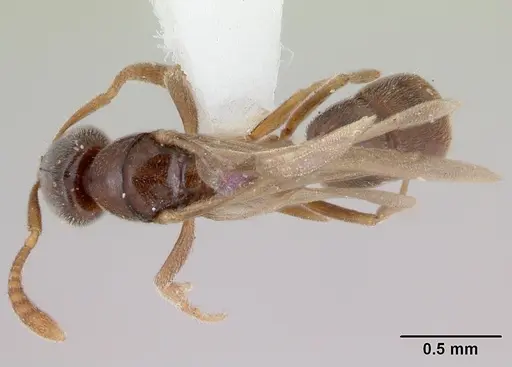
Literature
Loading...Loading products...