

Hylomyrma immanis
- Scientific Name
- Hylomyrma immanis
- Tribe
- Pogonomyrmecini
- Subfamily
- Myrmicinae
- Author
- Kempf, 1973
- Distribution
- Found in 8 countries
Hylomyrma immanis Overview
Hylomyrma immanis is an ant species of the genus Hylomyrma. It is primarily documented in 8 countries , including Bolivia, Plurinational State of, Brazil. Detailed taxonomic data and occurrence records can be further explored via authoritative databases such as AntWeb or the Global Biodiversity Information Facility (GBIF).
Hylomyrma immanis
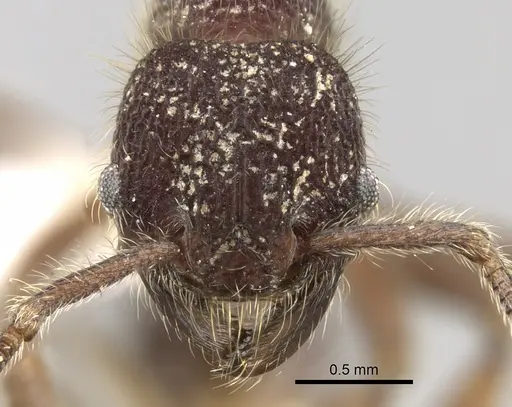
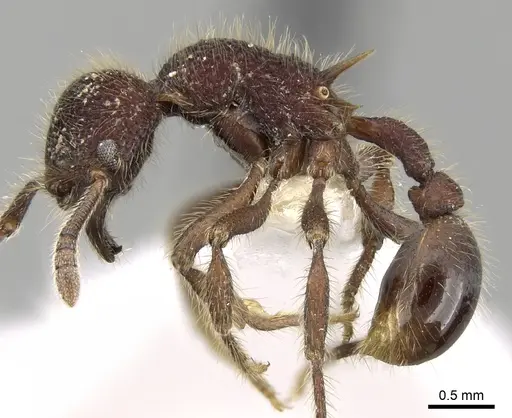
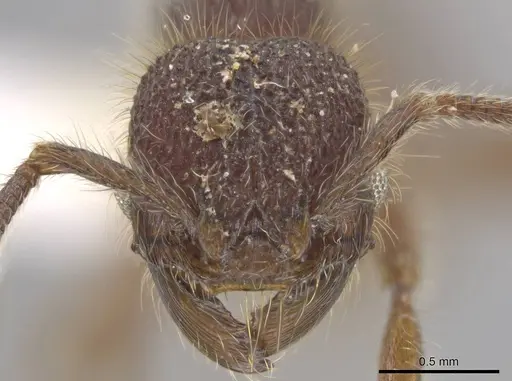
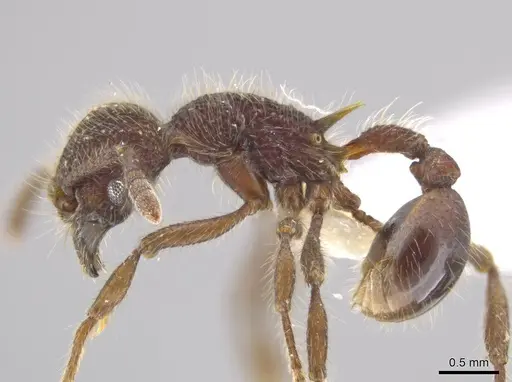
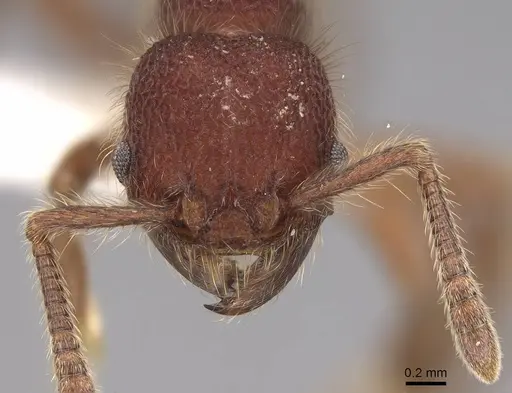
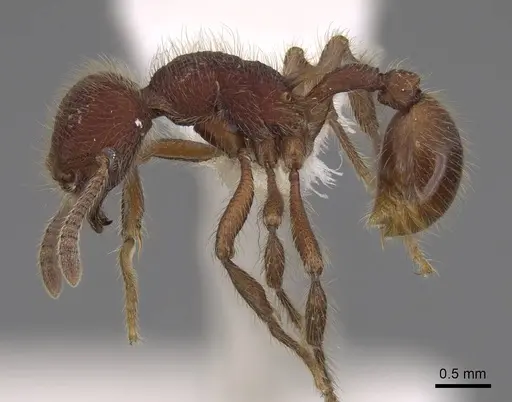
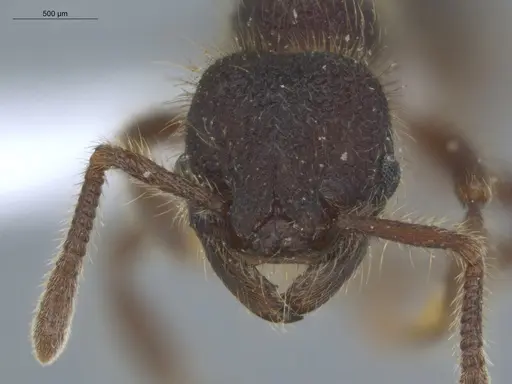
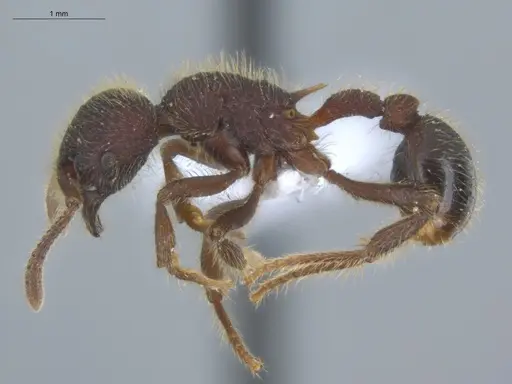
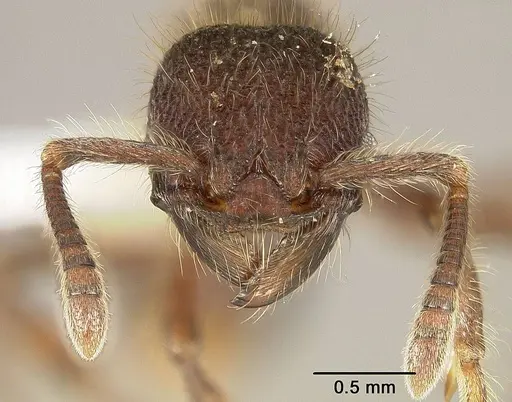
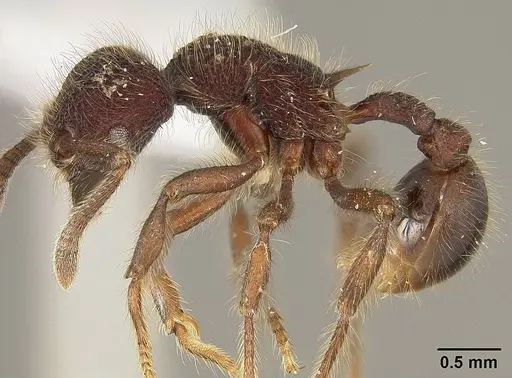
Hylomyrma immanis is the largest species in the Hylomyrma genus, with workers measuring 5.67-6.47mm and queens reaching 6.07-7.54mm [1]. These ants have a distinctive subopaque (slightly dull) body covered in fine striations, with very long striations on the first abdominal segment. Their long propodeal spines and continuous, convex dorsal margin of the petiole help distinguish them from similar species [1]. Native to South America, they inhabit tropical and Atlantic rainforests across Bolivia, Brazil, Colombia, Ecuador, French Guiana, Guyana, Peru, Trinidad and Tobago, and Venezuela [1][2].
These leaf-litter ants make their homes in fallen logs, rotten wood, and natural cavities in the top layers of soil in humid forest environments [3]. The species was described by Kempf in 1973,and notably features ergatoid queens, wingless reproductive females that can serve as replacement egg-layers if the primary queen dies [3]. This is a rarely kept species in captivity with limited documented care information.
Quick Summary
- Difficulty: Medium
- Origin & Habitat: Tropical and Atlantic rainforests of South America (Bolivia, Brazil, Colombia, Ecuador, French Guiana, Guyana, Peru, Trinidad and Tobago, Venezuela). They live in leaf-litter, fallen logs, rotten wood, and shallow soil cavities in humid forest environments [1][3].
- Colony Type: Colony structure is unconfirmed. Ergatoid (wingless) queens have been documented, which typically serve as replacement reproductives if the primary queen dies [3]. This does not necessarily indicate polygyny, single-queen colonies with ergatoid replacements are possible.
- Size & Growth:
- Queen: 6.07-7.54 mm [1]
- Worker: 5.67-6.47 mm [1]
- Colony: Unknown, no colony size data available
- Growth: Unknown, growth rate has not been documented
- Development: Unknown, no direct development data available. Based on related Myrmicini tribe members and tropical species patterns, estimate 6-10 weeks at optimal temperature. (Estimated based on genus and tribe patterns, no species-specific data exists.)
- Antkeeping:
- Temperature: Keep warm, around 24-28°C. This matches their tropical rainforest origin. A gentle temperature gradient allows ants to regulate their own exposure.
- Humidity: High humidity is essential, think damp forest floor. Keep substrate consistently moist but not waterlogged. Provide a gradient from damp to slightly drier areas so ants can choose their preferred zone. Mist or rehydrate based on substrate condition, not a fixed schedule.
- Diapause: Unknown, no documented diapause requirement. As a tropical species, they likely do not require a true hibernation period, but may show reduced activity during cooler or drier seasons.
- Nesting: Naturalistic setups work well given their leaf-litter habits. Y-tong (AAC) nests or plaster nests with good humidity retention are suitable. Provide moist substrate, small chambers, and multiple hiding spots. Avoid overly dry or ventilated setups.
- Behavior: Behavior is not well documented in captivity. As leaf-litter foragers, they likely search through substrate for food rather than actively hunting on surfaces. Their large size makes them relatively easy to observe. Escape prevention should be standard, while not tiny, they can still squeeze through small gaps. Use proper barriers and tight-fitting lids. Temperament is not documented but related species are generally non-aggressive.
- Common Issues: high humidity maintenance is critical, dry conditions will stress or kill colonies, limited availability makes this a specialty species not suitable for beginners, no documented captive breeding success means established colonies are likely wild-caught, tropical temperature requirements year-round may increase heating costs, ergatoid queen presence may confuse keepers about true colony structure
Natural History and Distribution
Hylomyrma immanis is found across northern South America, from the Amazon basin in Brazil and Colombia, through the Guianas, to Bolivia, Peru, and Ecuador [1][2]. They inhabit both Atlantic and tropical rainforests, living primarily in leaf-litter and decaying wood on the forest floor. Most specimens have been collected using winkler extractors, a method where leaf-litter is placed in bags and allowed to dry over time, causing ants to fall out for collection [1]. This sampling method confirms they are true leaf-litter specialists, spending most of their time in the top layers of the forest floor ecosystem. The species co-occurs with Hylomyrma praepotens in some areas of Colombia, though H. immanis has a much broader distribution [3].
Identification and Distinguishing Features
As the largest species in the Hylomyrma genus, H. immanis workers reach 5.67-6.47mm while queens can be 6.07-7.54mm [1]. Their most distinctive feature is the subopaque (slightly dull, not shiny) body surface covered in fine striations. The striations on the first abdominal segment are notably long, about 1.5 times the length of the postpetiole. They have long propodeal spines and a continuous, convex dorsal margin on the petiole. The subpostpetiolar process (a small projection beneath the postpetiole) is prominent and subtriangular. They can be distinguished from the similar H. praepotens by their duller body (H. praepotens is shiny) and the fine striations with indistinguishable interspaces (H. praepotens has thick striations with clear gaps between them) [1][3].
Housing and Nest Setup
Given their leaf-litter habitat, these ants do best in naturalistic setups that mimic the forest floor. A Y-tong (AAC) nest or plaster formicarium with good humidity retention works well. Keep the nest substrate consistently moist, damp but not waterlogged. Because they are tropical, maintain temperatures in the 24-28°C range year-round. A temperature gradient allows ants to move between warmer and cooler areas as needed. The outworld should have substrate or a foraging area that allows natural foraging behavior. Standard escape prevention is adequate for their size, though always use proper barriers. Multiple chambers at different humidity levels give colonies choices. Avoid setups that dry out quickly, these are humidity-dependent ants.
Feeding and Diet
While specific feeding behavior is undocumented, Hylomyrma species are generally omnivorous leaf-litter ants that likely forage for small insects, seeds, and honeydew. Offer a varied diet including protein sources (small insects like fruit flies, pinhead crickets, or mealworms) and sugar sources (honey water or sugar water). As leaf-litter dwellers, they probably scavenge more than actively hunt, so offering food on substrate surfaces may be more effective than hanging prey. Feed protein 2-3 times per week and provide constant access to sugar water. Remove uneaten prey after 24-48 hours to prevent mold. Acceptance of novel foods may vary, observe your colony's preferences.
Temperature and Seasonal Care
As a tropical rainforest species, H. immanis requires warm, stable temperatures year-round. Aim for 24-28°C in the nest area. Temperature drops below 20°C for extended periods may stress colonies. No documented diapause requirement exists, unlike temperate species, they likely do not need a hibernation period. However, they may show reduced activity during natural seasonal changes in their range. If your room temperature falls below their preferred range, use a heating cable or mat on one side of the nest to create a warm zone. Always provide a temperature gradient so ants can self-regulate. Avoid placing nests near air conditioning vents or drafty areas.
Colony Structure and Reproduction
The colony structure of H. immanis has not been thoroughly studied. Kempf (1973) documented ergatoid queens, wingless females that develop from workers rather than the typical winged queen form [3]. Ergatoid queens typically serve as replacement reproductives if the primary queen dies, allowing the colony to survive. This does not necessarily mean the species is polygynous (multiple queens), a colony can be functionally single-queen with ergatoid replacements available if needed. Nuptial flight timing is unknown. Males are 5.96-6.26mm and were only described in 2021 [1]. The lack of captive breeding documentation means established colonies in the hobby are likely wild-caught.
Frequently Asked Questions
How long does it take for Hylomyrma immanis to produce first workers?
The exact egg-to-worker development time is unknown. Based on related Myrmicini species and tropical ant patterns, estimate 6-10 weeks at optimal temperature (24-28°C). No species-specific development data exists.
What temperature do Hylomyrma immanis ants need?
Keep them warm at 24-28°C year-round. This matches their tropical rainforest origin. A temperature gradient allows self-regulation.
Do Hylomyrma immanis ants need hibernation?
No documented diapause requirement exists. As a tropical species, they likely do not need hibernation. However, they may show reduced activity during natural cool or dry seasons in their range.
How big do Hylomyrma immanis colonies get?
Maximum colony size is unknown. No published colony size data exists for this species.
What do Hylomyrma immanis ants eat?
They are generalist omnivores. Offer small insects (fruit flies, pinhead crickets, mealworms) for protein and sugar water or honey for carbohydrates. They likely scavenge more than hunt actively.
Can I keep multiple Hylomyrma immanis queens together?
Colony structure is unconfirmed. The presence of ergatoid queens does not mean they are polygynous. Combining unrelated queens has not been documented and is not recommended without evidence they can coexist.
Are Hylomyrma immanis good for beginners?
No. This is a specialty species with limited availability and undocumented captive care. They require high humidity and warm temperatures year-round. Beginners should start with better-documented species.
What size are Hylomyrma immanis queens and workers?
Workers are 5.67-6.47mm, queens are 6.07-7.54mm. This is the largest species in the Hylomyrma genus [1].
Where does Hylomyrma immanis live in the wild?
They inhabit tropical and Atlantic rainforests across northern South America. They live in leaf-litter, fallen logs, rotten wood, and shallow soil cavities in humid forest environments [1][3].
How do I set up a nest for Hylomyrma immanis?
Use a naturalistic setup with good humidity retention. Y-tong (AAC) or plaster nests work well. Keep substrate consistently moist but not waterlogged. Provide multiple chambers and a humidity gradient.
Why are my Hylomyrma immanis dying?
The most likely cause is incorrect humidity, dry conditions stress these rainforest species. Also check temperature (should be 24-28°C), water quality, and for signs of mold or parasites. Limited captive care documentation means troubleshooting is challenging.
References

This caresheet is licensed under CC BY-SA 4.0 .
CASENT0280842
View on AntWeb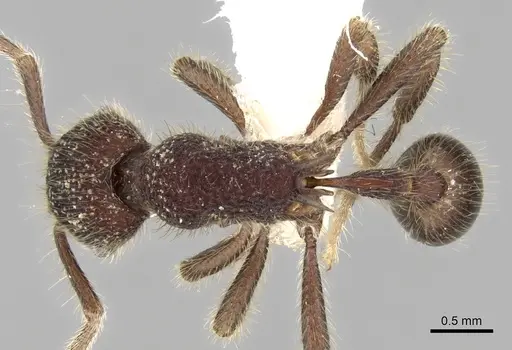
CASENT0637527
View on AntWeb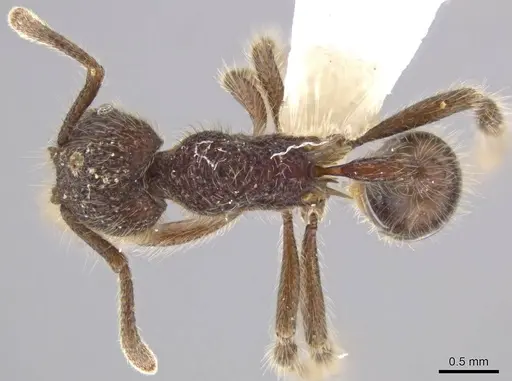
CASENT0923016
View on AntWeb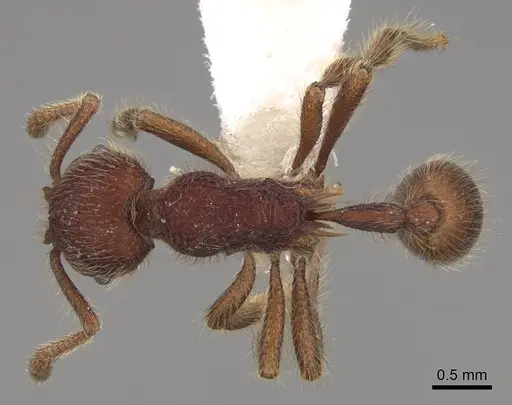
ECOFOG-IT14-0421-16
View on AntWeb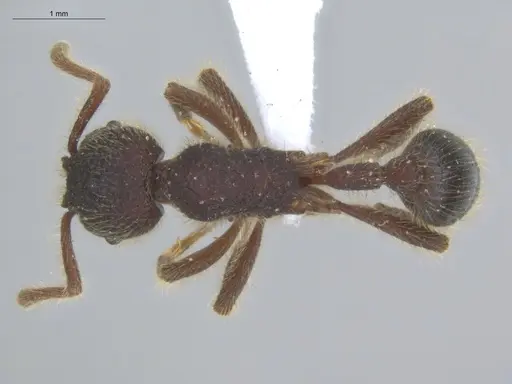
USNMENT00411903
View on AntWeb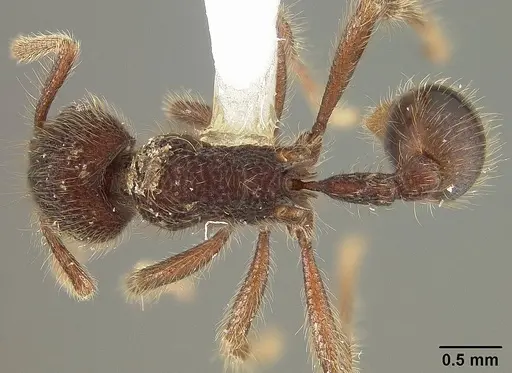
Literature
Loading...Loading products...