

Holcoponera nigrivitrea
- Scientific Name
- Holcoponera nigrivitrea
- Tribe
- Ectatommini
- Subfamily
- Ectatomminae
- Author
- Lattke, 1995
- Distribution
- Found in 1 countries
Holcoponera nigrivitrea Overview
Holcoponera nigrivitrea is an ant species of the genus Holcoponera. It is primarily documented in 1 countries , including Colombia. Detailed taxonomic data and occurrence records can be further explored via authoritative databases such as AntWeb or the Global Biodiversity Information Facility (GBIF).
Holcoponera nigrivitrea
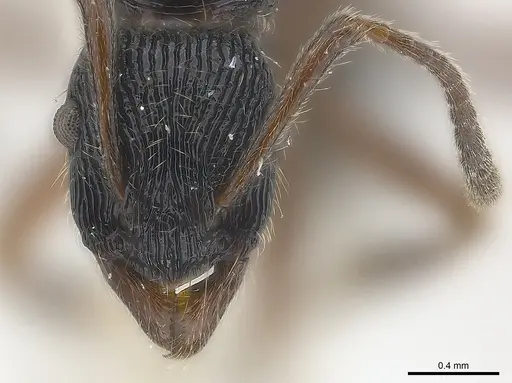
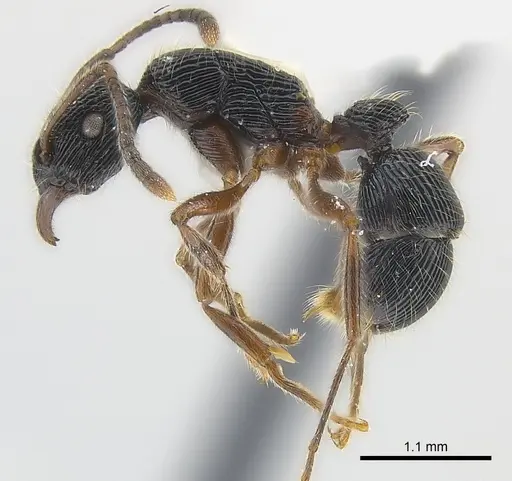
Holcoponera nigrivitrea is a small predatory ant native to the cloud forests of Colombia. Workers measure around 1.1mm in head length with a distinctive black body and brownish antennae, legs, and gaster tip. The species name means 'black and glassy' in Latin, referring to its smooth, almost enameled appearance. These ants belong to the porcata subgroup within the striatula species group and are closely related to Holcoponera brunnea. They inhabit humid forest environments at elevations between 1,000 and 2,300 meters across multiple Colombian departments. This is a poorly studied species with no documented biology in captivity, what we know comes from limited specimen collections and morphological descriptions.
Quick Summary
- Difficulty: Expert
- Origin & Habitat: Native to the humid cloud forests of Colombia, found exclusively in forest patches at elevations of 1,000-2,300 meters in departments including Caldas, Caquetá, Cundinamarca, Huila, Nariño, Putumayo, Quindío, Risaralda, Santander, and Valle del Cauca [1][2].
- Colony Type: Colony structure is unconfirmed. Only a single queen has been recorded from one collection site (Valle del Cauca,1575m) [3]. No data on whether colonies are single-queen or multi-queen in structure.
- Size & Growth:
- Queen: Undocumented, no queen measurements available in scientific literature
- Worker: Workers are approximately 1.1mm head length,0.86mm head width,1.40mm Weber's length [3]. This makes them very small ants.
- Colony: Unknown, only small numbers have been collected (1-7 workers per collection event) [3].
- Growth: Unknown, no development data exists for this species
- Development: Unconfirmed, no development studies exist for this species. Based on typical Ectatomminae patterns, expect 6-10 weeks at optimal temperature, but this is an estimate. (Development timeline is unconfirmed. Related Gnamptogenys species typically take 6-8 weeks from egg to worker at warm temperatures.)
- Antkeeping:
- Temperature: Inferred: Keep around 20-24°C based on their high-elevation cloud forest origin. They likely prefer cooler, stable temperatures similar to other Colombian cloud forest species. Avoid overheating.
- Humidity: Inferred: High humidity required, think damp forest floor. Keep nest substrate consistently moist but not waterlogged. These ants come from humid forest environments where moisture is constant [1].
- Diapause: Unknown, no seasonal studies exist. Given their high-elevation origin (1000-2300m), they likely experience cooler temperatures during certain months and may benefit from a slight cool period in winter, but specific requirements are unconfirmed.
- Nesting: Inferred: Likely nests in soil or under stones in humid forest environments. In captivity, a naturalistic setup with moist substrate or a Y-tong/plaster nest with good moisture retention would work well. They are ground-nesting ants.
- Behavior: Inferred: Based on genus patterns, these are predatory ants that hunt small invertebrates. They are likely relatively calm but may show defensive behavior if threatened. Their small size (around 1.1mm) means escape prevention is critical, they can squeeze through tiny gaps. No documented aggression levels or sting reports exist for this specific species.
- Common Issues: no documented biology means all care is based on inference from related species, results may vary, very small size makes escape prevention essential, use fine mesh barriers, high humidity requirements can lead to mold issues if ventilation is poor, lack of documented diet acceptance means you may need to experiment with prey items, cold-sensitive due to high-elevation origin, avoid temperatures below 15°C or above 28°C
Housing and Nest Setup
Since nothing is known about the captive care of Holcoponera nigrivitrea, housing recommendations must be inferred from their natural habitat and related species. These ants come from humid Colombian cloud forests at elevations of 1,000-2,300 meters, suggesting they need consistent moisture and moderate temperatures. A naturalistic setup with moist soil substrate works well for similar ground-nesting Ectatomminae. Alternatively, a Y-tong (acrylic) nest or plaster nest with a water reservoir can maintain humidity. The nest should have chambers scaled to their tiny size (workers are only about 1.1mm). Provide an outworld for foraging with easy access to the nest. Because of their very small size, excellent escape prevention is critical, use tight-fitting lids and fine mesh on any ventilation. [1][2]
Feeding and Diet
Holcoponera nigrivitrea is a predatory ant based on genus patterns (they're in the tribe Ectatommini, known as 'ectatommin' ants that are predatory hunters). In the wild, they likely hunt small invertebrates like springtails, mites, and other micro-arthropods found in forest leaf litter. For captive care, offer small live prey items such as flightless fruit flies, pinhead crickets, small mealworms, and most importantly, live springtails or isopods. Since no documented feeding observations exist for this species, be prepared to experiment. Protein should form the primary diet. Sugar sources may or may not be accepted, some related Gnamptogenys species occasionally attend aphids for honeydew, but this is not guaranteed. Feed small prey items 2-3 times per week and remove uneaten prey to prevent mold.
Temperature and Seasonal Care
Based on their high-elevation cloud forest origin in Colombia, Holcoponera nigrivitrea likely prefers cooler temperatures than typical tropical ants. Aim for a temperature range of 20-24°C in the nest area. Avoid temperatures above 28°C or below 15°C. A gentle heat gradient allows ants to regulate their temperature. Since they come from elevations of 1,000-2,300 meters, they likely experience seasonal temperature variations and may benefit from a slight cool period during winter months (around 15-18°C for 2-3 months), though this is not confirmed. Monitor colony activity, if workers become sluggish, the temperature may be too low. If they avoid the heated area, it may be too warm. [1][2]
Behavior and Temperament
No specific behavioral observations exist for Holcoponera nigrivitrea in scientific literature. However, based on genus-level patterns, these are likely predatory ants that hunt individually or in small groups rather than forming large raiding columns. They are probably relatively calm and not overly aggressive, but will defend the nest if threatened. Workers are very small (around 1.1mm head length), which means they can easily escape through tiny gaps. Always use excellent escape prevention. The petiolar node has a distinctive shape with a convex anterodorsal margin forming a blunt point that protrudes above the posterior margin, this is a key identification feature. Their activity level is unknown but likely moderate, similar to other forest-floor dwelling ants. [3]
Finding and Acquiring Colonies
Holcoponera nigrivitrea is extremely rare in the antkeeping hobby and has never been documented in commercial trade. This species is only known from high-elevation cloud forests in Colombia and has been collected in very low numbers (1-7 workers per collection event). Wild-collecting is not recommended due to the species' limited distribution and the difficulty of locating such tiny ants in remote cloud forests. Additionally, exporting ants from Colombia requires proper permits. For these reasons, Holcoponera nigrivitrea is not recommended for most antkeepers. If you're interested in similar ants, consider more commonly kept Ectatomminae species like Gnamptogenys species or other predatory ants with established captive care protocols. [3]
Frequently Asked Questions
Is Holcoponera nigrivitrea available in the antkeeping hobby?
No. This species is extremely rare and has never been documented in commercial ant trade. It's only known from high-elevation cloud forests in Colombia and is not recommended for hobbyists.
How long does it take for Holcoponera nigrivitrea to develop from egg to worker?
This is unconfirmed, no development studies exist for this species. Based on typical Ectatomminae patterns, expect approximately 6-10 weeks at optimal temperature (around 20-24°C), but this is only an estimate.
What do Holcoponera nigrivitrea ants eat?
Based on genus patterns, they are predatory ants that hunt small invertebrates. Feed small live prey like springtails, flightless fruit flies, small mealworms, and pinhead crickets. Sugar sources may or may not be accepted.
Do Holcoponera nigrivitrea ants sting?
Unknown, no sting reports exist for this specific species. Most Ectatomminae ants can sting but are too small to cause significant pain to humans. Given their tiny size (around 1.1mm), any sting would likely be negligible.
What temperature do Holcoponera nigrivitrea need?
Inferred: Keep around 20-24°C based on their high-elevation cloud forest origin (1000-2300m in Colombia). Avoid temperatures above 28°C or below 15°C.
Are Holcoponera nigrivitrea good for beginners?
No. This species is not recommended for beginners. No documented captive care exists, all recommendations are based on inference from related species, and they are extremely rare in the hobby.
How big do Holcoponera nigrivitrea colonies get?
Unknown, only small worker series have been collected (1-7 workers per collection event). Maximum colony size in the wild is unconfirmed.
Do Holcoponera nigrivitrea need hibernation?
Unknown, no seasonal studies exist. Given their high-elevation origin, they likely experience cooler temperatures seasonally and may benefit from a slight cool period (15-18°C for 2-3 months) in winter, but this is not confirmed.
Can I keep multiple Holcoponera nigrivitrea queens together?
Unknown, colony structure is unconfirmed. Only a single queen has been recorded from one collection site. Combining unrelated queens is not recommended without documented evidence that this species can found colonies pleometrotically.
Why is so little known about Holcoponera nigrivitrea?
This is a very poorly studied species. Only a small number of workers have ever been collected (from forest patches in Colombia), and no research has been conducted on their biology, behavior, or colony structure. The species was originally described in 1995 and later moved to the genus Holcoponera.
References

This caresheet is licensed under CC BY-SA 4.0 .
CASENT0179962
View on AntWeb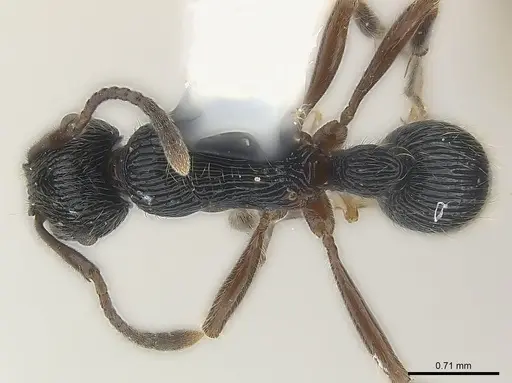
Literature
Loading...Loading products...