

Holcoponera haytiana
- Scientific Name
- Holcoponera haytiana
- Tribe
- Ectatommini
- Subfamily
- Ectatomminae
- Author
- Wheeler & Mann, 1914
- Distribution
- Found in 1 countries
Holcoponera haytiana Overview
Holcoponera haytiana is an ant species of the genus Holcoponera. It is primarily documented in 1 countries , including Dominican Republic. Detailed taxonomic data and occurrence records can be further explored via authoritative databases such as AntWeb or the Global Biodiversity Information Facility (GBIF).
Holcoponera haytiana
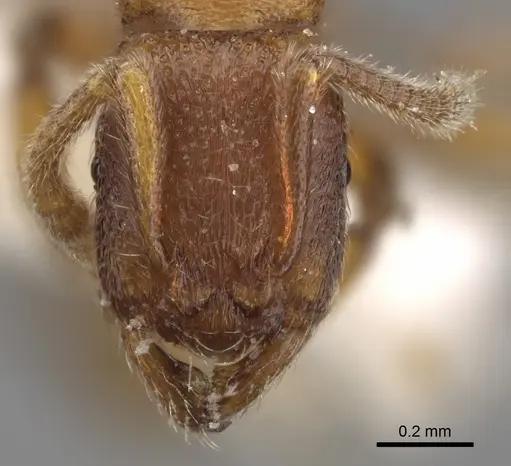
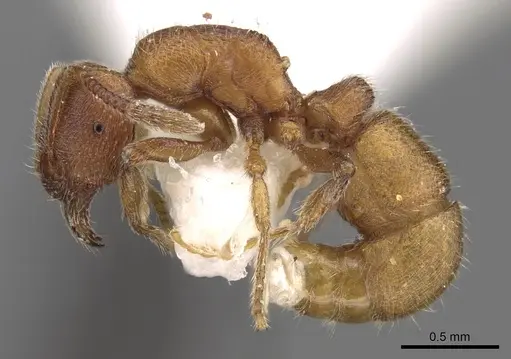
Holcoponera haytiana is a tiny, yellowish ant endemic to the island of Hispaniola (Haiti and Dominican Republic). Workers measure just 2.5mm and are distinguished by their brownish-yellow coloration, which sets them apart from other members of the haytiana species complex. Their body is mostly opaque with fine sculpturing, and the second gastric segment shows more pronounced curvature compared to related species. This is a leaf-litter dwelling ant, typically found at elevations between 900-1,100 meters in forest and coffee plantation settings. The species was originally described in 1914 and has undergone taxonomic revisions, moving from Gnamptogenys to Holcoponera based on recent phylogenetic research [1][2][3].
What makes this species particularly interesting is its limited distribution and the threats it faces. The dramatic deforestation of Hispaniola has considerably reduced the range of this already-restricted ant, making it a conservation concern on the island. As a ground-dwelling leaf-litter species, it occupies a sensitive ecological niche that has been impacted by human activity [2][3].
Quick Summary
- Difficulty: Medium
- Origin & Habitat: Endemic to Hispaniola, found only in Haiti (southeastern mountains near Jacmel) and the Dominican Republic (Barahona province). They live in leaf litter at elevations of 900-1,100 meters, in both forest and coffee plantation settings [2][4][3].
- Colony Type: Colony structure is unconfirmed. Only single specimens have been collected, so colony size in the wild is unknown. Based on related Ectatommini species, they likely form small colonies with a single queen.
- Size & Growth:
- Queen: Unknown, not directly measured. Estimated based on genus patterns at 4-6mm.
- Worker: 2.5mm [3]
- Colony: Unknown, only single workers have been collected. Related leaf-litter ants typically form colonies of several dozen to a few hundred workers.
- Growth: Unknown, likely moderate based on related species patterns.
- Development: 6-10 weeks (estimated based on related Ectatommini species at optimal temperature) (Development time is estimated from genus-level data since no direct measurements exist for this species. Expect moderate growth rates typical of small tropical ants.)
- Antkeeping:
- Temperature: Keep around 22-26°C. Based on their high-elevation leaf-litter habitat (900-1100m), they likely prefer cooler, more moderate temperatures than lowland tropical ants. A gentle temperature gradient allows them to regulate their exposure.
- Humidity: High humidity is essential. These ants live in leaf litter in a humid forest/coffee plantation environment. Keep the nest substrate consistently moist but not waterlogged, with some drier areas available for the ants to choose.
- Diapause: Unknown, likely minimal or no true diapause given their tropical island distribution. They may show reduced activity during cooler periods but probably do not require a hibernation-style rest.
- Nesting: A naturalistic setup with moist substrate (soil or a soil/gypsum mix) works well for these leaf-litter ants. They can also be kept in test tubes with a water reservoir if provided with high ambient humidity. Tight-fitting lids are critical given their tiny 2.5mm size.
- Behavior: These are small, ground-dwelling ants that likely forage in leaf litter and upper soil layers. Their behavior is not well-documented, but related Ectatommini species are typically moderate in temperament, not particularly aggressive but will defend the nest if threatened. Escape prevention is critical due to their very small size, they can squeeze through the tiniest gaps. They likely use chemical trails rather than tandem-running for recruitment.
- Common Issues: escape prevention is critical, at 2.5mm, they can squeeze through gaps that seem sealed, high humidity requirements can lead to mold problems if ventilation is inadequate, limited distribution means wild-caught colonies are rare and may have been stressed during collection, colony size in captivity is unknown, expect small colonies based on related species, their specific dietary needs are unconfirmed, offer varied protein sources to test acceptance
Housing and Enclosure
Given their tiny 2.5mm size and leaf-litter habitat, Holcoponera haytiana requires careful attention to enclosure design. A naturalistic setup with a moist substrate layer works well, a mix of soil and fine materials that mimics the forest floor they naturally inhabit. You can use a small plastic container or glass tank with a substrate depth of 2-3cm. Alternatively, test tubes with a water reservoir can work if you maintain high ambient humidity through misting or a moist outworld. Regardless of setup, escape prevention must be excellent, these tiny ants can slip through gaps that seem insignificant. Use fine mesh for any ventilation holes and ensure all lids fit tightly. A small outworld for feeding connects to the nest area via a tube. [2][3]
Feeding and Diet
The specific dietary needs of Holcoponera haytiana have not been documented, but they likely follow patterns typical of the Ectatommini tribe. In the wild, they probably forage for small invertebrates and honeydew in the leaf litter layer. For captivity, offer small protein sources like fruit flies, pinhead crickets, and other tiny arthropods. Since they're small, prey items should be appropriately sized, nothing larger than they can handle. Sugar water or honey can be offered occasionally, though their acceptance is uncertain. Feed small amounts every 2-3 days and remove uneaten prey within 24 hours to prevent mold. A varied diet helps you discover their preferences.
Temperature and Humidity
These ants come from higher elevations (900-1100m) on Hispaniola, suggesting they prefer cooler, more moderate temperatures than typical lowland tropical ants. Aim for 22-26°C with a gentle gradient so workers can choose their preferred temperature. Room temperature in this range works well for most keepers. Humidity is more critical, they naturally inhabit damp leaf litter in forest settings. Keep the nest substrate consistently moist but not saturated with standing water. A moisture gradient (damp on one side, slightly drier on the other) gives them options. Mist the enclosure regularly and consider a water dish in the outworld to help maintain humidity. Good ventilation prevents mold while retaining moisture. [2][4]
Colony Establishment and Growth
Since only single workers have been collected in the wild, establishing a colony in captivity may be challenging. If you obtain a queen (which has not been described), she would likely found claustrally like other Ectatommini, sealing herself in a chamber and raising the first workers on stored energy. If you start with a queen, provide a small founding chamber with moist substrate and keep her undisturbed in darkness. Growth rates are unknown but likely moderate for their size. Expect the first workers (nanitics) to emerge smaller than mature workers. Colonies probably remain small, perhaps 50-200 workers at maturity based on related species patterns. Patience is essential, as small leaf-litter ants often grow slowly. [1]
Observation and Handling
Holcoponera haytiana is not a species you'll handle frequently, they're too small and likely quick-moving. Observation is best done through the enclosure walls. Their small size and yellowish coloration make them distinctive under magnification. When you need to move them (for cleaning or transport), use gentle techniques like coaxing them into a vial or using soft brushes. Avoid disturbing the nest area unnecessarily, especially during founding. These ants are not known to be particularly aggressive, but they will defend their colony if threatened. Their sting is likely minimal or absent given their small size, though this hasn't been specifically documented.
Frequently Asked Questions
How long does it take for Holcoponera haytiana to produce first workers?
The exact timeline is unknown for this species. Based on related Ectatommini species, expect 6-10 weeks from egg to first worker at optimal temperature (around 24°C). The first workers will likely be smaller (nanitics) than mature workers.
What size enclosure do Holcoponera haytiana need?
Given their tiny 2.5mm size and likely small colony size, a small enclosure works well. A test tube setup with a moist cotton chamber is suitable for founding colonies. For established colonies, a small plastic container (roughly 10x10cm) with moist substrate works. Always prioritize escape prevention over spaciousness.
Do Holcoponera haytiana ants sting?
The sting ability of this species has not been documented. Given their very small size (2.5mm), any sting would likely be minimal and unable to penetrate human skin. Related Ectatommini ants have functional stings but their potency varies by species.
What do Holcoponera haytiana eat?
Their exact diet is unconfirmed, but they likely accept small protein sources like fruit flies, tiny crickets, and other micro-arthropods. Offer small prey items appropriately sized for their 2.5mm workers. Sugar water or honey may be accepted occasionally. Remove uneaten food promptly to prevent mold.
Are Holcoponera haytiana good for beginners?
This species is not ideal for beginners. It's poorly documented in captivity, wild colonies are extremely rare, and their specific care requirements (especially humidity and escape prevention) demand attention. Additionally, obtaining this species is difficult since it's endemic to Hispaniola and hasn't been widely kept in the antkeeping hobby.
Do Holcoponera haytiana need hibernation?
Probably not. As a tropical ant from Hispaniola (an island at roughly 18-19°N latitude), they likely do not require a true diapause. They may show reduced activity during cooler periods, but a hibernation-style rest is not necessary. Simply maintain normal room temperatures year-round.
How big do Holcoponera haytiana colonies get?
Colony size in the wild is unknown, only single workers have been collected. Based on related leaf-litter Ectatommini species, colonies likely reach several dozen to a few hundred workers at maximum. Do not expect large, populous colonies.
Why are my Holcoponera haytiana escaping?
At 2.5mm, these ants are extremely good at escaping through tiny gaps. Check all enclosure seals carefully, even seemingly small gaps can be exit routes. Use fine mesh for ventilation, ensure lids fit tightly, and consider applying fluon or similar barriers to edges. Escape prevention must be excellent with this species.
Can I keep multiple Holcoponera haytiana queens together?
This has not been documented. The colony structure of this species is unknown, only single workers have been collected. Without data on their natural colony structure, combining unrelated queens is not recommended. If you obtain a queen, house her alone for founding.
Where is Holcoponera haytiana found naturally?
Holcoponera haytiana is endemic to Hispaniola, found only in Haiti (southeastern mountains near Jacmel, the type locality) and the Dominican Republic (Barahona province). They live in leaf litter at elevations of 900-1,100 meters in forest and coffee plantation settings.
References

This caresheet is licensed under CC BY-SA 4.0 .
CASENT0281838
View on AntWeb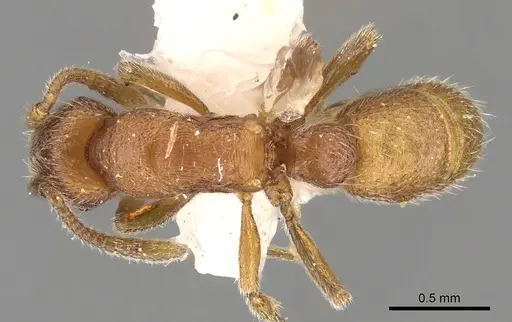
Literature
Loading...Loading products...