

Holcoponera crenaticeps
- Scientific Name
- Holcoponera crenaticeps
- Tribe
- Ectatommini
- Subfamily
- Ectatomminae
- Author
- Mann, 1919
- Distribution
- Found in 1 countries
Holcoponera crenaticeps Overview
Holcoponera crenaticeps is an ant species of the genus Holcoponera. It is primarily documented in 1 countries , including Solomon Islands. Detailed taxonomic data and occurrence records can be further explored via authoritative databases such as AntWeb or the Global Biodiversity Information Facility (GBIF).
Holcoponera crenaticeps
Holcoponera crenaticeps is a small predatory ant endemic to the Solomon Islands in the South Pacific. Workers measure around 6-7mm with a distinctive dark brown body and reddish-brown mandibles, scape, and legs. This species has reduced eyes and a triangular tooth on the hind coxae, features common among ground-dwelling predatory ants. The subpetiolar process is roughly triangular, and the propodeal declivity is smooth and flat. The species was originally described in 1919 and remains known only from the original type series collected beneath a stone on Isabel Island. Queen and male castes have never been described, making this one of the most poorly documented ant species in the hobby.
Quick Summary
- Difficulty: Expert
- Origin & Habitat: Solomon Islands (Isabel Island, Makira, Guadalcanal, Malaita), tropical Pacific island environment. Collected beneath a stone in shaded forest floor microhabitat [1][2].
- Colony Type: Unknown, only the worker caste has been described. Queen and male castes remain unknown. Based on genus placement in Ectatommini, likely single-queen colonies but this is unconfirmed.
- Size & Growth:
- Queen: Unknown, queen caste has not been described
- Worker: Workers approximately 6-7mm (HL 0.88mm, WL 1.10mm)
- Colony: Unknown, no colony data exists
- Growth: Unknown
- Development: Unknown, no development data exists for this species (No brood development studies exist. Related Ectatommini species typically develop in 6-10 weeks at tropical temperatures)
- Antkeeping:
- Temperature: Tropical species, keep at 24-28°C based on Solomon Islands climate. Use a heating cable on one side of the nest to create a gradient.
- Humidity: Requires moderate to high humidity. Keep the nest substrate consistently moist but not waterlogged, mimicking the damp forest floor where they were found under stones.
- Diapause: Unlikely, Solomon Islands have no cold winter. No diapause requirement expected.
- Nesting: Natural nesting: beneath stones on shaded forest floor. Captive recommendations: naturalistic setup with flat stones or a Y-tong/plaster nest with narrow chambers. Provide damp substrate and minimal disturbance.
- Behavior: This is a predatory ant species with a functional stinger [3]. Workers are likely active foragers that hunt small invertebrates. Based on related species in Ectatommini, they are probably moderately aggressive when defending the nest. Escape prevention should be moderate, workers are a manageable size but can climb smooth surfaces. Observe colony activity patterns to adjust care.
- Common Issues: No captive husbandry information exists, this is an extremely poorly documented species, Queen and male castes unknown, cannot establish proper colony founding protocols, Only ever collected once in 1919, wild biology completely unstudied, Risk of colony failure due to unknown dietary and environmental requirements, Limited availability, rarely if ever available in the antkeeping hobby
Species Overview and Identification
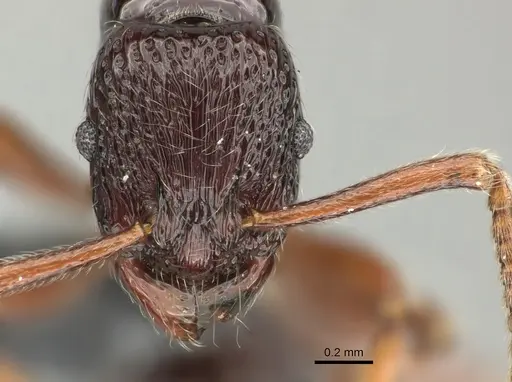
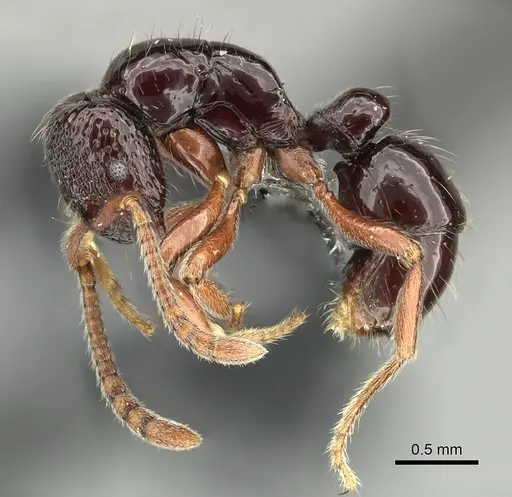
Holcoponera crenaticeps is a small ant measuring approximately 6-7mm in total length. Workers have a distinctive appearance with a dark brown head, mesosoma, petiole, and gaster (abdomen), while the mandibles, antennae, and legs are a reddish-ferruginous color. The eyes are notably reduced in size (OI 0.17), which is typical of ground-dwelling ants that do not rely heavily on visual hunting. The antennae are long, with the scapes surpassing the posterior head margin by at least twice their apical width. A distinctive feature is the low triangular tooth on the upper surface of the hind coxae. The petiolar node is relatively tall and convex dorsally, while the subpetiolar process projects forward in a roughly triangular shape. The propodeal declivity is smooth and flat, without any ridges or denticles. This species was originally described in 1919 by W.M. Mann from specimens collected beneath a stone on Isabel Island in the Solomon Islands. It was subsequently placed in the genus Gnamptogenys before being transferred to Holcoponera in 2022 based on molecular phylogenetics. [1]
Natural History and Distribution
Holcoponera crenaticeps is endemic to the Solomon Islands, a chain of islands in the South Pacific east of Papua New Guinea. The species has been recorded from Isabel Island (the type locality), Makira, Guadalcanal, and Malaita. All specimens have been collected from beneath stones in shaded forest floor microhabitats. This suggests the species prefers damp, shaded terrestrial environments typical of tropical island forests. The Solomon Islands have a tropical climate with year-round warm temperatures and high humidity. There is no distinct winter season, and rainfall is abundant throughout the year. The forest floor environment where these ants were found would maintain consistently moist soil conditions, especially under stones that retain humidity and provide stable microclimates. Beyond these basic habitat observations, almost nothing is known about the natural biology of this species, no nests have been observed, no colony sizes are documented, and the reproductive castes (queen and male) have never been described. [1][2]
Taxonomy and Nomenclatural History
This species has undergone several taxonomic changes since its original description. W.M. Mann first described the worker caste in 1919 under the name Holcoponera crenaticeps, based on specimens collected from Isabel Island in the Solomon Islands. In 1958,W.L. Brown transferred the species to the genus Gnamptogenys, where it remained for several decades. Most recently, in 2022,Camacho, Franco, Branstetter, and colleagues moved it to the genus Holcoponera based on phylogenomic analysis using ultra-conserved elements (UCEs). The species has also been redescribed by Lattke in 2004 as part of a comprehensive taxonomic revision of Gnamptogenys in Southeast Asia and Australasia. The genus Holcoponera belongs to the subfamily Ectatomminae and the tribe Ectatommini, which includes other predatory ants such as Gnamptogenys and Ectatomma. The worker description remains the only caste known to science, the queen and male castes have never been discovered or described.
Predatory Biology and Stinger Morphology
Holcoponera crenaticeps belongs to the Ectatommini tribe, which consists primarily of predatory ants that hunt small invertebrates. Recent research on stinger morphology has confirmed that this species possesses a functional stinger, classified as having a relatively small total surface area (0.07 mm2) and volume (0.00020 mm3) [3]. The stinger shows characteristics typical of predatory lineages, with structural features adapted for injecting venom into prey items rather than for defense against large predators. Based on related species in the Ectatommini, workers likely hunt individually or in small groups, using their stinger to subdue prey items such as small insects, springtails, and other micro-arthropods found in the leaf litter and soil. The reduced eye size suggests this species relies more on chemical and tactile cues than visual hunting, which is consistent with a ground-dwelling, cryptic lifestyle beneath stones and in soil crevices.
Keeping This Species in Captivity
Keeping Holcoponera crenaticeps in captivity presents significant challenges due to the complete lack of documented husbandry information. This species is essentially unknown in the antkeeping hobby and has rarely, if ever, been available commercially. If available, care should be based on推测 (inferred) from related species and the known natural habitat. Provide a tropical setup with temperatures around 24-28°C and high humidity. A naturalistic setup with damp substrate and flat stones or a Y-tong/plaster nest works well for ground-dwelling ants. Feed small live prey such as fruit flies, pinhead crickets, mealworms, and other small invertebrates. Sugar water may be accepted but predatory species often prefer protein sources. Minimize disturbance, especially during founding, as these are cryptic ants adapted to stable, protected microhabitats. Given the complete lack of captive data, success with this species would be experimental and would contribute valuable information to the antkeeping community. This species is recommended only for expert antkeepers comfortable with species that have no established husbandry protocols.
Conservation and Availability
Holcoponera crenaticeps is endemic to the Solomon Islands and has never been commonly encountered, with the original description in 1919 remaining the primary source of specimens. The species has been recorded from multiple islands in the Solomon chain (Isabel, Makira, Guadalcanal, and Malaita), suggesting it has a reasonably broad distribution within its limited range. However, nothing is known about population sizes, trends, or potential threats. The Solomon Islands face ongoing habitat loss from deforestation and development, which could affect ground-dwelling ant populations that require shaded forest floor microhabitats. In the antkeeping hobby, this species is essentially unavailable and rarely discussed. Anyone interested in keeping this species would likely need to travel to the Solomon Islands to collect them, which would require appropriate permits and adherence to export regulations. The extreme rarity of this species in both scientific collections and the hobby makes it one of the most challenging ants to keep, and prospective keepers should consider the significant unknowns involved. [1]
Frequently Asked Questions
Is Holcoponera crenaticeps available for purchase in the antkeeping hobby?
No, this species is essentially unavailable in the antkeeping hobby. It has rarely, if ever, been offered by breeders or sellers. The species is known only from a handful of specimens collected in 1919 and has never been commonly encountered.
How do I care for Holcoponera crenaticeps?
No established husbandry protocol exists because this species has never been kept in captivity. If available, provide a tropical setup at 24-28°C with high humidity. Use a naturalistic setup with damp substrate and flat stones. Feed small live prey like fruit flies and micro-arthropods. This is experimental care based on推测 from related species.
What does Holcoponera crenaticeps look like?
Workers are approximately 6-7mm with a dark brown body. The mandibles, antennae, and legs are reddish-brown. They have reduced eyes and a small triangular tooth on the hind coxae. The petiolar node is tall and convex.
Where is Holcoponera crenaticeps found in the wild?
This species is endemic to the Solomon Islands in the South Pacific. It has been recorded from Isabel Island (type locality), Makira, Guadalcanal, and Malaita. Specimens were collected beneath stones in shaded forest habitats.
Does Holcoponera crenaticeps have a stinger?
Yes, this species has a functional stinger. Research on stinger morphology confirms the presence of a small but functional stinger adapted for predatory purposes, typical of ants in the tribe Ectatommini.
How big do colonies of Holcoponera crenaticeps get?
Unknown, no colony data exists for this species. Only the worker caste has ever been described, and no colony observations have been documented in the scientific literature.
Do Holcoponera crenaticeps queens have wings?
Unknown, the queen caste has never been described. The species remains known only from workers, making it impossible to confirm whether queens are winged (alates) or ergatoid (wingless replacement reproductives).
Is Holcoponera crenaticeps difficult to keep?
This species would be extremely difficult to keep due to the complete lack of any captive husbandry information. It is recommended only for expert antkeepers comfortable with experimental species that have no established care protocols.
What do Holcoponera crenaticeps eat?
Likely predatory on small invertebrates, based on membership in Ectatommini tribe. Related species hunt small insects, springtails, and other micro-arthropods. Sugar sources may be accepted but protein prey is likely the primary food.
Do I need to hibernate Holcoponera crenaticeps?
No hibernation is expected. The Solomon Islands have a tropical climate with no cold winter season. Keep the colony at warm tropical temperatures year-round (24-28°C).
References

This caresheet is licensed under CC BY-SA 4.0 .
CASENT0219890
View on AntWeb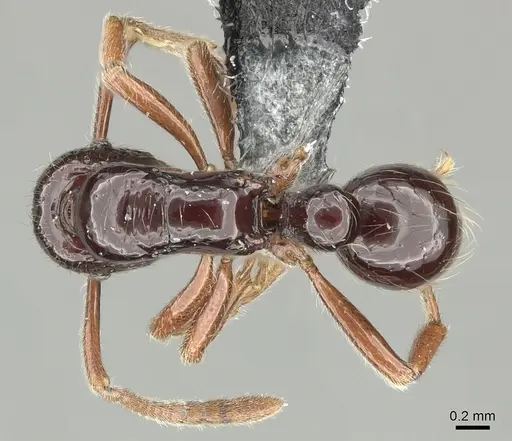
Literature
Loading...Loading products...