

Heteroponera monticola
- Scientific Name
- Heteroponera monticola
- Tribe
- Heteroponerini
- Subfamily
- Ectatomminae
- Author
- Kempf & Brown, 1970
- Distribution
- Found in 1 countries
Heteroponera monticola Overview
Heteroponera monticola is an ant species of the genus Heteroponera. It is primarily documented in 1 countries , including Colombia. Detailed taxonomic data and occurrence records can be further explored via authoritative databases such as AntWeb or the Global Biodiversity Information Facility (GBIF).
Heteroponera monticola
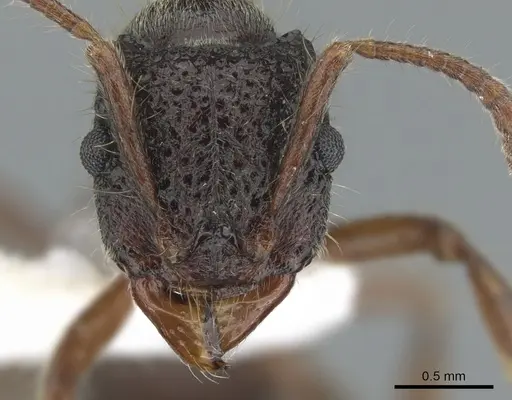
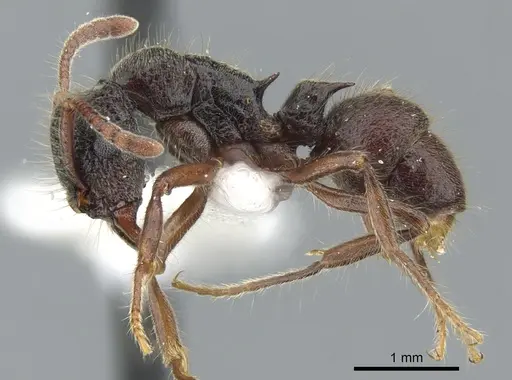
Heteroponera monticola is a medium-sized ponerine ant native to the Colombian Andes, found at high elevations between 1400-2600 meters [1]. Workers measure 5-7mm with a distinctive black body and prominent features including large propodeal teeth and a sharp spine extending from the petiole's posterior apex [2][3]. The species was described in 1970 from nests found in rotten wood and mossy logs near Cali, Colombia, a wet, high-altitude region where ants are generally scarce [4]. What makes this species particularly unusual is its social structure: researchers found no distinct queen caste in any of the studied colonies, suggesting certain workers become reproductives (a gamergate system), similar to some other ectatommine ants [4].
Quick Summary
- Difficulty: Medium
- Origin & Habitat: Colombian Andes, departments of Valle del Cauca, Caldas, Caquetá, Cundinamarca, Huila, Meta, Nariño, Quindío, and Risaralda at altitudes 1400-2600m [1]. Found in wet, high-elevation forest regions near the upper limit of ant occurrence, nesting in rotten wood, mossy logs, and tree cavities [4][3].
- Colony Type: Unusual social structure, no distinct queen caste observed. Certain workers function as reproductives (gamergate system). Colonies are small, containing only 30-45 workers [4].
- Special: Gamergates
- Size & Growth:
- Queen: Not morphologically distinct, workers serve as reproductives [4]
- Worker: 5.00-5.78mm [2]
- Colony: 30-45 workers [4]
- Growth: Slow, small colony size indicates gradual development
- Development: Unknown, no direct development data available. Based on typical ponerine patterns, estimate 2-3 months at warm temperatures. (Development timeline unconfirmed for this species. Ponerine ants typically have slower development than many formicines.)
- Antkeeping:
- Temperature: Keep around 20-24°C. These are high-altitude ants from cool, wet Colombian forests, avoid overheating [1]. Room temperature is likely suitable for most keepers.
- Humidity: High humidity required, they come from wet forest regions. Keep nest substrate consistently moist but not waterlogged. Provide a water source.
- Diapause: Unknown, high-altitude origin suggests they may tolerate cooler temperatures but specific diapause requirements are unconfirmed.
- Nesting: Nests naturally in rotten wood, mossy logs, and tree cavities [4][3]. In captivity, a naturalistic setup with rotten wood pieces or a Y-tong/plaster nest with moisture retention works well. They forage in leaf litter so the outworld should have some substrate for hunting.
- Behavior: These ants are predatory hunters that forage in leaf litter [3]. They are not aggressive toward humans but have a functional stinger, pain level is unknown but likely significant for a ponerine. Workers are relatively slow-moving compared to many ants. Colonies are small and docile. Escape risk is moderate, they are not tiny but can squeeze through small gaps. Use standard escape prevention.
- Common Issues: Small colony size means slow population growth, don't expect rapid expansion, No distinct queen means colony founding is unusual, you may receive a established colony with reproductive workers, High humidity is critical, dry conditions will kill colonies, Cool temperatures are important, avoid overheating above 25°C, Predatory diet means they need live prey, sugar sources are unlikely to be accepted
Housing and Nest Setup
Heteroponera monticola naturally nests in rotten wood, mossy logs, and tree cavities at high elevations in the Colombian Andes [4][3]. For captivity, a naturalistic setup works best, provide pieces of rotting wood or cork within a terrarium-style formicarium. Alternatively, a Y-tong (acrylic) nest with moist plaster or soil substrate can work well. The key is maintaining high humidity while ensuring good ventilation to prevent mold. Since they forage in leaf litter, include a layer of moist substrate in the outworld where they can hunt. A small water tube should be provided, but these ants get most of their moisture from prey and humid conditions.
Feeding and Diet
As a predatory ponerine ant, H. monticola hunts small invertebrates in leaf litter [3]. In captivity, offer small live prey such as fruit flies, small crickets, mealworms, and other tiny arthropods. Prey should be appropriately sized, these are medium ants but their colonies are small, so oversized prey may overwhelm them. Sugar sources are unlikely to be accepted, this is not a honeydew-feeding species. Fresh water should always be available. Feed every 2-3 days, adjusting based on colony consumption.
Temperature and Humidity
These ants come from cool, wet high-altitude forests in Colombia (1400-2600m elevation) [1]. Keep temperatures in the range of 18-24°C, room temperature is typically suitable. Avoid overheating, which can be fatal. High humidity is essential, aim for 70-80% relative humidity. Keep the nest substrate consistently moist but not waterlogged. Mist the setup regularly and ensure the nest material retains moisture. A shallow water dish in the outworld helps maintain humidity through evaporation.
Colony Structure and Reproduction
The most unusual aspect of H. monticola is its social structure. Unlike most ants, there is no distinct queen caste, researchers found no morphological differentiation between workers and queens in any of the studied colonies [4]. Instead, certain workers become reproductives (gamergates), meaning they mate and lay eggs. This is rare among ants and means your colony does not need a traditional queen to survive and grow. When acquiring this species, you will likely receive an established colony with reproductive workers rather than a founding queen. Colony sizes in the wild are very small, only 30-45 workers [4], so don't expect the large colonies typical of many ant species.
Behavior and Temperament
Heteroponera monticola is a docile, non-aggressive species. Workers forage slowly through leaf litter searching for prey rather than racing around like many fast-moving ants. They have a functional stinger as part of their ponerine heritage, but they are not defensive and rarely use it against keepers. Because of their small colony size and docile nature, they are best suited for observation rather than entertainment. They are not escape artists in the traditional sense but can squeeze through small gaps, use standard barrier methods. The slow-moving foragers make fascinating subjects for watching predatory behavior. [4]
Frequently Asked Questions
How long does it take for Heteroponera monticola to produce first workers?
The exact development timeline is unconfirmed for this species. Based on typical ponerine development, expect 2-3 months from egg to worker at warm temperatures (around 24°C). Growth is slow, wild colonies only reach 30-45 workers.
Can I keep multiple Heteroponera monticola queens together?
This species does not have a distinct queen caste, it uses a gamergate system where workers become reproductives. There is no traditional queen to keep together. If you receive multiple reproductive workers, they should coexist peacefully.
Do Heteroponera monticola ants sting?
Yes, as a ponerine ant they have a functional stinger. However, they are not aggressive and rarely sting. The sting pain level is not documented but is likely significant for a medium-sized ponerine.
What do Heteroponera monticola eat?
They are predatory hunters that eat small live invertebrates. Feed small live prey like fruit flies, small crickets, mealworms, and other tiny arthropods. Sugar sources are unlikely to be accepted.
Are Heteroponera monticola good for beginners?
They are rated Medium difficulty. While not aggressive, their small colony size, high humidity needs, predatory diet, and unusual social structure make them better suited for keepers with some antkeeping experience.
What temperature do Heteroponera monticola need?
Keep them at 18-24°C, room temperature is typically suitable. They come from cool high-altitude Colombian forests and do not tolerate heat well. Avoid temperatures above 25°C.
How big do Heteroponera monticola colonies get?
Wild colonies are very small, containing only 30-45 workers [4]. In captivity, don't expect large colonies, they remain modest in size compared to many common ant species.
Do Heteroponera monticola need hibernation?
Diapause requirements are unconfirmed. Their high-altitude origin suggests they may tolerate cooler temperatures, but specific winter care has not been documented. Keep them at stable room temperature for now.
When should I move Heteroponera monticola to a formicarium?
Start them in a simple setup (test tube or small container with moist substrate). Once established and actively foraging, you can move them to a naturalistic terrarium or Y-tong nest with appropriate humidity control.
Why are my Heteroponera monticola dying?
Common causes include: dry conditions (high humidity is critical), overheating (keep below 25°C), too large prey items they cannot subdue, and stress from small colony size. Ensure high humidity, moderate temperatures, and appropriately sized live prey.
References

This caresheet is licensed under CC BY-SA 4.0 .
CASENT0902410
View on AntWeb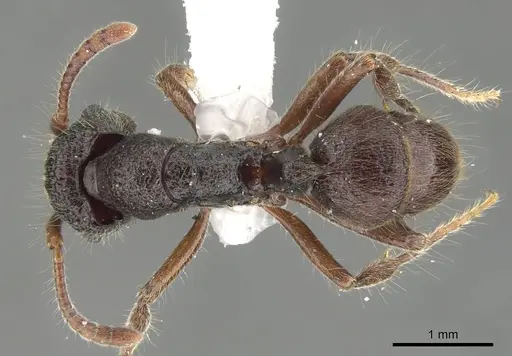
Literature
Loading...Loading products...