

Heteroponera georgesi
- Scientific Name
- Heteroponera georgesi
- Tribe
- Heteroponerini
- Subfamily
- Ectatomminae
- Author
- Perrault, 1999
- Distribution
- Found in 1 countries
Heteroponera georgesi Overview
Heteroponera georgesi is an ant species of the genus Heteroponera. It is primarily documented in 1 countries , including French Guiana. Detailed taxonomic data and occurrence records can be further explored via authoritative databases such as AntWeb or the Global Biodiversity Information Facility (GBIF).
Heteroponera georgesi
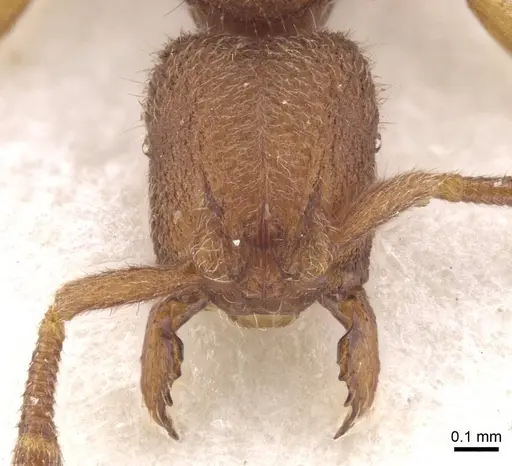
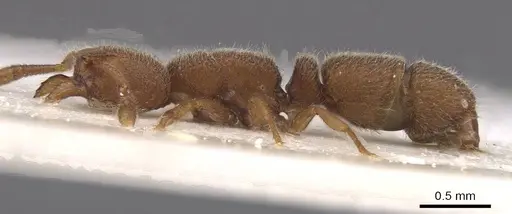
Heteroponera georgesi is a small, subterranean ant species described from French Guiana. Workers are characterized by their dramatically reduced eyes (ommatidia), a trait indicating they are hypogaeic, meaning they live and forage underground rather than on the surface [1]. The frontal lobes are rounded at the apex, slightly diverging, and the clypeus is anterolaterally rounded [2]. This species belongs to the subfamily Ectatomminae and tribe Heteroponerini. Only known from French Guiana, specifically the Cayenne region, these ants are rarely encountered and sampled using specialized subterranean techniques like lavage de terre (soil washing) at depths of 0-25 cm [3]. The complete colony structure and biology remain unstudied.
Quick Summary
- Difficulty: Unknown, insufficient data
- Origin & Habitat: French Guiana (Cayenne region). Sampled from subterranean habitats at 0-25 cm depth in tropical forest [3][1].
- Colony Type: Unconfirmed. Colony structure has not been documented in scientific literature.
- Size & Growth:
- Queen: Undescribed, no queen measurements available
- Worker: Undescribed in available literature, only worker caste known [1]
- Colony: Unknown, no colony size data available
- Growth: Unknown
- Development: Unknown, no development data available for this species (Related Heteroponera species may take several months, estimates based on genus patterns suggest 3-6 months at optimal temperature)
- Antkeeping:
- Temperature: Likely 24-28°C based on French Guiana tropical habitat. Provide a warm area around 26°C with gradient.
- Humidity: High humidity preferred, tropical subterranean environment. Keep nest substrate consistently moist but not waterlogged.
- Diapause: Unknown, no data on overwintering requirements. French Guiana has minimal seasonal temperature variation, so diapause may not be required.
- Nesting: No specific nesting data available. As a subterranean species, they likely prefer dark, humid nests with compact chambers. Y-tong or plaster nests with high humidity work well for related species.
- Behavior: Behavior is largely unstudied. As a subterranean Heteroponera, they likely are predatory like other members of the genus, hunting small soil arthropods. Their reduced eyes confirm they are adapted to life underground and are not surface-active. Escape risk is unknown but likely moderate, workers are small and may escape through standard barriers. Exercise standard escape prevention.
- Common Issues: very limited species-specific information makes care recommendations uncertain, subterranean species require specialized humidity management, no documented founding behavior, unknown if claustral or semi-claustral, no confirmed diet preferences, must infer from genus, wild-caught colonies may be difficult to establish in captivity
Species Identification and Morphology
Heteroponera georgesi workers are distinguished by their drastically reduced eyes (ommatidia), a clear adaptation to subterranean life [1]. The frontal lobes in dorsal view are rounded at the apex, slightly diverging and separated by a markedly concave space, extending to the anterior clypeal border. The clypeus is anterolaterally rounded, and the petiole in dorsal view is elliptical [2][4]. The species was described by Perrault in 1999 from specimens collected in Cayenne, French Guiana. Only the worker caste has been described, queens and males remain undescribed.
Distribution and Habitat
Heteroponera georgesi is known only from French Guiana, specifically the Cayenne region including Grand-Matoury [1]. The species has been sampled using the Lavage de Terre technique (soil washing) at depths of 0-25 cm, confirming its subterranean (hypogaeic) lifestyle [3]. The bait used during sampling contained both carbohydrates and proteins, suggesting these ants can utilize diverse food resources [3]. This represents the entire known range of the species, it has not been recorded elsewhere.
Subterranean Lifestyle
This species is one of the truly subterranean ants, with dramatically reduced eyes indicating they rarely if ever venture to the surface [1]. The reduction in ommatidia is a classic adaptation to life underground, similar to other hypogaeic species. This means they are adapted to dark, stable humidity conditions and likely forage through soil tunnels rather than on the surface. In captivity, this translates to needing a dark, humid nest environment with minimal light exposure. Related subterranean ants often show reduced pigmentation as well, though this is not specifically noted for H. georgesi.
Care Recommendations
Since specific care data is unavailable for H. georgesi, recommendations must be based on the species' known biology and related Heteroponera species. Provide a warm, humid environment, aim for 24-28°C with high humidity (70-85%). As a subterranean species, they likely prefer compact nest chambers over open spaces. Use a moist substrate like plaster or Y-tong setup that maintains humidity without flooding. Feed protein sources like small insects (fruit flies, pinhead crickets, mealworms) and occasional sugar water. Given their underground nature, minimize nest disturbance and provide darkness. Start with standard care and adjust based on colony behavior.
Known Distribution
This ant is endemic to French Guiana, meaning it is found nowhere else in the world. The entire scientific knowledge comes from a handful of specimens collected in the Cayenne area. This makes it a rare and potentially difficult species to acquire, and if obtained, it would be from very limited wild populations or potentially through specialized breeding programs.
Frequently Asked Questions
How do I care for Heteroponera georgesi ants?
Specific care is unconfirmed, but based on their subterranean lifestyle and French Guiana origin, provide 24-28°C temperatures and high humidity (70-85%). Use a humid nest setup like Y-tong or plaster. Feed small protein sources like fruit flies and micro crickets. Keep the nest dark and minimize disturbance.
What do Heteroponera georgesi eat?
Diet is unconfirmed for this species. Based on related Heteroponera species, they are likely predatory on small soil arthropods. Offer small live insects (fruit flies, springtails, micro crickets) and occasionally sugar water. The bait study showed acceptance of both carbohydrates and proteins [3].
How big do Heteroponera georgesi colonies get?
Colony size is unknown, no colony data exists for this species. Related Heteroponera species typically form colonies of several hundred workers. Expect moderate colony growth over time.
Do Heteroponera georgesi ants sting?
Sting capability is not documented for this species. The genus Heteroponera belongs to the subfamily Ectatomminae, which includes stinging ants. Exercise caution and assume they can sting until proven otherwise.
Are Heteroponera georgesi good for beginners?
No, this species is not recommended for beginners. There is virtually no species-specific care information available, making successful captivity very uncertain. The species is also extremely rare and rarely available in the antkeeping hobby.
Where is Heteroponera georgesi found?
This species is endemic to French Guiana, specifically the Cayenne region. It has only been recorded from the Grand-Matoury area and is not known from any other location worldwide.
Do Heteroponera georgesi need hibernation?
Diapause requirements are unknown. French Guiana has minimal seasonal temperature variation, so hibernation is likely not required. Maintain stable warm temperatures year-round.
How long does it take for Heteroponera georgesi to develop from egg to worker?
Development timeline is unconfirmed for this species. Based on related Heteroponera species, expect 3-6 months from egg to worker at optimal temperature. This is an estimate only.
Can I keep multiple Heteroponera georgesi queens together?
Colony structure is unconfirmed. Multiple queen combination has not been documented. Do not attempt combining unrelated queens without evidence they will accept each other.
Is Heteroponera georgesi available in the antkeeping hobby?
This species is extremely rare in the hobby. It is only known from French Guiana and has rarely been collected. Most antkeepers will not have access to this species.
References

This caresheet is licensed under CC BY-SA 4.0 .
CASENT0915357
View on AntWeb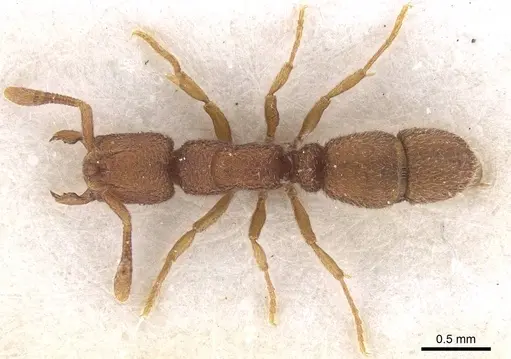
Literature
Loading...Loading products...