

Harpegnathos saltator
- Scientific Name
- Harpegnathos saltator
- Tribe
- Ponerini
- Subfamily
- Ponerinae
- Author
- Jerdon, 1851
- Common Name
- Indian Jumping Ant
- Distribution
- Found in 2 countries
Harpegnathos saltator Overview
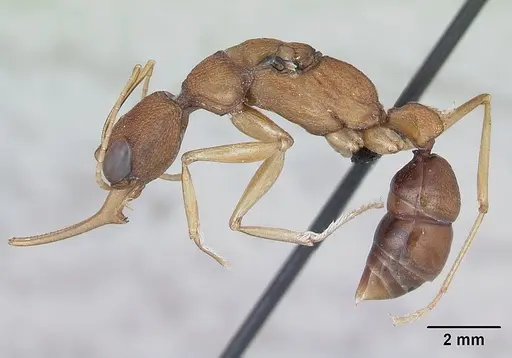
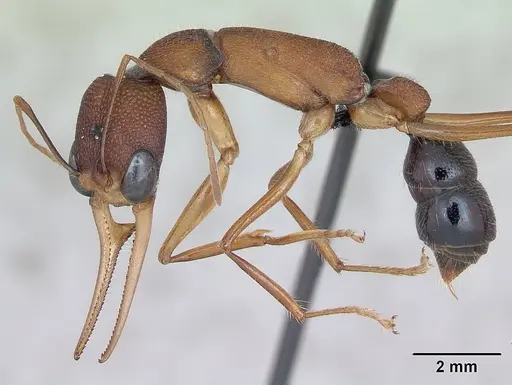
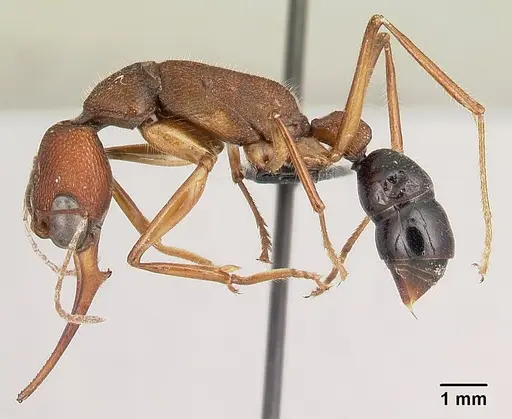
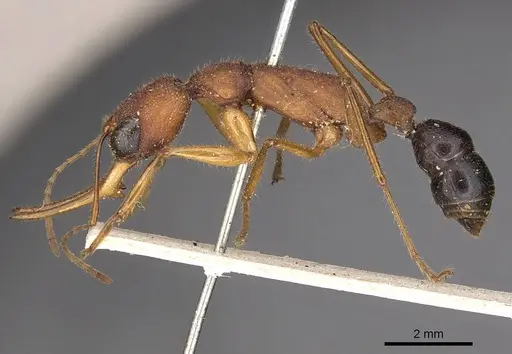
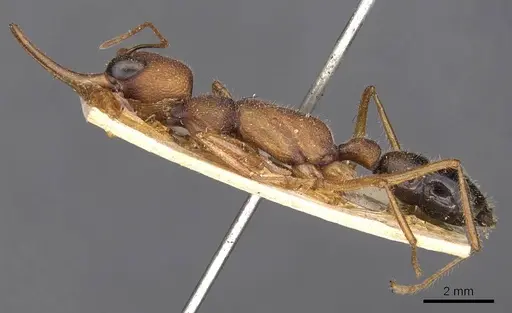
Harpegnathos saltator (commonly known as the Indian Jumping Ant) is an ant species of the genus Harpegnathos. It is primarily documented in 2 countries , including India, Sri Lanka. Detailed taxonomic data and occurrence records can be further explored via authoritative databases such as AntWeb or the Global Biodiversity Information Facility (GBIF).
Harpegnathos saltator - "Indian Jumping Ant"
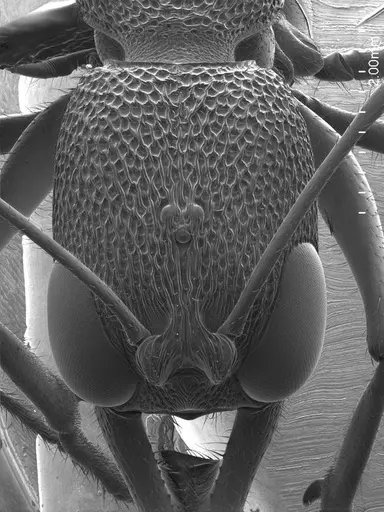
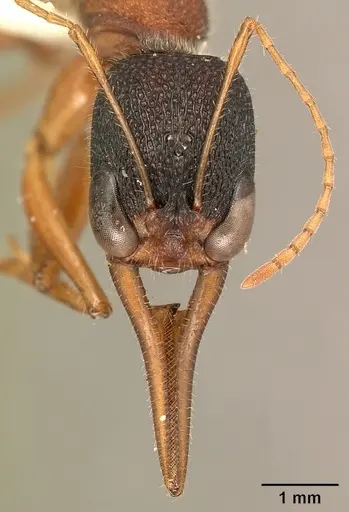
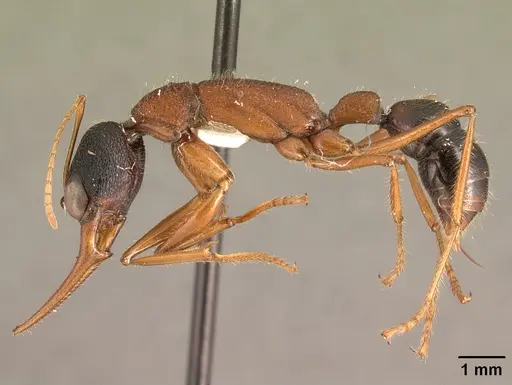
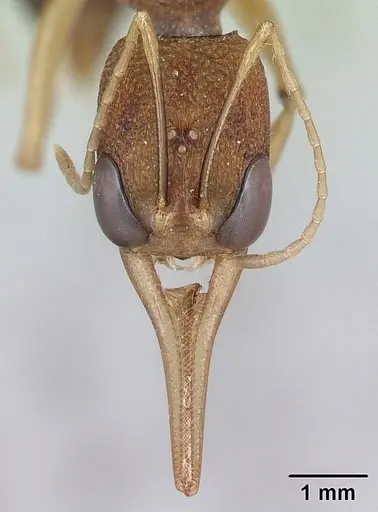
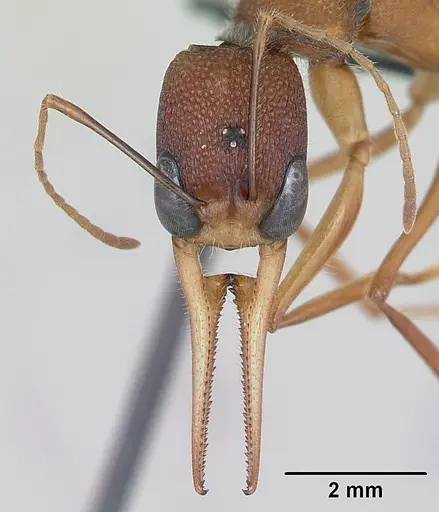
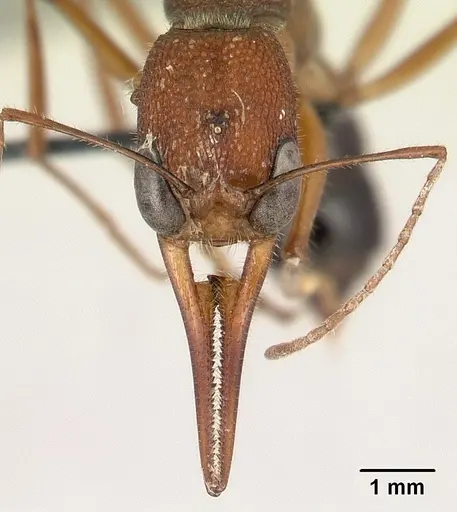
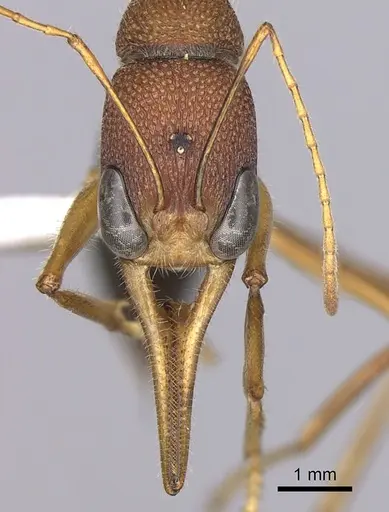
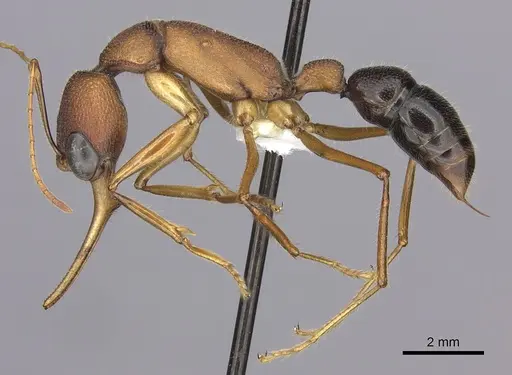
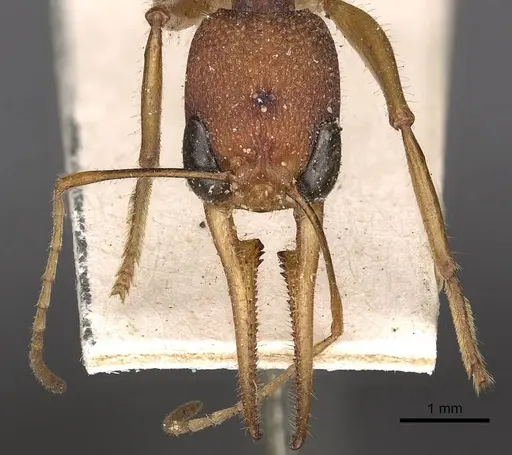
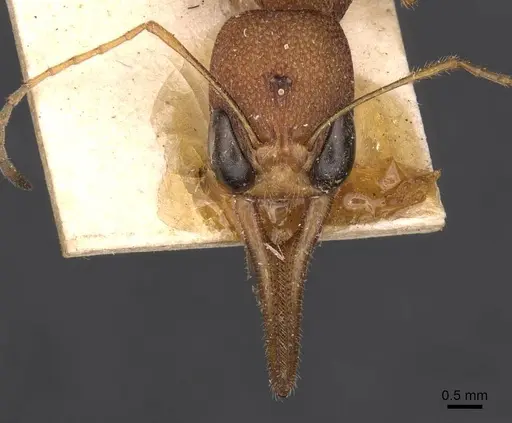
Harpegnathos saltator is a large (14-17mm) predatory ant from India and Sri Lanka, famous for its remarkable jumping ability and complex social system. Workers have elongated mandibles equipped with trigger hairs and large compound eyes with about 1,600 ommatidia for binocular vision, allowing them to hunt by sight and leap up to 20cm to capture prey or escape predators [1]. This species builds unusually complex nests for a ponerine ant, featuring stacked chambers lined with discarded cocoon fragments ('wall-papering') and a distinctive atrium that helps prevent flooding [2]. The colony operates with a single founding queen who is eventually replaced by multiple gamergates (mated reproductive workers) through a ritualized dominance tournament after the queen ages out [3].
Quick Summary
- Difficulty: Medium
- Origin & Habitat: India and Sri Lanka, primarily in the Western Ghats region. Found in evergreen forests and forest edges, typically nesting in areas with thick leaf litter [2][4].
- Colony Type: Colonies start with a single founding queen. After the queen dies or becomes senescent (typically 3-4 years), workers compete in dominance tournaments to establish 3-6 gamergates (mated reproductive workers) that take over reproduction [3][5]. Both queens and workers can reproduce, this is one of the few ant species where workers regularly contribute to sexual reproduction through inbreeding with colony males.
- Colony: Monogyne
- Founding: Semi-claustral
- Special: Gamergates
- Size & Growth:
- Queen: 17mm [4]
- Worker: 14-17mm [4]
- Colony: Typically 65±40 workers, can reach 300-500 workers in mature colonies [3]
- Growth: Moderate
- Development: 3-4 months at 25°C [3] (Eggs hatch after ~30 days, larvae develop and spin cocoons after ~33 more days, adults emerge after another 33 days. First workers appear 3-4 months after colony founding.)
- Antkeeping:
- Temperature: Keep at 24-26°C. Colonies are maintained at 25°C in laboratory conditions [3]. A gentle gradient is recommended.
- Humidity: Moderate to high. These ants prefer humid conditions but their complex nest architecture with an atrium helps regulate moisture. Keep nest substrate consistently moist but not waterlogged.
- Diapause: No, this is a tropical species from India/Sri Lanka. No hibernation period is required, but colony activity may slow slightly during cooler periods.
- Nesting: Best kept in a naturalistic setup with soil or a plaster/acrylic nest with chambers. They build elaborate multi-chambered nests in the wild and will construct complex structures given the opportunity. Test tubes can work for founding colonies but they benefit from more space as they grow.
- Behavior: Harpegnathos saltator is an aggressive, solitary forager that hunts primarily by sight. Workers have excellent vision and use their large eyes to spot prey from several centimeters away before launching a rapid attack. They can jump significant distances using their middle and hind legs to capture fleeing or flying prey. Workers are highly defensive and will readily sting threats. Escape prevention is important, while not tiny, they are active and can climb smooth surfaces. They are diurnal and primarily forage during daylight hours [1][6].
- Common Issues: Predatory feeding requirements mean they need live prey, cannot survive on sugar water alone, Complex social dynamics may confuse keepers expecting simple queen-worker hierarchy, Nests can be elaborate, may need more space than typical test tube setups for established colonies, Workers have potent venom and will sting readily when threatened, Colony growth is relatively slow compared to many common ant species
Housing and Nest Setup
Harpegnathos saltator benefits from a naturalistic setup that allows for their complex nest-building behavior. In the wild, they construct elaborate multi-chambered nests with stacked levels connected by passages, all enclosed within a spherical earthen shell with an atrium separating the nest from surrounding soil [2]. For captivity, a plaster or acrylic formicarium with multiple connected chambers works well, or you can use a naturalistic setup with soil in an outworld. The nest should have chambers sized appropriately for their body size (workers are 14-17mm). Provide a water tube and keep the nest substrate moderately moist. They are active foragers, so include a spacious outworld for hunting. Use Fluon or similar barrier on the edges of the outworld to prevent escapes, these ants can climb smooth surfaces effectively.
Feeding and Diet
This species is an obligate predator and cannot survive without regular protein from live prey. Workers hunt solitarily using their excellent vision to spot and chase down arthropods. They can catch prey detected at 3-4cm with an 80% success rate, and can even capture flying insects in mid-air [1]. Feed them a variety of small live insects including crickets (appropriately sized), fruit flies, small roaches, and other arthropods. They will paralyze prey with their sting and store it for later consumption. Unlike many ants, they do not typically collect honeydew or nectar, their diet is almost exclusively predatory. Feed prey items 2-3 times per week for established colonies, ensuring all prey is consumed or removed to prevent mold. Queens in the founding stage may accept paralyzed prey to supplement their energy needs during semi-claustral founding [7].
Temperature and Seasonal Care
Maintain temperatures between 24-26°C for optimal colony health and development. Laboratory colonies are successfully maintained at 25°C with a 12:12 light/dark cycle [3]. As a tropical species from India and Sri Lanka, they do not require hibernation or diapause. However, avoid temperatures below 20°C as this can slow activity and potentially harm brood development. A small heating cable on one side of the nest can create a gentle thermal gradient if your room temperature runs cool. They are diurnal foragers, so a regular day/night cycle helps maintain natural activity patterns.
The Gamergate System
One of the most fascinating aspects of H. saltator is their unique reproductive system. Colonies start with a single founding queen who produces workers. When the queen dies or becomes senescent after several years, workers engage in a ritualized dominance tournament to establish a new group of reproductives called gamergates [8]. During this tournament, workers compete through three main interactions: antennal dueling (most common, where two workers beat their antennae rapidly), dominance biting, and physical policing. Winners of these interactions develop active ovaries and become egg-laying gamergates. Unlike most ants, workers can mate with their brothers (inbreeding) and these mated workers can become reproductives. A colony typically establishes 3-6 gamergates through this process. Gamergates live dramatically longer than workers, about 5 times longer (median 1100 days vs 217 days) [9]. They also undergo physiological changes including brain shrinkage and ovarian development.
Behavior and Defense
Harpegnathos saltator workers are aggressive defenders of their colony and will readily attack threats. They have large compound eyes (about 1,600 ommatidia) providing excellent spatial vision for hunting and detecting intruders [6]. When threatened, they can deliver a painful sting and are known to jump up to 20cm to escape enemies or capture prey [1]. Their mandibles have trigger hairs on the inner surface, when these hairs contact prey, they trigger a rapid snap of the mandibles to secure the catch. Workers display age-based division of labor: young 'inside workers' tend brood inside the nest, while older workers become foragers that hunt and defend the colony [10]. Foragers have larger venom glands and show defensive behavior when provoked. Gamergates (reproductive workers) remain inside the nest and do not participate in foraging or defense.
Growth and Development
Colony development is relatively slow compared to many common ant species. After a dealate queen founds a new colony, eggs hatch after approximately 30 days, and larvae develop and spin cocoons after another 33 days. Adult workers emerge from cocoons about 33 days after the eggs were laid, meaning first workers appear 3-4 months after colony founding [3]. A founding queen can lay 1-2 eggs per day, while gamergates lay less than 1 egg per day. Colonies typically reach 65±40 workers in the wild, though some colonies can grow to 300-500 workers. The species shows minimal morphological difference between queens and workers, queens are slightly larger but the dimorphism ratio is only about 1.1 in body size [11]. This is characteristic of more primitive (basal) ant species.
Frequently Asked Questions
Can I keep Harpegnathos saltator in a test tube setup?
Test tubes work for founding colonies but are not ideal for established colonies. This species naturally builds complex multi-chambered nests and benefits from more space. Consider a plaster or acrylic formicarium with multiple connected chambers, or a naturalistic setup with soil.
How long does it take for first workers to appear?
At optimal temperature (25°C), first workers appear approximately 3-4 months after the queen lays her first eggs. The timeline is: eggs hatch after ~30 days, larvae spin cocoons after ~33 more days, and adults emerge after another ~33 days.
Do Harpegnathos saltator ants sting?
Yes, they have a potent sting and will use it readily when threatened. They are aggressive defenders of their colony. The sting is reportedly painful, so handle with caution.
What do Harpegnathos saltator eat?
They are obligate predators that require live prey. Feed them small insects like crickets, fruit flies, small roaches, and other arthropods. They do not typically accept sugar water or honey, their diet is almost exclusively predatory.
Are Harpegnathos saltator good for beginners?
They are considered intermediate in difficulty. While visually impressive and fascinating to watch, their predatory diet requires more effort than species that accept prepared foods. Their complex social system and potential for queen replacement by gamergates also requires understanding.
How big do colonies get?
Colonies typically reach 65±40 workers in the wild, though some mature colonies can grow to 300-500 workers. They are not among the largest ant colonies, this is typical for Ponerine ants.
Do they need hibernation?
No, this is a tropical species from India and Sri Lanka. They do not require hibernation or a diapause period. Maintain temperatures between 24-26°C year-round.
What is a gamergate?
A gamergate is a mated worker that becomes a reproductive egg-layer. In H. saltator, when the founding queen dies or ages out, workers compete in dominance tournaments and winners become gamergates. They can live 5x longer than regular workers and are the primary reproductives in mature colonies.
When should I move them to a formicarium?
Move them when the colony reaches 20-30 workers or when the test tube becomes crowded. They will benefit from more space to build their characteristic complex nest structures.
Can I keep multiple queens together?
This species is monogyne (single queen) in the founding stage. However, after the founding queen dies, the colony will develop multiple gamergates (reproductive workers). Do not combine unrelated foundress queens, they will fight.
References

This caresheet is licensed under CC BY-SA 4.0 .
ANTWEB1008532
View on AntWeb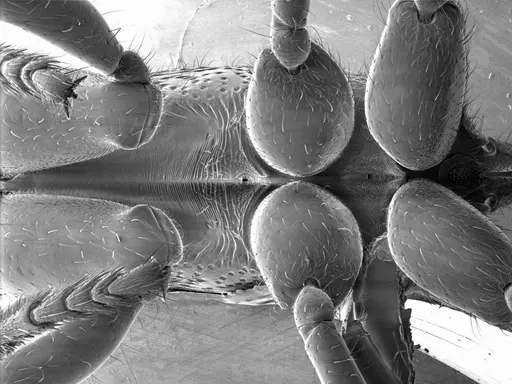
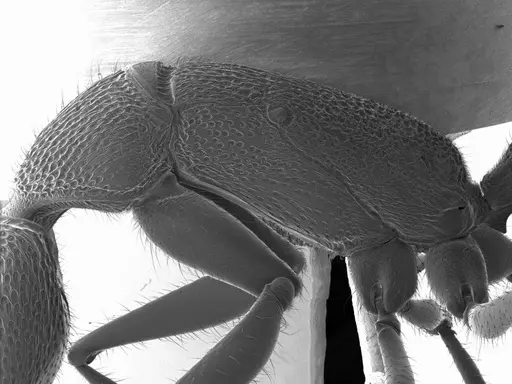
CASENT0101783
View on AntWeb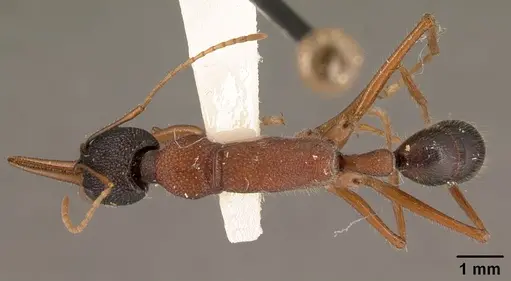
CASENT0173581
View on AntWeb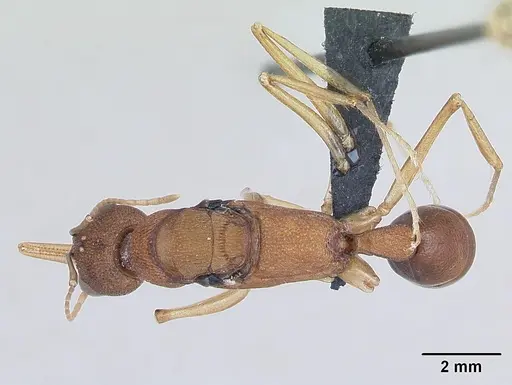
CASENT0173582
View on AntWeb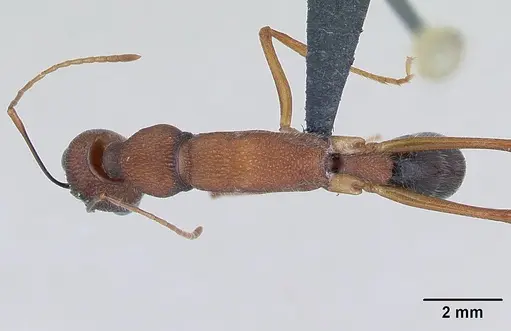
CASENT0179535
View on AntWeb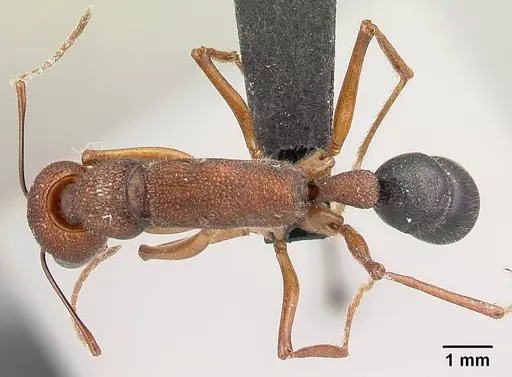
CASENT0260424
View on AntWeb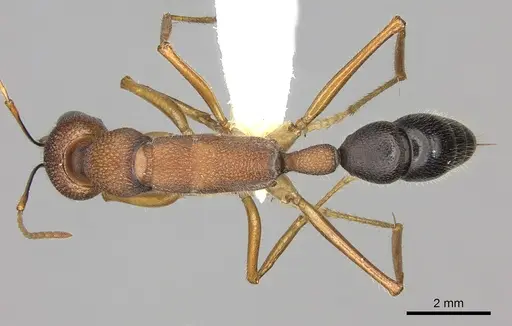
CASENT0900659
View on AntWeb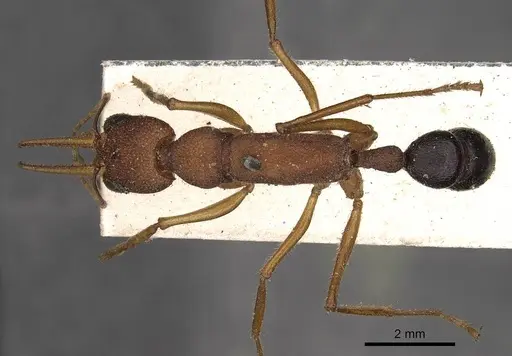
CASENT0907213
View on AntWeb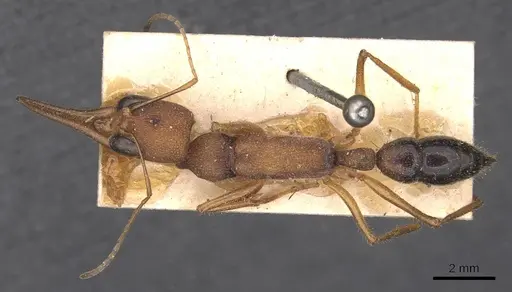
Literature
Loading...Loading products...