

Gesomyrmex howardi
- Scientific Name
- Gesomyrmex howardi
- Tribe
- Gesomyrmecini
- Subfamily
- Formicinae
- Author
- Wheeler, 1921
- Distribution
- Found in 2 countries
Gesomyrmex howardi Overview
Gesomyrmex howardi is an ant species of the genus Gesomyrmex. It is primarily documented in 2 countries , including China, Hong Kong. Detailed taxonomic data and occurrence records can be further explored via authoritative databases such as AntWeb or the Global Biodiversity Information Facility (GBIF).
Gesomyrmex howardi
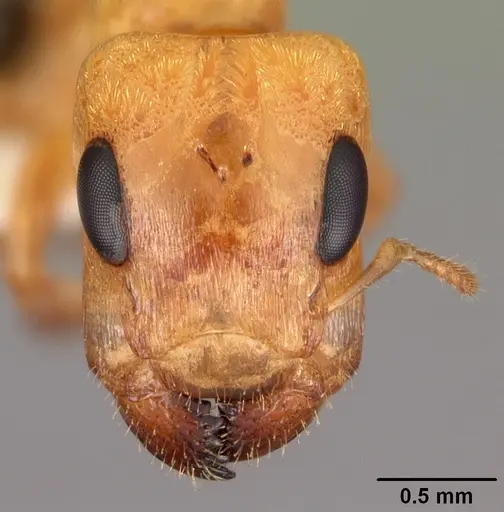
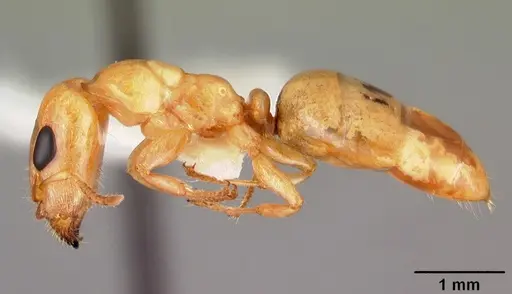
Gesomyrmex howardi is a rare and unusual ant species from the Formicinae subfamily, native to China. These ants are arboreal, meaning they live in trees rather than on the ground. Workers are relatively small at 4-6mm with a distinctive appearance typical of the genus, which is known for its unusual mouthpart structures. The genus Gesomyrmex is remarkable because it has both fossil species from Eocene amber and extant populations in China, making it a living fossil group [1][2]. This species was first described by Wheeler in 1921 from specimens collected in China, and has only recently been recorded in Macao in 2021,showing how little we know about this species in the wild [3].
What makes Gesomyrmex special is their arboreal lifestyle, they nest in hollow branches, under bark, or in tree cavities rather than in soil. This makes them quite different from most common ant pets, which are ground-nesting. They belong to the tribe Gesomyrmecini, a small group of ants that are poorly studied in the wild and extremely rare in captivity. Because of their limited distribution and specialized habitat needs, they are considered an expert-level species that requires specialized setups [1].
Quick Summary
- Difficulty: Expert
- Origin & Habitat: Native to China in the Palaearctic region. These ants are arboreal, living in trees and forested areas rather than on the ground [1][2].
- Colony Type: Colony structure is unconfirmed. Based on typical Formicinae patterns, likely single-queen colonies, but this has not been documented for this specific species.
- Size & Growth:
- Queen: Estimated 6-8mm based on genus morphology [4]
- Worker: 4-6mm [4]
- Colony: Unknown, likely small to moderate based on related arboreal Formicinae
- Growth: Unknown, estimated moderate based on genus patterns
- Development: Unknown, estimated 6-10 weeks based on related Formicinae species at optimal temperature (No specific development data exists for this species. Estimates based on typical Formicinae development patterns.)
- Antkeeping:
- Temperature: Keep at 20-26°C. Aim for roughly 22-24°C as a starting point and observe colony activity. Avoid temperatures above 30°C [4].
- Humidity: Moderate to high humidity, typical of arboreal forest ants. Keep nest substrate slightly moist but not waterlogged. Provide a humidity gradient so ants can choose their preferred zone.
- Diapause: Unknown, no specific data on winter requirements. Based on China distribution (temperate to subtropical), a cool period around 10-15°C for 2-3 months may be beneficial, but this is estimated.
- Nesting: Arboreal ants need elevated nesting sites. In captivity, they do well in acrylic nests or Y-tongs with narrow chambers, or naturalistic setups with cork bark pieces, branches, or flat stones positioned to simulate tree hollows. Avoid deep soil nests.
- Behavior: Behavior is poorly documented. Based on genus and subfamily, they are likely moderately active foragers that search for honeydew and small prey in vegetation. Escape risk is moderate, they are not particularly small but are arboreal, so they may climb actively. Use standard escape prevention. Temperament is likely peaceful toward conspecifics but may be defensive if threatened [4].
- Common Issues: very limited availability, this species is rarely available in the antkeeping hobby, no captive breeding data exists, keeping this species alive long-term may be challenging, escape prevention is important, they are active climbers and may escape through small gaps, humidity control is critical, arboreal ants are sensitive to drying out, lack of species-specific information means keepers must adapt care based on observation rather than established protocols
Nest Preferences and Housing
Gesomyrmex howardi is an arboreal species, meaning it naturally nests in elevated locations like hollow branches, under bark, or in tree cavities. In captivity, you need to replicate these conditions. The best options are acrylic nests (Y-tongs style) with relatively narrow chambers, or naturalistic setups featuring cork bark, small branches, or flat stones positioned to create artificial tree hollows. Avoid deep soil formicariums, these ants are not ground-nesting. The nest should have small chambers scaled to their worker size (4-6mm). Place the nest in an elevated position if possible, as this matches their natural arboreal behavior. A small outworld area with branches or vertical surfaces gives them opportunities to forage as they would in trees. [1][4]
Feeding and Diet
Based on related Formicinae ants, Gesomyrmex howardi likely has a typical omnivorous diet. They probably feed on honeydew (a sugary substance secreted by aphids and scale insects) and small insects. In captivity, offer sugar water or honey as a constant energy source. For protein, provide small insects like fruit flies, small mealworms, or crickets. Feed protein 2-3 times per week, and keep sugar sources available at all times. Because they are arboreal, they may prefer foraging on elevated surfaces rather than the ground, consider offering food on small platforms or branches in the outworld. Remove uneaten prey after 24-48 hours to prevent mold. [4]
Temperature and Seasonal Care
Maintain temperatures between 20-26°C, with 22-24°C being an ideal starting point. Avoid temperatures above 30°C as this can stress or kill the colony. A gentle temperature gradient allows ants to regulate their body temperature by moving between warmer and cooler areas of the nest. For heating, use a heating cable or mat placed on one side of the nest, never directly under it, and always with a thermostat. Regarding winter care, there is no specific data for this species. Based on its China distribution in temperate to subtropical regions, a cool period around 10-15°C for 2-3 months may be beneficial, but this is an estimate rather than a confirmed requirement. Monitor your colony's activity levels, if they remain active and healthy year-round, room temperature may be sufficient. [4]
Behavior and Colony Dynamics
The behavior of Gesomyrmex howardi is poorly documented in scientific literature, so much of what we know comes from inference about related arboreal Formicinae. These ants are likely diurnal (active during the day) and forage in vegetation for honeydew and small prey. Workers probably communicate through chemical signals and may use tandem running (one worker leading another to food) rather than mass recruitment. Colonies are likely small to moderate in size, possibly reaching a few hundred workers at maturity. The queen probably seals herself in during founding (claustral founding), living off stored fat until her first workers emerge, though this has not been confirmed for this specific species. Workers are likely defensive of the nest but not particularly aggressive toward humans. [4]
Acquiring and Establishing a Colony
Finding Gesomyrmex howardi for sale is extremely difficult, this is one of the rarest species in the antkeeping hobby. If you do obtain a colony, it will likely be a small established colony or a queen (if queens have been successfully mated in captivity). When establishing a founding queen, use a test tube setup with a water reservoir, but position it horizontally or at an angle rather than vertically to accommodate their arboreal nature. Once workers establish (if founding succeeds), transition to an appropriate arboreal nest setup. Because of their rarity, every individual is valuable, avoid disturbing the colony unnecessarily and maintain stable conditions. Document your observations carefully, as any captive data on this species contributes to our limited knowledge. [4]
Frequently Asked Questions
How long does it take for Gesomyrmex howardi to produce first workers?
The exact development time is unknown. Based on typical Formicinae development patterns, expect 6-10 weeks from egg to worker at optimal temperature (around 22-24°C). This is an estimate since no specific development data exists for this species.
Can I keep Gesomyrmex howardi in a test tube?
A test tube can work for a founding queen, but these are arboreal ants that prefer elevated, enclosed spaces. For an established colony, provide an acrylic nest or naturalistic setup with narrow chambers and vertical surfaces for climbing.
What temperature do Gesomyrmex howardi ants need?
Keep them at 20-26°C, with 22-24°C being ideal. Avoid temperatures above 30°C. A gentle temperature gradient allows the colony to regulate its own conditions.
Are Gesomyrmex howardi good for beginners?
No. This is an expert-level species due to extremely limited availability, lack of captive breeding data, and specialized arboreal housing requirements. There is almost no established husbandry information for this species.
Do Gesomyrmex howardi need hibernation?
It is unknown whether they require a formal diapause. Based on their China distribution, a cool period around 10-15°C for 2-3 months during winter may be beneficial, but this is an estimate rather than a confirmed requirement.
What do Gesomyrmex howardi ants eat?
Based on related Formicinae, they likely eat honeydew and small insects. Offer sugar water or honey constantly, and protein (small insects like fruit flies or mealworms) 2-3 times per week.
How big do Gesomyrmex howardi colonies get?
Colony size is unknown but likely small to moderate, possibly a few hundred workers at maturity. This is estimated based on related arboreal Formicinae species.
Can I keep multiple Gesomyrmex howardi queens together?
This has not been documented. Based on typical Formicinae patterns, single-queen colonies are most likely. Combining unrelated queens is not recommended without evidence they can coexist.
Why is Gesomyrmex howardi so rare in the antkeeping hobby?
This species has a limited natural distribution in China, and its arboreal nesting habits make it difficult to find and collect. It was only first recorded in Macao in 2021,showing how little we know about its wild populations [3]. Very few antkeepers have successfully kept or bred this species.
References

This caresheet is licensed under CC BY-SA 4.0 .
CASENT0102384
View on AntWeb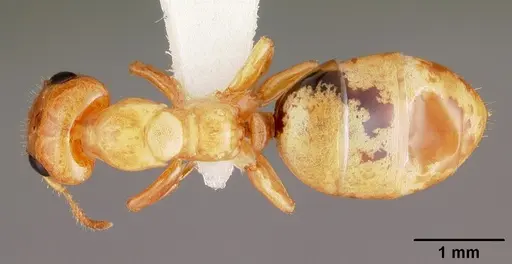
Literature
Loading...Loading products...