

Gaoligongidris planodorsa
- Scientific Name
- Gaoligongidris planodorsa
- Tribe
- Crematogastrini
- Subfamily
- Myrmicinae
- Author
- Xu, 2012
- Distribution
- Found in 1 countries
Gaoligongidris planodorsa Overview
Gaoligongidris planodorsa is an ant species of the genus Gaoligongidris. It is primarily documented in 1 countries , including China. Detailed taxonomic data and occurrence records can be further explored via authoritative databases such as AntWeb or the Global Biodiversity Information Facility (GBIF).
Gaoligongidris planodorsa
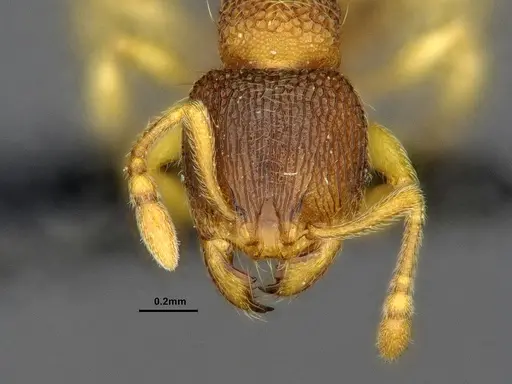
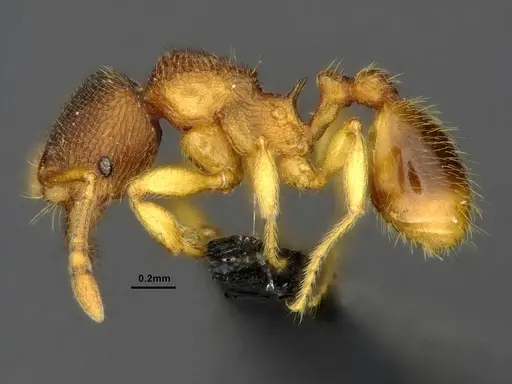
Gaoligigidris planodorsa is an extremely rare small ant species, newly described in 2012,and the only known species in its genus. Workers measure just 2.3-2.6mm, making them among the smaller Myrmicinae ants. They have a distinctive appearance with a nearly square head, short 11-segmented antennae with a 3-segmented club, long propodeal spines, and a long petiolar peduncle. Their coloration is yellowish brown overall, with a striking blackish brown band across the head and middle portion of the gaster. This species is known only from the Yunnan Province in southwestern China, where it inhabits subalpine moist evergreen broadleaf forests at elevations between 1500-2000 meters [1][2].
This is one of the least-studied ants in the hobby, with no established captive breeding records and only the worker caste ever documented. Everything about keeping this species remains speculative, based on related Stenammini ants and the limited natural history information available. For experienced antkeepers who enjoy pioneering care for rare species, this represents an exciting challenge.
Quick Summary
- Difficulty: Unknown
- Origin & Habitat: Yunnan Province, China, subalpine moist evergreen broadleaf forest at 1500-2000m elevation [1][2]
- Colony Type: Unknown, only worker caste has been described, no queens have been documented [1]
- Size & Growth:
- Queen: Unknown, queen caste has not been described [1]
- Worker: 2.3-2.6mm [1]
- Colony: Unknown, no colony size data exists [1]
- Growth: Unknown
- Development: Unknown, no development data exists for this species (Related Stenammini species typically develop in 6-10 weeks at warm temperatures, but this is a rough estimate only)
- Antkeeping:
- Temperature: Inferred: Based on subalpine habitat at 1500-2000m in Yunnan, expect cool-to-moderate requirements. Room temperature (18-24°C) is likely suitable. Start around 20-22°C and observe colony activity [1].
- Humidity: Inferred: Subalpine moist evergreen broadleaf forest suggests high humidity needs. Keep nest substrate consistently moist but not waterlogged. Provide a humidity gradient with a moist side and slightly drier area for choice [1].
- Diapause: Unknown, no seasonal data exists. Yunnan experiences cool winters at high elevation, so some form of winter rest is likely beneficial if keeping long-term.
- Nesting: Soil-nesting species in nature, they forager on the ground [1]. In captivity, a naturalistic setup with soil or a Y-tong/plaster nest with moisture retention would be most appropriate. Avoid completely dry setups.
- Behavior: No behavioral studies exist for this species. Based on related Stenammini genera, they are likely ground-foraging and may form small colonies. Their small size (2.3-2.6mm) means escape prevention must be excellent, they can slip through standard barrier setups. Treat as potentially defensive but unlikely to sting effectively due to tiny size [1].
- Common Issues: No established care protocol exists, keepers will be pioneers and may face trial-and-error challenges, Only worker caste known, queen acquisition is essentially impossible as no one has documented or collected dealate queens, Extremely small size makes escape prevention critical, standard barriers may be insufficient, No captive diet data exists, related Stenammini are omnivorous but specific acceptance is unknown, Slow growth and small colony sizes typical of this genus may frustrate beginners expecting rapid development
Species Discovery and Rarity
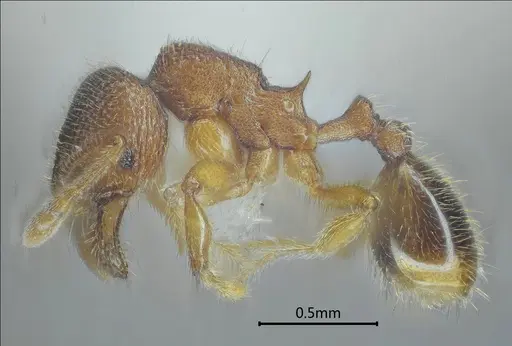
Gaoligongidris planodorsa was only described in 2012 by Zheng-Hui Xu, making it one of the most recently discovered ant species in the hobby. It represents an entirely new genus, Gaoligongidris, which is monotypic, meaning this is the only species in the genus. The genus belongs to the tribe Stenammini within the subfamily Myrmicinae, making it distantly related to more familiar genera like Myrmica and Crematogaster. All known specimens come from soil samples collected in the Gaoligong Mountains of Yunnan Province, China, at elevations between 1500-2000 meters. The species name 'planodorsa' refers to the flat (plane) dorsal surface of the promesonotum, the plateau-like upper profile of the alitrunk that gives this ant its distinctive silhouette [1].
For antkeepers, this species represents a true frontier. No one has documented keeping Gaoligongidris planodorsa in captivity, and the scientific literature provides almost no information beyond basic morphology and collection data. If you acquire this species, you will be contributing genuinely new knowledge to antkeeping.
Natural Habitat and Elevation
This species is known only from the Gaoligong Mountains in Yunnan Province, China, a region famous for its extraordinary biodiversity. The type locality sits at approximately 2000 meters elevation on the western slope of Gaoligong Mountain. They inhabit subalpine moist evergreen broadleaf forest, a cool, damp, shaded environment typical of high-elevation tropical or subtropical mountains. Workers have been collected from soil samples, confirming they are ground-nesting ants that forage on the forest floor [1][3].
The elevation range of 1500-2000m is significant for antkeeping because it suggests this species is adapted to cooler, more temperate conditions than many tropical ants. The Yunnan highlands experience distinct seasons, with cool winters and mild summers. In captivity, this likely translates to moderate temperature requirements, avoid overheating this species, and provide a cool side of the enclosure for thermoregulation.
Identification and Morphology
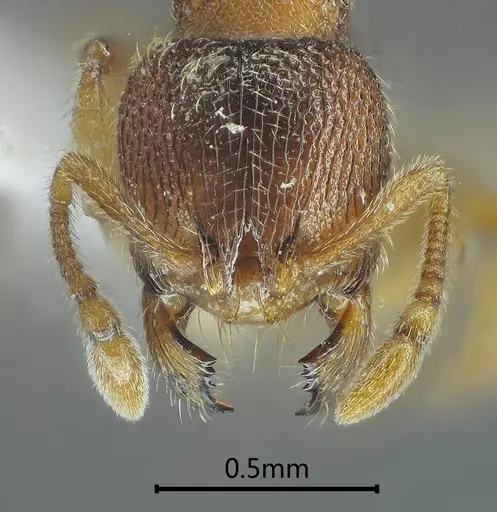
At just 2.3-2.6mm, Gaoligongidris workers are tiny ants that could easily be overlooked in the field. Their most distinctive features include a nearly square head (as broad as long), short antennae that only reach about three-quarters of the distance to the back of the head, and remarkably long propodeal spines that are about as long as the propodeum itself. The promesonotum forms a distinctive high plateau that slopes gently backward, this 'planodorsa' (flat back) feature gives the species its name. The petiole has a long peduncle (stalk) that is longer than the node itself [1].
Color pattern is distinctive: overall yellowish brown to brownish yellow, but with a blackish brown band across the top of the head and another dark band across the middle of the gaster (abdomen). This bicolored appearance can help distinguish them from other tiny ground-nesting ants in the region. The eyes are moderately large, positioned toward the front of the head, with about 12 ommatidia in the longest diameter [1].
Related Species and Taxonomic Position
Gaoligongidris belongs to the tribe Stenammini, a group of Myrmicinae ants that includes several genera familiar to antkeepers, such as Myrmica. Despite some superficial similarities to Lophomyrmex (due to the long propodeal spines), Xu's 2012 description definitively places this genus in Stenammini based on multiple characters: the bicarinate (two-ridged) median clypeus, the 6-toothed mandibles, the short antennae with a reduced third club segment, and the strongly sculptured head and alitrunk [1].
The genus appears most similar to Lasiomyrma, another Indo-Australian Stenammini genus, but can be distinguished by its non-angled clypeal margin, deeply impressed metanotal groove, large propodeal spiracles, and very long propodeal spines. For antkeepers, understanding this taxonomic position suggests care requirements may loosely parallel those of Myrmica species, moderate temperatures, moisture-loving, ground-nesting, and omnivorous feeding patterns, though this remains speculative.
Housing and Nest Setup
Since this is a soil-nesting species that forages on the ground, a naturalistic setup with a soil chamber would be most appropriate. The substrate should hold moisture well while allowing for some drainage, a mix of soil and sand or perlite works well. Given their tiny size (2.3-2.6mm), any artificial nest needs appropriately scaled chambers and passages. Standard test tubes may work for founding colonies, but watch for escape, these ants are small enough to potentially slip through standard cotton barriers [1].
A Y-tong (acrylic) nest with small chambers or a plaster/ytong formicarium with moisture retention would be suitable once the colony grows. The key is maintaining humidity while providing good ventilation to prevent mold. Given their subalpine origin, avoid overheating and provide a temperature gradient so the ants can choose their preferred warmth level. A small water reservoir connected to the nest helps maintain humidity over time.
Feeding and Diet
No specific dietary studies exist for Gaoligongidris planodorsa. Based on its position in Stenammini and its small size, it likely operates as an omnivore similar to related genera, consuming small insects, honeydew, and possibly seed husks. The genus is probably a generalist forager that exploits various food sources on the forest floor [1].
For captive feeding, start with small protein sources like fruit flies, pinhead crickets, or other tiny arthropods. Sugar water or honey can be offered, though acceptance is uncertain. Given the small size of workers, prey items must be appropriately sized, anything larger than the ants themselves will likely be ignored. Feed small prey items every few days and remove uneaten food promptly to prevent mold. Monitor carefully to see what the colony actually accepts.
Temperature and Seasonal Care
The subalpine origin of this species (1500-2000m elevation in Yunnan) provides the best clue for temperature requirements. These elevations experience cool temperatures year-round, summer highs rarely exceed 25°C, while winters can drop near or below freezing. In captivity, aim for temperatures in the range of 18-24°C, avoiding sustained temperatures above 28°C [1].
A heating cable or mat on one side of the nest can create a temperature gradient, allowing the colony to self-regulate. Place the heating on top of the nest, not underneath, to avoid drying out the substrate. Room temperature in most homes (18-22°C) may actually be ideal for this species. If the colony shows signs of stress (workers clustering away from heat, inactivity), reduce or remove heating entirely. Winter cooling is likely beneficial given the natural seasonal cycle, consider reducing temperatures slightly during winter months.
Challenges and Realistic Expectations
Keeping Gaoligongidris planodorsa successfully requires adjusting expectations significantly. This is not a species for beginners expecting rapid growth or large colonies. The complete lack of captive data means every aspect of care may require experimentation. Colonies will likely remain small, possibly only dozens to low hundreds of workers at maturity, based on typical Stenammini patterns. Growth will be slow, as the tiny first workers (nanitics) are already very small and must develop normally before the colony expands [1].
The biggest challenge is simply obtaining this species, no one has documented collecting or culturing dealate queens, and the worker-only caste description suggests queens may be rarely encountered or difficult to distinguish. If you obtain a colony, document everything carefully. Your observations could become the first captive care records for this species, contributing genuinely new knowledge to the antkeeping community.
Frequently Asked Questions
Is Gaoligongidris planodorsa available in the antkeeping hobby?
No, this is one of the rarest species in the hobby. It was only described in 2012 and has never been documented in captive ant cultures. Obtaining this species would require collecting in the Gaoligong Mountains of Yunnan Province, China, which presents significant practical and legal challenges.
How do I keep Gaoligongidris planodorsa?
No established care protocol exists. Based on natural history (soil-nesting, subalpine forest at 1500-2000m), use a naturalistic setup with moist soil substrate, maintain moderate temperatures around 18-24°C, and provide small prey items. This is experimental antkeeping, expect trial and error.
What do Gaoligigidris planodorsa ants eat?
Diet is unconfirmed. Based on related Stenammini ants, they likely accept small insects and honeydew. Offer tiny prey items like fruit flies, springtails, or small crickets, plus sugar water or honey. Monitor carefully to determine actual acceptance.
How big do Gaoligongidris planodorsa colonies get?
Unknown, no colony size data exists. Based on related tiny Stenammini species, colonies likely remain small, possibly under 100-500 workers at maturity. This is not a species that produces large, impressive colonies.
Do Gaoligongidris planodorsa ants sting?
Likely no significant sting, at 2.3-2.6mm, they are too small to effectively penetrate human skin. They may bite if handled, but the sting is negligible or absent.
What temperature do Gaoligongidris planodorsa need?
Based on subalpine origin, aim for cool-to-moderate temperatures around 18-24°C. Room temperature (18-22°C) is likely ideal. Avoid sustained heat above 28°C. Provide a gradient so ants can choose their preferred temperature.
Do they need hibernation or diapause?
Unknown, no seasonal data exists. However, Yunnan at 1500-2000m experiences cool winters, so some form of winter rest is likely natural and potentially beneficial. Consider reducing temperatures slightly during winter months.
Are Gaoligongidris planodorsa good for beginners?
No, this species is completely unestablished in captivity with no care records. The complete lack of information means even experienced antkeepers will face significant challenges. This is a species for advanced keepers who enjoy pioneering care for rare species.
Where does Gaoligongidris planodorsa live?
Only known from Yunnan Province, China, specifically the Gaoligong Mountains at elevations of 1500-2000m. They inhabit subalpine moist evergreen broadleaf forest and nest in soil, foraging on the ground.
How long do Gaoligongidris planodorsa take to develop from egg to worker?
Unknown, no development data exists for this species. Related Stenammini species typically take 6-10 weeks at optimal temperatures, but this is a rough estimate with low confidence for this specific species.
Can I keep multiple queens together?
Unknown, queen caste has never been documented, so colony structure is completely unstudied. Do not attempt combining unrelated queens until more is known about natural colony structure.
Why is this species so rare in antkeeping?
Gaoligongidris planodorsa was only described in 2012 and is known only from a limited region in southwestern China. No one has documented collecting or culturing this species in captivity. The combination of recent discovery, restricted range, and the difficulty of obtaining specimens makes it essentially unavailable to hobbyists.
References

This caresheet is licensed under CC BY-SA 4.0 .
ANTWEB1060545
View on AntWeb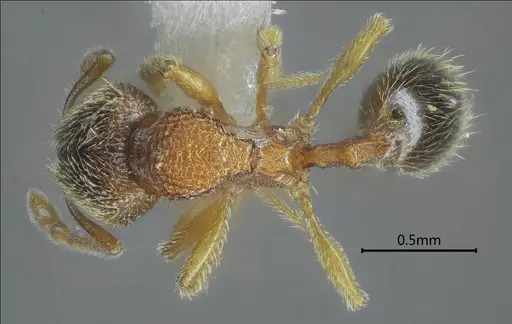
ZRC
View on AntWeb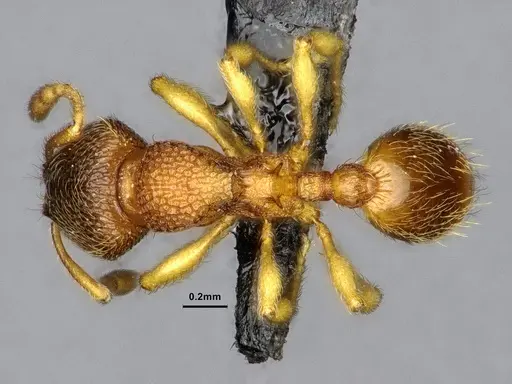
Literature
Loading...Loading products...