

Fulakora exigua
- Scientific Name
- Fulakora exigua
- Tribe
- Amblyoponini
- Subfamily
- Amblyoponinae
- Author
- Clark, 1928
- Distribution
- Found in 1 countries
Fulakora exigua Overview
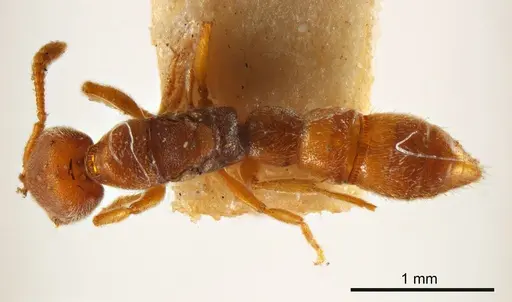
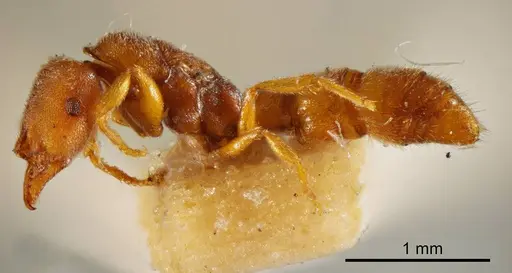
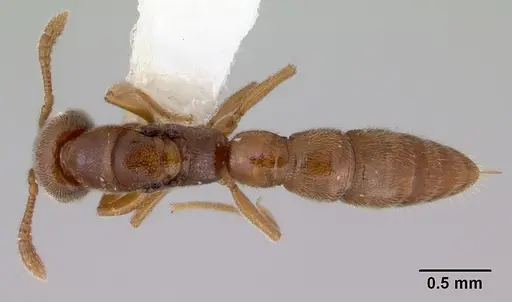
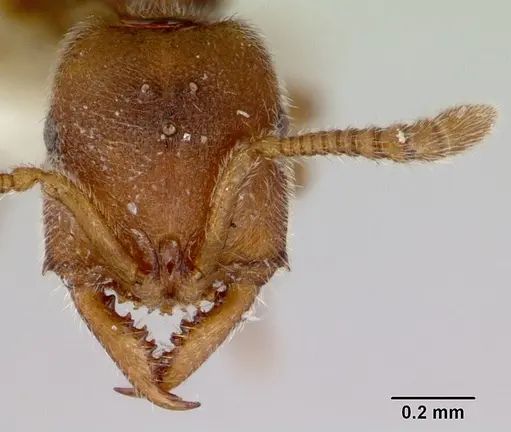
Fulakora exigua is an ant species of the genus Fulakora. It is primarily documented in 1 countries , including Australia. Detailed taxonomic data and occurrence records can be further explored via authoritative databases such as AntWeb or the Global Biodiversity Information Facility (GBIF).
Fulakora exigua
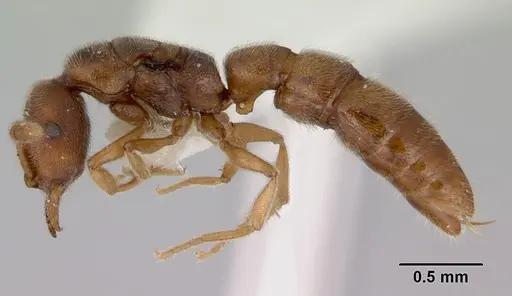
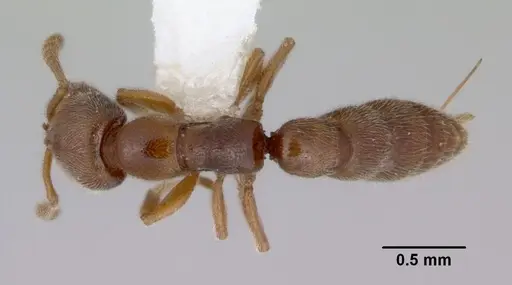
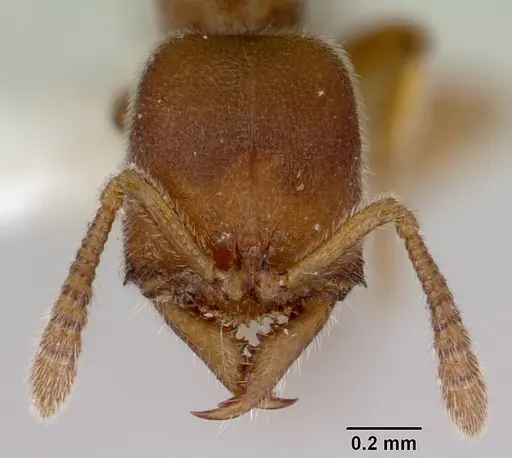
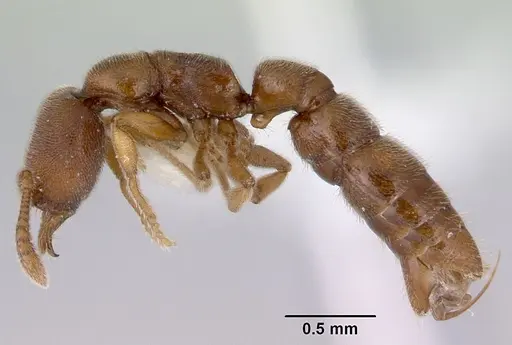
Fulakora exigua is a small predatory ant species native to Australia, specifically found in Victoria. These ants belong to the Amblyoponinae subfamily, commonly known as 'dracula ants' due to their unique feeding behavior where they puncture the exoskeleton of prey and feed on hemolymph rather than consuming the entire prey. Workers are small and slender, adapted for hunting small arthropods in forest floor microhabitats. The genus Fulakora was recently separated from Stigmatomma, and this species remains poorly studied in the scientific literature. Queens measure approximately 5-6mm, while workers are significantly smaller at 3-4mm. The colony structure appears to be monogyne (single queen), though detailed studies on this specific species are lacking.
Quick Summary
- Difficulty: Medium
- Origin & Habitat: Fulakora exigua is found in Victoria, Australia, particularly in the Belgrave area. Based on related Amblyoponinae species, they likely inhabit damp forest floor environments, nesting in soil or under stones in shaded areas. The temperate climate of Victoria suggests they experience seasonal temperature variations.
- Colony Type: Monogyne (single queen) colonies are suspected based on typical genus patterns. Ergatoid (wingless) replacement queens may be present as documented in related species, allowing for queen replacement if the primary queen dies.
- Colony: Monogyne
- Founding: Semi-claustral
- Size & Growth:
- Queen: Approximately 5-6mm, estimated from related species and original description [1]
- Worker: Approximately 3-4mm [1]
- Colony: Likely small colonies of 50-200 workers based on typical Amblyoponinae patterns
- Growth: Moderate, inferred from related species development patterns
- Development: Estimated 6-10 weeks based on typical Amblyoponinae development at warm temperatures (Development time is estimated from related species, specific data for F. exigua is unavailable)
- Antkeeping:
- Temperature: Keep around 22-26°C with a slight gradient. Room temperature in this range works well. Related Amblyoponinae species prefer warm, stable conditions.
- Humidity: Moderate to high humidity (60-80%). Keep the nest substrate consistently moist but not waterlogged. These ants naturally live in damp forest floor environments.
- Diapause: Likely yes, based on temperate Australian origin. A cool period (15-18°C) during winter months is probably beneficial, though specific requirements are unconfirmed.
- Nesting: Naturalistic setups with moist substrate work well. Y-tong nests or test tube setups with access to a moist foraging area are suitable. They prefer tight, humid chambers.
- Behavior: These ants are predatory and actively hunt small arthropods. Workers are small but determined hunters, using their mandibles to capture prey. They are not aggressive toward keepers but will defend their colony. Escape prevention is important due to their small size, use fine mesh barriers. They are primarily nocturnal or crepuscular, becoming more active during dim lighting conditions.
- Common Issues: small size makes escape prevention critical, use fine mesh and tight-fitting lids, predatory nature requires constant access to live prey, they cannot survive on sugar alone, high humidity needs can lead to mold problems if ventilation is poor, slow colony growth may frustrate beginners, colonies remain small, semi-claustral founding means queens must hunt, failure during founding is common
Housing and Nest Setup
Fulakora exigua requires a setup that maintains high humidity while providing hunting opportunities. A naturalistic terrarium-style setup works well, use a moist soil substrate with hiding spots like stones or pieces of bark. The foraging area should be separate from the nest but connected via tubes. Test tube setups can work if paired with a moist foraging area, but the small colony size means you don't need large spaces. Use a water source connected to the nest via cotton wick for passive humidity. Avoid fully enclosed formicariums without ventilation, these ants need some air flow to prevent mold. Tight-fitting lids are essential as these tiny ants can squeeze through standard gaps. [1]
Feeding and Diet
As predatory dracula ants, F. exigua requires live prey to thrive. Their unique feeding method involves puncturing prey exoskeletons and consuming hemolymph rather than eating entire insects. Offer small live prey such as fruit flies, springtails, small mealworms, and isopods. Prey should be appropriately sized, no larger than the ant itself. Feed small prey items 2-3 times per week. While some Amblyoponinae may occasionally accept sugar water, this should not be their primary food. Remove uneaten prey after 24 hours to prevent mold. A varied diet of different small arthropods helps ensure nutritional balance. [1]
Temperature and Seasonal Care
Maintain temperatures between 22-26°C for optimal colony health and development. A heating cable on one side of the nest creates a temperature gradient allowing ants to self-regulate. Place the heating element on top of the nest to avoid evaporation issues. During Australian winter (June-August), consider reducing temperatures to 15-18°C for several months to simulate natural seasonal cycles. This cool period may help trigger reproductive behavior and maintain colony health long-term. Do not cool suddenly, reduce temperatures gradually over 2-3 weeks. Monitor colony activity during cool periods, some activity may continue but at reduced levels. [1]
Colony Founding
Queen founding in Fulakora exigua is semi-claustral, meaning the queen must leave the nest to hunt for food during the founding stage. This differs from claustral species that seal themselves in and survive on stored fat. Provide the founding queen with access to small live prey immediately. Place prey in the foraging area and allow the queen to hunt. Failure during founding is common, queens that cannot find adequate prey often die. Expect the first workers (nanitics) to emerge in 6-10 weeks under warm conditions. Nanitics are typically smaller than mature workers and may help with subsequent hunting. Do not disturb the founding chamber during this critical period. [1]
Behavior and Temperament
Fulakora exigua workers are active hunters, patrolling their territory in search of small arthropods. They are not particularly aggressive toward humans but will readily defend against threats to their colony. Workers communicate primarily through chemical signals and vibration. Their small size makes them difficult to observe in detail, but they are fascinating to watch during hunting sequences. The colony will establish a clear nest area and foraging territory. Unlike some ants, they do not form large supercolonies, keep expectations modest for colony size. They are primarily crepuscular, becoming most active during dawn and dusk or under dim lighting conditions. [1]
Frequently Asked Questions
How long does it take for Fulakora exigua to produce first workers?
Expect first workers (nanitics) to emerge in 6-10 weeks after the queen begins laying eggs, provided temperatures are maintained at 22-26°C. This timeline is estimated from related Amblyoponinae species as specific development data for F. exigua is not available.
What do Fulakora exigua ants eat?
They are predatory and require live small arthropods. Offer fruit flies, springtails, small mealworms, and tiny isopods. They use their unique 'dracula' feeding method, puncturing prey and drinking hemolymph. Remove uneaten prey after 24 hours.
Do Fulakora exigua ants need hibernation?
Based on their temperate Australian origin, a cool period during winter months is likely beneficial. Reduce temperatures to 15-18°C for 2-3 months during winter. This mimics natural seasonal conditions and may help trigger reproductive behavior.
How big do Fulakora exigua colonies get?
Colonies likely remain relatively small, probably reaching 50-200 workers at maturity. This is typical for Amblyoponinae species. They are not large colony formers like some Lasius or Camponotus species.
Can I keep multiple Fulakora exigua queens together?
This species is suspected to be monogyne (single queen). Combining unrelated queens is not recommended as they likely will fight. If ergatoid replacement queens exist in the colony, these serve as internal succession rather than multiple simultaneous egg-layers.
Are Fulakora exigua ants difficult to keep?
They are rated as medium difficulty. The main challenges are providing constant live prey, maintaining high humidity without mold problems, and preventing escapes due to their tiny size. They are not recommended for complete beginners.
What temperature range is best for Fulakora exigua?
Keep them at 22-26°C with a slight gradient. Room temperature in this range works well. A heating cable on one side of the nest can create the necessary temperature variation.
Do Fulakora exigua ants sting?
They are small ants and while they have a stinger, it is unlikely to penetrate human skin significantly. They are not considered dangerous to humans. Their primary defense is fleeing or biting.
When should I move Fulakora exigua to a formicarium?
Keep them in a test tube or simple setup with moist substrate until the colony reaches 20-30 workers. At this point, you can expand to a naturalistic setup or Y-tong nest with separate foraging area.
Why are my Fulakora exigua dying during founding?
Semi-claustral queens must hunt during founding, ensure small live prey is available. Also check humidity (too dry kills founding queens), temperature stability, and that the queen has not been disturbed. Founding failure is common in this group.
References

This caresheet is licensed under CC BY-SA 4.0 .
Literature
Loading...Loading products...