

Fulakora celata
- Scientific Name
- Fulakora celata
- Tribe
- Amblyoponini
- Subfamily
- Amblyoponinae
- Author
- Mann, 1919
- Distribution
- Found in 1 countries
Fulakora celata Overview
Fulakora celata is an ant species of the genus Fulakora. It is primarily documented in 1 countries , including Solomon Islands. Detailed taxonomic data and occurrence records can be further explored via authoritative databases such as AntWeb or the Global Biodiversity Information Facility (GBIF).
Fulakora celata
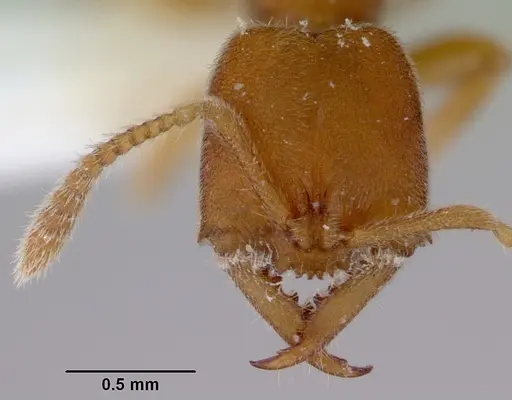
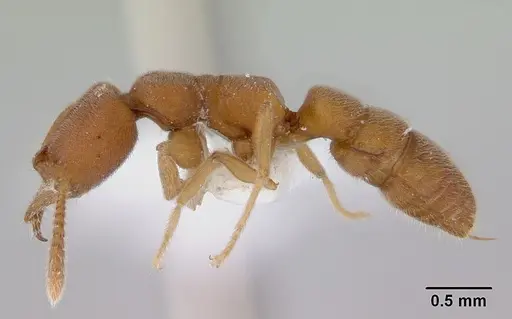
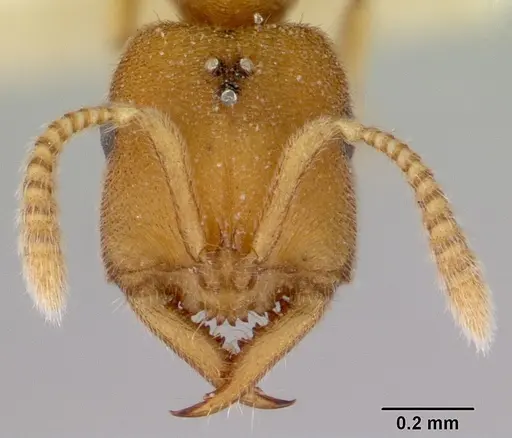
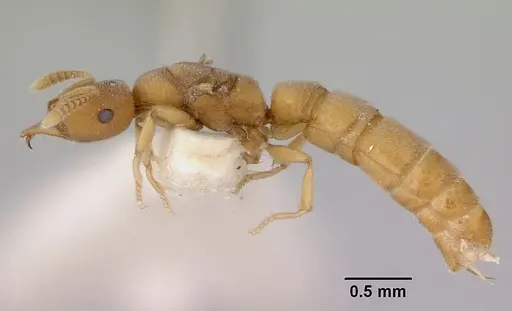
Fulakora celata is a small predatory ant species native to the Solomon Islands archipelago in the southwestern Pacific. Workers are tiny at just 3-4mm, with a distinctive slender appearance and long, toothed mandibles adapted for capturing small prey [1]. The genus Fulakora belongs to the Amblyoponinae subfamily, commonly known as 'dracula ants' due to their unique predatory habits. These ants are found only on the Solomon Islands including Isabel Island, Malaita Island, Florida Island, and San Cristobal Island [2]. This is a rarely kept species in captivity with limited documented care information.
Quick Summary
- Difficulty: Expert
- Origin & Habitat: Solomon Islands (Isabel I., Malaita I., Florida I., San Cristoval I.), tropical island environment with high humidity [1]
- Colony Type: Likely monogyne (single queen) based on typical Amblyoponinae patterns, though colony structure is unconfirmed for this species
- Size & Growth:
- Queen: Approximately 4-5mm, estimated from genus patterns
- Worker: 3-4mm [1]
- Colony: Likely small colonies of 50-200 workers based on typical Amblyoponinae
- Growth: Unknown, likely moderate based on related species
- Development: Unknown, estimates based on similar tropical Amblyoponinae suggest 6-10 weeks at warm temperatures (No direct development data exists for this species. Related tropical Amblyoponinae typically develop in 6-10 weeks at 24-28°C.)
- Antkeeping:
- Temperature: Keep at 24-28°C, tropical species requiring warm, stable conditions
- Humidity: High humidity required, aim for 70-85% relative humidity. Keep substrate consistently moist but not waterlogged
- Diapause: Unlikely, Solomon Islands are tropical with no cold season. No diapause requirement expected
- Nesting: Natural nesting habits unconfirmed. Likely nests in soil, rotting wood, or under stones in shaded forest areas. In captivity, a moist plaster nest or test tube setup with access to a foraging area works well
- Behavior: These are secretive, slow-moving ants that hunt small prey with their long mandibles. They are not aggressive and rarely sting. Workers are nocturnal or crepuscular, often foraging in the leaf litter layer. Their small size makes escape prevention important, they can squeeze through tiny gaps. They are not known for escape artist behavior but their minute size means fine mesh barriers are essential.
- Common Issues: very small size makes escape prevention critical, use fine mesh and tight-fitting lids, limited information means care is largely experimental, expect a learning curve, tropical humidity requirements can lead to mold problems if ventilation is poor, slow colony growth may frustrate keepers expecting rapid development, wild-caught colonies may have parasites or be stressed from collection
Housing and Nest Setup
Fulakora celata requires a setup that maintains high humidity while providing secure housing for these tiny ants. A test tube setup works well for founding colonies, use a small test tube with a cotton plug creating a water reservoir, placed inside a larger container (outworld) for feeding. For established colonies, a small acrylic nest or plaster nest with narrow chambers helps maintain the micro-humidity they need. The foraging area should be simple and easy to clean. Because of their minute size, all connections must be secure, use cotton or foam plugs, not just tight-fitting barriers. A small water test tube attached to the nest helps maintain humidity. Cover the nest portion to create darkness, as these ants prefer dim conditions.
Feeding and Diet
As predatory ants, Fulakora celata likely requires small live prey. Based on related Amblyoponinae species, they probably hunt small arthropods like springtails, booklice, and tiny insects in the leaf litter. Offer small live prey items such as pinhead crickets, fruit flies, small mealworms, or ideally live springtails. Prey should be appropriately sized, no larger than the ant itself. Sugar sources may be accepted occasionally, but protein prey should be the primary food. Feed small prey items every 2-3 days, removing any uneaten prey to prevent mold. The exact diet preferences are unconfirmed for this species, so experimentation may be needed.
Temperature and Humidity
Being from the Solomon Islands, these ants require warm, humid conditions. Maintain temperatures between 24-28°C (75-82°F). A small heating cable on one side of the nest can create a gentle gradient if room temperature is below this range. Place the heating on top of the nest, not underneath, to avoid drying out the substrate. Humidity should be high, around 70-85%. The nest substrate should remain consistently moist but never waterlogged. A water test tube connected to the nest helps maintain moisture. Avoid placing the setup near air conditioning or heating vents that cause temperature fluctuations. No diapause or hibernation is needed for this tropical species.
Colony Development and Growth
Fulakora celata colonies likely grow slowly compared to many common ant species. The first workers (nanitics) will be smaller than mature workers and may take 6-10 weeks to emerge based on related species patterns. Colony size likely remains modest, probably 50-200 workers at maturity. The queen may lay relatively few eggs at a time, focusing on quality over quantity. Be patient with these ants, they are not fast growers. A healthy colony will gradually produce more workers over months to years. The slow growth is actually typical of predatory ants that invest heavily in each offspring.
Behavior and Observation
These are cryptic, secretive ants that spend much of their time in the nest or hunting in the leaf litter. Workers are not aggressive and will flee rather than fight when disturbed. They do not have a painful sting, their stingers are too small to penetrate human skin effectively. Observation is best done using a red film or light, as many ant species are less active under red light, allowing you to watch their natural behavior. They are primarily nocturnal or crepuscular, so evening observation may be most rewarding. The long, toothed mandibles are their primary weapon for capturing prey, watch for hunting behavior in the early morning or evening hours.
Frequently Asked Questions
How long does it take for Fulakora celata to produce first workers?
The exact timeline is unconfirmed, but based on related Amblyoponinae species, expect 6-10 weeks from egg to first worker at optimal temperatures (24-28°C). This is a slow process, be patient.
What do Fulakora celata ants eat?
They are predatory ants that likely hunt small arthropods. Feed small live prey like springtails, fruit flies, pinhead crickets, or small mealworms. Protein should be the primary food source. Sugar water may be occasionally accepted.
Do Fulakora celata ants sting?
They have a stinger but it is too small to effectively penetrate human skin. They are not considered dangerous to humans and are not aggressive.
What temperature do Fulakora celata ants need?
Keep them warm at 24-28°C (75-82°F). They are tropical ants from the Solomon Islands and require consistent warmth year-round.
Are Fulakora celata good for beginners?
No, this is an expert-level species. There is very limited documented care information, and their small size, specific humidity needs, and unknown dietary preferences make them challenging. Start with easier species like Lasius or Messor first.
How big do Fulakora celata colonies get?
Based on typical Amblyoponinae patterns, colonies likely reach 50-200 workers at maturity. They are not large colony species.
Do Fulakora celata need hibernation?
No, they are tropical ants from the Solomon Islands with no cold season. No diapause or hibernation is required.
Why are my Fulakora celata dying?
Common causes include: temperature too low (below 24°C), humidity too low or too high (aim for 70-85% consistently), improper prey size, or stress from excessive disturbance. Their small size also makes escape and drying out significant risks.
Can I keep multiple Fulakora celata queens together?
This is unconfirmed. Combining unrelated queens of this species has not been documented. Based on typical Amblyoponinae behavior, it is not recommended to house multiple foundress queens together.
References

This caresheet is licensed under CC BY-SA 4.0 .
CASENT0172191
View on AntWeb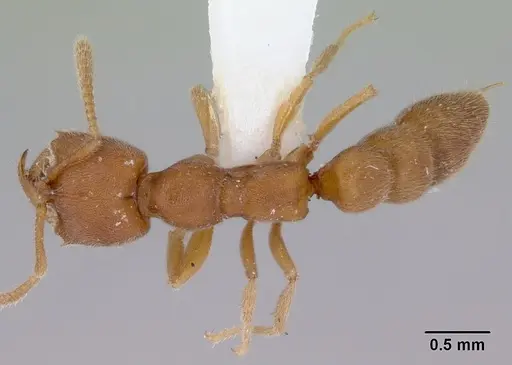
CASENT0172192
View on AntWeb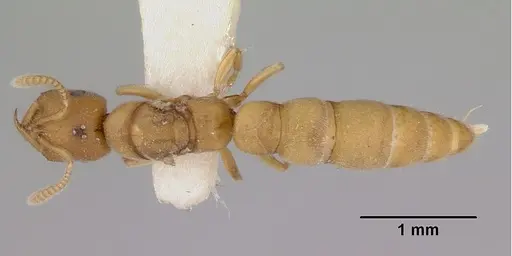
Literature
Loading...Loading products...