

Froggattella latispina
- Scientific Name
- Froggattella latispina
- Tribe
- Leptomyrmecini
- Subfamily
- Dolichoderinae
- Author
- Wheeler, 1936
- Distribution
- Found in 1 countries
Froggattella latispina Overview
Froggattella latispina is an ant species of the genus Froggattella. It is primarily documented in 1 countries , including Australia. Detailed taxonomic data and occurrence records can be further explored via authoritative databases such as AntWeb or the Global Biodiversity Information Facility (GBIF).
Froggattella latispina
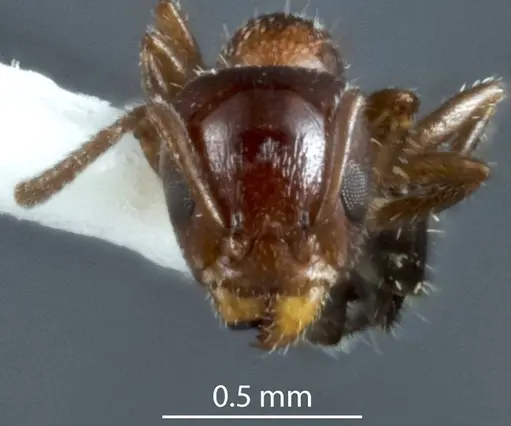
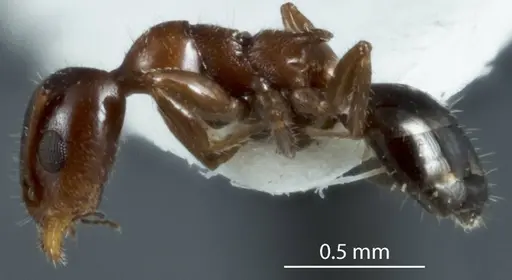
Froggattella latispina is a tiny Australian ant, measuring just 2.2-2.5mm in worker length [1]. Workers are reddish-brown and notably smaller than the related F. kirbii, about half the size [2]. The genus belongs to the Dolichoderinae subfamily and is considered the closest relative to the larger Iridomyrmex genus [3]. These ants have distinctive broad, blunt epinotal spines that form a semicircular pattern when viewed from above, and their head sculpturing transitions from finely striate at the front to smoother toward the back [1].
This is an exceptionally rare species with almost no documented biological information. It has been collected only a few times from arid areas in southern Australia, with recent sightings near Lake Warden close to Esperance in Western Australia [2][1]. Given how little is known about this species in captivity, it represents a true challenge even for experienced antkeepers.
Quick Summary
- Difficulty: Expert
- Origin & Habitat: Southern Australia, arid and semi-arid regions. Known from very few collections in Western Australia near Esperance [2][1].
- Colony Type: Unconfirmed. Colony structure has not been documented for this rare species.
- Size & Growth:
- Queen: Undescribed, queen measurements not available in scientific literature
- Worker: 2.2-2.5mm [1]
- Colony: Unknown, colony size has never been documented
- Growth: Unknown
- Development: Unknown, no development data exists for this species (No direct observations of colony development exist. Related Iridomyrmex species typically develop from egg to worker in 4-8 weeks at warm temperatures, but this is a rough estimate only.)
- Antkeeping:
- Temperature: Inferred: Based on arid Australian habitat and relation to Iridomyrmex, likely tolerates warm conditions. Start around 22-26°C and monitor colony activity. Room temperature (20-24°C) is likely acceptable as a baseline.
- Humidity: Inferred: Arid habitat suggests prefer drier conditions. Keep nest substrate moderately dry with occasional moisture zones. Avoid constant dampness.
- Diapause: Unknown, no data on overwintering requirements. Southern Australia experiences mild winters, so a reduced activity period may occur but has not been documented.
- Nesting: Inferred: Likely nests in soil or under stones in arid ground. A test tube setup or Y-tong nest with moderate dryness would be appropriate starting points. Avoid overly humid setups.
- Behavior: Not documented. Based on genus placement in Dolichoderinae and relation to Iridomyrmex, these are likely generalist foragers with moderate activity levels. Escape prevention should be adequate for their small 2.2-2.5mm size, standard test tube cotton and barrier methods should suffice. Temperament is unknown.
- Common Issues: extremely limited availability, this species is rarely collected and seldom available in the antkeeping hobby, no documented care requirements, all guidance is inferred from related species and may be inaccurate, slow growth expected, like many rare Australian species, colonies likely develop slowly, risk of colony failure, without established care protocols, keeping this species alive represents a genuine challenge, wild-caught colonies may be stressed from collection and difficult to establish
Why Keep Froggattella latispina?
This species is not for beginners. Froggattella latispina represents a genuine challenge because virtually nothing is known about its captive care requirements. It has been collected only a handful of times in the wild, and no scientific papers document its biology, colony structure, or development [1]. Keeping this species successfully would be a genuine contribution to antkeeping knowledge, you would essentially be pioneering its husbandry. That said, this makes it a project for experienced antkeepers who understand that they may need to experiment with different conditions and accept that the colony may not thrive. The reward is the satisfaction of working with an extremely rare species that few people have ever kept.
Housing and Setup
Given the complete lack of captive data, you must make educated inferences from related species. Froggattella belongs to Dolichoderinae and is closely related to Iridomyrmex, which are ground-nesting ants from arid and semi-arid regions [3]. Start with a standard test tube setup as a founding chamber, these tiny ants (2.2-2.5mm) need appropriately scaled housing. The test tube should have clean water with a cotton barrier, but avoid oversaturation since their arid habitat suggests they prefer drier conditions. Once the colony establishes, you could transition to a small Y-tong or acrylic nest with moderate humidity zones. Ensure escape prevention is adequate, while not the smallest ants in the hobby, they are still quite small and can squeeze through gaps.
Feeding and Nutrition
No specific dietary data exists for this species. Inferred from related Iridomyrmex behavior: these ants are likely generalist feeders that accept both sugar sources and protein. Offer sugar water or honey water as a constant energy source. For protein, small insects like fruit flies, pinhead crickets, or mealworm pieces would be appropriate. Given their tiny worker size (about half that of typical F. kirbii), prey items must be very small [2]. Start with very small portions and observe acceptance. Remove uneaten food after 24-48 hours to prevent mold. The acceptance of sugar sources is inferred, not confirmed, some Dolichoderinae prefer honeydew and plant secretions over pure sugar water.
Temperature and Seasonal Care
No specific temperature data exists for this species. Based on its collection in southern Australia's arid regions, it likely tolerates a range of warm conditions. Start around 22-26°C and observe colony behavior, if workers are active and foraging, the temperature is likely suitable. If they cluster and show reduced activity, consider a slight increase. Room temperature in most homes (20-24°C) may be acceptable as a baseline. No data exists on diapause or winter requirements. Southern Australia has mild winters, so a dramatic hibernation period is unlikely, but you may observe reduced activity during cooler months. If the colony shows decreased activity in winter, reduce feeding and keep them in a slightly cooler area (15-18°C) for a few months. [1]
Growth and Development Expectations
You should expect slow growth and very limited development data. No egg-to-worker timeline has ever been documented for this species. Based on related Iridomyrmex species, development likely takes 4-8 weeks at optimal warm temperatures, but this is a rough estimate only. The first workers (nanitics) will likely be even smaller than normal workers, which are already tiny at 2.2-2.5mm [1]. Do not expect rapid colony expansion, rare Australian species often develop slowly. Document your observations carefully, as any captive colony data would be scientifically valuable given how little is known about this species.
Frequently Asked Questions
Is Froggattella latispina good for beginners?
No. This species is not recommended for beginners. Essentially nothing is known about its captive care requirements, it is extremely rare in the hobby, and successful husbandry would require significant antkeeping experience. The lack of any established care protocols means you would be experimenting blindly.
How big do Froggattella latispina colonies get?
Unknown. Colony size has never been documented in scientific literature. Based on related Iridomyrmex species, colonies likely reach dozens to a few hundred workers, but this is purely speculative.
What do Froggattella latispina ants eat?
Unconfirmed, but likely generalist. Based on related species, they probably accept sugar water or honey and small protein sources like fruit flies or tiny insects. No specific dietary studies exist for this species.
What temperature do Froggattella latispina need?
No specific data exists. Based on arid Australian habitat, likely 22-26°C. Start at room temperature (20-24°C) and adjust based on colony activity. Monitor for signs of stress.
How long does it take for first workers to emerge?
Unknown. No development data exists for this species. Related Iridomyrmex species suggest 4-8 weeks at warm temperatures, but this is a rough estimate only.
Can I keep multiple Froggattella latispina queens together?
Unknown. Colony structure has never been documented. Do not attempt combining unrelated queens without documented evidence that this species tolerates multi-queen arrangements.
Where does Froggattella latispina live in the wild?
Southern Australia, specifically arid and semi-arid regions. Known from very few collections in Western Australia near Esperance. The species was described in 1936 and remains rarely encountered [2][1].
Does Froggattella latispina need hibernation?
Unknown. No data exists on overwintering requirements. Southern Australia's mild climate suggests a dramatic hibernation is unlikely, but reduced winter activity may occur.
Why is so little known about this species?
Froggattella latispina is exceptionally rare. It has been collected only a few times in nearly a century since its description in 1936. The lack of specimens and observations means scientists and antkeepers alike have had almost no opportunity to study its biology [1].
References

This caresheet is licensed under CC BY-SA 4.0 .
JDM32-000175
View on AntWeb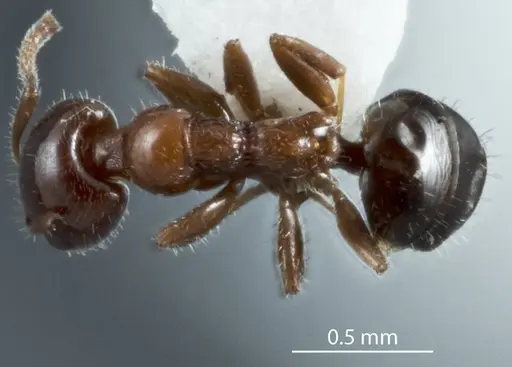
Literature
Loading...Loading products...