

Forelius macrops
- Scientific Name
- Forelius macrops
- Tribe
- Leptomyrmecini
- Subfamily
- Dolichoderinae
- Author
- Kusnezov, 1957
- Distribution
- Found in 1 countries
Forelius macrops Overview
Forelius macrops is an ant species of the genus Forelius. It is primarily documented in 1 countries , including Argentina. Detailed taxonomic data and occurrence records can be further explored via authoritative databases such as AntWeb or the Global Biodiversity Information Facility (GBIF).
Forelius macrops
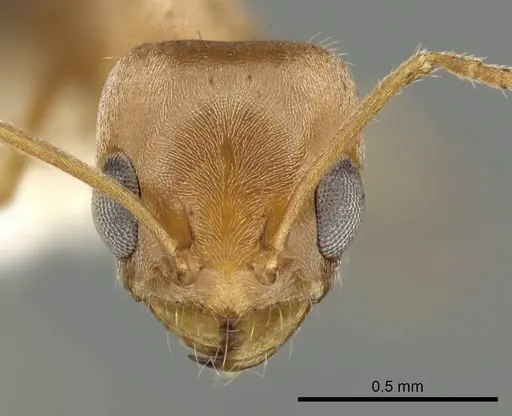
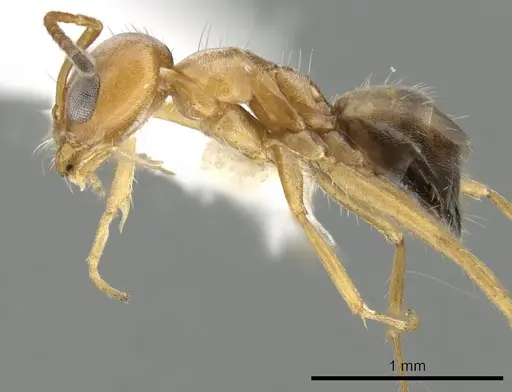
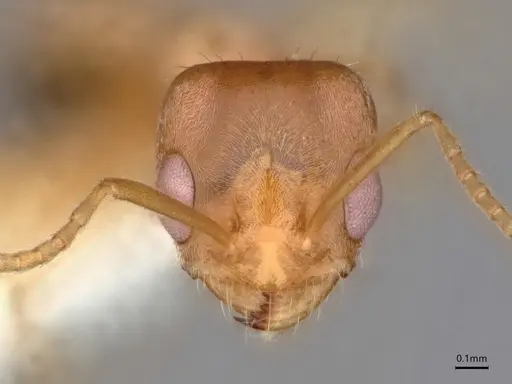
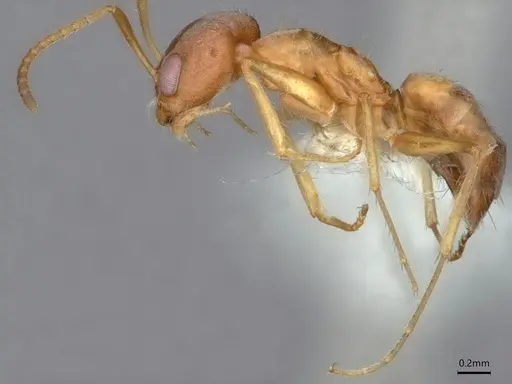
Forelius macrops is a small ant species belonging to the Dolichoderinae subfamily, native to South America. Workers are tiny at just 2-3mm, with a dark brown to black coloration and notably large eyes that give the species its name ('macrops' means large-eyed in Greek). These ants form small to medium colonies typically containing a few hundred workers. They construct distinctive funnel-shaped nest entrances and are well-adapted to warm, dry habitats across their range in Argentina, Uruguay, and surrounding regions. Like other Forelius species, they are active foragers that readily exploit sugar sources and small prey.
Quick Summary
- Difficulty: Easy
- Origin & Habitat: South America (Argentina, Uruguay, Paraguay), dry to semi-arid grasslands and savanna habitats with well-drained soils [1]
- Colony Type: Likely monogyne (single queen) based on typical genus patterns, colonies typically contain one reproductive queen [2]
- Colony: Monogyne
- Founding: Claustral
- Size & Growth:
- Queen: Estimated 5-6mm based on genus Forelius morphology
- Worker: 2-3mm
- Colony: Estimated 200-500 workers at maturity based on genus patterns
- Growth: Moderate, typical for small Dolichoderinae
- Development: Estimated 6-8 weeks at warm temperatures based on related Dolichoderinae (Development time is inferred from genus-level data, specific timing for F. macrops has not been documented)
- Antkeeping:
- Temperature: Keep at 24-28°C, these are warmth-adapted ants from temperate South America
- Humidity: Low to moderate, prefer dry to semi-dry conditions. Allow nest substrate to dry between waterings
- Diapause: Likely requires a mild winter rest period of 8-12 weeks at 10-15°C, consistent with temperate South American distribution
- Nesting: Naturalistic setup with dry to slightly moist substrate works well. Y-tong nests or test tube setups with minimal water reserves suit their preference for drier conditions
- Behavior: Generally peaceful and non-aggressive. Workers are active foragers that readily search for sugar sources and small prey. They are not known for stinging and pose no danger to keepers. Their small size means escape prevention is important, use fine mesh barriers. Workers are quick-moving and can be skittish when disturbed.
- Common Issues: small size makes escape prevention critical, use tight-fitting lids and fine mesh, dry habitat preferences mean overwatering can be fatal, err on the side of dryness, wild-caught colonies may carry parasites that affect captive survival, slow colony growth can test beginner patience, limited specific data means care is based on genus-level inferences
Housing and Nest Setup
Forelius macrops does well in a variety of captive setups. Test tubes work perfectly for founding colonies, use a small water reservoir with a cotton plug, but avoid overfilling as these ants prefer drier conditions. Once the colony reaches 30-50 workers, you can transition to a small formicarium or Y-tong nest. The key is providing干燥的条件, their natural habitat in South American grasslands has well-drained soils, so allow the nest substrate to dry out between waterings. A small outworld for foraging allows workers to search for food. Escape prevention is important given their tiny size, use fine mesh on any openings.
Feeding and Diet
Like other Forelius species, these ants are opportunistic feeders that accept both sugar and protein sources. Offer sugar water or honey water as a constant energy source. For protein, small prey items like fruit flies, pinhead crickets, or small mealworms work well. They are not specialized predators, so standard ant feeding protocols apply. Feed protein prey 2-3 times per week, and keep sugar water available at all times. Remove uneaten prey after 24 hours to prevent mold.
Temperature and Seasonal Care
These ants prefer warm conditions, ideally 24-28°C during the active season. They are adapted to temperate South American climates and can tolerate a range of temperatures, but growth and activity slow significantly below 20°C. During winter (roughly November to March in the Northern Hemisphere), reduce temperatures to 10-15°C for a dormancy period. This mimics their natural seasonal cycle and helps maintain colony health. Do not feed during the winter rest period, but keep a small water source available.
Behavior and Colony Dynamics
Forelius macrops colonies are peaceful and focused on foraging. Workers are active and quick-moving, often creating visible trails to food sources. Unlike some aggressive ant species, they pose no sting threat to keepers and are suitable for observation. The colony will establish a clear division of labor with workers tending brood, maintaining the nest, and foraging for food. New colonies grow gradually, expect several months before the first workers (nanitics) appear, then steady growth through the first year.
Frequently Asked Questions
How long does it take for Forelius macrops to produce first workers?
Expect 6-8 weeks from egg to first worker at optimal temperatures (24-28°C). This is an estimate based on related Dolichoderinae species, as specific development data for F. macrops is not documented.
Can I keep Forelius macrops in a test tube?
Yes, test tubes work well for founding colonies. Use a small water reservoir and keep it relatively dry, these ants prefer drier conditions than many species. Cover with fine mesh to prevent escapes.
What temperature do Forelius macrops need?
Keep them at 24-28°C during the active season. They are warmth-adapted and grow slowly below 20°C. A heating cable on one side of the nest can help maintain optimal temperatures.
How big do Forelius macrops colonies get?
Based on genus patterns, expect 200-500 workers at maturity. This is a small to medium-sized ant species with relatively compact colonies.
Do Forelius macrops need hibernation?
Yes, a mild winter rest period of 8-12 weeks at 10-15°C is recommended. This mimics their natural seasonal cycle in temperate South America and supports colony health.
What do Forelius macrops eat?
They accept both sugar and protein. Offer sugar water or honey water constantly, and protein prey (fruit flies, small crickets, mealworms) 2-3 times per week.
Are Forelius macrops good for beginners?
Yes, they are considered easy to keep. They are forgiving of minor care mistakes, don't require high humidity, and are peaceful. Their small size does require attention to escape prevention.
When should I move Forelius macrops to a formicarium?
Transition once the colony reaches 30-50 workers. A small Y-tong or naturalistic setup with dry substrate works well. Avoid overly moist conditions.
Why are my Forelius macrops dying?
Common causes include overwatering (they prefer dry conditions), temperatures too low (below 20°C slows activity), or escapes due to inadequate barriers. Check that the nest is not too humid and that escape prevention is secure.
References

This caresheet is licensed under CC BY-SA 4.0 .
CASENT0249693
View on AntWeb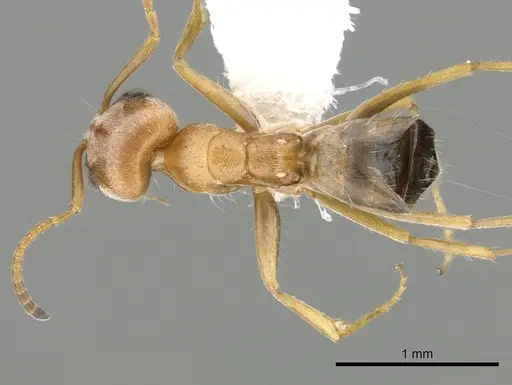
CASENT0841239
View on AntWeb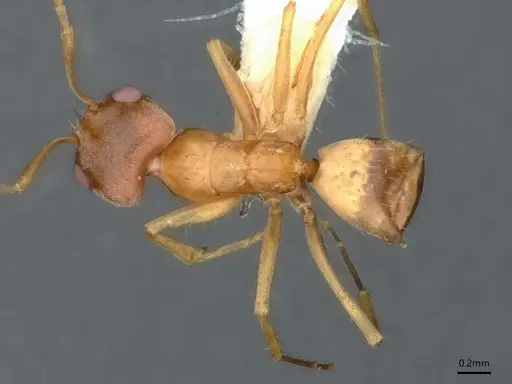
Literature
Loading...Loading products...