

Forelius heyeri
- Scientific Name
- Forelius heyeri
- Tribe
- Leptomyrmecini
- Subfamily
- Dolichoderinae
- Author
- Forel, 1902
- Distribution
- Found in 5 countries
Forelius heyeri Overview
Forelius heyeri is an ant species of the genus Forelius. It is primarily documented in 5 countries , including Argentina, Bolivia, Plurinational State of. Detailed taxonomic data and occurrence records can be further explored via authoritative databases such as AntWeb or the Global Biodiversity Information Facility (GBIF).
Forelius heyeri
Forelius heyeri is a tiny Neotropical ant species native to southern South America, found across Argentina, Brazil, Paraguay, and Uruguay. Workers measure just 1.6-1.8mm and are dull yellow to light yellowish brown in color, with distinctive dark erect setae on the pronotum that contrast with their pale body. Their most notable feature is their extremely short antennae scapes, which barely reach the head margin. These ants nest in the ground in open areas and form colonies with multiple nest entrances, often with loose soil around the entrance holes. They are fast-moving, heat-loving ants that remain active during the hottest times of the day when other ants retreat from the heat.
Quick Summary
- Difficulty: Easy
- Origin & Habitat: Neotropical region, Argentina, Brazil, Paraguay, and Uruguay. Prefers dry to semi-desert habitats, grasslands, and seasonally dry tropical forests. Nests in the ground in open areas without vegetation [1][2][3].
- Colony Type: Colony structure is not well-documented in scientific literature. Workers have been observed with multiple nest entrances suggesting polydomous (multiple connected nests) arrangement. Further research needed on queen number and colony social structure.
- Size & Growth:
- Queen: Not documented in available research, estimated 4-5mm based on genus patterns
- Worker: 1.6-1.8mm TL [4]. Head length 0.45-0.57mm, head width 0.39-0.51mm [3].
- Colony: Unknown, likely small to moderate based on worker size and genus patterns
- Growth: Unknown, likely moderate based on typical Dolichoderinae development
- Development: Estimated 6-8 weeks at optimal temperature based on related Dolichoderinae species (Direct development data not available for this species. Estimates based on genus-level patterns for small Dolichoderinae ants.)
- Antkeeping:
- Temperature: Keep at 24-30°C. These ants have high thermal tolerance and are naturally active during the hottest times of the day [1]. A warm setup mimicking their native grassland habitat works well.
- Humidity: Moderate humidity around 50-70%. They prefer drier conditions compared to many tropical ants, reflecting their dry habitat preferences [2]. Allow the nest substrate to dry partially between waterings.
- Diapause: Unknown for this species. Southern Brazilian populations may experience cooler winters but documented behavior is limited. Consider a cool period around 15-18°C during winter months.
- Nesting: Ground-nesting species. Use a naturalistic setup with compact soil chambers or a Y-tong/plaster nest with tight chambers scaled to their tiny size. They prefer compact nesting areas with multiple small chambers.
- Behavior: These ants are fast-moving and highly active, especially in warm conditions. Workers forage on soil arthropods and honeydew from vegetation. They have high thermal tolerance and are often the most active ants during midday heat when other species retreat. Their tiny size makes them excellent escape artists, escape prevention must be excellent. They are not aggressive and typically flee when disturbed. Workers move quickly through the outworld and can squeeze through very small gaps.
- Common Issues: escape prevention is critical due to their very small 1.6-1.8mm size, they can squeeze through standard test tube barriers, high activity levels mean they may escape if given any opportunity, wild-caught colonies may have parasites that affect survival in captivity, limited research means colony development timeline is uncertain, fast movement makes them difficult to contain during transfers
Appearance and Identification
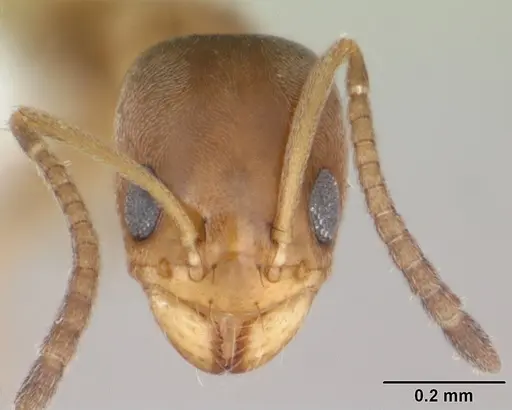
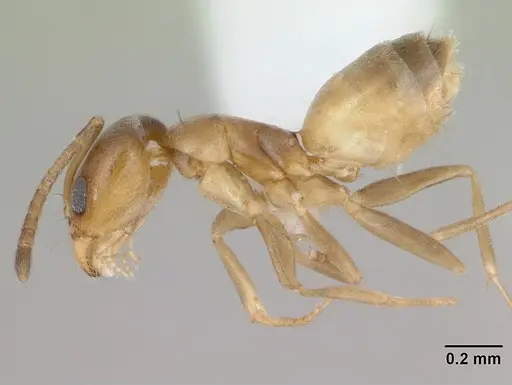
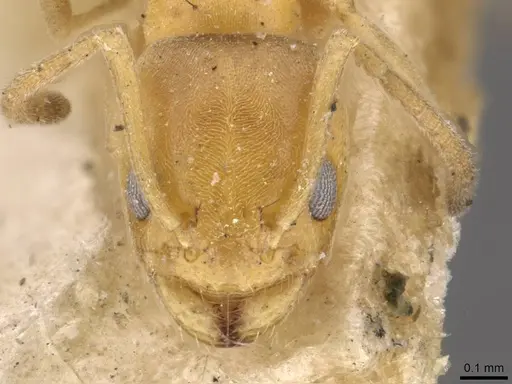
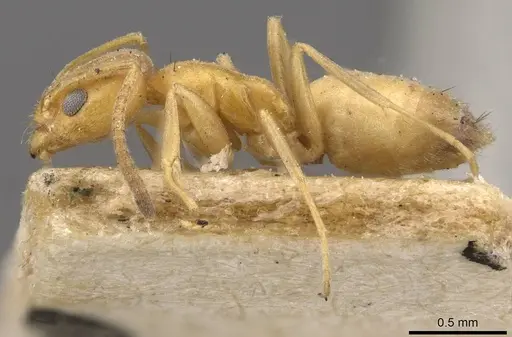
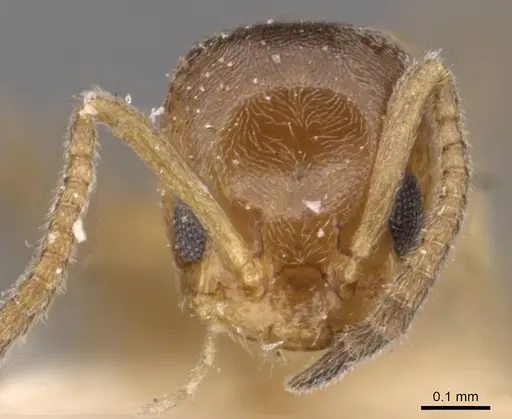
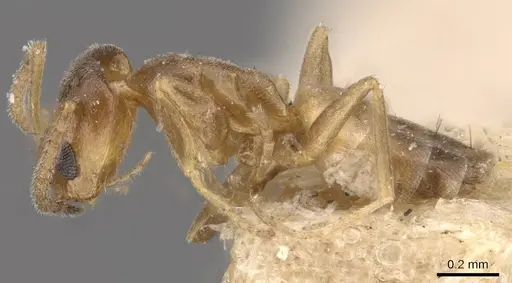
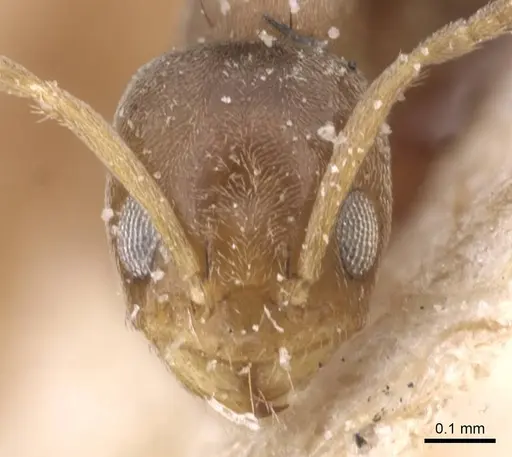
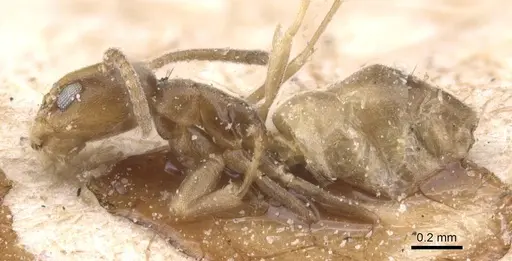
Forelius heyeri workers are among the smallest ants you will encounter, measuring just 1.6-1.8mm in total length. Their body color is a dull yellow to light yellowish brown throughout, which helps them blend into sandy soil habitats. The most distinctive physical features are the two thick dark erect setae (bristles) on the pronotum (the middle body section) that stand out against their pale integument. Their antennae scapes are extremely short, measuring 0.32-0.43mm, and barely reach or fall just short of the back of the head. This is notably shorter than many related species. The mandibles have five teeth plus one small denticle. The petiolar scale (the small segment between thorax and abdomen) is very small and projects forward, often hidden by the first abdominal segment. Males and queens have not been described in detail in available literature. [3][4]
Natural Habitat and Distribution
This species is native to the Neotropical region of southern South America, specifically found in Argentina, Brazil, Paraguay, and Uruguay. Their range extends from São Paulo state in Brazil south to Rio Grande do Sul [5]. They prefer dry to semi-desert habitats and are commonly found in grasslands, including both low and high grassland areas, as well as Cerrado (tropical savanna) biomes [1][2]. They have also been recorded in the Caatinga biome of northeastern Brazil, which is a seasonally dry tropical forest [2]. In their natural habitat, they nest in the ground in open areas that lack dense vegetation. Nests typically have multiple entrances surrounded by loose soil, and colonies often maintain more than one nest (polydomous arrangement).
Feeding and Diet
In the wild, Forelius heyeri workers are active foragers that hunt soil arthropods and other small invertebrates. They also consume honeydew, the sugary excretion from aphids and scale insects that accumulates on vegetation [1]. For captive care, offer small protein sources such as fruit flies, tiny crickets, and other small insects. Sugar water or honey can be offered occasionally, though they are primarily predatory. Feed protein prey 2-3 times per week and provide a constant sugar source. Remove uneaten prey within 24-48 hours to prevent mold. Their small size means prey items should be appropriately sized, no larger than their head width.
Temperature and Heating
These ants are notably heat-tolerant and are naturally most active during the hottest times of the day when other ant species reduce activity [1]. This makes them well-suited to warm setups. Keep the nest area at 24-30°C, with a slight gradient allowing workers to choose their preferred temperature. A heating cable or mat on one side of the nest can create this gradient. Because they naturally inhabit hot grassland environments, they handle higher temperatures better than most ants, but avoid extreme heat above 35°C. Room temperature in the mid-20s°C is typically suitable, but a small heating element can help maintain optimal conditions.
Nesting and Housing
Forelius heyeri is a ground-nesting species that prefers compact soil chambers rather than large open spaces. In captivity, use a naturalistic setup with tightly packed soil or a Y-tong/plaster nest with small chambers scaled to their tiny 1.6-1.8mm size. The chambers should be narrow and snug, these ants do not require large open spaces. Provide a moisture reservoir in the nest setup to maintain moderate humidity. Because they naturally have multiple nest entrances, they may appreciate having a few connected chambers rather than one large cavity. The outworld should include a small foraging area with easy access to food. [1]
Escape Prevention
Due to their extremely small size of just 1.6-1.8mm, excellent escape prevention is absolutely critical. These ants can squeeze through the tiniest gaps that would hold back larger species. Use tight-fitting lids on all containers, fine mesh barriers on any ventilation, and apply Fluon or similar barrier products to the rim of the outworld. Standard test tube setups may need additional barriers. Check all connections and seams regularly, these fast-moving ants will find any weakness. A thin layer of petroleum jelly or fluon on inner container rims provides an effective barrier.
Colony Development
Colony development data for Forelius heyeri is limited. Based on typical patterns for small Dolichoderinae ants, expect the first workers (nanitics) to emerge 6-8 weeks after the queen lays eggs, at optimal warm temperatures. Colonies likely remain small to moderate in size, probably under a few hundred workers at maturity. The queen is not well-documented but based on related species, she is probably 4-5mm. Founding behavior has not been directly studied, it is likely claustral (queen seals herself in and lives off stored fat) but this is inferred from genus patterns rather than confirmed through observation. Growth rate is likely moderate, with workers appearing within a couple months under good conditions.
Frequently Asked Questions
How long does it take for Forelius heyeri to produce first workers?
The exact timeline is not documented, but based on related Dolichoderinae species, expect 6-8 weeks from egg to first worker at optimal temperatures of 24-30°C.
What do Forelius heyeri ants eat?
They are predators that hunt small soil arthropods. Feed small live prey like fruit flies, pinhead crickets, or other tiny insects. They also accept honeydew, so occasional sugar water or honey can be offered.
Are Forelius heyeri ants good for beginners?
Yes, they are considered easy to keep due to their tolerance of varying conditions and small colony size needs. The main challenge is their tiny size requiring excellent escape prevention.
What temperature do Forelius heyeri ants need?
Keep them warm at 24-30°C. They have high thermal tolerance and are naturally most active during hot periods of the day.
Can I keep multiple queens together?
Colony structure is not well-documented for this species. It is unknown whether they are single-queen or multi-queen colonies. Combining unrelated queens is not recommended due to lack of documented success.
How big do Forelius heyeri colonies get?
Colony size is not well-documented, but based on worker size and genus patterns, colonies likely reach a few hundred workers at most.
Do Forelius heyeri need hibernation?
Diapause requirements are not documented. Southern Brazilian populations experience mild winters. A cool period around 15-18°C during winter months may be beneficial but is not required.
Why are my Forelius heyeri escaping?
Their extremely small 1.6-1.8mm size means they can squeeze through tiny gaps. Use fine mesh, tight-fitting lids, and apply Fluon barriers to prevent escapes.
When should I move Forelius heyeri to a formicarium?
Keep them in a test tube setup for founding. Once the colony reaches 20-30 workers and you see active foraging, you can move them to a naturalistic or Y-tong setup with appropriately sized chambers.
References

This caresheet is licensed under CC BY-SA 4.0 .
CASENT0173739
View on AntWeb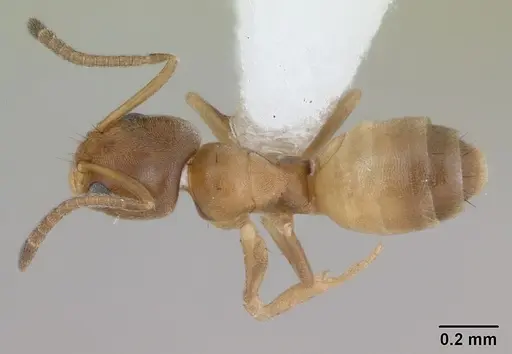
CASENT0909771
View on AntWeb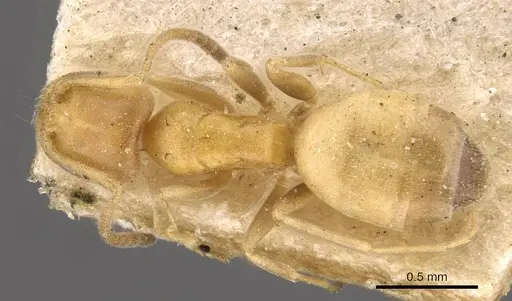
CASENT0909772
View on AntWeb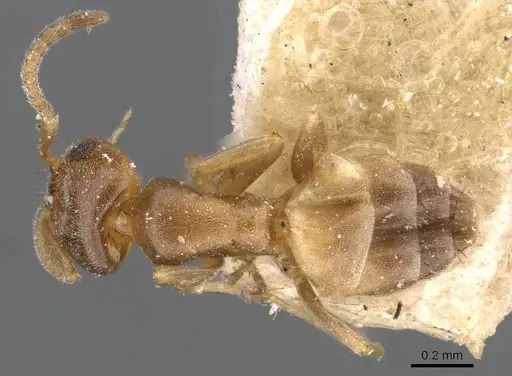
CASENT0911547
View on AntWeb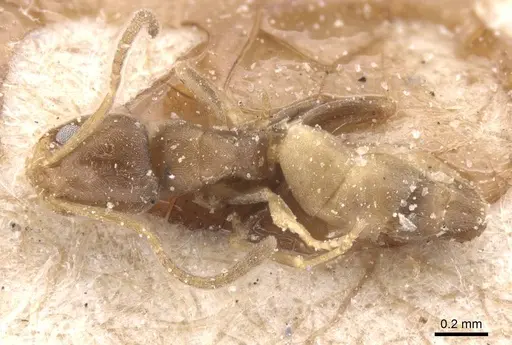
Literature
Loading...Loading products...