

Eurhopalothrix megalops
- Scientific Name
- Eurhopalothrix megalops
- Tribe
- Attini
- Subfamily
- Myrmicinae
- Author
- Longino, 2013
- Distribution
- Found in 1 countries
Eurhopalothrix megalops Overview
Eurhopalothrix megalops is an ant species of the genus Eurhopalothrix. It is primarily documented in 1 countries , including Costa Rica. Detailed taxonomic data and occurrence records can be further explored via authoritative databases such as AntWeb or the Global Biodiversity Information Facility (GBIF).
Eurhopalothrix megalops
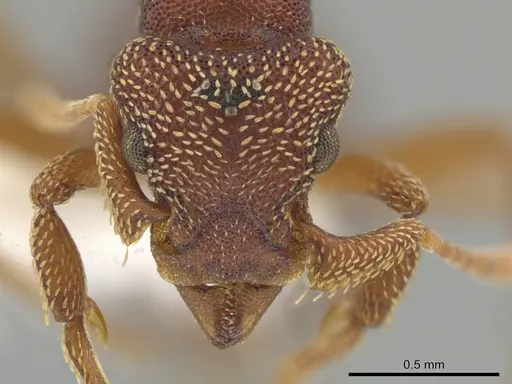
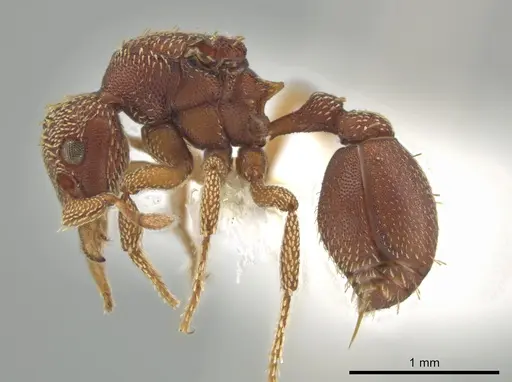
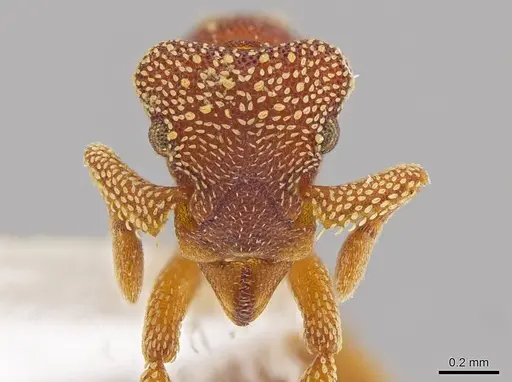
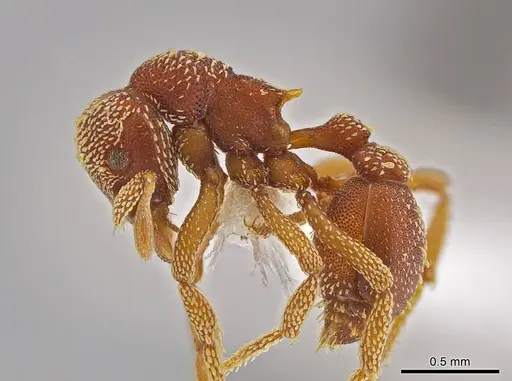
Eurhopalothrix megalops is an extremely rare tiny ant from the rainforests of Costa Rica. Workers measure just 0.74mm in head width, making them among the smallest ants you could keep. They were first described in 2013 from a single specimen collected in a pan trap at 500m elevation in mature wet forest. What makes this species stand out from other Eurhopalothrix is its unusually large eyes (about 9 ommatidia) and relatively long legs, suggesting it forages on surfaces rather than in the leaf litter like its relatives. The genus is known for a remarkable camouflage trick, these ants coat themselves with a thin layer of clay using specialized spatulate setae on their face, making them nearly invisible against the forest floor. [1][2][3]
Quick Summary
- Difficulty: Expert
- Origin & Habitat: Costa Rica, Heredia province, at 500m elevation in mature wet forest stream edges. This is a extremely rare species known from only one specimen. [1][3]
- Colony Type: Unknown, only a single worker has ever been documented. Colony structure, queen presence, and founding behavior are completely unstudied. [1]
- Size & Growth:
- Queen: Unknown, no queen has been described [1]
- Worker: 0.74mm HW,0.75mm HL [1]
- Colony: Unknown, only one worker ever collected [1]
- Growth: Unknown
- Development: Unknown (No development data exists for this species. Related leaf-litter ants typically take 4-8 weeks at tropical temperatures, but this is a rough estimate.)
- Antkeeping:
- Temperature: Keep around 22-26°C, mimicking warm tropical forest conditions. A gentle heat gradient allows the ants to choose their preferred temperature.
- Humidity: High humidity (70-85%) is essential. These ants come from wet tropical forest understory. Keep the nest substrate consistently moist but not waterlogged.
- Diapause: No, as a tropical species, they do not require hibernation. Activity may slow slightly during cooler periods but no true diapause occurs.
- Nesting: Given their likely surface-foraging or arboreal habits, provide a naturalistic setup with small chambers, damp substrate, and opportunities to climb. A Y-tong or acrylic nest with tight chambers scaled to their tiny size works well. Avoid deep soil setups since they appear to be surface-dwellers.
- Behavior: These ants are predatory, using stealth or sit-and-wait techniques to capture small prey in the leaf litter. Their large eyes suggest they rely on vision more than many other leaf-litter ants. They are extremely small and delicate, escape prevention is critical since they can squeeze through the tiniest gaps. Temperament is unknown but likely similar to other Eurhopalothrix, shy and non-aggressive. [2][3]
- Common Issues: this species is known from a single specimen, captive colonies may not exist and wild collection is extremely difficult, their tiny size means escape prevention must be excellent, use fine mesh and tight-fitting lids, virtually nothing is known about their diet in captivity, start with tiny live prey like springtails and micro-arthropods, they may be arboreal or surface-dwelling, not soil-nesting, provide climbing structures and avoid deep substrate setups, clay camouflage behavior may not transfer to captive conditions, do not expect to see the natural covering
Why This Species Is So Challenging
Let me be direct: Eurhopalothrix megalops is one of the most difficult ants you could ever consider keeping, and not because of complex care requirements, it's because we know almost nothing about it. This species was described from a single worker collected in a pan trap in Costa Rica in 2013. No queen has ever been found. No colony has ever been observed. We don't know what they eat, how they found colonies, whether they have one queen or many, or really anything about their basic biology. The reason for this is their unusual behavior, unlike most Eurhopalothrix that live in leaf litter and are caught in Winkler samples, E. megalops was never found in hundreds of those samples. This suggests it forages on surfaces or in trees, making it much harder to collect. Unless you can find a researcher willing to collect in Costa Rica specifically for this species, you likely cannot obtain this ant. [1][3]
What We Do Know About Eurhopalothrix
While E. megalops specifically is a mystery, we know quite a bit about the genus Eurhopalothrix as a whole. These are tiny predatory ants found in tropical leaf litter across Central America and the Caribbean. Workers are typically 1-2mm and use sit-and-wait hunting strategies, they don't chase prey but ambush it instead. A fascinating trait is their clay camouflage: the specialized spatulate setae on their face help them acquire and hold a layer of clay particles, effectively disguising them against the forest floor. This crypsis is so effective that you often only spot them by their movement. The genus has 7-segmented antennae and distinctive triangular mandibles with a single row of teeth. [2]
Housing and Setup Recommendations
If you somehow obtained this species, the setup would differ from typical leaf-litter ants. The fact that E. megalops was never caught in Winkler samples (which extract ants from sifted leaf litter) but was caught in a pan trap (which sits on surfaces) suggests they are surface-dwellers or possibly arboreal. This means you should provide a setup with horizontal surfaces for foraging, not deep vertical soil chambers. A naturalistic terrarium with damp substrate, moss, and small climbing structures would be appropriate. The chambers in any formicarium must be extremely small, these ants are under 1mm. Escape prevention is absolutely critical since they can pass through standard mesh. Use tight-fitting lids and consider sealing all edges.
Feeding and Diet
Based on genus-level knowledge, E. megalops is predatory, using stealth to capture small invertebrates in the leaf litter. In captivity, you would need to provide tiny live prey, springtails, micro-arthropods, and other small insects. They are far too small to take standard ant feeders like mealworms. Sugar sources are unlikely to be accepted since this is a predatory genus, not a honeydew feeder. Do not expect to observe the clay-camouflaging behavior in captivity, it requires access to the appropriate substrate and likely specific behavioral triggers we don't understand. [2]
Temperature and Humidity
As a Costa Rican wet forest species from 500m elevation, these ants need warm, humid conditions. Aim for temperatures in the low-mid 20s Celsius (22-26°C) with humidity around 75-85%. The forest understory where they live is consistently damp but not saturated. Provide a moisture gradient so the ants can self-regulate. Since we don't know if they nest in soil, rotting wood, or under objects, providing multiple microhabitats increases your chances of success. Never let the setup dry out completely.
Frequently Asked Questions
Can I keep Eurhopalothrix megalops in captivity?
Practically speaking, no. This species is known from a single worker collected in Costa Rica in 2013. No queen or colony has ever been documented, and the ant has never been found in standard leaf-litter samples. Unless you have a research connection in Costa Rica specifically collecting for this species, there is no way to obtain it. Even if you could, we know virtually nothing about their care requirements.
How big are Eurhopalothrix megalops ants?
Extremely tiny. The only known worker has a head width of 0.74mm and head length of 0.75mm. This makes them among the smallest ants in the antkeeping hobby, you would need extremely fine mesh and tight seals to prevent escapes. [1]
What makes Eurhopalothrix megalops different from other Eurhopalothrix?
This species has unusually large eyes (about 9 ommatidia across) and longer legs compared to other Eurhopalothrix. These features suggest it forages on surfaces rather than in leaf litter, and may even be arboreal. The name 'megalops' means 'large eye' in Greek. [1][3]
Where does Eurhopalothrix megalops live?
Only known from Costa Rica, Heredia province, at 500m elevation in mature wet forest. The single known specimen was collected near a stream at the Cascante refuge. [1][3]
Are Eurhopalothrix megalops dangerous?
No. These are tiny, non-aggressive predatory ants. At under 1mm, they pose no threat to humans. Their mandibles are designed for catching tiny prey, not for biting people.
What do Eurhopalothrix ants eat?
Eurhopalothrix are predatory ants that use sit-and-wait hunting strategies. They capture small invertebrates in the leaf litter. For any Eurhopalothrix in captivity, you would need to provide tiny live prey like springtails, micro-arthropods, and other small insects. Sugar sources are unlikely to be accepted. [2]
Why is Eurhopalothrix megalops so rarely found?
Unlike most Eurhopalothrix that live in leaf litter and are easily collected in Winkler samples, E. megalops was never found in hundreds of those samples. Its large eyes and long legs suggest it forages on surfaces or in trees, not in the soil and leaf litter where researchers typically sample. The single known specimen was collected in a pan trap that sits on the ground surface. [3]
Can I find Eurhopalothrix megalops in the wild?
Extremely unlikely. This species has only been collected once, despite extensive ant surveys in Costa Rica. You would need to conduct targeted surface foraging surveys in mature wet forest at around 500m elevation in Costa Rica's Heredia province. Even then, finding one would be a major scientific discovery. [1][3]
Is Eurhopalothrix megalops a good species for beginners?
No. This species is not recommended for anyone, beginner or expert. We don't know how to keep it, we don't have queens or colonies available, and we barely know anything about its biology. If you're interested in Eurhopalothrix, look for more common and well-studied species in the genus that have documented care requirements. [1]
References

This caresheet is licensed under CC BY-SA 4.0 .
CASENT0648455
View on AntWeb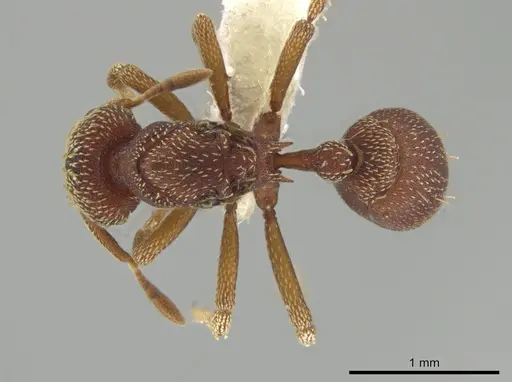
JTLC000003555
View on AntWeb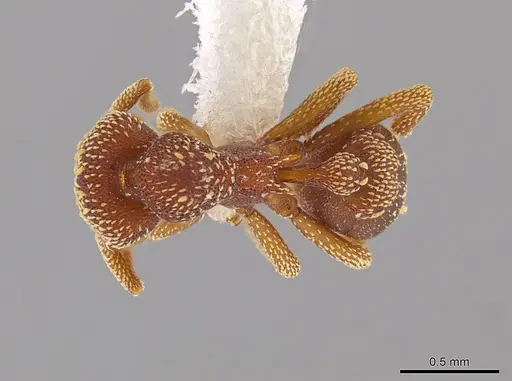
Literature
Loading...Loading products...