

Eurhopalothrix australis
- Scientific Name
- Eurhopalothrix australis
- Tribe
- Attini
- Subfamily
- Myrmicinae
- Author
- Brown & Kempf, 1960
- Distribution
- Found in 1 countries
Eurhopalothrix australis Overview
Eurhopalothrix australis is an ant species of the genus Eurhopalothrix. It is primarily documented in 1 countries , including Australia. Detailed taxonomic data and occurrence records can be further explored via authoritative databases such as AntWeb or the Global Biodiversity Information Facility (GBIF).
Eurhopalothrix australis
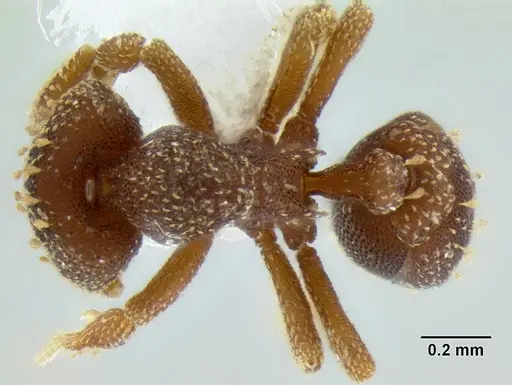
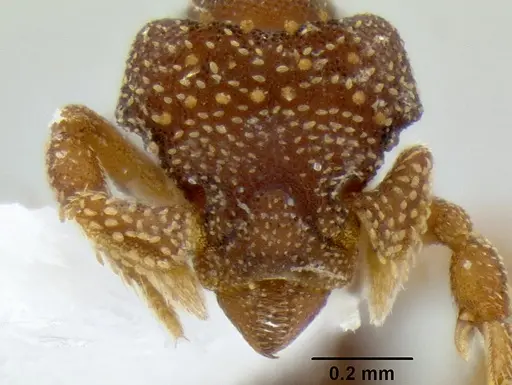
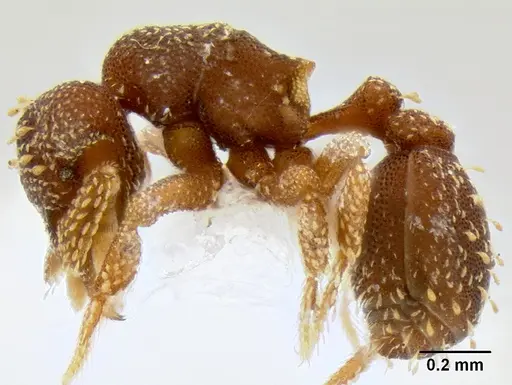
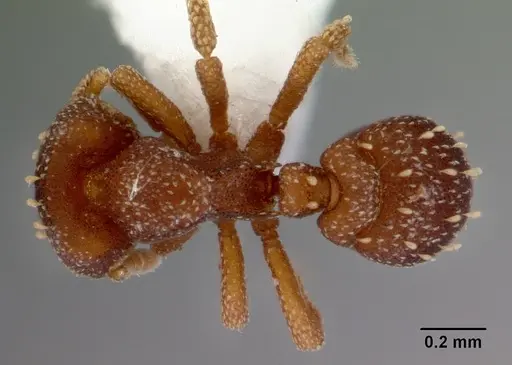
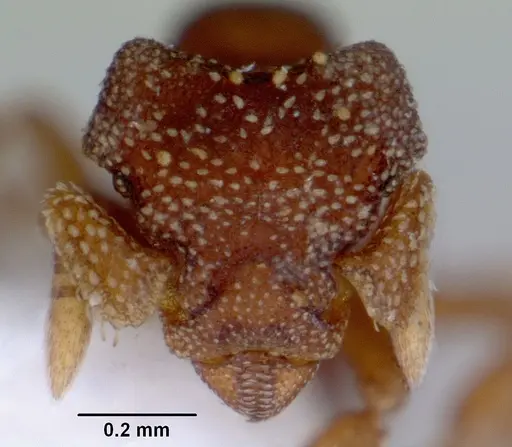
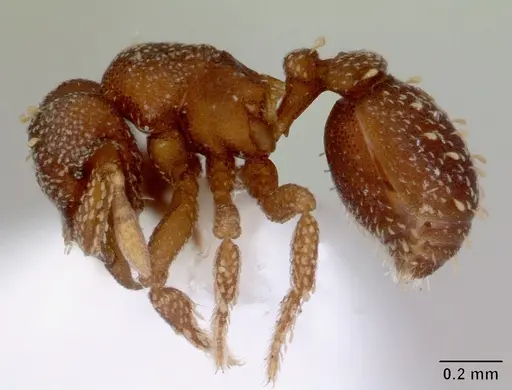
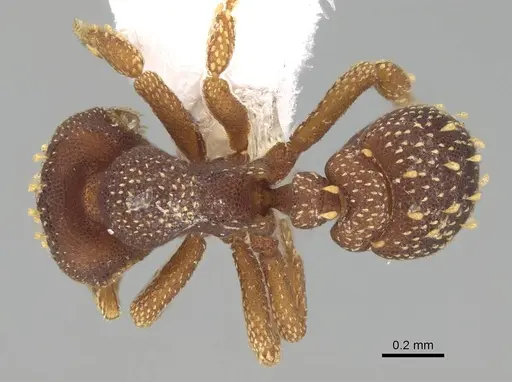
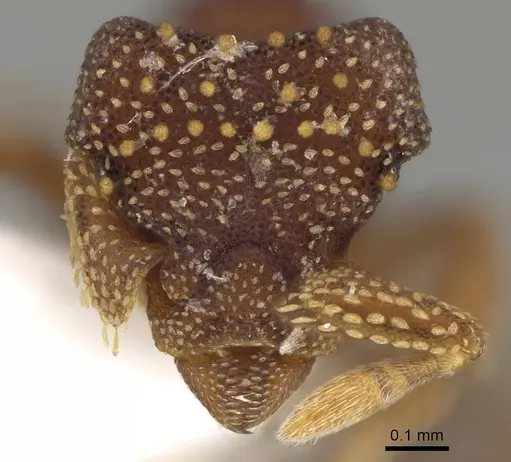
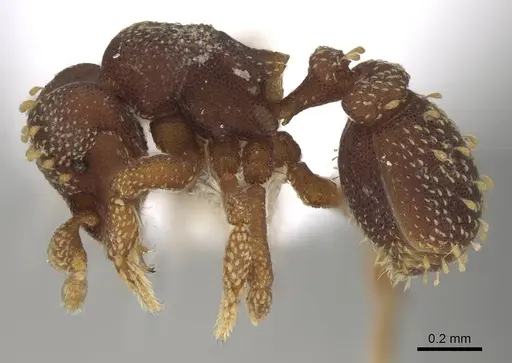
Eurhopalothrix australis is a tiny ant species native to the rainforests of eastern Queensland and northern New South Wales in Australia. Workers measure just 2.0-2.4mm, making them among the smaller ants you'll encounter. They have a distinctive appearance with a medium reddish-brown body and paler yellowish legs and antennae, covered in specialized flattened hairs. Queens are slightly larger at 2.8mm and were described from the original type series collected in rainforest habitats [1].
This species belongs to the tribe Attini, which includes fungus-growing ants, though the specific dietary habits of Eurhopalothrix are less specialized than their leaf-cutter cousins. They nest in soil within rainforest environments, from coastal areas to elevated sites around 600m. What makes this species notable is that it's one of the more frequently collected Eurhopalothrix in Australia, giving us more insight into its distribution than many related species [2].
Quick Summary
- Difficulty: Hard
- Origin & Habitat: Eastern Queensland and northern New South Wales, Australia. Found in rainforest habitats ranging from open areas to heavily forested zones along the coast and elevated regions up to 600m [2][1].
- Colony Type: Colony structure is unconfirmed. Only small numbers have been collected, suggesting relatively small colony sizes typical of this genus.
- Size & Growth:
- Queen: 2.8mm [2]
- Worker: 2.0-2.4mm [2]
- Colony: Likely small, under 100 workers based on collection data and typical genus patterns [2]
- Growth: Unknown, likely slow given small colony sizes
- Development: Unconfirmed, no direct development data exists. Based on typical Attini patterns and their small size, expect 6-10 weeks at warm temperatures, but this is an estimate. (Development timeline has not been directly studied for this species.)
- Antkeeping:
- Temperature: Keep warm, around 24-28°C. As a subtropical rainforest species from eastern Australia, they need temperatures warmer than room temperature. A heating cable on one side of the nest creates a suitable gradient.
- Humidity: High humidity is essential, think damp rainforest floor. Keep the nest substrate consistently moist but not waterlogged. Provide a water reservoir in the test tube or nest setup.
- Diapause: Unknown, subtropical species from coastal Australia may have reduced activity in cooler months but likely does not require true hibernation. Keep warm year-round.
- Nesting: Soil-nesting species. In captivity, a test tube setup works well for founding colonies. For established colonies, a small formicarium with tight chambers scaled to their tiny size is appropriate. Avoid large, open spaces.
- Behavior: These ants are very small and quite shy. They are not aggressive and will likely avoid confrontation. Foraging activity is probably focused on the forest floor, hunting small prey or collecting organic matter. Escape prevention is critical, at 2mm, they can squeeze through the tiniest gaps. Use fine mesh and tight-fitting barriers.
- Common Issues: escape prevention is critical, their tiny size means they can slip through standard barrier setups, high humidity requirements can lead to mold if ventilation is poor, small colony sizes mean slow growth and higher vulnerability to disturbances, wild-caught colonies may be difficult to establish in captivity, lack of documented care information means you'll be experimenting with conditions
Housing and Setup
Because of their extremely small size, Eurhopalothrix australis requires careful housing setup. A test tube setup works well for founding colonies, use a small test tube with a water reservoir at one end, stopped with cotton. The tiny workers will appreciate tight, snug chambers rather than large open spaces. If you move them to a formicarium, choose one with small chambers and narrow passages scaled to their 2mm body size. Escape prevention cannot be overstated, these ants will find and exploit any gap, no matter how small. Apply Fluon or use fine mesh barriers on all openings. Keep the nest in darkness or dim conditions, as bright light will stress them. [2]
Feeding and Diet
The dietary needs of Eurhopalothrix australis are not well documented, but as a member of the tribe Attini, they may have some relationship with fungi or may be generalist foragers. Offer small prey items like fruit flies, pinhead crickets, or other tiny insects. Given their minute size, prey should be appropriately small, essentially micro-prey. They may also accept sugar water or honey, though this is unconfirmed. Start with offering small live prey and observe acceptance. Remove any uneaten prey after 24-48 hours to prevent mold. Feed every 2-3 days, adjusting based on colony size and consumption.
Temperature and Humidity
As a subtropical rainforest species from eastern Australia, Eurhopalothrix australis needs warm and humid conditions. Aim for temperatures in the 24-28°C range, this is warmer than typical room temperature. Use a heating cable or heating mat on one side of the nest to create a temperature gradient, allowing the ants to regulate their own exposure. High humidity is essential, mimicking the damp rainforest floor. Keep the substrate consistently moist but not saturated with standing water. A water reservoir in the test tube setup provides humidity through evaporation. Monitor for condensation, some condensation is good, but excessive moisture leads to mold problems. [2]
Colony Establishment
Establishing Eurhopalothrix australis in captivity presents challenges. This species is rarely collected and there is limited information on its captive care. If obtaining a colony, it will likely be from a wild-caught queen during nuptial flights (timing unknown) or a small colony collection. Wild-caught colonies often struggle to adapt to captive conditions. When establishing a colony, minimize disturbances. Keep the nest dark and quiet, and avoid checking on them too frequently. Their small colony size means each individual is precious, avoid losing workers to stress or improper conditions. Be patient, growth will likely be slow.
Behavior and Temperament
Eurhopalothrix australis is a shy, non-aggressive species. Workers are tiny and likely forage quietly on the rainforest floor. They are not known to sting and their small size means they pose no threat to keepers. Their defense strategy is likely avoidance and hiding rather than confrontation. Activity levels are probably moderate, with workers emerging to forage for food. Given their small size and cryptic lifestyle, you may not observe dramatic behaviors, these are subtle ants that go about their business quietly. Handle them gently if ever necessary, as their small bodies are fragile. [2]
Frequently Asked Questions
How long does it take for Eurhopalothrix australis to produce first workers?
The egg-to-worker timeline is unconfirmed for this species. Based on typical Attini patterns and their small size, expect approximately 6-10 weeks at warm temperatures (around 26°C), but this is an estimate. No direct development data exists.
Can I keep Eurhopalothrix australis in a test tube?
Yes, a test tube setup is ideal for this species. Use a small test tube with a water reservoir, and ensure the cotton stopper is packed tightly to prevent escapes. The tiny chambers of a test tube are well-suited to their small size.
What do Eurhopalothrix australis ants eat?
Their exact diet is unconfirmed, but as members of the Attini tribe, they likely eat small insects and may have a relationship with fungi. Offer small live prey like fruit flies or tiny crickets. Sugar water or honey may be accepted. Start with micro-prey and observe.
Are Eurhopalothrix australis ants aggressive?
No, they are not aggressive. These are tiny, shy ants that avoid confrontation. They pose no threat to keepers and do not sting.
Do Eurhopalothrix australis need hibernation?
Probably not. As a subtropical species from coastal eastern Australia, they likely remain active year-round in warm conditions. There is no documented diapause requirement. Keep them warm (24-28°C) throughout the year.
How big do Eurhopalothrix australis colonies get?
Colony size is unconfirmed, but based on collection data and typical genus patterns, colonies likely remain small, probably under 100 workers. They are not a rapidly expanding species.
What temperature should I keep Eurhopalothrix australis at?
Keep them warm, around 24-28°C. Use a heating cable on one side of the nest to create a gradient. This subtropical rainforest species needs warmer conditions than typical room temperature.
Why are my Eurhopalothrix australis dying?
Common causes include: escape through tiny gaps, improper humidity (too dry or too wet), temperatures outside their range, stress from disturbance, or accepting inadequate food. Review your setup against their warm, humid requirements and ensure escape prevention is excellent.
Is Eurhopalothrix australis good for beginners?
No, this species is not recommended for beginners. There is limited documented care information, they require very specific warm and humid conditions, their tiny size makes them prone to escaping, and wild colonies are difficult to establish. This is a species for experienced antkeepers.
When should I move Eurhopalothrix australis to a formicarium?
Only move them when the colony has grown significantly and the test tube is becoming crowded. Given their likely small colony size, this may take a long time. When moving, use a small formicarium with tight chambers scaled to their 2mm size.
References

This caresheet is licensed under CC BY-SA 4.0 .
Literature
Loading...Loading products...