

Eurhopalothrix apharogonia
- Scientific Name
- Eurhopalothrix apharogonia
- Tribe
- Attini
- Subfamily
- Myrmicinae
- Author
- Snelling, 1968
- Distribution
- Found in 1 countries
Eurhopalothrix apharogonia Overview
Eurhopalothrix apharogonia is an ant species of the genus Eurhopalothrix. It is primarily documented in 1 countries , including Costa Rica. Detailed taxonomic data and occurrence records can be further explored via authoritative databases such as AntWeb or the Global Biodiversity Information Facility (GBIF).
Eurhopalothrix apharogonia
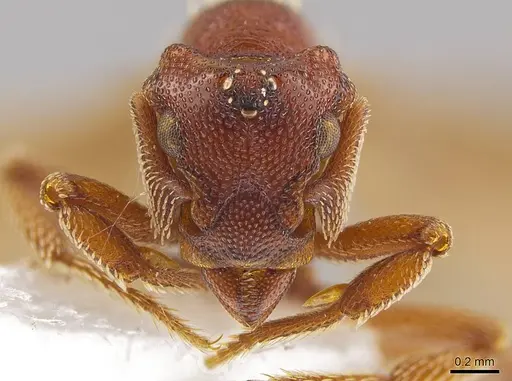
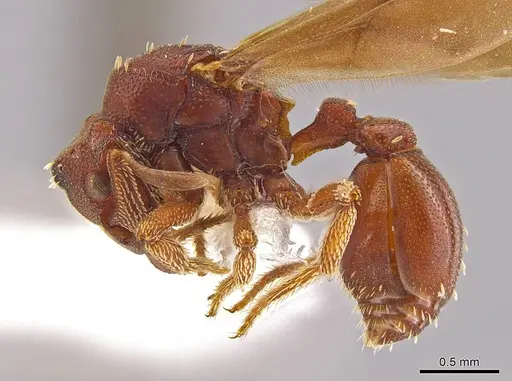
Eurhopalothrix apharogonia is an extremely rare ant species known only from El Salvador. Workers are tiny at just 3.87mm total length, with a distinctive reddish-brown body and paler legs and antennae. This species belongs to a genus characterized by 7-segmented antennae and triangular mandibles, adapted for predatory hunting in tropical forest leaf litter. The most striking feature is its highly reduced facial setae, unlike most Eurhopalothrix species, it has only four specialized spatulate hairs arranged in a tight square on the back of the head. These ants are masters of camouflage, coating themselves with a thin layer of clay that helps them blend into their environment while hunting prey [1].
Quick Summary
- Difficulty: Expert
- Origin & Habitat: Known only from El Salvador in Central America. In common with other Eurhopalothrix species, it inhabits tropical forest leaf litter and soil, typically found in sifted litter, rotten wood, and soil samples [1].
- Colony Type: Unknown, colony structure has not been documented for this species. Only the worker caste has ever been collected [2].
- Size & Growth:
- Queen: Unknown, no queen specimens have been collected or described [2].
- Worker: Workers measure approximately 3.87mm total length, with head width 0.84mm, head length 0.93mm, and scape length 0.53mm [2].
- Colony: Unknown, no colony size data exists for this species.
- Growth: Unknown, growth rate has not been documented.
- Development: Unknown, development timeline has not been studied for this species. (Based on related tropical leaf-litter ants, expect development to take several months under optimal conditions.)
- Antkeeping:
- Temperature: Keep warm, in the range of 24-28°C. This is inferred from the species' tropical forest habitat and the fact that related Eurhopalothrix species are found in warm, humid environments [1].
- Humidity: High humidity is essential, these ants live in forest leaf litter where conditions are constantly moist. Keep the nest substrate damp but not waterlogged, with a gradient to slightly drier areas for the ants to regulate their moisture needs.
- Diapause: Unlikely, as a tropical species from El Salvador, diapause is probably not required. However, a slight reduction in temperature during winter months may be beneficial.
- Nesting: Use a naturalistic setup with moist substrate (like a soil-filled container or plaster nest with a water reservoir). The tiny size of these ants means they need very small chambers and narrow passages. A Y-tong style nest with appropriately scaled chambers works well, or a carefully maintained test tube setup with moist cotton.
- Behavior: These are stealth predators that hunt in tropical leaf litter using sit-and-wait techniques [1]. Workers are likely nocturnal or crepuscular, foraging through the substrate. They are extremely small and fragile, with no documented sting. Escape prevention is critical, their tiny size means they can squeeze through standard barrier setups. Handle with extreme care as they are easily crushed.
- Common Issues: escape prevention is critical due to their extremely tiny size, standard barriers may not work, use fine mesh and tight-fitting lids, very limited distribution means wild-caught colonies are essentially impossible to obtain, no colony size or development data exists, keepers will be pioneering captive husbandry, predatory diet means they require live micro-prey which can be difficult to culture reliably, fragile body structure means they are easily injured during transfers or nest maintenance
Why This Species Is So Challenging
Eurhopalothrix apharogonia is one of the rarest ants in the antkeeping hobby, it has only ever been collected a handful of times in El Salvador, and the worker caste is the only form known to science [2]. This means there is essentially no captive husbandry data, no development timelines, and no established care protocols. You will be a pioneer if you attempt to keep this species. The lack of data extends to basic biology: we don't know how many queens they have, how big colonies get, or how long development takes. This makes E. apharogonia a true expert-level species suitable only for experienced antkeepers who enjoy the challenge of working with poorly documented species.
Housing and Setup
Given their tiny size and leaf-litter habitat, these ants need a carefully designed setup. A naturalistic terrarium-style enclosure with several centimeters of moist substrate works well, use a mixture of soil and rotting wood fragments to mimic their natural forest floor environment. The substrate should be kept consistently moist but never waterlogged. Because they are so small, even standard test tube setups need modification, use very small diameter tubes with appropriately scaled water reservoirs. A Y-tong style nest with chambers scaled to their tiny size (around 1-2mm passages) would be ideal if you can obtain one. Regardless of setup, escape prevention must be excellent, these ants can squeeze through gaps that other species would never fit through. [1]
Feeding and Diet
Like all Eurhopalothrix species, these are predators that hunt small invertebrates in leaf litter [1]. In captivity, you will need to provide live micro-prey such as springtails, tiny isopods, booklice, and other small arthropods. Because they use sit-and-wait hunting strategies, prey should be small enough for them to tackle and should be introduced live. The frequency of feeding will depend on colony size, start with offering prey every 2-3 days and adjust based on how quickly it is consumed. Sugar sources are unlikely to be accepted given their predatory nature, though you can occasionally offer a tiny drop of diluted honey to test acceptance. Do not rely on sugar as a primary food source.
Understanding Their Unique Morphology
One of the most interesting aspects of Eurhopalothrix apharogonia is its highly reduced facial setae. Most Eurhopalothrix species have numerous specialized spatulate hairs on their face, but E. apharogonia has only four arranged in a tight square on the back of the head [2]. These specialized setae help the ants acquire and adhere to a layer of clay that functions as camouflage [1]. This coating helps them remain invisible to both prey and predators while hunting in leaf litter. The extremely reduced head angles (one of the lowest recorded for the genus at CI 90) give this species a very unusual head shape compared to its relatives. Understanding these morphological traits helps explain why these ants are so well-adapted to their cryptic, leaf-litter lifestyle.
Frequently Asked Questions
Can I keep Eurhopalothrix apharogonia as a beginner?
No, this species is absolutely not suitable for beginners. It is known only from type specimens and has never been kept in captivity. There is no established care protocol, no development data, and no way to obtain colonies. This is an expert-level species for antkeepers who want to pioneer captive husbandry of extremely rare species.
Where can I get Eurhopalothrix apharogonia?
You almost certainly cannot obtain this species. It is known only from El Salvador and has been collected only a handful of times. There are no documented captive colonies, and wild collection would be extremely difficult given its cryptic leaf-litter lifestyle and tiny population densities.
What do Eurhopalothrix apharogonia ants eat?
They are predators that hunt small invertebrates in leaf litter. In captivity, they need live micro-prey such as springtails, tiny isopods, booklice, and other small arthropods. They use sit-and-wait hunting techniques and likely do not accept sugar sources.
How big do Eurhopalothrix apharogonia colonies get?
Unknown, colony size has not been documented for this species. Based on related Eurhopalothrix species that occur in low densities in litter samples, colonies are likely small, possibly under 100 workers.
What temperature do Eurhopalothrix apharogonia need?
Keep them warm, around 24-28°C. This is inferred from their tropical forest habitat in El Salvador and the care requirements of related species. A heating cable on one side of the nest can create a temperature gradient.
How long does it take for Eurhopalothrix apharogonia to develop from egg to worker?
Unknown, no development data exists for this species. Based on similar tropical leaf-litter ants, expect several months under optimal conditions. You will need to document this yourself if you obtain a colony.
Do Eurhopalothrix apharogonia need hibernation?
Unlikely, as a tropical species from El Salvador, they probably do not require a diapause period. A slight temperature reduction during winter months may be appropriate but is not necessary.
Can I keep multiple queens together?
Unknown, colony structure has not been documented for this species. Without any data on whether they are monogyne (single queen) or polygyne (multiple queens), combining unrelated queens is not recommended.
Why is this species so rare in the hobby?
Eurhopalothrix apharogonia is known only from El Salvador and has been collected only twice in scientific history. The ants live in tropical forest leaf litter where they occur in very low densities (less than 10% of litter samples). Their cryptic, camouflaged lifestyle makes them extremely difficult to find. There are simply no colonies available to antkeepers.
References

This caresheet is licensed under CC BY-SA 4.0 .
CASENT0914892
View on AntWeb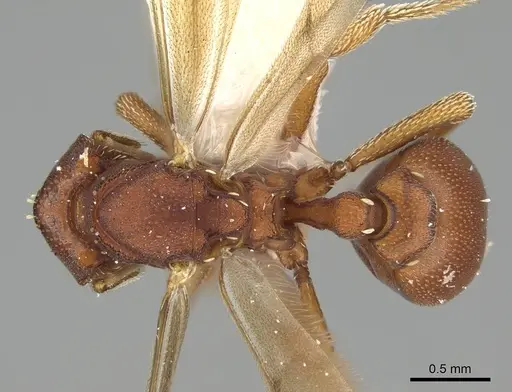
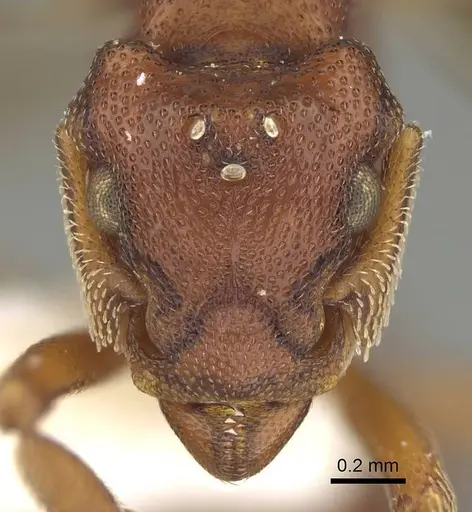
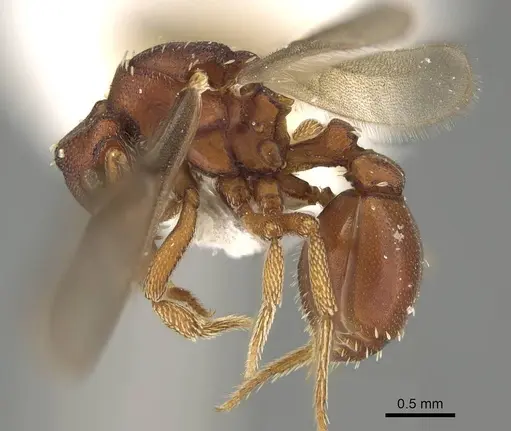
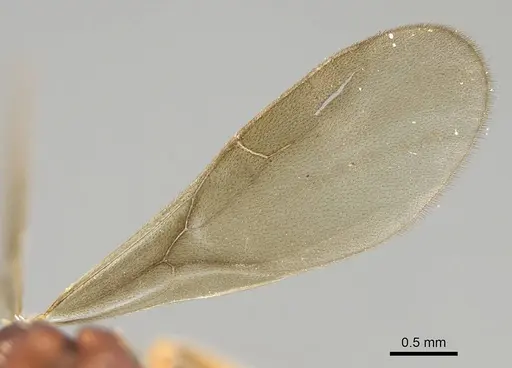
INB0003207423
View on AntWeb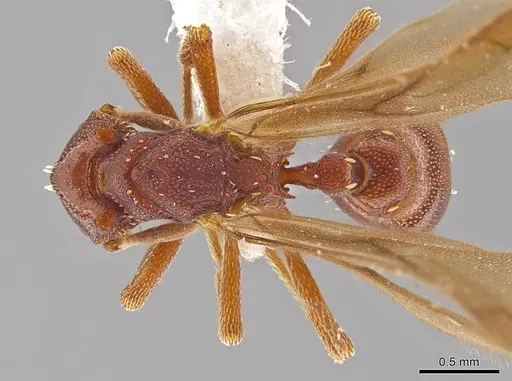
Literature
Loading...Loading products...