

Euprenolepis variegata
- Scientific Name
- Euprenolepis variegata
- Tribe
- Lasiini
- Subfamily
- Formicinae
- Author
- LaPolla, 2009
- Distribution
- Found in 2 countries
Euprenolepis variegata Overview
Euprenolepis variegata is an ant species of the genus Euprenolepis. It is primarily documented in 2 countries , including Indonesia, Malaysia. Detailed taxonomic data and occurrence records can be further explored via authoritative databases such as AntWeb or the Global Biodiversity Information Facility (GBIF).
Euprenolepis variegata
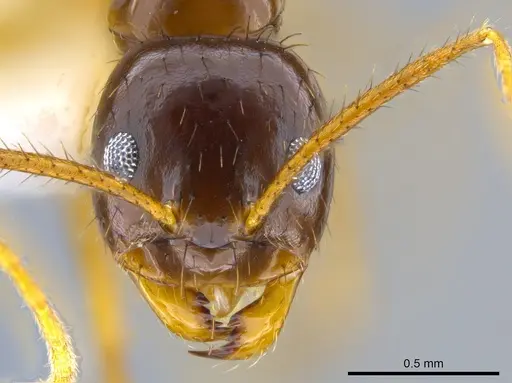
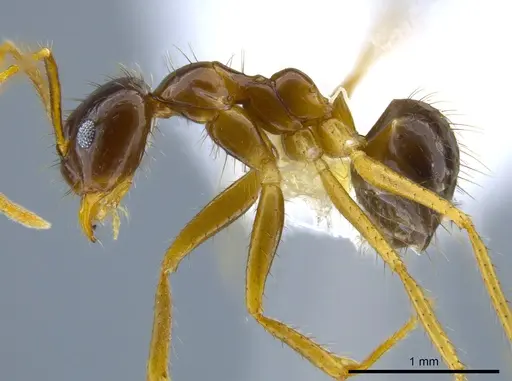
Euprenolepis variegata is a small, slender ant measuring just 3-3.4mm in total length [1]. Workers have a brown head with noticeably lighter scapes and antennae that fade to brownish-yellow, giving them a distinctive two-toned appearance [1]. The body is shiny with weakly wrinkled surface texture and scattered erect hairs across the head, mesosoma, and gaster [1]. This species is native to the rainforests of Borneo and surrounding regions in Indonesia and Malaysia, where it has been found at lowland elevations of 60-250 meters [1][2]. It was only described as a species in 2009 and is most likely to be confused with its close relative Euprenolepis wittei, from which it can be distinguished by its lighter overall coloration and longer erect hairs on the gaster [1].
Quick Summary
- Difficulty: Unknown
- Origin & Habitat: Borneo, Indonesia, and Malaysia in the Indomalaya region. Found in lowland tropical rainforests at elevations of 60-250 meters [1][2].
- Colony Type: Unconfirmed, colony structure and queen number have not been documented in scientific literature.
- Size & Growth:
- Queen: Undescribed, no queen specimens have been collected or measured [1].
- Worker: 2.98-3.36mm total length,0.77-0.82mm head width [1].
- Colony: Unknown, no colony size data exists.
- Growth: Unknown, no development or growth data available.
- Development: Unconfirmed, no direct observations of development exist. Based on related Formicinae like Lasius, estimate 6-10 weeks at optimal temperature, but this is a rough guess. (Development timeline is entirely unstudied. Any estimate for this species would be speculative.)
- Antkeeping:
- Temperature: Inferred: Keep warm in the low-to-mid 20s°C range (around 24-26°C). This species comes from tropical Borneo rainforests where temperatures are consistently warm year-round. Use a heating cable on one side of the nest to create a gentle gradient if room temperature is below this range.
- Humidity: Inferred: High humidity is likely required. Borneo rainforests are consistently humid. Keep the nest substrate moist but not waterlogged, with some drier areas available. Monitor for condensation, some moisture is beneficial but avoid standing water.
- Diapause: Unknown, no research on seasonal behavior exists. Borneo has minimal temperature variation year-round, so this species likely does not require a diapause period. However, a slight cooling period during what would be the wet season may be appropriate.
- Nesting: Inferred: Likely nests in soil or rotting wood in forest floor habitats. A Y-tong (AAC) nest or plaster nest with good moisture retention would be appropriate. The small worker size suggests narrow chambers work well. Provide a connection to an outworld with access to protein and sugar foods.
- Behavior: Behavior is essentially unstudied, no observations of aggression, foraging, or colony activity have been published [2]. Based on genus placement in Lasiini (related to Lasius), they are likely generalist foragers that accept sugar and protein. Their small size (under 4mm) means escape prevention should be taken seriously, use fine mesh and tight-fitting barriers. No information exists on stingers or defensive behavior, though Formicinae generally have reduced or absent stingers.
- Common Issues: No biological data exists, this is one of the least studied ant species in the hobby, so all care is essentially experimental., Small size makes escape likely without proper barriers, use fine mesh and check for gaps regularly., Growth rate is unknown, keepers should expect slow development and not overfeed in an attempt to speed things up., No information on acceptable foods, start with sugar water/honey and small protein sources (fruit flies, pinhead crickets) and observe what gets accepted., Humidity requirements are inferred, not confirmed, monitor colony behavior and adjust accordingly.
Species Discovery and Taxonomy
Euprenolepis variegata was only formally described as a distinct species in 2009 by John LaPolla through a comprehensive taxonomic revision of the genus Euprenolepis [1]. The species name 'variegata' comes from Latin meaning 'different' or 'varied', referring to how it was separated from its close relative Euprenolepis wittei [1]. The type specimens were collected from two locations in Borneo, Malaysia: Danum Valley at 250 meters elevation and Sepiok Forest Reserve at 60 meters elevation [1]. This species belongs to the tribe Lasiini within the subfamily Formicinae, making it related to the well-known Lasius ants [2]. The genus Euprenolepis contains only a handful of described species, all restricted to Southeast Asia.
Identification and Appearance
Workers of Euprenolepis variegata are small ants measuring 2.98-3.36mm in total length [1]. The head is brown and roughly as long as it is broad, with scapes and mandibles noticeably lighter in color, and the antennae (funiculi) are much lighter, fading to brownish-yellow [1]. The body surface is shiny with a weakly wrinkled (rugoreticulate) texture and has scattered erect hairs of varying lengths concentrated on the posterior pronotum and anterior mesonotum [1]. The scapes have scattered pubescence that becomes denser toward the tip [1]. The gaster is darker brown than the mesosoma and lacks the fine hairs (pubescence) found on other body parts [1]. The petiole is triangular and inclined forward [1]. This species is most easily confused with Euprenolepis wittei, but E. variegata is lighter overall and has longer erect hairs on the gaster [1].
Natural Distribution
Euprenolepis variegata is known from Borneo, Indonesia, and Malaysia in the Indomalaya region [2]. The only confirmed specimens come from lowland rainforest locations in Sabah, Borneo, at elevations between 60 and 250 meters [1]. One study found this species only at 10 meters from a forest edge habitat, suggesting it may have specific microhabitat preferences within the rainforest ecosystem [3]. The genus Euprenolepis is endemic to Southeast Asia, with most species found in similar tropical forest environments [1]. This distribution indicates the species is adapted to warm, humid tropical conditions year-round.
Housing and Nest Setup
Since no specific nesting information exists for this species, care must be inferred from its natural habitat and related ants. A Y-tong (AAC) nest or plaster formicarium with good moisture retention would be a reasonable starting point, as these hold humidity well and suit small ants [1]. The small worker size (under 4mm) means chambers and tunnels should be appropriately scaled, tight spaces help them feel secure. Connect the nest to an outworld that allows for foraging. Use excellent escape prevention: fine mesh over all openings and check for gaps regularly, as tiny ants can squeeze through surprisingly small spaces. The nest should have both moist areas (for humidity) and slightly drier areas (for the ants to self-regulate).
Feeding and Diet
No published information exists on what Euprenolepis variegata eats in the wild or in captivity. As a member of the tribe Lasiini (related to Lasius), it likely has a generalist diet similar to many Formicinae, accepting both sugar sources and protein. Start with sugar water or honey as a carbohydrate source, and offer small protein items like fruit flies, small crickets, or mealworms. Observe what the colony accepts and adjust accordingly. Since nothing is known about their specific dietary preferences, this species represents an opportunity for careful observation and documentation. Remove uneaten food after 24-48 hours to prevent mold.
Temperature and Humidity Requirements
Temperature and humidity requirements are not documented for this species, so care must be inferred from its origin. It comes from tropical Borneo rainforests where temperatures are warm year-round (typically 24-30°C) and humidity is high. Aim for temperatures in the low-to-mid 20s°C (around 24-26°C) as a starting point. A heating cable placed on one side of the nest can create a gentle gradient if needed. For humidity, keep the nest substrate consistently moist but not waterlogged, think damp forest floor. Some condensation on the nest is beneficial, but avoid standing water. Monitor how the colony responds and adjust: if workers cluster near moisture, increase humidity, if they avoid wet areas, allow them to dry out somewhat.
Challenges and Experimental Care
This is one of the least-studied ant species available in the antkeeping hobby. Literally nothing has been published about its biology, colony structure, founding behavior, or captive care [2]. This means keepers are essentially pioneers working with no established guidelines. Every aspect of care, from founding to feeding to overwintering, will require careful observation and experimentation. Do not expect fast growth, small ants in the tropics often develop slowly. Be patient and document your observations. The lack of information also means we don't know if this species can be kept in multi-queen colonies, whether they need hibernation, or what triggers nuptial flights. If you succeed in breeding this species, your observations could be genuinely valuable to the antkeeping community.
Frequently Asked Questions
How long does it take for Euprenolepis variegata to produce first workers?
This is unknown, no development data exists for this species. Based on related Formicinae like Lasius, expect roughly 6-10 weeks from egg to first worker at optimal temperature, but this is a rough estimate. Actual development could be faster or slower.
What do Euprenolepis variegata ants eat?
No specific dietary information exists. Based on genus placement in Lasiini, they likely accept both sugar (honey, sugar water) and protein (small insects). Start with these basics and observe what gets accepted. Remove uneaten food after 24-48 hours.
What temperature should I keep Euprenolepis variegata at?
No specific data exists. Based on their tropical Borneo origin, aim for warm conditions around 24-26°C. Use a heating cable on one side of the nest to create a gradient if room temperature is lower.
Are Euprenolepis variegata good for beginners?
No, this is actually one of the least suitable species for beginners. Literally nothing is known about their biology, care requirements, or behavior in captivity. Every aspect of keeping them is experimental. They are only suitable for experienced keepers who can carefully observe and document their colony's needs.
How big do Euprenolepis variegata colonies get?
Colony size is completely unknown, no colony size data has been published. Related species in the genus likely form moderate-sized colonies, but this is speculative.
Can I keep multiple Euprenolepis variegata queens together?
No information exists on colony structure or queen number for this species. Combining unrelated queens has not been documented and is not recommended until more is known about their natural colony structure.
Do Euprenolepis variegata need hibernation or diapause?
Unknown. Borneo has minimal seasonal temperature variation, so this species likely does not require a formal diapause. However, slight seasonal changes may be appropriate. Observe your colony's activity patterns and adjust accordingly.
What is the best nest type for Euprenolepis variegata?
No specific nesting data exists. A Y-tong (AAC) or plaster nest with good moisture retention would be appropriate for a small tropical ant. Keep chambers scaled to their tiny 3mm size.
Where does Euprenolepis variegata come from?
This species is native to Borneo, Indonesia, and Malaysia in Southeast Asia. It lives in lowland tropical rainforests at elevations of 60-250 meters.
References

This caresheet is licensed under CC BY-SA 4.0 .
CASENT0616805
View on AntWeb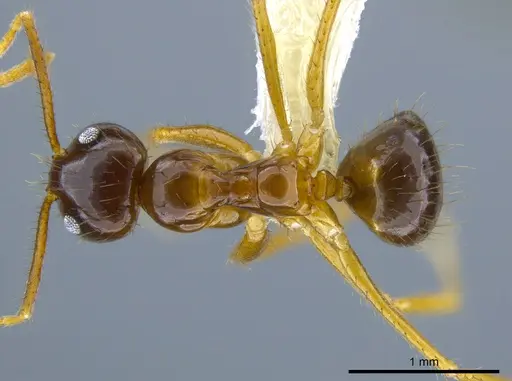
Literature
Loading...Loading products...