

Euponera maeva
- Scientific Name
- Euponera maeva
- Tribe
- Ponerini
- Subfamily
- Ponerinae
- Author
- Rakotonirina & Fisher, 2013
- Distribution
- Found in 0 countries
Euponera maeva Overview
Euponera maeva is an ant species of the genus Euponera. It is primarily documented in 0 countries . Detailed taxonomic data and occurrence records can be further explored via authoritative databases such as AntWeb or the Global Biodiversity Information Facility (GBIF).
Euponera maeva
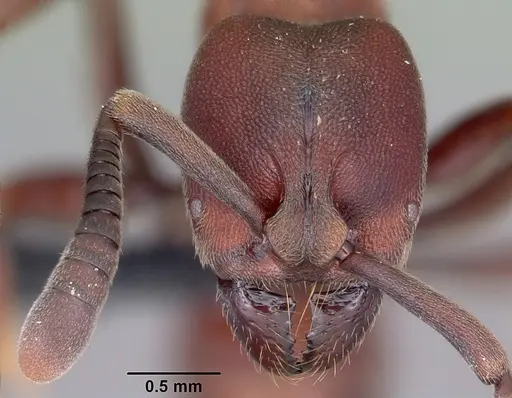
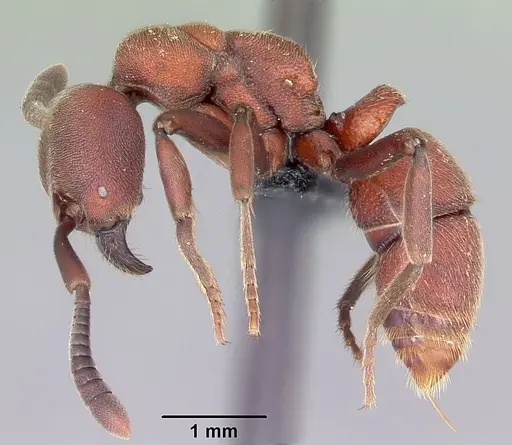
Euponera maeva is a medium-sized ant species from the Ponerinae subfamily, found only in the montane rainforests of Ranomafana National Park in southeastern Madagascar. Workers measure about 1.35mm in head width and 2mm in body length, with a distinctive rusty reddish-brown coloration and finely textured body surface. This species is known from only a single collected specimen, making it one of the rarest and least studied ants in the hobby. The worker has small, flattened eyes and short antennae, suggesting it forages in cryptic microhabitats under leaf litter and soil. As a Ponerine ant, they possess a functional stinger. [1][2][3]
Quick Summary
- Difficulty: Expert
- Origin & Habitat: Ranomafana National Park, southeastern Madagascar at 1100m elevation. Montane rainforest environment with high humidity and moderate temperatures. [1][2]
- Colony Type: Unknown, only a single worker specimen has ever been collected. Colony structure (single queen or multiple queens) has not been documented. [1]
- Size & Growth:
- Queen: Unknown, queen has never been described or collected [1]
- Worker: 1.35mm head width,2.01mm Weber's length [2]
- Colony: Unknown, no colony data exists [1]
- Growth: Unknown
- Development: Unknown, no development data exists for this species. Based on typical Ponerinae patterns, estimate 6-10 weeks at optimal temperature, but this is a rough guess. (No direct observations of colony development exist. Ponerine ants typically have slower development than many Myrmicinae species.)
- Antkeeping:
- Temperature: Aim for 22-26°C, mimicking montane rainforest conditions. Avoid high temperatures above 28°C. Room temperature in most homes should work well, but monitor for signs of stress.
- Humidity: High humidity is essential, montane rainforest environments are consistently damp. Keep nest substrate moist but not waterlogged. Provide a water tube and ensure the nest area stays humid. Consider occasional misting of the outworld.
- Diapause: Unknown, no research on seasonal behavior exists. Madagascar has mild seasons, so they may not require a true hibernation. A slight cooling period during winter months may be beneficial, but this is speculative.
- Nesting: Natural nesting occurs in leaf litter and likely shallow soil. In captivity, a Y-tong or plaster nest with good moisture retention works well. Keep the nest humid and provide a moisture gradient so ants can choose their preferred zone. Avoid dry, airy setups.
- Behavior: Behavior is unstudied in captivity. Based on related Ponerinae species and their morphology (small eyes, short antennae), they are likely cryptic foragers that hunt small prey in leaf litter and soil. They probably have moderate aggression and will sting if threatened. Escape risk is moderate, medium-sized ants need standard barriers but are not particularly escape-prone.
- Common Issues: extreme rarity makes this species nearly impossible to obtain, only one wild specimen has ever been collected, completely unknown biology means no established care guidelines exist, you would be pioneering all aspects of husbandry, no documented diet preferences, you will need to experiment with various protein and sugar sources, risk of keeping a species with no captive history, all advice is speculative and may not result in colony success, potential stress from captive conditions since wild-caught colonies do not exist for comparison
Rarity and Collection History
Euponera maeva is an extraordinarily rare species known from only a single worker specimen collected in Ranomafana National Park, Madagascar. The holotype was collected in 2003 from leaf litter at 1100m elevation in montane rainforest. This means virtually nothing is known about their biology, colony structure, or behavior in the wild. No queens, no colonies, and no additional workers have ever been documented. For antkeepers, this presents a unique challenge: there is no established care guide, no captive colony history, and no way to verify if your husbandry is correct. You would essentially be pioneering the captive care of a species that exists only as a single preserved specimen in a museum. [1][2]
Natural Habitat and Environment
This species is endemic to the montane rainforests of Ranomafana National Park in southeastern Madagascar. The environment at 1100m elevation features high humidity, moderate temperatures, and dense leaf litter. The single known specimen was collected by sifting through leaf mold and rotten wood, this suggests the workers are cryptic foragers that spend most of their time under cover, perhaps hunting in the soil layers or deep litter. The worker's morphology supports this: small, flattened eyes and short antennal scapes are adaptations for navigating confined spaces rather than open terrain. When keeping this species, you should replicate these conditions with high humidity, plenty of cover in the outworld, and a moist nest environment. [2]
Housing and Nest Setup
Given the unknown biology, you should use a setup that maximizes your ability to observe and adjust conditions. A Y-tong (acrylic) or plaster nest with a built-in water reservoir works well for maintaining humidity. The nest chambers should be appropriately sized for medium-sized ants, roughly 2mm body length means chambers 3-5mm work well. Provide a moisture gradient by keeping one side of the nest slightly damper than the other, allowing the ants to self-regulate. The outworld should have hiding places and ground cover (like small stones or leaf litter) to simulate their natural leaf-litter environment. Use standard escape prevention, these are not tiny ants, so standard barriers should suffice. Keep temperatures stable in the 22-26°C range.
Feeding and Diet
As a Ponerinae ant, Euponera maeva is likely predatory or omnivorous, similar to most ants in this subfamily. Without any direct observations of their diet, you can only make educated guesses based on related species. Start by offering small live prey like fruit flies, pinhead crickets, or small mealworms. You might also try sugar water or honey as a carbohydrate source, many Ponerinae will accept it, though some are strictly predatory. Given their cryptic forager lifestyle, they may prefer hunting live prey over scavenging. Offer protein 2-3 times per week and keep a sugar source available. Watch carefully to see what they accept, and adjust accordingly. Document your observations, any captive colony would contribute enormously to scientific knowledge.
Challenges of Keeping Poorly Studied Species
Keeping Euponera maeva presents unique challenges that go beyond typical antkeeping. With no captive history, no described queen, and no colony data, every aspect of husbandry is speculative. You will not be following an established caresheet, you will be creating one. This requires patience, careful observation, and a willingness to experiment. Be prepared for the possibility that colonies may not thrive despite your best efforts. The species may have very specific requirements that we simply do not know. If you do succeed in maintaining a colony, your observations would be scientifically valuable. Consider documenting your setup, feeding experiments, and colony behavior to contribute to what is currently an almost complete knowledge gap.
Frequently Asked Questions
Is Euponera maeva available for purchase in the antkeeping hobby?
No, this species is essentially unavailable. Only a single worker has ever been collected in the wild, and no colonies exist in captivity. It is extremely unlikely you will find this species for sale. [1]
How do I care for Euponera maeva when there is no care guide?
You would need to infer care requirements from related Ponerinae species and their natural habitat. Keep them humid (70-80%), at moderate temperatures (22-26°C), and offer small live prey. Expect to experiment, no established protocol exists. Document your observations carefully.
What does Euponera maeva look like?
Workers are medium-sized at about 2mm body length with a rusty reddish-brown coloration. They have a finely textured (reticulate-punctate) body surface, small flattened eyes, and short antennae that do not reach the back of the head. The petiole (the narrow 'waist' segment) is flattened front-to-back with a notch visible from above. [2][1]
Where does Euponera maeva live in the wild?
They are only known from Ranomafana National Park in southeastern Madagascar, at 1100m elevation in montane rainforest. The single known specimen was collected from leaf litter. [1][2]
How big do Euponera maeva colonies get?
Unknown, no colony size data exists. The largest Ponerinae colonies can reach hundreds to thousands of workers, but we have no information specific to this species. [1]
What do Euponera maeva eat?
Unconfirmed, but based on related Ponerinae species, they are likely predatory on small invertebrates. Offer small live prey like fruit flies, springtails, or tiny crickets. They may also accept sugar sources.
Do Euponera maeva need hibernation?
Unknown, no research on their seasonal behavior exists. Madagascar has mild seasons, so they may not require a true hibernation. A slight cooling during winter months might be appropriate, but this is speculative.
Is Euponera maeva a good species for beginners?
No. This is an expert-level species even by advanced standards because absolutely no captive care information exists. You would be pioneering all aspects of their husbandry with no established guidelines to follow.
Can I keep multiple Euponera maeva queens together?
Unknown, the colony structure has never been documented. We do not even know if the species is single-queen or multi-queen. Without any data, combining queens is not recommended. [1]
How long does it take for Euponera maeva to develop from egg to worker?
Unknown, no development data exists for this species. Based on typical Ponerinae development, estimate 6-10 weeks at optimal temperature, but this is a rough guess with no direct evidence.
Why is Euponera maeva so rarely collected?
They appear to be genuinely rare in the wild, possibly with small, localized populations. Their cryptic lifestyle (foraging under leaf litter and soil) also makes them difficult to find. The montane rainforest of Ranomafana is also a remote area that has received limited ant surveys. [1][2]
References

This caresheet is licensed under CC BY-SA 4.0 .
CASENT0034340
View on AntWeb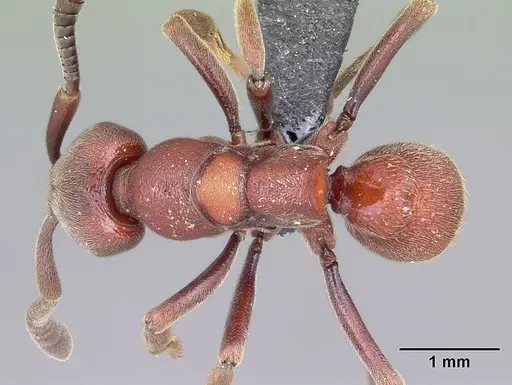
Literature
Loading...Loading products...