

Epopostruma areosylva
- Scientific Name
- Epopostruma areosylva
- Tribe
- Attini
- Subfamily
- Myrmicinae
- Author
- Shattuck, 2000
- Distribution
- Found in 1 countries
Epopostruma areosylva Overview
Epopostruma areosylva is an ant species of the genus Epopostruma. It is primarily documented in 1 countries , including Australia. Detailed taxonomic data and occurrence records can be further explored via authoritative databases such as AntWeb or the Global Biodiversity Information Facility (GBIF).
Epopostruma areosylva
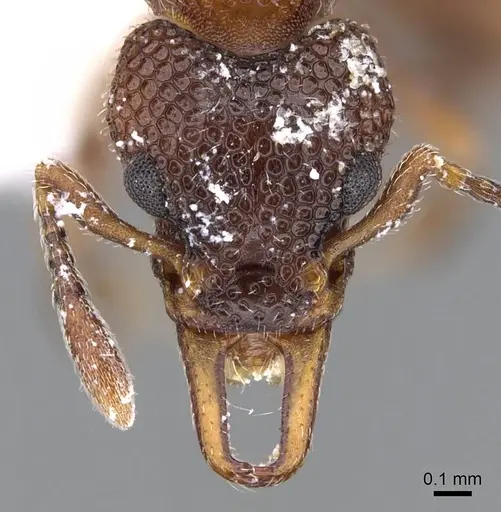
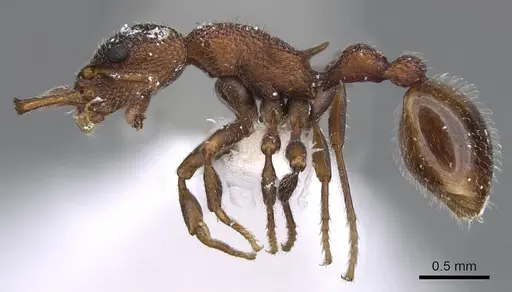
Epopostruma areosylva is a small Australian ant measuring around 3.9mm in total length [1]. Workers have a distinctive appearance with a yellow-red to red-brown body, a darker dorsal surface on the head, and may display a dark band across the posterior section of the first gastral tergite [1]. This species belongs to the tribe Attini, which includes leaf-cutter ants and their relatives, though Epopostruma are not leaf-cutters themselves. They are characterized by several morphological features including pronotal spines, petiolar spines, and distinctive postpetiole spines with the posterolateral teeth wider than the anterolateral teeth in dorsal view [1]. The species was described by Shattuck in 2000 and is found only in eastern Australia.
Quick Summary
- Difficulty: Unknown, limited captive care data available
- Origin & Habitat: Eastern Australia, from south-eastern Queensland to central New South Wales. Found in dry sclerophyll forests, open grasslands, and Eucalyptus forests [1].
- Colony Type: Unconfirmed, colony structure has not been documented in scientific literature
- Size & Growth:
- Queen: Unknown, queen measurements not documented
- Worker: Approximately 3.9mm total length [1]
- Colony: Unknown, no colony size data available
- Growth: Unknown
- Development: Unknown, no development data available for this species (Related Attini species typically develop in 6-10 weeks at optimal temperatures, but this is an estimate for E. areosylva)
- Antkeeping:
- Temperature: Likely comfortable at room temperature (20-24°C) based on Australian temperate climate. Provide a gentle thermal gradient if possible.
- Humidity: Moderate humidity preferred, reflecting their dry sclerophyll and grassland habitat. Keep nest substrate slightly moist but not waterlogged.
- Diapause: Unknown, likely experiences cooler winter period given Australian temperate distribution, but specific diapause requirements unstudied
- Nesting: Natural nesting habits unconfirmed. Likely nests in soil or under stones in captivity based on genus typical behavior. Test tubes or small acrylic nests would be appropriate starting setups.
- Behavior: Behavior is poorly documented. Based on genus typical patterns, they are likely ground-nesting ants that forage on the forest floor. Escape risk is moderate given their small size, use standard barrier methods. Stinging capability is unknown but likely minimal given their small size.
- Common Issues: limited species-specific care information makes proper husbandry challenging, growth and development timelines are unknown, making colony management difficult, wild-caught colonies may have parasites or diseases not yet documented, their small size requires attention to escape prevention, dietary requirements are not well documented for captive care
Appearance and Identification
Epopostruma areosylva workers are small ants measuring approximately 3.9mm in total length [1]. Their body coloration ranges from yellow-red to red-brown, with the dorsal surface of the head typically darker than the rest of the body [1]. The gaster may be uniform in color or have a distinctive dark band across the posterior section of the first tergite. Several morphological features help distinguish this species: pronotal spines are present and distinct, petiolar spines are present, and the postpetiole has distinctive spines with the posterolateral teeth wider than the anterolateral teeth when viewed from above [1]. The first gastral tergite is smooth or nearly smooth, with at most very weak and widely spaced rugae. The dorsum of the petiole, postpetiole, and gaster bear numerous elongate erect hairs, many of which bend near their tips.
Natural Distribution and Habitat
This species is endemic to eastern Australia, with a distribution spanning from south-eastern Queensland south to central New South Wales [1][2]. Collections have been made in three primary habitat types: dry sclerophyll forests, open grasslands, and Eucalyptus forests [1]. This distribution pattern suggests the species is adapted to temperate Australian conditions with relatively dry to moderately moist environments. The species was described in 2000 by Shattuck and remains poorly studied in terms of its ecological requirements and behavior.
Housing and Nesting
Since specific captive care information is not available for this species, recommendations must be based on typical Attini genus behavior and the species' natural habitat. Given their collection from dry sclerophyll and grassland habitats, they likely prefer moderate humidity with good ventilation. A test tube setup serves as an excellent starting point for founding colonies, with the ability to upgrade to a small acrylic or plaster nest as the colony grows. The small size of workers (3.9mm) means chambers should be appropriately scaled. Ensure escape prevention is adequate, as small ants can squeeze through tiny gaps.
Feeding and Diet
The dietary requirements of Epopostruma areosylva have not been documented in scientific literature. As members of the tribe Attini, they may have dietary preferences similar to other Attini ants, which typically include fungal cultivation or foraging for small insects and honeydew. In captivity, offer a varied diet including small live prey such as fruit flies or pinhead crickets, and sugar sources like honey water or sugar water. Start with small quantities and observe acceptance. Given the lack of species-specific data, be prepared to experiment with different food items.
Temperature and Seasonal Care
The specific temperature requirements for this species are unstudied. Based on their distribution in temperate eastern Australia (Queensland to New South Wales), they likely tolerate temperatures ranging from approximately 15-28°C. Room temperature (20-24°C) is likely suitable for keeping this species. A thermal gradient allows ants to self-regulate their temperature preferences. Regarding seasonal care, the need for hibernation or winter cooling is unknown but likely experiences cooler winters given the temperate distribution. If keeping them in a temperate climate, a slight reduction in temperature during winter months may be appropriate.
Frequently Asked Questions
How long does it take for Epopostruma areosylva to develop from egg to worker?
The development timeline for this species has not been documented. Based on typical Attini genus patterns, development likely takes 6-10 weeks at optimal temperature, but this is an estimate rather than confirmed data.
What do Epopostruma areosylva ants eat?
Their specific diet is unconfirmed. Based on Attini tribe typical behavior, they likely accept small live prey (fruit flies, pinhead crickets) and sugar sources (honey water, sugar water). Start with varied offerings and observe what they accept.
Are Epopostruma areosylva good for beginners?
This species is not recommended for beginners due to the lack of documented captive care information. Without established care protocols, keeping this species successfully requires significant experience with ant keeping and willingness to experiment.
How big do Epopostruma areosylva colonies get?
Maximum colony size is unknown, no scientific data documents colony size for this species.
Can I keep multiple queens together?
Colony structure (monogyne vs polygyne) has not been documented for this species. Without data on their natural colony structure, combining queens is not recommended.
What temperature should I keep Epopostruma areosylva at?
Specific requirements are unknown, but room temperature (20-24°C) is likely appropriate based on their temperate Australian distribution. A thermal gradient allows self-regulation.
Do Epopostruma areosylva need hibernation?
Diapause requirements are unconfirmed. Given their distribution in temperate eastern Australia, they likely experience cooler winter conditions, but specific hibernation protocols have not been studied.
When should I move my colony to a formicarium?
No specific guidance exists for this species. As a general rule for small Myrmicinae, wait until the colony reaches 20-30 workers before considering a formicarium upgrade, ensuring the new setup has appropriately sized chambers.
Is Epopostruma areosylva a difficult species to keep?
Difficulty level cannot be accurately assessed due to lack of captive care data. The primary challenge is the absence of established husbandry protocols, requiring keepers to develop care methods through experimentation.
References

This caresheet is licensed under CC BY-SA 4.0 .
CASENT0914667
View on AntWeb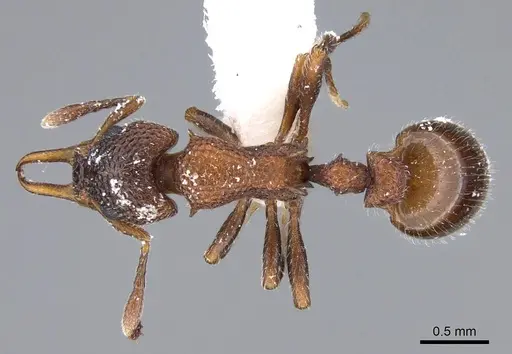
Literature
Loading...Loading products...