

Ectomomyrmex striolatus
- Scientific Name
- Ectomomyrmex striolatus
- Tribe
- Ponerini
- Subfamily
- Ponerinae
- Author
- Donisthorpe, 1933
- Distribution
- Found in 1 countries
Ectomomyrmex striolatus Overview
Ectomomyrmex striolatus is an ant species of the genus Ectomomyrmex. It is primarily documented in 1 countries , including India. Detailed taxonomic data and occurrence records can be further explored via authoritative databases such as AntWeb or the Global Biodiversity Information Facility (GBIF).
Ectomomyrmex striolatus
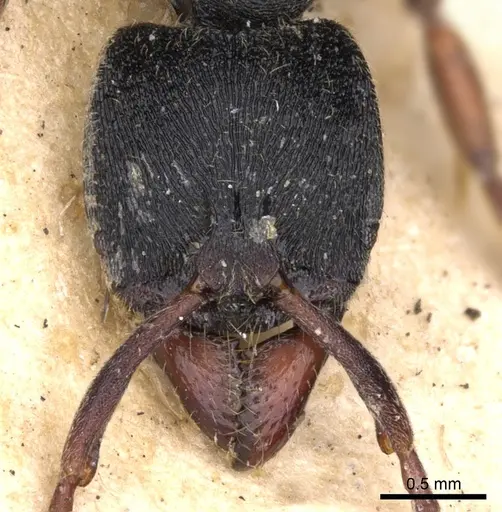
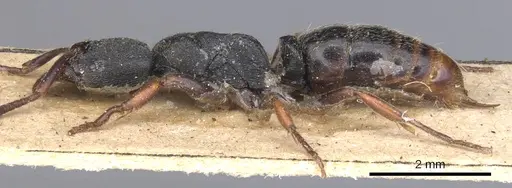
Ectomomyrmex striolatus is a medium-sized predatory ant native to South and Southeast Asia. Workers measure about 7.3mm and have a distinctive appearance, they're mostly black with red on their mandibles, antennae, leg tips, and the tip of the abdomen. Their body is covered in fine striations (grooves), giving them a textured look. These ants belong to the Ponerinae subfamily, known for their powerful stings and predatory lifestyle. They nest in soil or under stones in forested areas across India, Nepal, and surrounding regions [1][2].
Unlike many common house ants, Ectomomyrmex striolatus is a specialized predator that hunts live prey. Their colony sizes stay relatively modest compared to supercolonies like Argentine ants, typically reaching a few hundred workers at most. They have a potent sting for defense, which makes them effective hunters but also means they should be handled with care.
Quick Summary
- Difficulty: Medium
- Origin & Habitat: Native to the Indomalaya region, specifically found across India (Arunachal Pradesh, Assam, Karnataka, Kerala, Meghalaya, Sikkim, Tripura, West Bengal) and recently recorded in Nepal. They live in forested areas and nest in soil or under stones at various elevations [2][3].
- Colony Type: Likely monogyne (single queen colonies) based on typical Ponerinae patterns. Colony sizes remain modest, typically under 200-300 workers.
- Colony: Monogyne
- Founding: Semi-claustral
- Size & Growth:
- Queen: Unconfirmed size, estimated 9-12mm based on genus patterns
- Worker: 7.3mm [1]
- Colony: Likely 100-300 workers based on typical Ponerinae colony sizes
- Growth: Moderate
- Development: Estimated 6-10 weeks at optimal temperature based on related Ponerinae species (Ponerine ants typically have slower development than many common ants. First workers (nanitics) are smaller than normal workers.)
- Antkeeping:
- Temperature: Keep at 24-28°C. These are tropical ants that prefer warm conditions. A heating cable on one side of the nest creates a gradient for them to regulate their temperature [4].
- Humidity: High humidity (60-80%). Ponerine ants come from humid forest environments. Keep the nest substrate consistently moist but not waterlogged.
- Diapause: No, being tropical, they do not require hibernation. However, they may slow down slightly during cooler months.
- Nesting: They naturally nest in soil or under stones. In captivity, a naturalistic setup with moist substrate or a Y-tong/plaster nest works well. They prefer dark, humid nest chambers.
- Behavior: Ectomomyrmex striolatus is a predatory ant with an active hunting style. Workers are aggressive when defending the colony and have a functional sting. They are medium-active foragers that hunt individually for prey. Escape prevention is important, while not tiny ants, they can squeeze through small gaps. They are most active in warm, humid conditions.
- Common Issues: colonies often fail when kept too dry, these ants need consistent humidity, slow growth can frustrate beginners who overfeed or disturb the nest, wild-caught colonies may have parasites that kill them in captivity, their sting is painful, handle with care and use proper protection, test tube setups can flood if water reservoirs are too large, drowning the colony
Housing and Nest Setup
Ectomomyrmex striolatus does well in naturalistic setups with moist substrate or in Y-tong/plaster nests designed for Ponerine ants. They prefer dark, humid nest chambers and will do poorly in bright, dry environments. A nest with chambers roughly 5-10mm tall works well for their 7mm workers. Because they are predatory, include an outworld area where they can hunt and dispose of prey remains. Use a water tube or moist cotton for humidity, but avoid flooding. Escape prevention should be good, while not tiny, they are active and can find gaps. Apply fluon or use tight-fitting lids on all connections. [4]
Feeding and Diet
These ants are obligate predators that require live prey. Feed them small insects like fruit flies, small crickets, mealworms, and other appropriately-sized invertebrates. They typically accept most small arthropods. Unlike some ants, they are unlikely to accept sugar water or honey as a primary food source, protein from prey is essential for brood development. Feed every 2-3 days, removing uneaten prey to prevent mold. A varied diet of different prey types helps ensure proper nutrition. [4]
Temperature and Seasonal Care
Keep your colony at 24-28°C for optimal growth and activity. Being tropical ants, they do not require hibernation or diapause. During cooler months (winter), they may naturally slow down, this is normal and you can reduce feeding frequency. However, avoid letting temperatures drop below 20°C for extended periods. A small heating cable on part of the nest creates a temperature gradient that lets ants regulate their own temperature. Monitor colony behavior, if workers cluster near heat, increase slightly, if they avoid heated areas, reduce heat. [4]
Behavior and Temperament
Ectomomyrmex striolatus has an active, predatory foraging style. Workers hunt individually rather than in groups, using their sting to subdue prey. They are defensive of their colony and will sting if threatened. The sting is painful (Ponerine ants are known for this), so handle carefully and avoid disturbing the nest. Workers are medium-sized and relatively robust, not particularly fragile but also not aggressive toward humans unless provoked. They are most active when warm and humid, and will reduce activity in cooler or drier conditions. [4]
Colony Development
Ponerine colonies typically grow more slowly than common ants like Tetramorium or Camponotus. Expect 6-10 weeks from egg to first worker at optimal temperature. The first workers (nanitics) will be smaller than normal workers and may take time to develop. Colony growth is moderate, don't expect rapid expansion. A mature colony may reach 100-300 workers over several years. The queen is long-lived and colonies can persist for many years with proper care. Avoid disturbing the queen during the founding stage, stress can cause queen death. [4]
Frequently Asked Questions
How long does it take for Ectomomyrmex striolatus to produce first workers?
Expect 6-10 weeks from egg to first worker at optimal temperature (24-28°C). This is slower than many common ants. The first workers will be smaller (nanitics) and the colony will grow gradually from there.
What do Ectomomyrmex striolatus eat?
They are predatory ants that need live prey. Feed them small insects like fruit flies, small crickets, mealworms, and other invertebrates. They are unlikely to accept sugar water or honey as primary food.
Are Ectomomyrmex striolatus good for beginners?
They are rated as medium difficulty. They require more specific care (high humidity, live prey) than some beginner species. They are not the hardest ant to keep but require more attention to humidity and temperature than hardy species like Lasius or Tetramorium.
How big do Ectomomyrmex striolatus colonies get?
Colony sizes remain modest, likely 100-300 workers at maturity. They grow more slowly than many common ants and never reach the massive sizes of species like Argentine ants.
Do Ectomomyrmex striolatus need hibernation?
No, they are tropical ants and do not require hibernation. They may slow down slightly during cooler months, but this is not a true diapause. Keep them warm year-round.
Can I keep multiple Ectomomyrmex striolatus queens together?
This has not been documented. Based on typical Ponerinae behavior, they likely form single-queen colonies. Combining unrelated queens is not recommended without evidence they will accept each other.
What temperature should I keep Ectomomyrmex striolatus at?
Keep them at 24-28°C. They are tropical ants that prefer warm conditions. A slight temperature gradient allows them to regulate their own temperature.
When should I move Ectomomyrmex striolatus to a formicarium?
Wait until the colony has at least 20-30 workers and the test tube is becoming crowded. Ponerine ants prefer stable, dark conditions so avoid moving them unnecessarily. When moving, connect the test tube to the formicarium and let them move on their own.
Why is my Ectomomyrmex striolatus colony dying?
The most common causes are: too low humidity (keep substrate consistently moist), too cold (below 20°C), poor nutrition (they need live prey, not sugar), or stress from disturbance. Check these factors and adjust accordingly.
References

This caresheet is licensed under CC BY-SA 4.0 .
CASENT0902490
View on AntWeb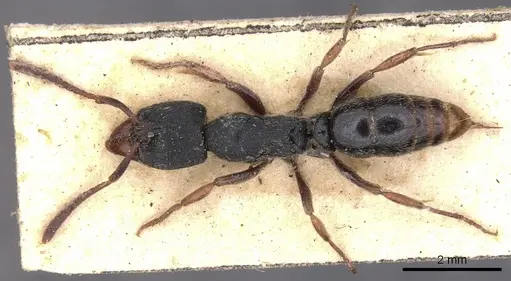
Literature
Loading...Loading products...