

Ectomomyrmex annamitus
- Scientific Name
- Ectomomyrmex annamitus
- Tribe
- Ponerini
- Subfamily
- Ponerinae
- Author
- André, 1892
- Distribution
- Found in 2 countries
Ectomomyrmex annamitus Overview
Ectomomyrmex annamitus is an ant species of the genus Ectomomyrmex. It is primarily documented in 2 countries , including China, India. Detailed taxonomic data and occurrence records can be further explored via authoritative databases such as AntWeb or the Global Biodiversity Information Facility (GBIF).
Ectomomyrmex annamitus
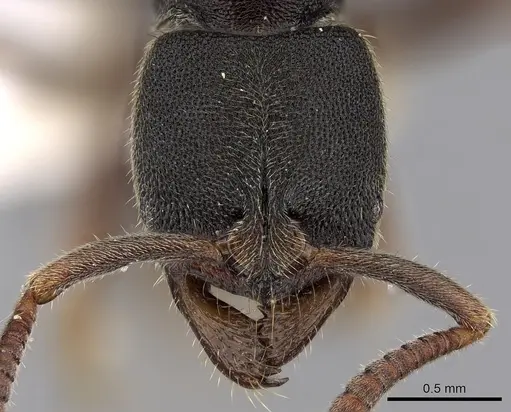
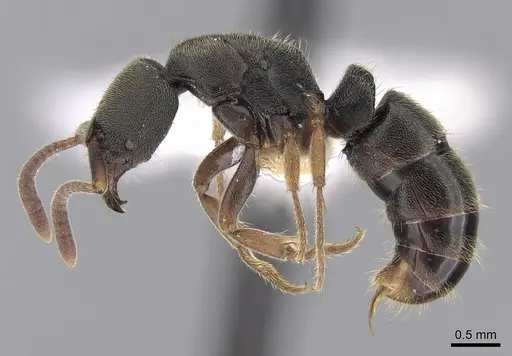
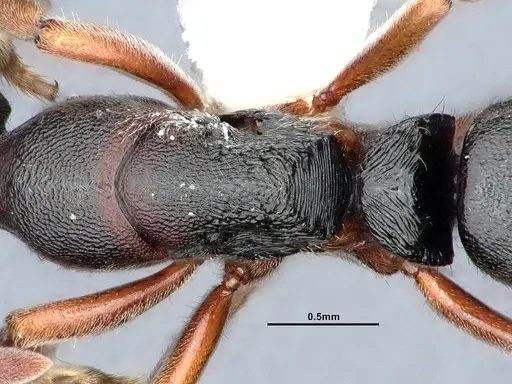
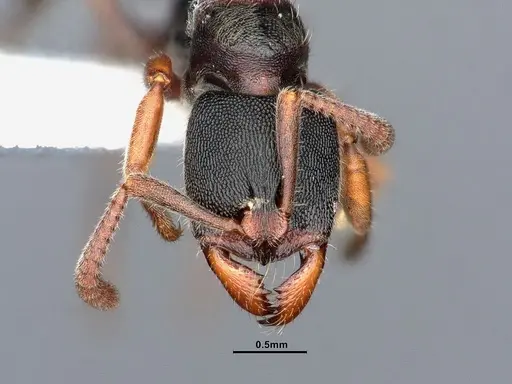
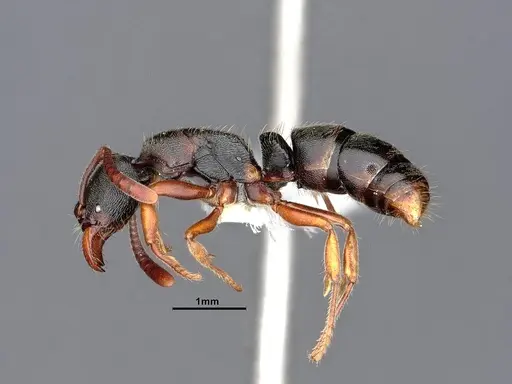
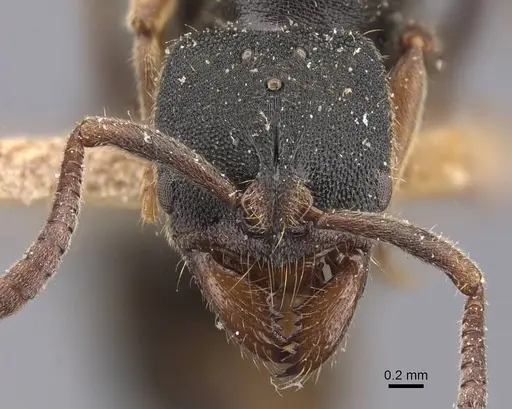
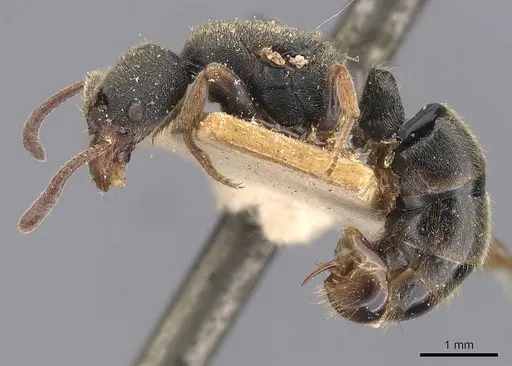
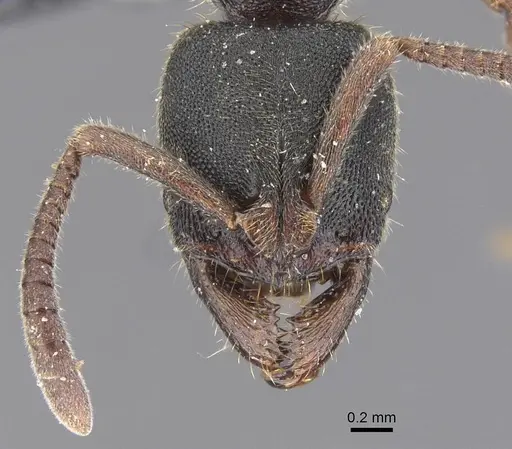
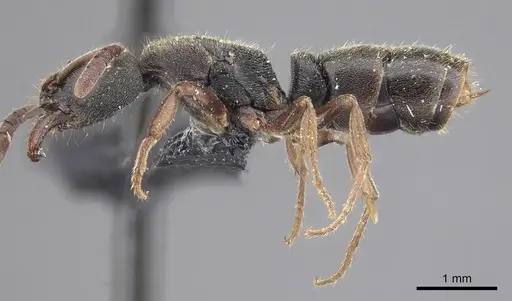
Ectomomyrmex annamitus is a medium-sized predatory ant belonging to the subfamily Ponerinae. Workers measure 3-6mm and have a distinctive appearance: primarily black with reddish-brown mandibles, antennae, legs, and the tip of the abdomen. Their body is covered in fairly abundant erect pale red hairs and a fine silky pubescence that shows up only in certain light. The head is more elongated than related species, and the petiole (the segment connecting the thorax and abdomen) is thick and coarsely ridged. Queens are larger at 6.3mm with a truncated head and depressed thorax. This species ranges across South and Southeast Asia, including India, Myanmar, Vietnam, the Philippines, and southern China. They inhabit well-developed forests and forested areas, nesting in rotting logs, under stones, and in soil. A notable behavior is thanatosis, workers play dead when disturbed, curling up and remaining motionless to avoid predators.
Quick Summary
- Difficulty: Medium
- Origin & Habitat: Found across the Indomalaya region (India, Myanmar, Philippines, Vietnam) and into southern China. They inhabit well-developed forests and forested settings, typically nesting in rotting logs, wood fragments, under stones, and in soil [1]. They are absent from rubber plantations but present in both primary and secondary forest (17 regions each) [2].
- Colony Type: Colony structure is unconfirmed. Like many Ponerinae, they likely form single-queen colonies, but this has not been directly documented.
- Size & Growth:
- Queen: 6.3mm [3]
- Worker: 3-6mm [3]
- Colony: Unknown, no colony size data available
- Growth: Moderate, inferred from typical Ponerinae development patterns
- Development: 6-10 weeks, estimated based on typical Ponerinae development at warm temperatures (Development time is estimated rather than directly studied. Ponerinae ants typically develop faster than larger formicines at optimal temperatures.)
- Antkeeping:
- Temperature: Keep at 22-26°C. This range is inferred from their tropical/subtropical distribution and typical Ponerinae preferences. Room temperature within this range works well, or use a heating cable on one side of the nest to create a gentle gradient.
- Humidity: Moderate to high. They naturally nest in rotting wood and soil in forested areas, so keep the nest substrate moist but not waterlogged. Provide a gradient with slightly drier areas available.
- Diapause: Unknown, no specific data on winter dormancy. Based on their range spanning tropical to subtropical areas, they likely have reduced activity in cooler months but may not require true hibernation. Keep cooler (15-18°C) during winter if colony shows reduced activity.
- Nesting: They naturally nest in rotting logs, wood fragments, under stones, and in soil. In captivity, a naturalistic setup with rotting wood or a Y-tong/plaster nest works well. They prefer tight, enclosed chambers that mimic their natural nesting sites in decaying wood and soil cavities.
- Behavior: Ectomomyrmex annamitus is a generalist predator that hunts arthropods both above and below ground. Workers exhibit thanatosis, they curl up and play dead when disturbed, which is a defensive adaptation. They are not aggressive toward keepers but will sting if handled roughly. Their sting is functional and can penetrate human skin, causing mild to moderate pain. Escape prevention should be good but is not as critical as for tiny ants, they are medium-sized (3-6mm) and less likely to escape through standard barriers. They are active foragers that search for prey both on the surface and in shallow substrate.
- Common Issues: colonies may fail if kept too dry, they prefer moist nesting environments like their natural rotting wood habitat, stress from handling causes workers to play dead, but they recover in quiet conditions, slow founding phase, Ponerine queens often take longer to raise first workers than claustral species, wild-caught colonies may have parasites that require treatment, predatory diet means they need consistent live prey, sugar alone is insufficient
Housing and Nest Setup
Ectomomyrmex annamitus does well in naturalistic setups that mimic their forest floor habitat. Use a mix of soil and rotting wood pieces, or provide a Y-tong/plaster nest with moisture chambers. They prefer tight, enclosed spaces rather than open areas. A small outworld for foraging works well. Since they nest in rotting logs in the wild, adding small pieces of decaying wood to the setup helps them feel at home. Keep the nest area humid, these ants naturally live in moist, shaded forest environments. [1]
Feeding and Diet
This species is a generalist arthropod predator. Feed small live prey like fruit flies, small crickets, mealworms, and other tiny insects. They hunt both on the surface and in shallow underground chambers, so place prey where they can find it. Unlike some ants, they are primarily predatory and unlikely to accept sugar water as a primary food source. Offer protein prey 2-3 times per week, removing uneaten prey within 24 hours to prevent mold. Some keepers report success with very small pieces of raw meat or fish as supplementary protein. [1]
Temperature and Seasonal Care
Maintain temperatures between 22-26°C. This species comes from tropical and subtropical regions, so warmth supports their activity and brood development. Room temperature in most homes is suitable, or use a heating cable on part of the nest if your room runs cool. During winter months, reducing temperature to 15-18°C may be appropriate if the colony shows reduced activity, but true hibernation is not documented. Avoid temperatures below 15°C or above 30°C. They tolerate brief temperature fluctuations but prefer stability.
Behavior and Handling
Workers exhibit thanatosis, a defensive behavior where they curl up and remain motionless when threatened or disturbed. This is not a sign of death, they recover when left alone in quiet conditions. They are not particularly aggressive but possess a functional stinger that can penetrate human skin. The sting causes mild to moderate pain, similar to a bee sting. Handle them gently and avoid provoking them. They are active foragers and will hunt prey in the outworld. Colonies are not known to be escape artists, but standard barrier methods still help. [1]
Colony Founding
Direct observations of colony founding are not documented in available literature. Like other Ponerinae, the queen likely uses a semi-claustrl founding method where she must leave the nest periodically to hunt for food to sustain herself and her brood. This is more challenging than claustral species (queens that seal themselves in and live off stored fat). If you obtain a founding queen, provide a small hunting area with access to tiny prey. Expect the founding phase to take longer than claustral ants, possibly several months before the first workers emerge.
Frequently Asked Questions
How long does it take for Ectomomyrmex annamitus to raise first workers?
The exact timeline is not documented, but based on typical Ponerinae development, expect 6-10 weeks from egg to first worker at optimal temperature (22-26°C). The founding phase may be longer than claustral ants since the queen likely needs to hunt for food during founding.
What do Ectomomyrmex annamitus eat?
They are generalist arthropod predators. Feed small live prey like fruit flies, small crickets, mealworms, and other tiny insects. They are unlikely to accept sugar water as a primary food source, protein from prey is essential.
Can I keep Ectomomyrmex annamitus in a test tube?
Test tubes can work for founding colonies, but they prefer more naturalistic setups with rotting wood or soil. If using test tubes, ensure good humidity and provide access to a small foraging area with prey. A Y-tong or plaster nest with moisture chambers is a better long-term option.
Are Ectomomyrmex annamitus good for beginners?
They are rated Medium difficulty. They require more attention to humidity and a consistent protein diet compared to simpler species. Their semi-claustral (likely) founding phase is more challenging than claustral ants. They are best suited for keepers with some antkeeping experience.
What temperature do Ectomomyrmex annamitus need?
Keep them at 22-26°C. This range supports their activity and brood development. Room temperature in most homes works well, or use a heating cable on one side of the nest to create a gentle gradient.
Do Ectomomyrmex annamitus need hibernation?
True hibernation requirements are unknown. Based on their tropical/subtropical range, they likely do not require a cold dormancy. If colony activity slows in winter, reducing to 15-18°C is appropriate, but deep hibernation is not necessary.
Why do my Ectomomyrmex annamitus workers play dead?
This is normal behavior called thanatosis. When threatened, workers curl up and remain motionless as a defensive strategy. They recover on their own when left in quiet conditions, do not disturb them while they are exhibiting this behavior.
How big do Ectomomyrmex annamitus colonies get?
Colony size data is not available in the literature. Based on their medium worker size and typical Ponerinae patterns, colonies likely reach several hundred workers. Growth is moderate, not extremely fast.
Can I keep multiple queens together?
Colony structure is not well documented for this species. Combining unrelated queens is not recommended since we don't know if they accept multiple foundresses. If you obtain multiple queens, house them separately until you determine colony structure.
References

This caresheet is licensed under CC BY-SA 4.0 .
CASENT0281894
View on AntWeb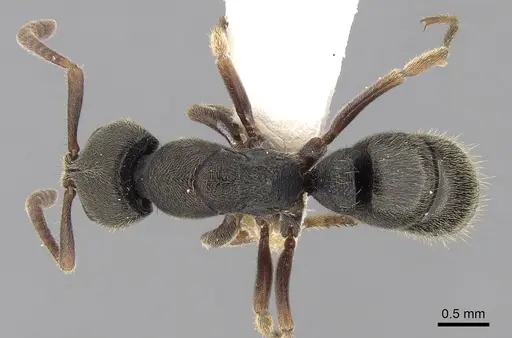
CASENT0863371
View on AntWeb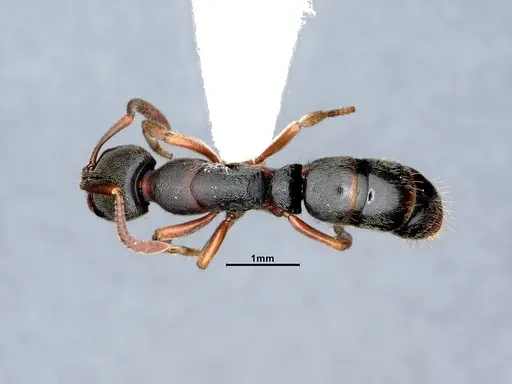
CASENT0907268
View on AntWeb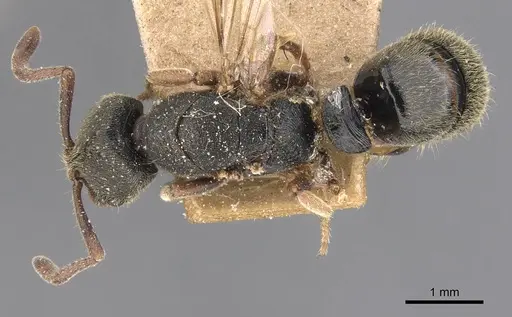
CASENT0915468
View on AntWeb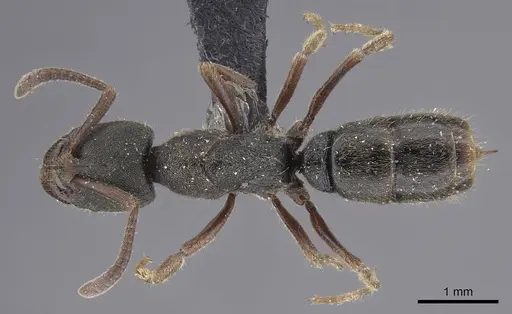
Literature
Loading...Loading products...