

Ectatomma lugens
- Scientific Name
- Ectatomma lugens
- Tribe
- Ectatommini
- Subfamily
- Ectatomminae
- Author
- Emery, 1894
- Distribution
- Found in 7 countries
Ectatomma lugens Overview
Ectatomma lugens is an ant species of the genus Ectatomma. It is primarily documented in 7 countries , including Brazil, Colombia, Ecuador. Detailed taxonomic data and occurrence records can be further explored via authoritative databases such as AntWeb or the Global Biodiversity Information Facility (GBIF).
Ectatomma lugens
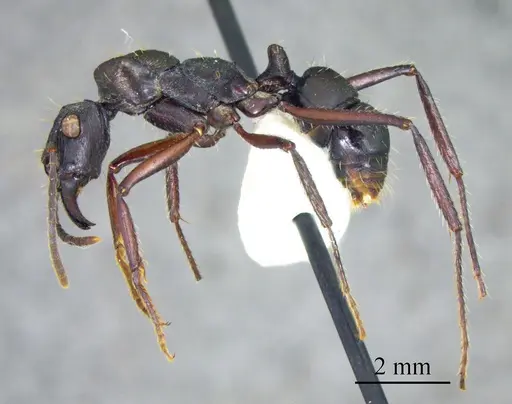
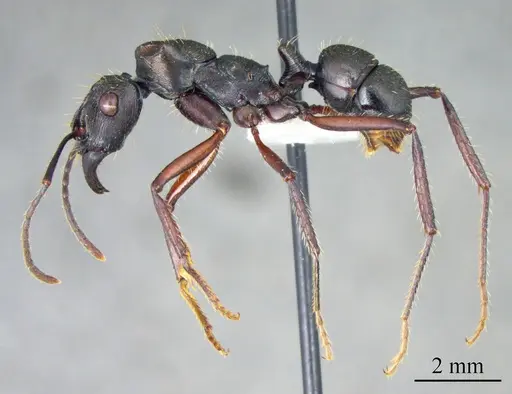
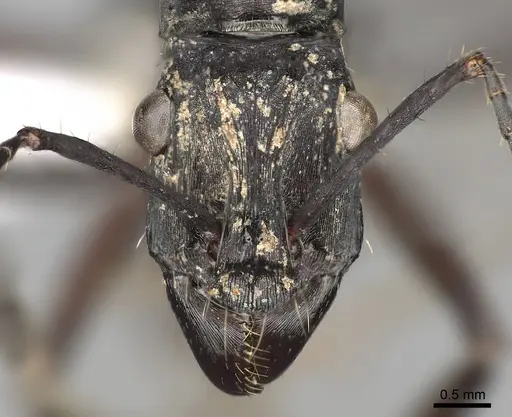
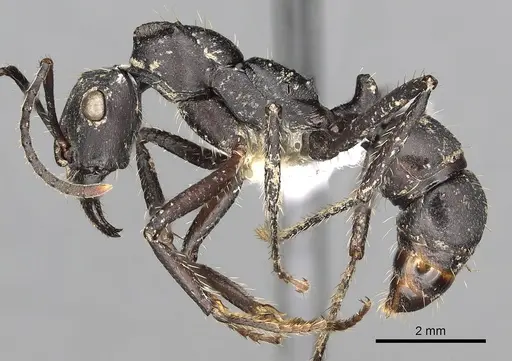
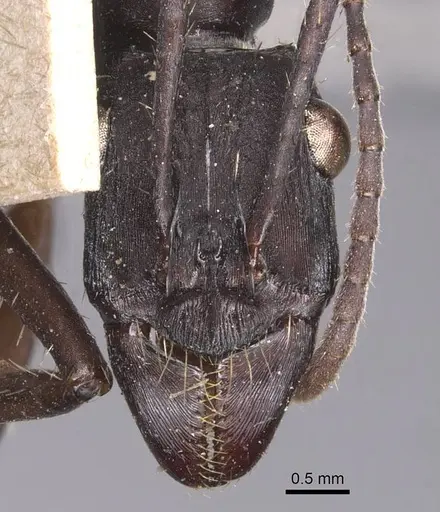
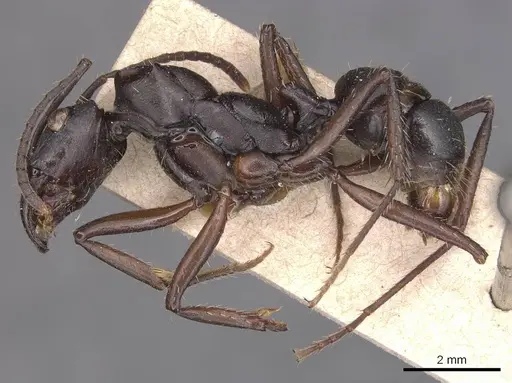
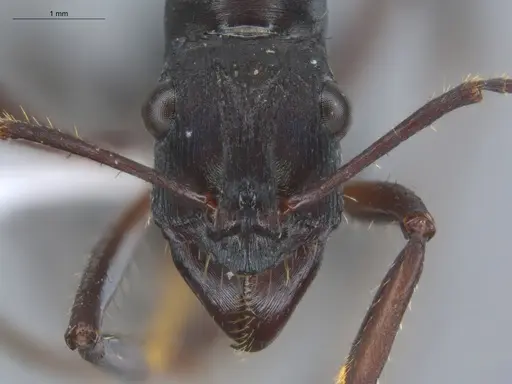
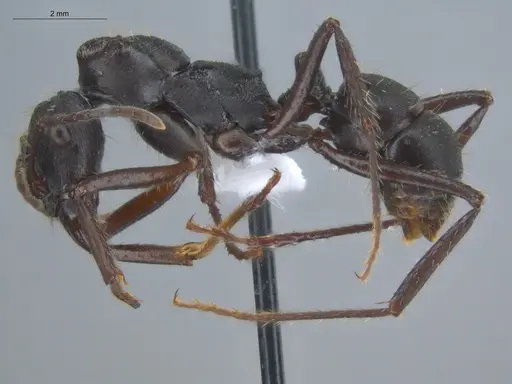
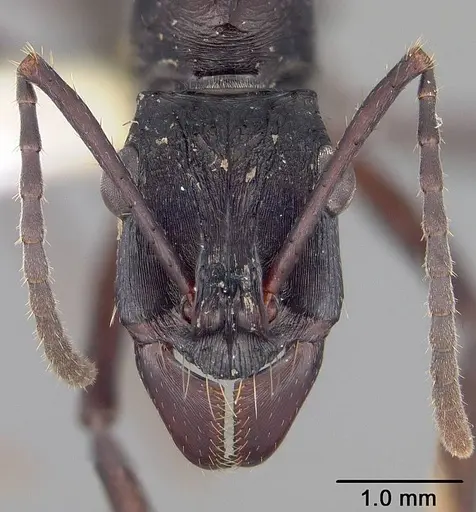
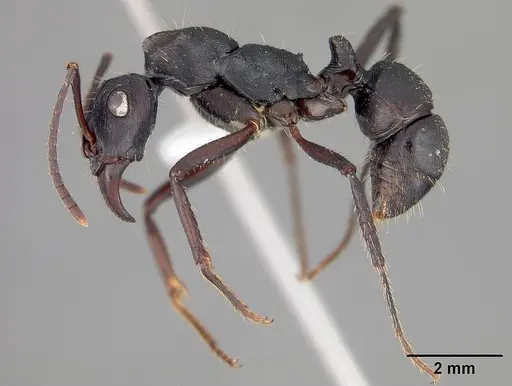
Ectatomma lugens is a medium-sized ant belonging to the subfamily Ectatomminae. Workers are robust with distinctive features including an antennal scape longer than the head width and a second gastral segment with fine reticulations but without striations [1]. This species is found across the northern Neotropical region including Brazil, Colombia, Ecuador, French Guiana, Guyana, Peru, and Suriname [2]. It inhabits lowland forests up to 350m elevation, with a preference for forested habitats, research shows it thrives in both undisturbed and disturbed primary forests, making it a resilient forest-floor species [3]. Interestingly, workers are mimicked by the spider Myrmecium cf. velutinum as a form of protective camouflage [1].
Quick Summary
- Difficulty: Medium
- Origin & Habitat: Northern South America including Brazil, Colombia, Ecuador, French Guiana, Guyana, Peru, and Suriname. Found in lowland tropical forests, semideciduous mesophytic forests, and Amazonian forest fragments at elevations up to 350m [2][3].
- Colony Type: Colony structure is not well-documented in scientific literature. Based on genus patterns, likely single-queen (monogyne) colonies. No documented ergatoid replacement reproductives for this specific species.
- Size & Growth:
- Queen: Approximately 8-10mm based on genus Ectatomma patterns, queen described by Almeida Filho 1987 [4]
- Worker: Approximately 6-8mm based on genus patterns [1]
- Colony: Likely moderate colonies of several hundred workers based on related Ectatomma species
- Growth: Moderate, inferred from tropical forest ant patterns
- Development: Estimated 6-8 weeks at tropical temperatures (25-28°C) based on typical Ectatomma development (Development time is estimated based on genus patterns for tropical Poneromorph ants. Actual timing may vary.)
- Antkeeping:
- Temperature: Keep at 24-28°C. This is a tropical species from lowland Amazonian forests, they need warm, stable temperatures year-round [3]. Room temperature in most homes may be too cool, consider a heating cable on one side of the nest.
- Humidity: Requires high humidity similar to their native forest floor habitat. Keep nest substrate consistently moist but not waterlogged. Aim for 70-80% humidity in the nest area.
- Diapause: No, this is a tropical species that does not hibernate. Maintain warm temperatures year-round.
- Nesting: In nature, they nest in soil and leaf litter on the forest floor. In captivity, a naturalistic setup with moist substrate (soil or plaster) works well. Y-tong nests with tight chambers also work. They prefer dark, humid nesting areas.
- Behavior: This is a subordinate species in ant communities, they do not exhibit mass recruitment behavior and rarely monopolize food baits [5]. Workers are active foragers on the forest floor, searching individually for prey. They are predatory and likely hunt small invertebrates. As an opportunist functional group species, they can adapt to disturbed habitats but prefer forested areas [6]. Escape risk is moderate, use standard barrier methods.
- Common Issues: tropical temperature requirements mean colonies can struggle in cool rooms without heating, high humidity needs can lead to mold problems if ventilation is poor, slow colony growth may frustrate beginners expecting fast development, wild-caught colonies may have parasites that affect survival in captivity, prey of army ants (Eciton) in the wild, may be vulnerable to larger predatory ants in captivity
Natural History and Distribution
Ectatomma lugens is a Neotropical ant species found across northern South America. Its range includes Brazil, Colombia, Ecuador, French Guiana, Guyana, Peru, and Suriname [2]. In Colombia, they are found in lowlands between 50-350m elevation in the departments of Amazonas, Caquetá, Cauca, and Meta [2][7]. This species originated during the late Pliocene to Pleistocene period, making it a relatively 'recent' species evolutionarily [8]. They are primarily ground-dwelling ants found in leaf litter and soil samples from tropical forests, particularly semideciduous mesophytic forests [4]. Research in Amazonian landscapes shows they prefer forested habitats, with highest abundance in disturbed primary forests (88 occurrences each in logged and logged-burnt forest) compared to only 1 occurrence in pasture [3]. This makes them a resilient forest species that can persist in moderately disturbed areas.
Nest Preferences and Housing
In the wild, Ectatomma lugens nests in soil and leaf litter on the forest floor. They are a litter-dwelling species, meaning they prefer dark, humid nesting areas close to the ground. For captive care, a naturalistic setup with moist substrate works well, you can use a mix of soil and sand or a plaster nest. Y-tong (acrylic) nests with tight, appropriately-sized chambers also work for this species. The key is maintaining high humidity in the nest while allowing for some ventilation to prevent mold. Keep the nest area dark, these forest-floor ants prefer dim conditions. A water reservoir or moisture source in the nest helps maintain the humidity they need. [4]
Feeding and Diet
Ectatomma lugens is a predatory ant, hunting small invertebrates on the forest floor. Studies show they are a subordinate species with no mass recruitment behavior, workers forage individually rather than recruiting groups to food [5]. In captivity, offer small live prey such as fruit flies, small crickets, mealworms, and other small insects. They are likely to accept protein-rich foods. As opportunistic foragers, they may also accept some sugar sources, though this is not well-documented. Feed them small prey items 2-3 times per week, adjusting based on colony size and consumption. Remove uneaten prey to prevent mold issues.
Temperature and Seasonal Care
This is a tropical species requiring warm temperatures year-round. Keep the nest area at 24-28°C (75-82°F). Research shows they inhabit lowland tropical forests where temperatures are consistently warm [3]. Unlike temperate ants, they do not enter diapause or hibernation. Room temperature in air-conditioned homes may be too cool, consider using a heating cable on one side of the nest to maintain proper temperatures. Place the heating on top of the nest to avoid evaporating moisture too quickly. Monitor colony activity, if workers become sluggish, the temperature may be too low.
Colony Structure and Development
The exact colony structure of Ectatomma lugens is not well-documented in scientific literature. Based on genus patterns for related Ectatomma species, they likely form single-queen colonies. Queens are approximately 8-10mm and workers are 6-8mm [4]. Colonies likely reach several hundred workers over time. Development from egg to worker likely takes 6-8 weeks at optimal tropical temperatures, based on typical Ectatomma development patterns. As a subordinate species in ant communities, they coexist with dominant ants without competing aggressively for resources [5]. This peaceful coexistence trait may carry over to captivity, they are unlikely to be aggressive toward other ant species.
Frequently Asked Questions
How long does it take for Ectatomma lugens to produce first workers?
Based on typical Ectatomma development patterns, expect first workers (nanitics) approximately 6-8 weeks after the queen lays eggs, at optimal tropical temperatures of 25-28°C. This is an estimate as specific development timing has not been documented for this species.
What temperature do Ectatomma lugens ants need?
Keep them at 24-28°C (75-82°F). This is a tropical lowland species from Amazonian forests that needs warm temperatures year-round. Room temperature may be too cool, use a heating cable if needed.
Do Ectatomma lugens ants need hibernation?
No. This is a tropical species that does not hibernate or enter diapause. Maintain warm temperatures throughout the year.
What do Ectatomma lugens eat?
They are predatory ants that hunt small invertebrates. Feed them small live prey like fruit flies, small crickets, and mealworms. They may also accept some sugar sources, though this is less well-documented.
Are Ectatomma lugens good for beginners?
They are rated as Medium difficulty. They require warm temperatures and high humidity year-round, which can be challenging. Their specific colony structure is not well-documented, which adds some uncertainty. They are best suited for antkeepers with some experience maintaining tropical species.
How big do Ectatomma lugens colonies get?
Based on related species, colonies likely reach several hundred workers. Specific colony size data is not available for this species.
Do Ectatomma lugens ants sting?
Ectatomma ants are in the subfamily Ectatomminae, which includes poneromorph ants known for their sting. While not as aggressive as some species, they likely can sting if threatened. The sting is probably functional but the pain level is not well-documented.
Can I keep multiple Ectatomma lugens queens together?
The colony structure (monogyne vs polygyne) is not well-documented for this species. Based on genus patterns, they likely form single-queen colonies. Combining unrelated queens is not recommended without documented evidence of acceptance.
What type of nest is best for Ectatomma lugens?
A naturalistic setup with moist substrate (soil or plaster) works well, or a Y-tong nest with tight chambers. They prefer dark, humid nesting areas similar to their forest floor habitat in the wild.
Where is Ectatomma lugens found in the wild?
They are found across northern South America including Brazil, Colombia, Ecuador, French Guiana, Guyana, Peru, and Suriname. They live in lowland tropical forests up to 350m elevation, particularly in Amazonian forest areas.
References

This caresheet is licensed under CC BY-SA 4.0 .
ANTWEB1041397
View on AntWeb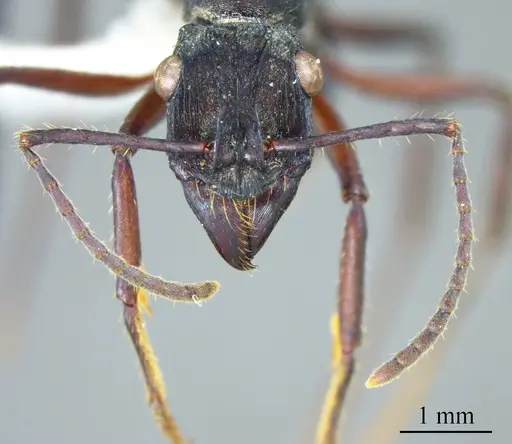
ANTWEB1041421
View on AntWeb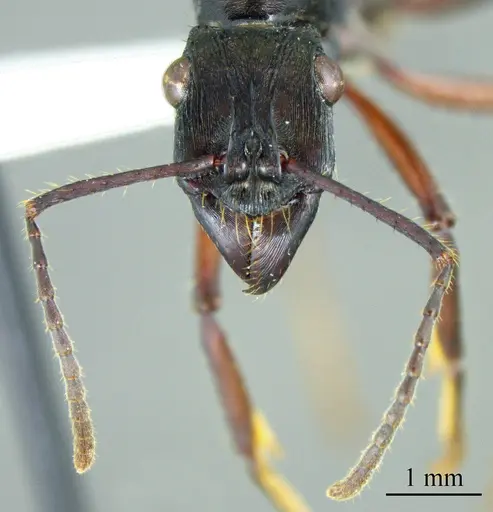
CASENT0281505
View on AntWeb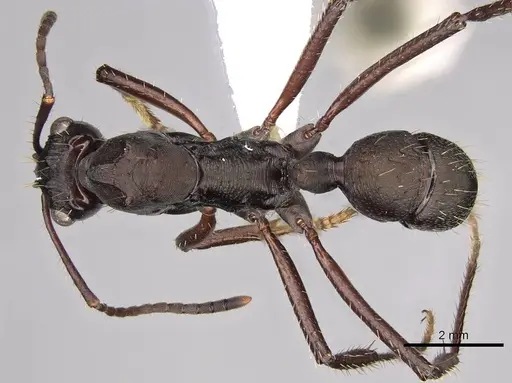
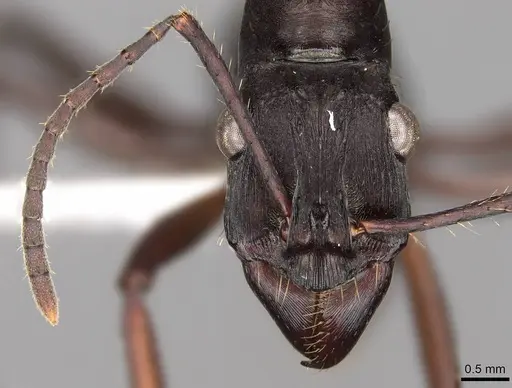
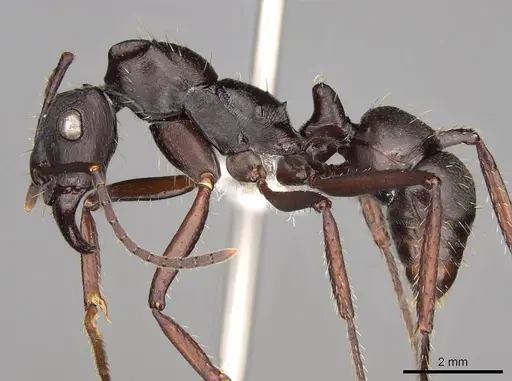
CASENT0281816
View on AntWeb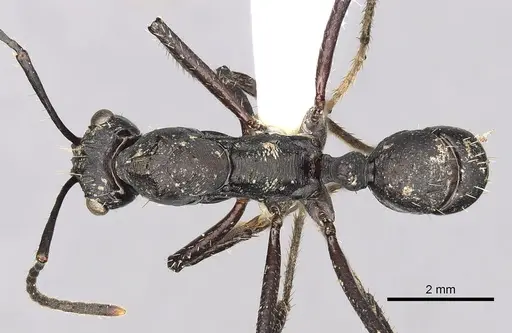
CASENT0905380
View on AntWeb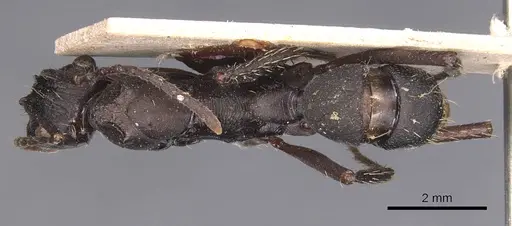
ECOFOG-IT14-0403-11
View on AntWeb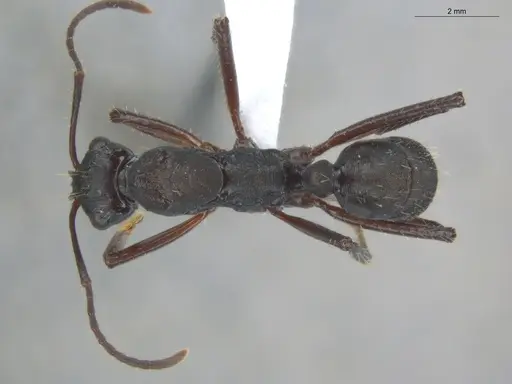
USNMENT00445341
View on AntWeb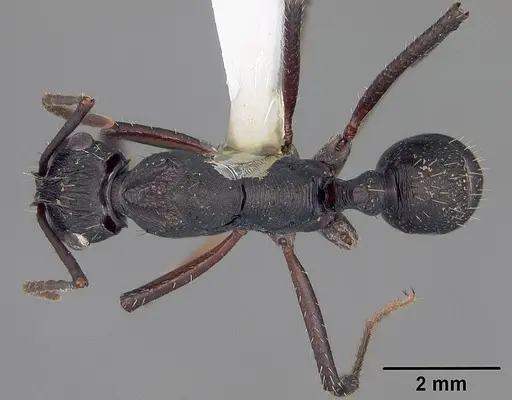
Literature
Loading...Loading products...