

Eciton quadriglume
- Scientific Name
- Eciton quadriglume
- Subfamily
- Dorylinae
- Author
- Haliday, 1836
- Distribution
- Found in 1 countries
Eciton quadriglume Overview
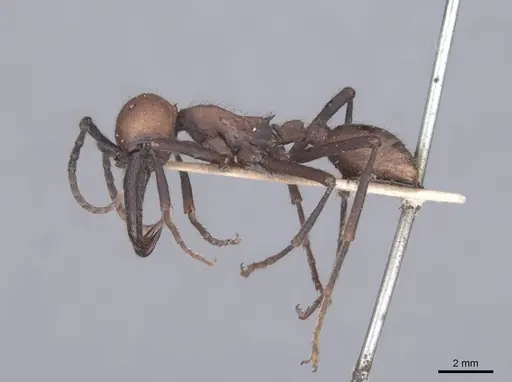
Eciton quadriglume is an ant species of the genus Eciton. It is primarily documented in 1 countries , including Brazil. Detailed taxonomic data and occurrence records can be further explored via authoritative databases such as AntWeb or the Global Biodiversity Information Facility (GBIF).
Eciton quadriglume
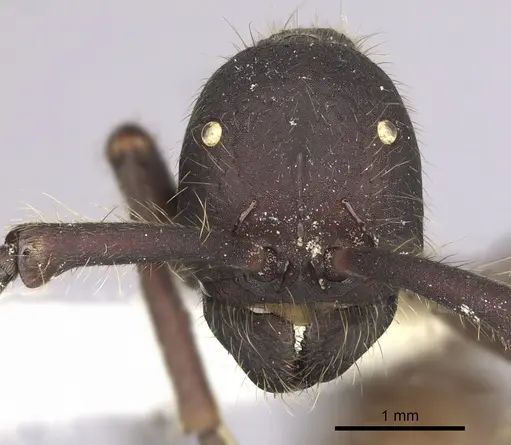
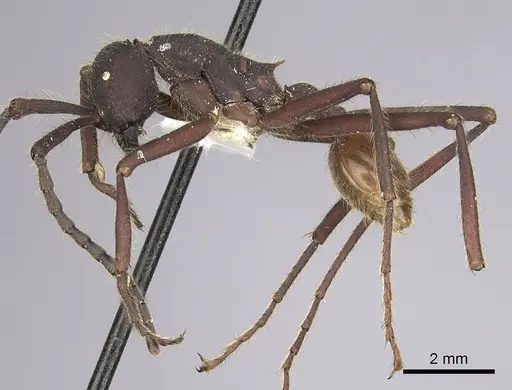
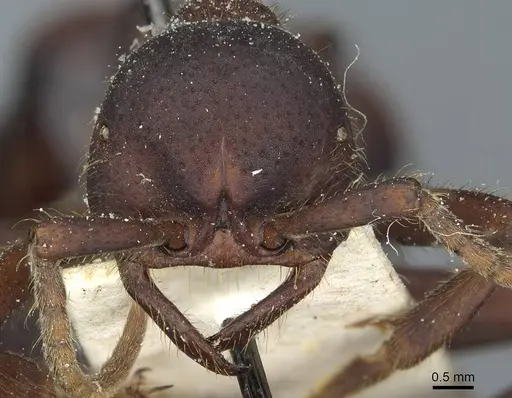
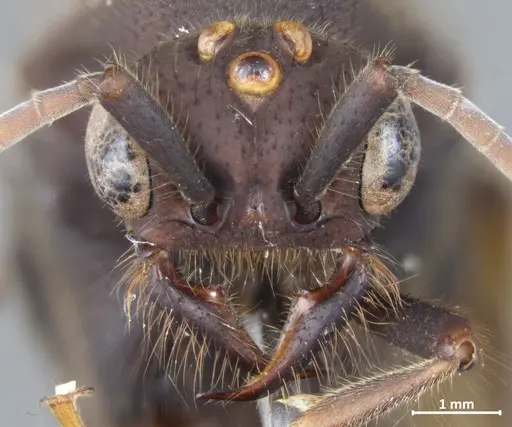
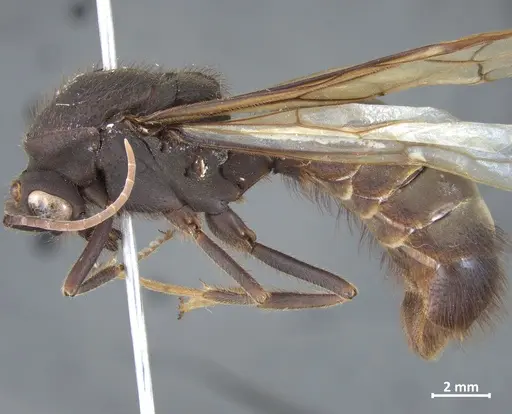
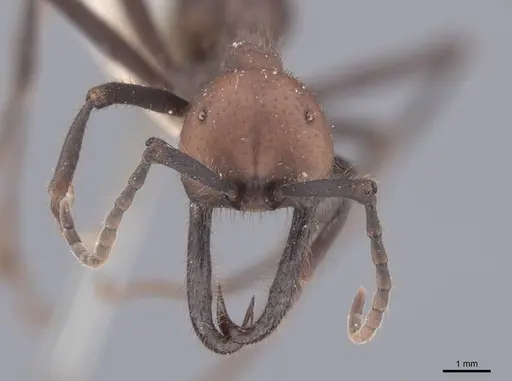
Eciton quadriglume is a Neotropical army ant species found across Argentina, Brazil, Colombia, Panama, Paraguay, and Peru [1]. Workers are uniformly matte black, while soldiers have distinctive red heads [2]. This species is a classic army ant, highly predatory, forming large colonies that conduct mass raids through the forest floor. They are known to raid nests of other ants, including Atta leafcutter colonies [3]. As a typical army ant, they do not maintain permanent nests but instead form temporary bivouacs as they nomadically move through their territory. These ants are part of the Subordinate Camponotini functional group, indicating they play a specific ecological role in Neotropical forests [4]. The genus Eciton is famous for its sophisticated raiding behaviors and colony structure, making them fascinating subjects for advanced antkeepers.
Quick Summary
- Difficulty: Expert
- Origin & Habitat: Neotropical rainforests of South America, Argentina, Brazil, Colombia, Panama, Paraguay, and Peru [1]. They require specific microhabitats with native forest litter for nesting and foraging, relying on shaded, moist conditions with stable temperatures [5].
- Colony Type: Single-queen colonies (monogyne). Army ants form massive colonies that can contain hundreds of thousands of individuals. The colony is permanently nomadic, moving between temporary bivouac sites.
- Colony: Monogyne
- Founding: Semi-claustral
- Size & Growth:
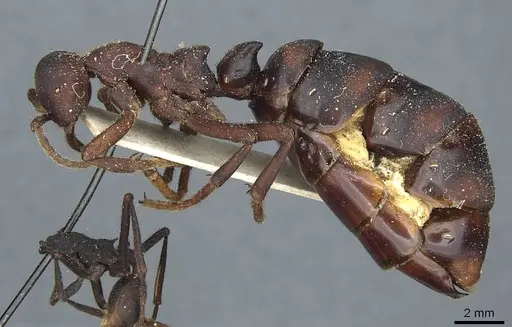
- Queen: Large (queen described by Reichensperger 1924), estimated 15-20mm based on genus patterns
- Worker: Workers 4-7mm, soldiers with distinctive red heads and large mandibles [2][1]
- Colony: Extremely large, can reach hundreds of thousands of workers in mature colonies
- Growth: Fast, colonies grow rapidly once established
- Development: Estimated 3-4 weeks at tropical temperatures (25-28°C) based on typical Eciton development (Development is rapid compared to many ants, supporting their nomadic lifestyle)
- Antkeeping:
- Temperature: Tropical species, keep at 24-28°C. They require warm, stable temperatures year-round [5]. A heating cable or mat on one side of the enclosure helps maintain these conditions.
- Humidity: High humidity required, 70-85%. These forest-floor ants need consistently moist substrate. Mist regularly and use a water reservoir in the outworld.
- Diapause: No, as a tropical species, they do not hibernate. Maintain warm conditions year-round.
- Nesting: Army ants do not nest in traditional ant nests. In captivity, they need a large outworld with multiple hiding spots and a damp substrate for forming temporary bivouacs. Provide dark, humid spaces where the colony can cluster.
- Behavior: Extremely aggressive predators with well-developed eyes and ocelli [2]. They conduct coordinated mass raids on other ant colonies and arthropods. Workers are fast-moving and will readily attack anything that enters their territory. Escape prevention is critical, they will readily explore and find gaps in enclosures. They are not suitable for observation-focused setups due to their reclusive bivouac behavior.
- Common Issues: Colony collapse from temperature drops, they require constant warmth, Inability to provide sufficient live prey, they need constant hunting opportunities, Escape due to their active foraging and exploration behavior, Stress from disturbance, army ants are sensitive to vibrations and light, Inability to accommodate colony size, they need enormous space and resources
Housing and Enclosure Setup
Eciton quadriglume cannot be kept in standard ant nests. They require a large, naturalistic setup that mimics their forest-floor habitat. Use a spacious outworld (at least 40x30cm for established colonies) with a deep layer of moist substrate (coco fiber, soil mix) that allows them to form bivouacs. Provide multiple dark hiding spots like cork bark, leaf litter, and artificial shelters where the colony can cluster. The setup should have excellent escape prevention, these are active, exploratory ants that will find any gap. Use fluon on container edges and ensure all ventilation is covered with fine mesh. Maintain high humidity by misting regularly and providing a water reservoir. [5][2]
Feeding and Predatory Behavior
This is a strict predator, they will not accept sugar or seed-based foods. Feed them live prey insects: crickets, roaches, mealworms, and other arthropods. They are known to raid Atta (leafcutter ant) nests [3], so they can tackle substantial prey. For a large colony, you need to provide prey items daily or even multiple times per day. The colony should have constant access to hunting opportunities. Remove uneaten prey after 24 hours to prevent mold. Young colonies will need smaller prey items, established colonies can take larger insects. The raiding behavior is spectacular, workers coordinate in large groups to overwhelm prey colonies.
Temperature and Humidity Management
As a Neotropical species, Eciton quadriglume requires warm, humid conditions year-round. Keep temperatures between 24-28°C using a heating cable or mat placed under one side of the enclosure to create a gradient. Do not let temperatures drop below 22°C for extended periods, this can stress and kill the colony. Humidity should be 70-85%, the substrate should remain consistently moist but not waterlogged. Mist the enclosure regularly and check that condensation forms on the sides. These ants are adapted to the stable, warm, humid conditions of the tropical forest floor and do not tolerate temperature fluctuations or dry conditions. [5]
Colony Structure and Nomadic Lifestyle
Army ant colonies are fundamentally different from typical ants. They have a single queen who stays permanently in the bivouac, and the entire colony moves nomadically every few weeks. In captivity, you will observe the colony forming temporary clusters rather than a fixed nest. The colony can grow to enormous size, hundreds of thousands of workers in mature colonies. The soldiers, with their distinctive red heads and large mandibles, serve as defenders and can tackle prey too large for regular workers. Do not disturb the bivouac unnecessarily, these ants are sensitive to vibrations and light. The colony's nomadic nature means they need constant space to explore and hunt. [2]
Legal and Ethical Considerations
Before acquiring Eciton quadriglume, check your local regulations regarding ant keeping. This is a non-native species in most regions and may require permits. Never release this species or any ant colony into the wild, they are aggressive predators that could disrupt local ecosystems. Eciton quadriglume is not a beginner species and requires significant resources, time, and expertise to keep properly. Only experienced antkeepers should attempt to maintain this species.
Frequently Asked Questions
Can I keep Eciton quadriglume in a test tube or formicarium?
No. Army ants do not nest in traditional formicariums. They need a large naturalistic setup with space to form nomadic bivouacs. A standard test tube setup will not work for this species.
What do Eciton quadriglume ants eat?
They are strict predators that only accept live prey. Feed them live insects like crickets, roaches, and mealworms. They do not eat sugar water, honey, or seeds. They are known to raid other ant colonies, including Atta nests.
Are Eciton quadriglume ants good for beginners?
No. This is an expert-level species. They require constant warm temperatures, high humidity, daily live prey feeding, and large amounts of space. They are not suitable for beginners.
How long does it take for first workers to appear?
Based on typical Eciton development at tropical temperatures (25-28°C), expect first workers in approximately 3-4 weeks after the queen lays eggs. Army ant development is relatively rapid.
Do Eciton quadriglume ants need hibernation?
No. As a Neotropical tropical species, they do not hibernate. Keep them warm year-round at 24-28°C. Cold temperatures will stress and potentially kill the colony.
How big do Eciton quadriglume colonies get?
Extremely large. Mature colonies can reach hundreds of thousands of workers. You will need to provide increasing amounts of prey as the colony grows.
Do Eciton quadriglume ants sting?
They can bite with their mandibles, and soldiers have particularly powerful bites. While they lack a stinger like many army ants, their bites can be painful. They are aggressive defenders of their colony.
Can I keep multiple queens together?
No. Eciton quadriglume is monogyne, colonies have a single queen. Multiple queens would fight. Do not attempt to combine unrelated queens.
Why are my Eciton quadriglume dying?
Common causes include: temperature too cold (below 22°C), low humidity, insufficient live prey, or stress from disturbance. These ants are sensitive to environmental changes. Ensure warm, humid conditions and constant access to live prey.
When should I move them to a larger enclosure?
Start with a spacious enclosure from the beginning. Army ant colonies grow rapidly and need significant space. If you see workers clustering excessively or escaping due to overcrowding, upgrade to a larger setup immediately.
References

This caresheet is licensed under CC BY-SA 4.0 .
CASENT0249461
View on AntWeb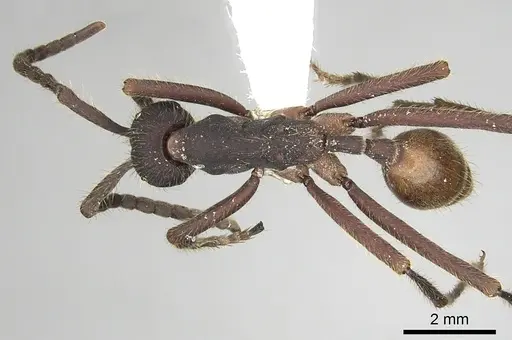
CASENT0911388
View on AntWeb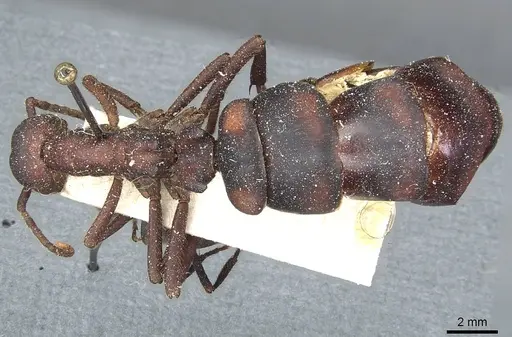
DZUP549835
View on AntWeb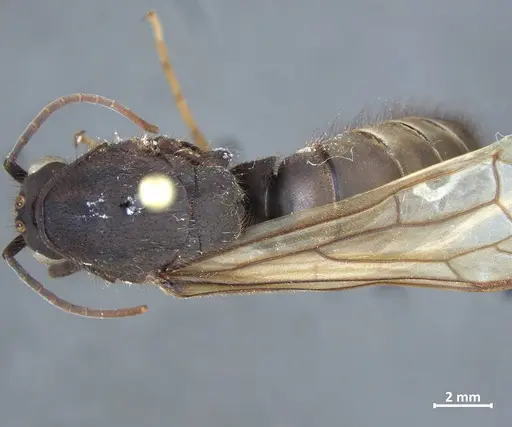
FMNHINS0000045245
View on AntWeb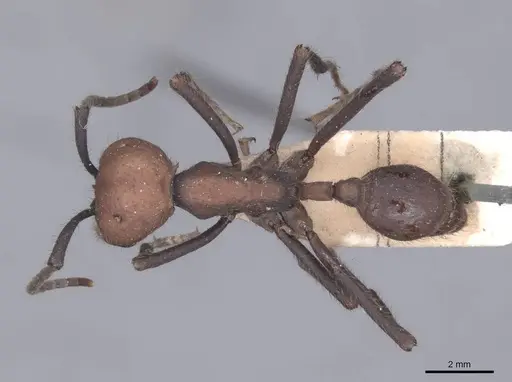
Literature
Loading...Loading products...